 Whatcom County
 Windows in Barkley Work Harder Than Most
Barkley sits inside Whatcom County's marine climate zone, which sounds pleasant until you own a house here. What that really means for a window is year-round moisture pressure: salt-tinged air drifting in off the Sound, driving rain that comes in sideways during fall and winter storms, and a moss season that stretches longer than most homeowners expect. None of this is dramatic on any single day, but it's relentless. A window that's "good enough" in a drier inland climate can start showing problems in Whatcom County within a handful of years, while a properly specified and correctly installed window can go decades without trouble.
Custom windows aren't just about matching an odd-shaped opening or getting a specific grid pattern. In this area, "custom" also means selecting materials, glazing, and flashing details that are actually suited to sustained wet-and-salt exposure — and then installing them in a way that respects how water moves around a house here. That's the standard we hold every Barkley project to.
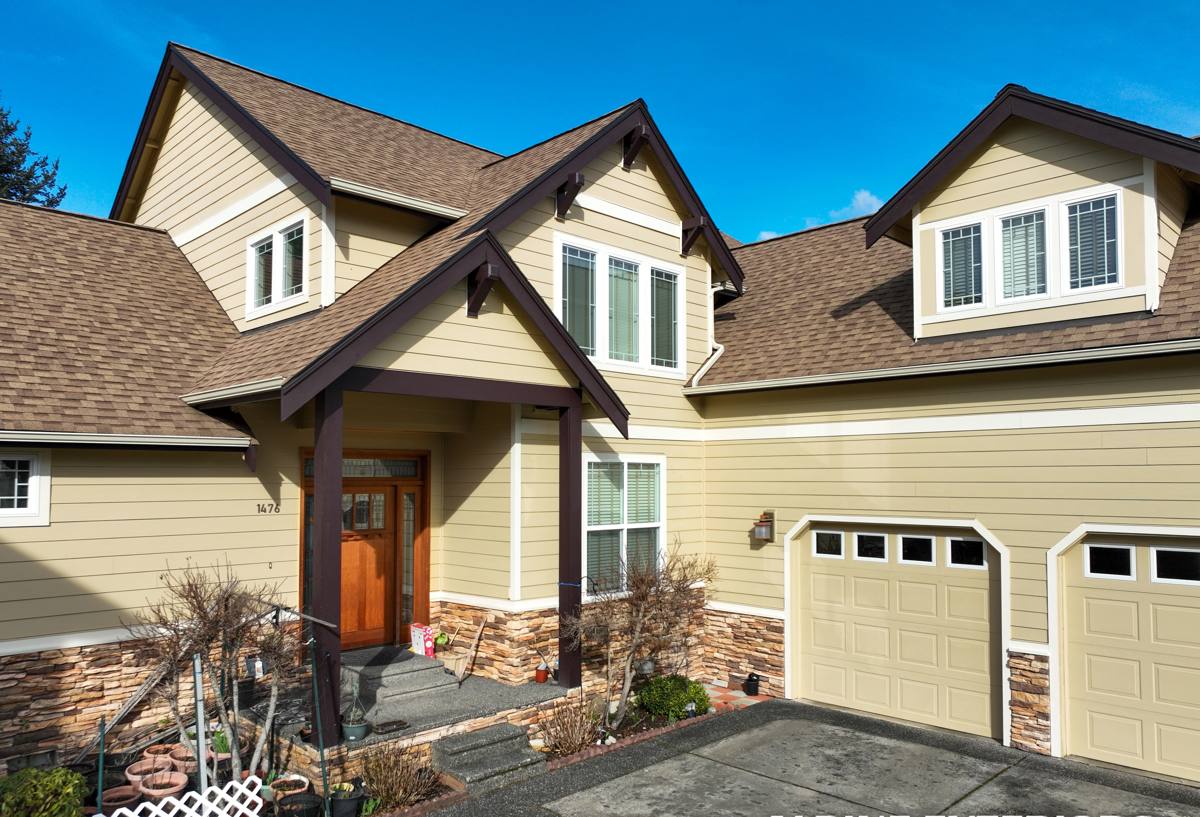
How the Local Climate Actually Damages Windows
It helps to understand the specific mechanisms at work, because they point directly to what a good installation has to solve for.
Salt Air and Corrosion
Homes closer to Bellingham Bay and the wider Whatcom County shoreline deal with airborne salt that settles on hardware, fasteners, and unprotected metal. Over time this accelerates corrosion on lower-grade window hardware — hinges, locks, and cranks — and can pit aluminum components that aren't properly finished. It's a slow process, which is exactly why it's easy to underestimate until a window won't latch cleanly anymore.
Driving Rain
Whatcom County storms rarely fall straight down. Wind-driven rain hits window assemblies at an angle, which means the water management around the window — not just the window unit itself — is doing most of the work to keep a wall dry. A great window installed with poor flashing will leak. A modest window installed with correct flashing usually won't.
Extended Moss and Mold Season
The long stretch of cool, damp weather here supports moss and mold growth on anything that stays wet, including window sills, exterior trim, and frame joints that don't shed water well. Wood components that aren't properly sealed or that sit in standing moisture are especially vulnerable to soft spots and rot over time.
Signs a Barkley Home's Windows Are Losing the Fight
Homeowners usually notice one of these before they call, but there are quieter warning signs too:
- Fogging or a hazy film between double-pane glass — a sign the seal has failed and the insulating gas or air gap is gone
- Visible moss, black staining, or soft wood at the sill or bottom corners of the frame
- Windows that are harder to open, close, or lock than they used to be
- Noticeable drafts or a cold spot near the window even when it's fully closed
- Condensation forming on the inside of the glass regularly during cooler months
- Paint or finish peeling on the exterior trim around the window opening
Any one of these can be minor on its own. Several together, or any sign of soft wood or interior water staining, usually means the window and its surrounding flashing need a real look, not just a caulk touch-up.
What a Correct Window Job Actually Involves
A window replacement is really two jobs layered together: removing the old unit without damaging the opening, and installing the new one so water has nowhere to go but away from the house.
Flashing and Water Management
This is the part that determines whether a window leaks in five years, not whether it looks good on day one. Proper flashing integrates with the building's weather-resistive barrier so water is directed out and down, never trapped behind the siding or pooling on the sill. In a climate with this much driving rain, we treat flashing detail as non-negotiable — it's the difference between a window that performs and one that just looks installed.
Air Sealing and Insulation
Gaps around a new window frame need to be sealed with the right materials — not just caulk on the surface, but proper backer rod and sealant or low-expansion foam in the gap itself. Done right, this stops both drafts and the kind of moist air infiltration that feeds mold growth inside a wall cavity.
Fastening and Structural Fit
Windows need to be shimmed level, plumb, and square before they're fastened — an out-of-square frame stresses the sash and hardware over time, which shows up later as windows that won't close smoothly or seals that fail early.
Choosing Frame Materials for This Climate
Not every window frame material handles Whatcom County's moisture and salt exposure equally well. Here's how the common options compare for a Barkley home specifically:
| Frame Material | Moisture / Salt Resistance | Maintenance | Best Fit |
|---|---|---|---|
| Vinyl | Strong — won't rot or corrode | Low; occasional cleaning | Most homes prioritizing value and low upkeep |
| Fiberglass | Very strong — dimensionally stable in wet/dry cycles | Low | Homes wanting long-term durability and paintable finish |
| Aluminum | Fair — can pit or corrode near salt air if finish is low grade | Moderate | Specific architectural or commercial-style applications |
| Wood / Wood-Clad | Requires diligent sealing and upkeep to resist rot and moss | High | Homeowners committed to regular maintenance for a specific look |
We're honest with Barkley homeowners about wood: it can look excellent, but in a marine climate with a long wet season, it demands real upkeep — checking seals, repainting exposed surfaces, and catching soft spots early. That's a maintenance commitment, not a flaw in the material, and we'll tell you plainly what that commitment looks like before you decide.
Glazing Considerations
Double-pane, low-E glass is the practical baseline for this region — it cuts heat loss and helps control condensation, which matters given how much cool, damp weather Whatcom County sees. Triple-pane can make sense on north-facing or particularly exposed walls where comfort and energy loss are more pronounced, though it adds cost and weight that isn't always necessary on every elevation.
Our Process, Start to Finish
- On-site assessment. We look at each window opening individually — not every window on a Barkley home is in the same condition or exposure, so recommendations aren't one-size-fits-all.
- Honest scope and options. You get a clear picture of what's actually needed: full replacement, frame repair, or in some cases just a flashing and sealant correction.
- Material selection. We walk through frame and glazing options against your budget and how exposed that specific opening is to weather and salt air.
- Removal and opening prep. Old units come out carefully, and the opening is inspected for hidden rot or water damage before anything new goes in.
- Installation with proper flashing. This is where the long-term performance is decided — correct integration with the weather barrier, proper shimming, and sealed gaps.
- Final check and walkthrough. Every window is operated, checked for square and smooth function, and reviewed with you before we call the job done.
Maintenance That Actually Extends Window Life Here
A well-installed window still benefits from basic seasonal attention in this climate. A short list that makes a real difference:
- Rinse accumulated salt film and grime off frames and glass a few times a year, especially on wind-exposed sides of the house
- Clear moss or debris from sills and tracks before it holds moisture against the frame
- Check exterior caulk lines annually for cracking or gaps, particularly after a hard winter
- Operate every window at least once each season so hardware doesn't seize or corrode from disuse
- Watch for soft or discolored trim around the frame — catching rot early is far cheaper than replacing a rotted opening later
Why Hiring a Crew That Already Works in Barkley Matters
Whatcom County's mix of salt exposure, wind-driven rain, and prolonged damp weather isn't uniform across Washington, and it isn't something every installer accounts for by default. A crew that regularly works in and around Barkley already understands which elevations tend to take the worst weather, how flashing details need to be adapted for this level of rain exposure, and which materials hold up versus which ones create maintenance headaches five years down the line. That local pattern recognition shows up in fewer callbacks and windows that perform the way they're supposed to, season after season.
It also means straight answers. If a wood window isn't the right call for a heavily exposed wall on your specific home, we'll say so — and explain why — rather than selling you something that looks right in a showroom but struggles against this region's weather.
Get a Straightforward Estimate
If your Barkley home has windows showing wear, fogging, drafts, or moss buildup, it's worth getting an honest look before small issues turn into opening repairs. We offer free, no-pressure estimates — use the form below to get started.