 Whatcom County
 Why Siding Fails Faster in Happy Valley
Happy Valley sits close enough to Bellingham Bay and the broader Puget Sound shoreline that salt-laden air is a real factor in how exterior materials age here, not a minor footnote. Add Whatcom County's long stretch of driving rain — wind-driven storms that push water sideways into laps, seams, and trim rather than just down a wall — and you have two forces working against siding at the same time: corrosion and moisture intrusion. Layer on the shaded, tree-lined character of many Happy Valley streets, where moss and algae get a long, cool, damp season to establish themselves on north-facing walls and anything under tree cover, and you get a specific failure pattern that's different from what you'd see on a dry, sun-exposed lot inland.
None of this means siding here is doomed. It means siding here needs to be installed, and repaired, with those three forces in mind — salt air, driving rain, and moss — instead of treated as a generic problem with a generic fix.
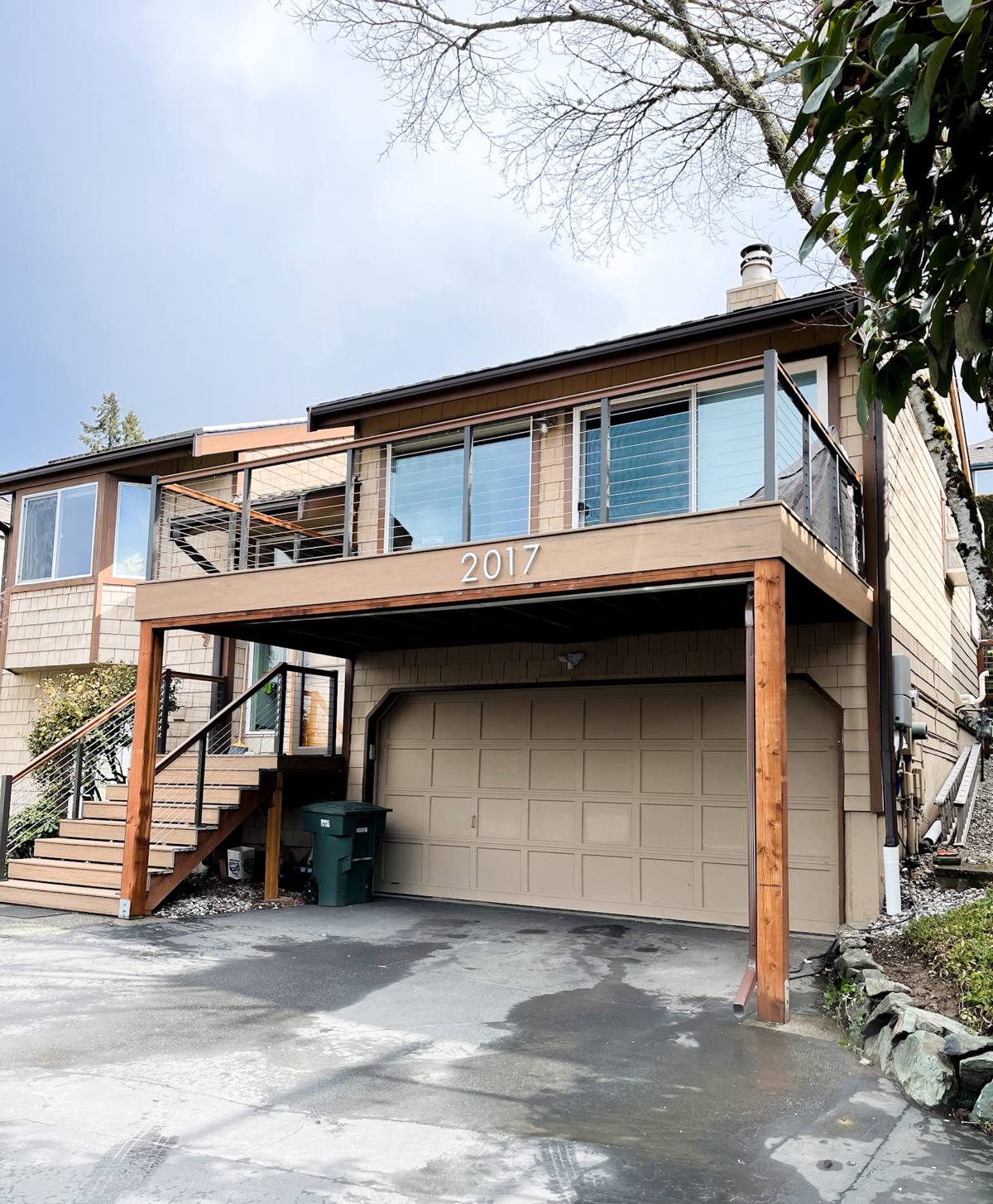
What Salt Air, Rain, and Moss Actually Do to Siding
Salt air and fasteners
Salt-laden moisture accelerates corrosion on fasteners, flashing, and any exposed metal trim. On homes with lower-grade or improperly coated nails, you'll often see rust streaking bleeding out through paint or caulk years before the siding material itself has failed. Once a fastener starts corroding, it loses holding power, and the siding around it starts to work loose.
Driving rain and water paths
Wind-driven rain doesn't behave like a gentle vertical shower. It gets pushed up under laps, into butt joints, and behind trim that isn't properly flashed. The siding material can be perfectly sound and still let water through if the flashing details, caulking, or overlaps were done wrong — or have simply worn out over the years. This is the single most common root cause we find behind "siding damage" that actually turns out to be a water-management failure.
Moss, algae, and trapped moisture
Shaded walls and roof lines that stay damp longer than they dry give moss and algae a foothold. Beyond the cosmetic issue, a mat of moss holds moisture directly against the siding surface far longer than open air would, which is exactly the condition that causes paint failure, substrate softening on wood-based products, and freeze-thaw stress during the county's colder snaps.
Common Warning Signs
- Soft, spongy, or crumbling spots when you press on the siding
- Paint that's peeling, bubbling, or failing in a localized patch rather than evenly across a wall
- Visible gaps, warping, or boards pulling away from the wall at seams or corners
- Dark staining or streaking below joints, trim, or window heads
- Persistent moss or algae growth that keeps coming back within a season of cleaning
- Rust bleed around nail heads or metal trim
- Interior signs — musty smell, discoloration on interior walls near exterior corners — that point to moisture getting past the siding entirely
What a Correct Repair Actually Involves
A siding repair that just covers the visible damage without addressing why it happened is a repair you'll be paying for again in a few years. Doing it right means treating the visible damage as a symptom and finding the cause before closing anything back up.
Diagnose before you patch
That means pulling back enough surrounding material to see what's underneath — sheathing, house wrap, flashing — and confirming whether the damage is isolated or has already spread. On a house exposed to Whatcom County's rain patterns, damage often travels further behind the wall than it appears on the surface.
Fix the water path, not just the board
If the root cause is a flashing gap, a failed kick-out, or caulk that's dried out and cracked, replacing the siding alone without correcting that detail guarantees a repeat failure. Proper repair work re-establishes the water-shedding path — laps, flashing, and drainage — before any new material goes on.
Match the material and the finish
A patch that doesn't match the existing siding's profile, reveal, or finish stands out and can also create a new place for water to collect at the transition. This is one of several reasons material choice matters, which we'll get to below.
Repair or Replace? How We Actually Decide
Not every damaged section needs a full re-side, and not every "repair" is worth doing instead of replacing a larger section. Here's how we weigh it:
| Factor | Leans Toward Repair | Leans Toward Replacement |
|---|---|---|
| Extent of damage | Isolated to one section or wall | Spread across multiple elevations |
| Underlying sheathing | Dry, sound structure | Soft or rotted sheathing found |
| Age of existing siding | Newer install, still under warranty | Near or past expected service life |
| Cause of failure | One-time or localized flashing issue | Systemic issue (bad original install, wrong product for the exposure) |
| Material match | Matching material still available | Discontinued profile or color, patch would be visibly obvious |
We'll tell you honestly which side of that table your situation falls on. There's no reason to sell a full re-side when a targeted repair will hold, and no reason to pretend a patch will last when the underlying structure is already compromised.
Why We Only Repair and Replace With James Hardie Fiber Cement
When a repair does call for new siding material — whether it's a few boards or a full elevation — we install James Hardie fiber cement, and that's the only siding product we put on a house. It's worth explaining why, especially in a climate like this one.
Fiber cement doesn't rot, and it isn't a food source for the moss and algae that thrive in Whatcom County's damp, shaded conditions the way wood-based products can be. It's also non-combustible, which matters regardless of climate. James Hardie's HZ5 product line is specifically engineered for climates with high moisture exposure, which describes this region well. The factory-applied ColorPlus finish is baked on under controlled conditions rather than field-painted, which means better adhesion and color consistency over time than a repair painted on-site — and it holds up to the region's UV and moisture cycling better than field-applied paint on other substrates.
We don't install LP SmartSide, vinyl, or other engineered-wood or plastic siding products, and we don't repair with them either. Those products have real strengths, and plenty of them are installed correctly and perform fine elsewhere. But when we're the ones doing the work, we want a repair or replacement that we can stand behind for the long haul in this specific climate, and fiber cement's moisture behavior, fire resistance, and warranty structure are why we standardized on it.
Our Repair Process
1. On-site inspection
We look at the damaged area and the surrounding wall, checking for how far moisture has traveled and whether the cause is isolated or systemic.
2. Straightforward assessment
You get a plain explanation of what we found, what caused it, and whether a repair or a larger replacement is the right call — with reasoning, not just a number.
3. Correct the water path first
Before any new siding goes up, we address flashing, house wrap, or sheathing issues that caused the original failure.
4. Install and finish
New James Hardie material is installed to manufacturer spec — proper fastening, clearances, and sealant details — matched as closely as possible to your existing siding's profile and color.
5. Final check
We walk the repair with you before calling it done, so you know exactly what was fixed and why.
Why Local Experience in Happy Valley Matters
A repair crew that regularly works in Whatcom County has already seen how salt air, driving rain, and moss show up on homes in this specific area, which means less time spent guessing and more time spent fixing the actual problem. They also know which failure patterns are common on shaded, tree-covered lots versus more exposed ones, and how the region's building conditions typically interact with different siding ages and installations.
Questions worth asking any contractor before you hire them
- Will you show me what's underneath the damaged siding before quoting a fix?
- Do you address the underlying water-management issue, or just replace the visible material?
- What siding product do you install, and why that one for this climate?
- Can you match the existing profile, reveal, and color, or will the patch be visibly different?
- What's covered under warranty — the material, the labor, or both — and for how long?
- Do you have experience working in this specific area, and can you speak to conditions here?
Keeping Repaired Siding in Good Shape
Once a repair is done correctly, a little seasonal attention goes a long way in this climate. Rinse moss and algae off shaded walls before it builds into a thick mat, keep gutters and downspouts clear so water isn't dumping directly onto siding below, and trim back vegetation that's keeping a wall shaded and damp longer than it needs to be. Fiber cement holds up well with minimal upkeep, but no siding material is maintenance-free in a climate that stays wet as much of the year as Whatcom County does.
If you're seeing warning signs on your siding, or you just want an honest opinion on whether it's a repair or something bigger, we're happy to take a look. Reach out for a free, no-pressure estimate — fill out the form below and we'll get back to you.