 Whatcom County
 Deck Repair Built for Bellingham's Climate
A deck in Bellingham lives a harder life than the same deck would a few hundred miles inland. Whatcom County sits right up against the Salish Sea, which means salt-laden air moving through the wood fibers, driving rain off Bellingham Bay that gets pushed sideways into ledger boards and railings, and a moss season that can run from October clear through May. None of that is dramatic on its own. What it does is quiet, cumulative damage — the kind of thing that looks like a cosmetic issue for a year or two and then suddenly isn't.
We repair decks in Bellingham and the surrounding areas regularly enough to know the failure patterns before we pull the first board. That matters, because a repair that doesn't account for how this specific climate attacks a deck is a repair you'll be paying for again in three or four years.
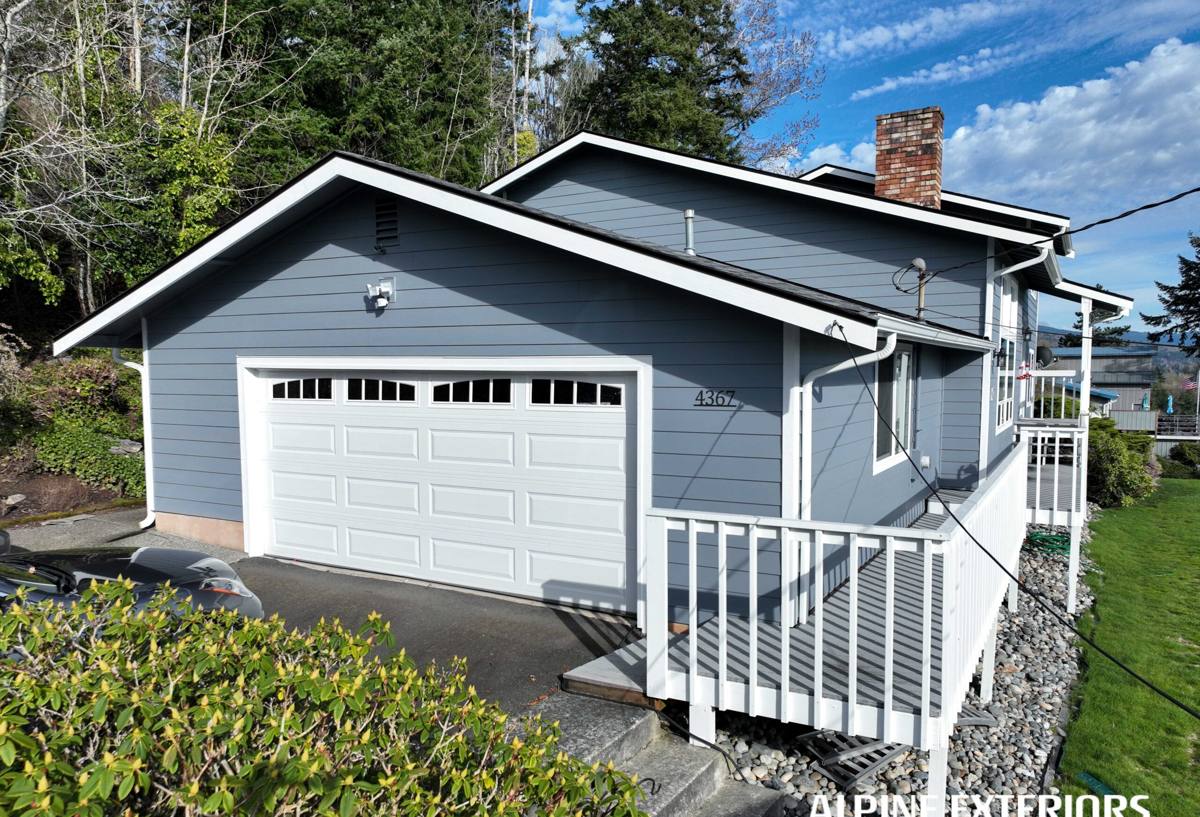
What Whatcom County Weather Actually Does to a Deck
Salt Air and Metal Fasteners
Proximity to the water means airborne salt settles on everything, including the fasteners holding your deck together. Older decks built with standard galvanized nails or screws are the ones we see failing first — not because the wood gave out, but because the fastener corroded, lost its grip, and let boards work loose. Once a board starts moving, water gets into the gap and rot follows.
Driving Rain and Ledger Boards
The ledger board — where the deck attaches to the house — is the single most important structural connection on most decks, and it's also the part most exposed to wind-driven rain in this area. When flashing is missing, undersized, or was never properly integrated with the house's water-resistive barrier, water tracks behind the ledger and rots both the ledger and the rim joist behind it. This is invisible from the deck surface until the damage is severe.
Moss, Algae, and a Long Wet Season
Bellingham's moss season isn't a minor nuisance — it's a moisture-retention problem. Moss and algae hold water against the wood surface for months at a time, well past the point where the wood would otherwise have dried. This accelerates rot on horizontal surfaces (decking boards, stair treads, the tops of rail caps) far faster than sun exposure alone would explain. Shaded decks under trees, which describes a lot of Bellingham lots, are hit hardest.
Freeze-Thaw at the Margins
Whatcom County doesn't get deep, sustained freezes most winters, but it gets enough freeze-thaw cycling to matter. Wood that's already saturated from months of rain and moss cover can crack when it freezes, opening new entry points for water the next time it rains — which, here, is soon.
Signs Your Bellingham Deck Needs Repair, Not Just Cleaning
- Soft or spongy spots when you press on decking boards, especially near the house or at board ends
- Rail posts that wiggle or flex at the base — often a sign the post base or connection has rotted
- Gaps opening up where the deck meets the house, or a slight separation/sag at the ledger
- Rust streaking around fasteners or visible corrosion on brackets and hangers
- Persistent dark staining or moss growth that comes back within weeks of cleaning
- Stairs that feel less solid than they used to, or visible splitting on tread edges
- Any area where standing water pools after rain instead of draining off
What a Correct Deck Repair Actually Involves
A repair that holds up in this climate isn't just swapping a rotten board for a new one. It starts with figuring out why that board failed in the first place — otherwise the replacement fails on the same schedule.
Our Process
- Inspection from the ground up. We check the ledger connection, joists, post bases, and structural framing before we look at surface boards. Surface damage is often just the visible symptom of a framing problem.
- Identify the water path. Every rot problem has an entry point — bad flashing, a missing gap between boards, a fastener hole that was never sealed. We find it, because fixing the symptom without fixing the source just resets the clock.
- Remove and assess framing. Any joist, ledger section, or post base showing soft wood gets probed and, if compromised, replaced or sistered with new lumber rated for ground or weather exposure.
- Correct flashing and fastening. Where the original build skipped proper ledger flashing or used fasteners that don't hold up to salt exposure, we upgrade to corrosion-resistant hardware and proper flashing detail as part of the repair.
- Replace surface material to match. Decking, rail caps, or stair treads are replaced with material chosen for how it'll actually perform here, not just how it looks on day one.
- Final check for drainage and airflow. Standing water and dead air under a deck are the two biggest drivers of repeat rot, so we make sure both are addressed before we call the job done.
Repair vs. Full Rebuild: How We Make the Call
Homeowners often assume any deck problem means a full teardown. Sometimes that's true — but often it isn't, and an honest contractor tells you which situation you're in before quoting the bigger job.
| Factor | Usually Repairable | Usually Needs Rebuild |
|---|---|---|
| Structural framing | Solid joists and posts, isolated soft spots | Widespread rot in joists, beams, or posts |
| Ledger connection | Sound, properly flashed once corrected | Rim joist behind ledger badly rotted |
| Surface boards | Scattered failing boards, rest sound | Most boards cupping, splitting, or soft |
| Age and code | Reasonably current, safe fastening pattern | Old enough that hardware and spans don't meet current standards |
| Cost logic | Repair cost is a fraction of rebuild cost | Repair cost approaches rebuild cost |
We'll walk the deck with you, point to what we're seeing, and give you a straight answer on which category yours falls into. If a repair is the honest recommendation, that's what we'll quote.
Materials: What Holds Up in This Climate
Material choice matters more here than in drier inland climates, because everything gets tested by moisture and salt air year-round.
Fasteners and Hardware
We use corrosion-resistant fasteners and structural hardware rated for exterior and coastal-adjacent exposure. Standard hardware-store galvanized fasteners are a common source of the corrosion issues we get called out to fix, so we treat this as a non-negotiable upgrade on any repair we do, not an optional add-on.
Framing and Structural Lumber
Any framing member we replace is rated for the exposure it will actually see — ground contact or weather exposure as appropriate — rather than matching whatever grade happens to be cheapest. Cutting corners on hidden framing is the single most common reason decks in this region fail early.
Decking Surface Options
Wood and composite decking both have a place, and the right choice depends on your budget, how much shade the deck gets, and how much maintenance you want to take on. We'll talk through the honest trade-offs — wood needs more regular upkeep in a moss-prone climate but is easier to spot-repair board by board; composite needs less maintenance but requires the whole board replaced if it's damaged, and quality varies a lot between products. We don't push one over the other; we tell you what fits your situation.
Why a Local Bellingham Crew Matters for This Job
Deck repair is one of those projects where local experience shows up directly in the outcome. A crew that works Whatcom County regularly has already seen how salt exposure, rain direction, and moss cover play out on decks in this specific area — which means we know where to look first, what tends to fail, and what actually holds up long-term instead of just meeting a minimum. That translates into faster, more accurate diagnosis and a repair that's built for the conditions your deck will actually face, not generic conditions from a manual written for a different climate.
It also means we're not far away if a question comes up after the work is done. We're part of the same community your home is in.
Maintaining Your Deck Between Repairs
- Clear moss and organic debris from the deck surface and between boards at least twice a year, more often under tree cover
- Keep gutters and downspouts near the deck clear so water isn't dumping onto or near the structure
- Check fasteners and hardware for rust or looseness once a year, ideally before the wet season starts
- Make sure furniture and planters aren't trapping moisture against the deck surface long-term
- Address small soft spots or loose boards as soon as you notice them — waiting turns a board-level fix into a framing-level fix
If your Bellingham deck has soft spots, loose railings, or just feels less solid than it used to, we're glad to take a look. We offer a free, no-pressure estimate — no obligation, just a straight assessment of what's going on and what it would take to fix it right.