 Whatcom County
 Why More Bellingham Homeowners Are Looking at Metal
Composition shingles do fine in a lot of the country, but Bellingham isn't a lot of the country. Between the salt air off the bay, the driving rain that comes sideways off the water for months at a time, and a moss season that never really ends in the shaded, damp yards common around Whatcom County, asphalt shingles here take a beating faster than the warranty paperwork suggests. Metal roofing was built for exactly this kind of weather — it sheds water fast, doesn't give moss much to grab onto, and holds up to decades of wind-driven rain without the granule loss and curling that shortens a shingle roof's life on the west side of the state.
That doesn't mean metal is automatically the right call for every house, or that any metal roof will do. The product, the details, and the crew installing it all matter more here than they do in a drier climate. This page is about what a metal roof needs to get right specifically for a Bellingham home, and how we handle it.
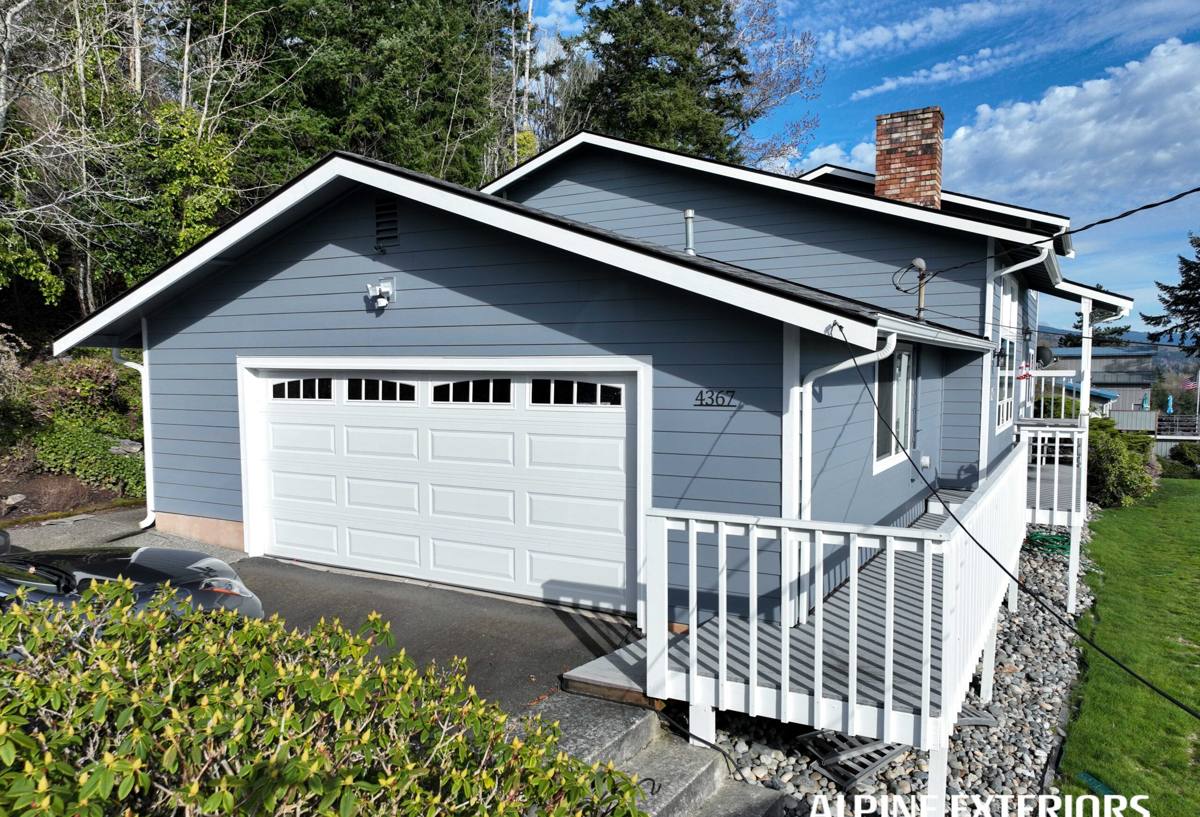
What Whatcom County Weather Actually Does to a Roof
Salt air and corrosion
Homes closer to Bellingham Bay and the Salish Sea see airborne salt that slowly attacks unprotected metal — fasteners, flashing, and any exposed cut edges are the weak points. It's not dramatic; it's a slow chemical process that shows up as rust streaks and pitting years down the road if the wrong fastener or finish was used.
Driving rain
Storms off the water don't just fall straight down — they push rain sideways under laps, around penetrations, and into any seam that isn't detailed correctly. A roof here needs to handle water moving uphill and sideways under wind pressure, not just water running downhill.
Moss and algae
Shade, moisture, and mild temperatures year-round are ideal moss conditions, and Whatcom County has all three in spades. Moss doesn't just look bad — on a shingle roof it lifts tabs and holds moisture against the deck. Metal gives it far less to hold onto, but the roof still needs airflow and the right surface treatment to stay clean long-term.
Standing Seam vs. Exposed-Fastener Panels
Both are "metal roofing," but they behave very differently over time, especially in a wet, salt-exposed climate. Here's how we walk homeowners through the choice:
| Factor | Standing Seam | Exposed-Fastener |
|---|---|---|
| Fasteners | Hidden under the seam — nothing penetrates the panel face | Screws go through the panel face, each one a potential leak point over time |
| Movement | Panels float in clips, so they expand and contract without stressing fasteners | Fixed points can work loose or elongate the screw holes over decades |
| Maintenance | Minimal — no exposed fasteners to re-torque or replace | Washers age and gaskets harden; expect occasional fastener maintenance |
| Upfront cost | Higher | Lower |
| Best fit | Long-term ownership, low-slope sections, coastal exposure | Budget-conscious projects, secondary structures, steeper simple roofs |
For most Bellingham homes we lean toward standing seam, mainly because of the salt-air factor — every exposed fastener is a future maintenance item, and hidden-fastener panels take that variable off the table for the life of the roof. Exposed-fastener panels aren't a bad product; they're just a different trade-off, and we'll say so honestly if that's the better fit for a particular budget or building.
The Details That Actually Determine How the Roof Performs
Underlayment
Given how much rain-driving wind this area gets, we don't treat underlayment as an afterthought. Self-adhered synthetic or peel-and-stick membrane at eaves, valleys, and penetrations gives the roof a real backup layer if wind-driven water ever gets past the metal, which matters more here than in a calmer climate.
Fasteners and flashing metal
In a salt-air environment, fastener and flashing material has to match the panel metal to avoid galvanic corrosion, and it has to carry a coating rated for coastal exposure. Mismatched metals sitting against each other in wet conditions corrode faster than either metal would on its own — a detail that's easy to skip and expensive to ignore.
Ventilation
Metal roofs perform best over a properly vented deck. Good intake and exhaust airflow keeps condensation from forming on the underside of the panels and helps control the moisture that feeds moss and mildew in the attic space, not just on the roof surface.
Panel finish
Paint system matters more than color. A PVDF (Kynar-type) finish holds its color and chalk resistance far longer under UV and salt exposure than a basic polyester coating, which is why we favor it for roofs that need to look good for 30-plus years, not just five.
Moss and Algae: Prevention Built Into the Install
Metal sheds water fast enough that moss has a much harder time establishing itself compared to a textured shingle surface, but "harder time" isn't "impossible," especially on shaded, north-facing sections common in wooded Whatcom County lots. We factor moss control into the install itself — panel profile and slope that encourage runoff, clean valley and gutter design so debris doesn't sit and hold moisture, and, where a roof has heavy tree cover, zinc or copper strip options near the ridge that release trace metal ions in the rain and discourage regrowth without chemical treatment.
What Drives the Cost of a Bellingham Metal Roof
We won't quote a number without seeing the roof, but these are the factors that move the price up or down on most projects:
| Factor | Why it matters |
|---|---|
| Panel type | Standing seam runs higher than exposed-fastener due to material and labor |
| Roof pitch and complexity | Steep roofs and lots of valleys, dormers, or hips add labor and flashing work |
| Tear-off vs. overlay | Removing old roofing and inspecting the deck adds cost but avoids trapping moisture under the new metal |
| Gauge and finish | Heavier gauge and PVDF finishes cost more upfront and less over the roof's life |
| Access | Tight lots, steep grades, or limited staging area near the water increase labor time |
As a broad range, metal roofing generally costs more per square than asphalt shingles up front, but the gap narrows considerably over a 30-to-50-year ownership horizon once you factor in one or two shingle replacements over that span.
Our Process on a Bellingham Metal Roof
- Roof and deck inspection — we check the existing deck condition, ventilation, and any moisture damage before quoting, not after tear-off surprises us.
- Panel and finish selection — walk through standing seam vs. exposed-fastener, gauge, and coating options based on the home, the budget, and how long you plan to own it.
- Underlayment and flashing plan — eaves, valleys, and every penetration get self-adhered membrane and properly matched flashing metal before a single panel goes on.
- Installation — panels, clips, and fasteners installed to manufacturer spec, with attention to fastener torque and seam engagement, not just speed.
- Final walk-through — we go over the finished roof with you, including what routine maintenance (if any) looks like going forward.
Is a Metal Roof the Right Call for Your House?
It's not the right fit for every home or every budget, and we'll tell you that straight up during an estimate. As a general guide, ask yourself:
- Is your current roof more than 15-20 years old, or has it needed repeated moss and moisture repairs?
- Do you have significant tree cover or shaded sections that stay damp for long stretches?
- Are you planning to stay in the home long enough for the lower lifetime cost to pay off the higher upfront price?
- Does your home sit close enough to the water that salt-air corrosion is a real factor for fasteners and flashing?
- Are you dealing with a low-slope section where standing seam's sealed seams matter more than they would on a steep simple gable?
If most of those apply, metal is worth a serious look. If your roof is newer, well-ventilated, and you don't expect to own the home for decades, a straightforward shingle replacement might make more financial sense — we'll say so if that's the honest answer.
Why Hiring a Crew That Already Works Bellingham Matters
Metal roofing punishes shortcuts in ways that don't always show up right away — a poorly matched fastener or a skipped underlayment detail might not leak for a year or two, but it will eventually, and by then it's a bigger repair than it needed to be. A crew that installs roofs across Whatcom County regularly sees how this specific climate — the salt air, the driving rain, the moss — actually plays out on real houses over time, not just in a manufacturer's install manual written for a different region. That local repetition is what catches the details that matter here before they become problems.
If you're weighing a metal roof for your Bellingham home, we're happy to walk the roof, talk through honest options for your situation, and put together a free, no-pressure estimate — no obligation either way.