 Whatcom County
 Why Bellingham Roofs Face Tougher Conditions Than Most
A roof in Bellingham does more work than a roof almost anywhere inland. Between the marine exposure off Bellingham Bay, the sheer volume of rain that falls across Whatcom County most of the year, and a moss season that can run from fall through spring, local roofs are under near-constant load. A new roof installed without accounting for these conditions may look fine on day one and still fail early — not because the shingles were bad, but because the details underneath weren't built for this climate.
Salt Air and Coastal Exposure
Homes closer to the water deal with airborne salt that accelerates corrosion on exposed metal — flashing, fasteners, vent stacks, and gutter hardware all take a hit over time. Standard galvanized fasteners and untreated flashing can start showing rust years before they would inland. It's a slow, cumulative problem that's easy to ignore until a leak shows up around a penetration or edge.
Rain Volume and Duration
It's not just how much it rains in Whatcom County, it's how long the roof stays wet. Extended damp periods give water more opportunity to find any gap in flashing, underlayment, or shingle overlap, and they slow down drying between storms. A roof that sheds a heavy downpour but holds moisture in valleys or under debris is still a roof with a problem.
The Long Moss Season
Shade, moisture, and mild temperatures are exactly what moss needs, and Bellingham's tree cover and weather pattern give it plenty of both for much of the year. Moss doesn't just look bad — it holds water against the roofing material, lifts shingle edges as it grows, and can work its way under flashing if left unchecked.
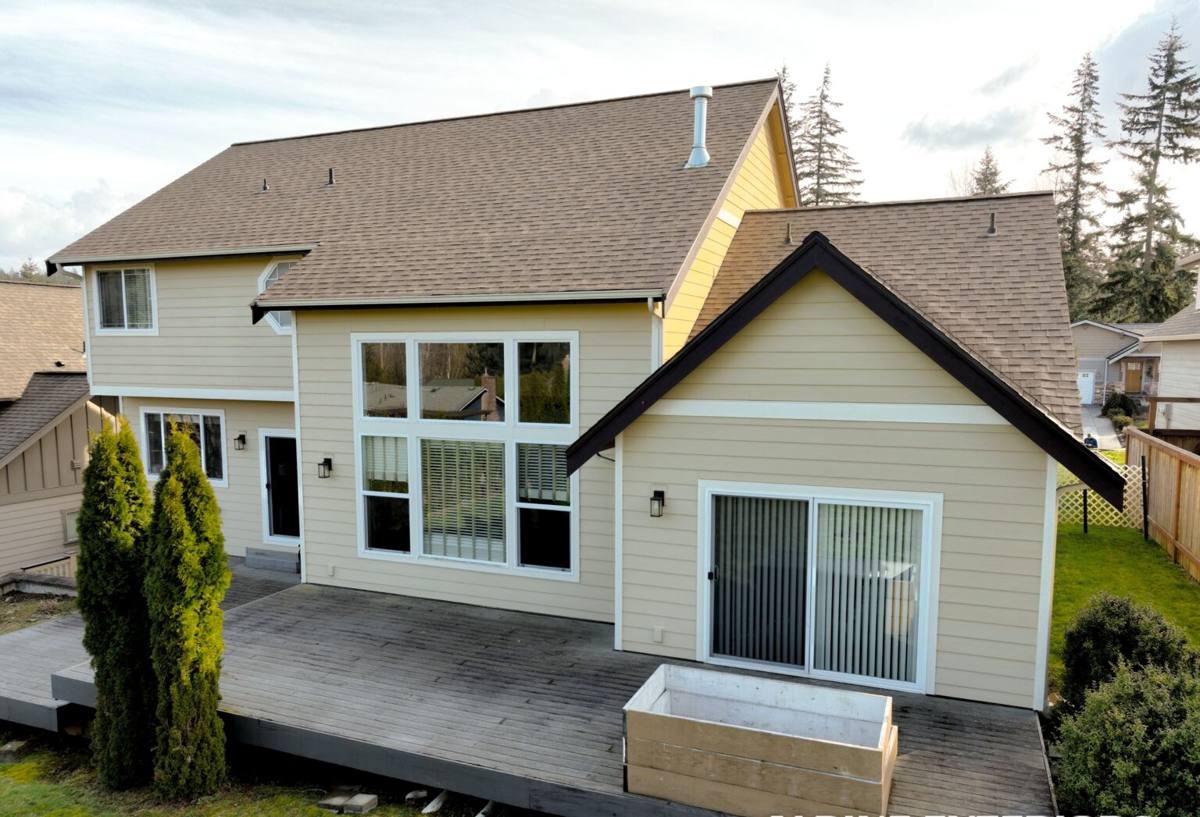
What a Correct New Roof Installation Actually Involves
A new roof is more than swapping old shingles for new ones. The components underneath the visible surface are what determine whether the roof performs for its full expected life or starts causing problems in year five.
- Full tear-off and inspection of the decking — not just a layover on top of the old roof
- Replacement of any damaged, soft, or delaminated sheathing before new material goes down
- Ice and water shield in valleys, around penetrations, and along eaves, since those are the highest-risk spots for water intrusion in a wet climate
- Synthetic or felt underlayment matched to the roofing material and local exposure
- New flashing at all walls, chimneys, skylights, and roof-to-roof transitions — reused flashing is a common source of early leaks
- Proper starter strip and drip edge at eaves and rakes
- Balanced intake and exhaust ventilation sized to the attic
Skipping any one of these to save time or money tends to show up later as a leak, a moisture problem in the attic, or premature shingle failure — usually well before the material's rated lifespan.
Choosing Roofing Materials That Hold Up in This Climate
There's no single "best" roofing material for every Bellingham home — it depends on budget, roof pitch, how much shade and moss exposure the property gets, and how long the owner plans to stay in the house. Here's how the common options compare for this specific climate.
| Material | Moisture & Moss Behavior | Maintenance | Typical Lifespan Here |
|---|---|---|---|
| Architectural asphalt shingle | Good with proper algae-resistant granules; still needs moss management on shaded slopes | Low to moderate — periodic cleaning recommended | 20–30 years |
| Standing seam metal | Sheds water and moss fast due to smooth surface and steep detailing; salt-air fasteners matter | Low | 40–60 years |
| Cedar shake | Attractive but holds moisture longer than other options; higher moss and rot risk in constant shade | High — regular treatment and moss control needed | 20–30 years with upkeep |
| Synthetic composite | Doesn't absorb water like wood; performs well in damp, shaded conditions | Low | 30–50 years |
We don't install every product on this list on every home. Cedar shake, for example, can be a fine architectural choice on a well-ventilated, sun-exposed roof, but on a heavily shaded lot in Whatcom County it's a maintenance commitment we're upfront about before anyone signs off on it. Our standard is to recommend what will actually perform on that specific roof, not just what sells.
Ventilation and Moisture Control: The Part Homeowners Don't See
An attic that can't breathe traps warm, moist air against the underside of the roof deck. In a climate as damp as this one, that leads to condensation, wood rot, and conditions moss and mold both like. Balanced ventilation — intake at the eaves, exhaust at or near the ridge — pulls that moisture out before it becomes a structural problem.
This is also where a lot of otherwise decent roofing jobs fall short. Ventilation gets treated as an afterthought instead of being calculated to match the attic's square footage and the home's existing intake and exhaust points. We size it as part of the install, not as an extra line item tacked on if someone asks.
Our Installation Process for Bellingham Homes
- Inspection and estimate. We look at the current roof, decking condition, ventilation, and any moss or moisture history on the property before quoting anything.
- Material selection. We walk through the trade-offs above based on your roof's pitch, shade exposure, and budget — no pressure toward the most expensive option.
- Permitting. Depending on scope, a permit may be required through the applicable local building department; we handle that coordination.
- Tear-off and deck inspection. Old material comes off completely so we can see and repair the actual deck condition, not guess at it.
- Underlayment, flashing, and ice/water shield. These go in before a single shingle or panel is installed, matched to the vulnerable areas of that specific roof.
- Roofing material installation. Installed to manufacturer specification, with attention to nailing pattern, exposure, and sealing — details that matter more in wind and rain than they do in a dry climate.
- Ventilation check and final walkthrough. We confirm intake/exhaust balance and walk the finished roof with you before calling the job done.
What Affects the Cost of a New Roof in Bellingham
Every roof is priced based on its own conditions, but the main variables tend to be the same across Whatcom County homes.
| Cost Factor | Why It Matters |
|---|---|
| Roof size and number of facets | More area and more valleys/hips mean more material and labor time |
| Decking condition | Rot or soft spots found during tear-off require repair before new roofing goes down |
| Material choice | Asphalt, metal, and composite products carry different material and installation costs |
| Roof pitch and access | Steep or hard-to-access roofs take longer and require more safety setup |
| Ventilation upgrades | Adding or correcting intake/exhaust vents adds labor but pays off in roof longevity |
| Tear-off layers | Removing multiple existing layers takes more time and disposal than a single layer |
We'd rather walk a roof and give an honest number than quote a range that doesn't hold up once we're actually up there.
Signs Your Bellingham Home May Need a New Roof
- Shingles that are cupping, curling, or missing granules in patches
- Moss buildup that keeps coming back within a season or two of cleaning
- Daylight visible through the attic roof deck
- Water stains on interior ceilings, especially near valleys or chimneys
- Soft or spongy spots when walking the roof
- A roof that's past 20–25 years old and hasn't had a full replacement
- Rusted or lifting flashing around vents, skylights, or walls
Moss, Algae, and Long-Term Roof Care
A well-installed roof still needs some ongoing attention in this climate. Keeping gutters and valleys clear of needles and debris, trimming back overhanging branches that keep a section of roof shaded and damp, and having moss treated or removed before it spreads all extend the life of the investment. None of this replaces a correct installation — but it's what keeps a good roof good for its full expected lifespan instead of losing years to preventable moisture damage.
Why Hiring a Crew That Already Works in Whatcom County Matters
A roofing crew that mostly works drier inland climates isn't necessarily going to over-engineer flashing details, size ventilation correctly for constant humidity, or flag a moss-prone shade pattern before it becomes a problem. Working in and around Bellingham and the rest of Whatcom County day in and day out means we're used to building for this specific combination of salt air, sustained rain, and moss pressure — not adapting a generic install to conditions it wasn't planned for.
If you're weighing a new roof for your Bellingham home, we're happy to take a look and give you a straightforward, no-pressure estimate — what your roof actually needs, what it will cost, and why. Use the form below to get started.