 Whatcom County
 Asphalt Shingle Roofing Built for Bellingham's Climate
Bellingham sits where the Salish Sea meets the foothills, and that location is exactly why roofs here wear differently than roofs almost anywhere else in the country. Homes close to Bellingham Bay deal with salt-laden air. Homes tucked under tree cover deal with shade, damp, and a moss season that can run most of the year. And every home in Whatcom County deals with driving, wind-pushed rain that doesn't fall straight down the way rain does in drier climates — it gets forced sideways and upward under edges, laps, and fasteners that were never designed to handle it. Asphalt shingle roofing can absolutely hold up to all of that, but only when it's installed with this specific climate in mind, not installed the same way a crew would install it in Arizona or inland Idaho.
This page covers what an asphalt shingle roof needs to perform well on a Bellingham home, what a correct installation actually involves, and how we approach the work from first estimate to final walk-through.
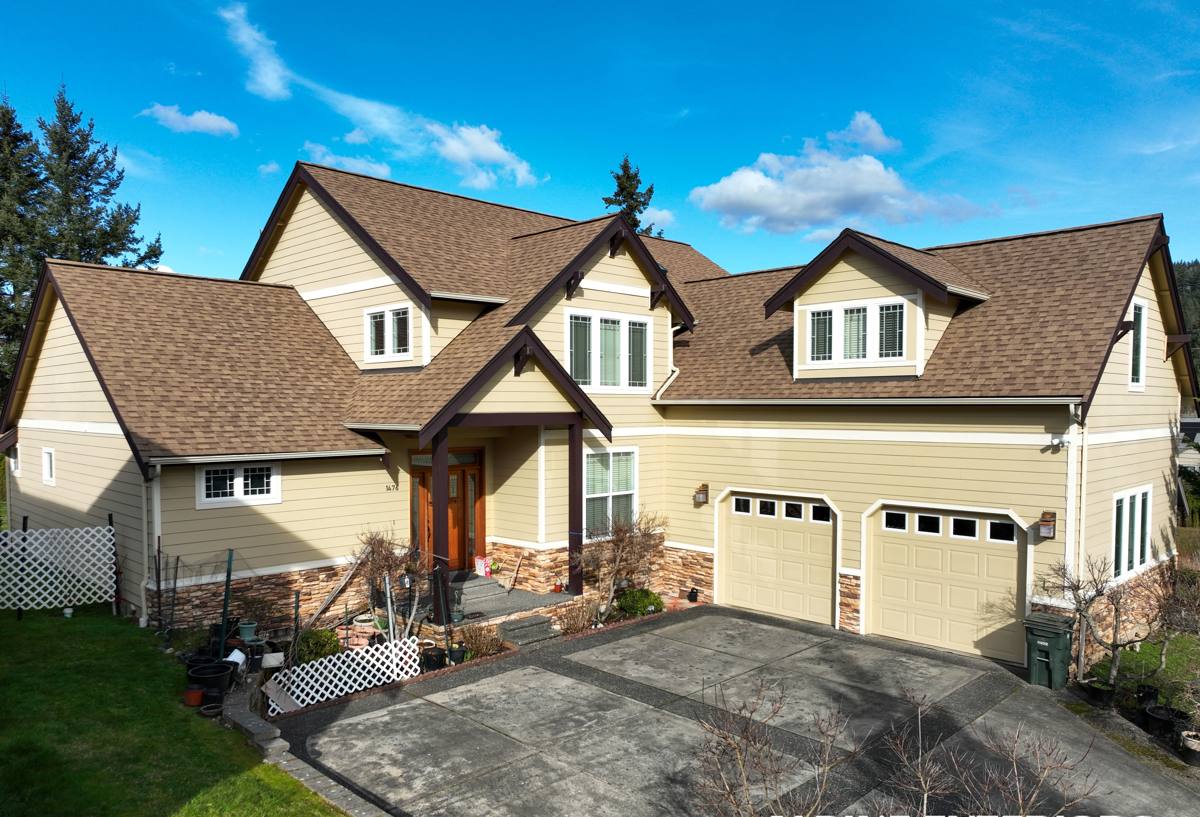
What Salt Air, Rain, and Moss Actually Do to a Roof
Driving rain and wind-driven moisture
Standard installation assumes rain falls straight down and sheds off a shingle's overlap. In Whatcom County storms, wind regularly pushes rain sideways and even slightly upward at eaves, valleys, and rake edges. If underlayment, flashing, and shingle exposure aren't sized and lapped for that reality, water finds its way under the shingle course instead of over it. That's how homeowners end up with a roof that looks fine from the ground but has a slow leak at a valley or chimney that's been feeding rot into the deck for a season or two before it shows up as a stain on a ceiling.
Salt air and coastal exposure
Homes closer to the water take on airborne salt that accelerates corrosion on exposed metal — roofing nails, flashing, vent stacks, and gutter hardware all age faster here than they would inland. Standard electro-galvanized fasteners can start showing rust streaks well before the shingles themselves are due for replacement. That's a maintenance issue, not just a cosmetic one, because a corroded fastener loses its grip long before it looks obviously bad.
Moss, algae, and constant damp
Whatcom County's mix of mild temperatures, shade, and near-constant moisture through fall, winter, and spring makes it prime territory for moss and algae growth on roofing. Moss isn't just unsightly — its root structure works into the granule surface of a shingle and holds moisture against it, and as moss mats grow they can lift shingle edges enough for wind-driven rain to get underneath. Algae staining (the dark streaking you see on older roofs) is mostly cosmetic, but heavy moss growth left unaddressed for years will shorten a shingle roof's useful life.
What a Correctly Installed Asphalt Shingle Roof Involves
A roof that's going to hold up in this climate isn't just "shingles nailed to plywood." Every layer underneath the visible shingle does part of the work of keeping water out, and skipping or shortcutting any one of them is where most premature failures start.
Deck inspection and tear-off
We remove old roofing down to the deck rather than layering over it, because you can't properly inspect or repair sheathing you can't see. Soft, delaminated, or water-stained decking gets replaced before anything new goes down — installing new shingles over a compromised deck just hides the problem for a while longer.
Underlayment and ice-and-water protection
Synthetic underlayment goes down as the roof's real waterproof layer, with self-adhered ice-and-water membrane at the eaves, valleys, and any low-slope transitions — the spots where wind-driven rain and ponding water are most likely to get past the shingles themselves. In a climate with this much sustained rainfall, this layer matters as much as the shingles do.
Flashing at every penetration and transition
Chimneys, skylights, vent pipes, sidewalls, and valleys all need properly formed and lapped metal flashing, not just roofing cement smeared over a gap. Flashing is where the majority of roof leaks actually originate, and it's also the part of a job that's easiest for a rushed crew to shortcut because it's slower, detail-heavy work.
Shingle installation and fastening
Correct nail placement, count, and pattern matter more in high-wind, high-rain regions than in mild climates — under-fastened shingles are a common cause of wind lift and subsequent leaks. We also use corrosion-resistant fasteners given the coastal exposure much of Whatcom County sees.
Attic ventilation
A shingle roof needs balanced intake and exhaust ventilation to let moisture and heat escape the attic space. Without it, condensation builds up on the underside of the deck — which, in a climate this damp, can rot sheathing from the inside even when the roofing itself is doing its job perfectly.
Choosing an Asphalt Shingle for This Climate
Not all asphalt shingles perform the same in a coastal, high-rain, moss-prone climate. Here's how the common options generally compare for a Bellingham home:
| Shingle Type | Typical Lifespan | Wind/Rain Performance | Moss & Algae Resistance |
|---|---|---|---|
| 3-tab (economy) | 15–20 years | Lower wind rating, less overlap | None unless specially treated |
| Architectural/laminate | 25–30+ years | Higher wind rating, thicker profile sheds water better | Better than 3-tab; algae-resistant (AR) versions available |
| Impact-rated/premium laminate | 30+ years | Strongest wind and impact rating | Usually includes algae-resistant granules |
For most homes in Whatcom County, we steer people toward architectural shingles with algae-resistant (AR) granules as the baseline, not the upgrade. Given how much moss and algae exposure a shingle roof gets here, the AR treatment pays for itself in reduced staining and moss buildup over the life of the roof. Whether it's worth going further to an impact-rated product usually comes down to your specific site — tree cover, storm exposure, and how long you plan to stay in the home.
Our Roofing Process, Start to Finish
- On-site inspection: We look at the existing roof, attic ventilation, decking condition where visible, and any trouble spots like valleys, chimneys, or low-slope sections before quoting anything.
- Written estimate: A clear scope covering tear-off, decking allowance, underlayment, flashing details, shingle product, and ventilation — no vague "roofing package" line item.
- Scheduling around Whatcom County weather: Roofing is weather-dependent work here more than in drier climates, so we plan tear-off timing to minimize the window a deck sits exposed.
- Tear-off and deck repair: Old roofing removed, deck inspected and repaired as needed, debris cleared and hauled.
- Underlayment, flashing, and shingle installation: Installed in the order and to the standard described above.
- Cleanup and magnetic sweep: Job site cleared of debris and nails before we consider the job done.
- Final walk-through: We go over the finished roof with you, including ventilation and any warranty paperwork.
Repair, Full Replacement, or Something in Between?
Not every roof problem means a full tear-off. A localized leak at a single flashing detail, a section of storm-damaged shingles, or moss buildup on an otherwise sound roof can often be addressed with a targeted repair or a thorough moss treatment and inspection. We'll tell you honestly when a repair makes sense versus when a roof has enough age, wear, or hidden deck damage that repair is just delaying an inevitable replacement. The deciding factors are usually the roof's age relative to its expected lifespan, how widespread the damage is, and whether the deck underneath is still sound.
Maintenance That Actually Extends a Shingle Roof's Life Here
Asphalt shingle roofs in this region need a bit more attention than the same roof would in a drier climate, mostly because of moss and gutter debris. A short annual routine goes a long way:
- Have moss growth treated and removed before it mats and lifts shingle edges — don't wait until it's visibly thick
- Keep gutters and downspouts clear so water isn't backing up under the roof edge during heavy rain
- Trim back overhanging branches to reduce shade, debris buildup, and moss-friendly conditions
- After major windstorms, have the roof checked for lifted or missing shingles rather than waiting for a leak to show up inside
- Check attic ventilation periodically, especially if you've noticed condensation or musty smell in the attic space
- Avoid pressure-washing shingles — it strips granules and shortens shingle life; use proper moss treatment methods instead
Why It Matters That We Already Work Bellingham Roofs
A roofing crew that mainly works drier, milder climates elsewhere doesn't always plan for what a Whatcom County winter actually throws at a roof — the combination of sustained rain, wind events, and moss pressure is regionally specific. Working roofs in and around Bellingham regularly means we know which details tend to fail first in this climate — valley construction, chimney flashing, low-slope transitions — and we build those details heavier than the code minimum, not just to it. It also means we're familiar with local permitting and inspection expectations, and we're positioned to respond if a warranty issue or storm damage comes up after the job is done, rather than being a crew that's moved on to another region entirely.
Getting Started
If your roof is showing granule loss, moss buildup, staining, or you've simply lost track of how old it is, a straightforward inspection is the right first step before assuming you need a full replacement. We offer free, no-pressure estimates for asphalt shingle roofing — repair or replacement — for homes in Bellingham and throughout Whatcom County. Fill out the form below and we'll take a look and give you an honest read on where your roof actually stands.