 Whatcom County
 Ferndale's Climate Is Hard on a Roof
Ferndale sits close enough to the water that salt-laden air is a daily fact of life, not an occasional nuisance. Add in Whatcom County's long wet season, driving rain off the Salish Sea, and a moss season that can run most of the year on shaded and north-facing roof slopes, and you've got a combination that wears out the wrong roofing material fast. Asphalt shingles granulate and curl under that kind of moisture load. Moss works its way under tabs and lifts them. Metal, done correctly, handles all three of those stressors better than almost anything else on the market — but "done correctly" is doing a lot of work in that sentence, and it's the part most homeowners never get a straight answer on.
This page is about what a metal roof actually needs to hold up in Ferndale specifically, not metal roofing in general. The fasteners, coatings, and details that work fine in a dry inland climate aren't automatically the right call two miles from saltwater.
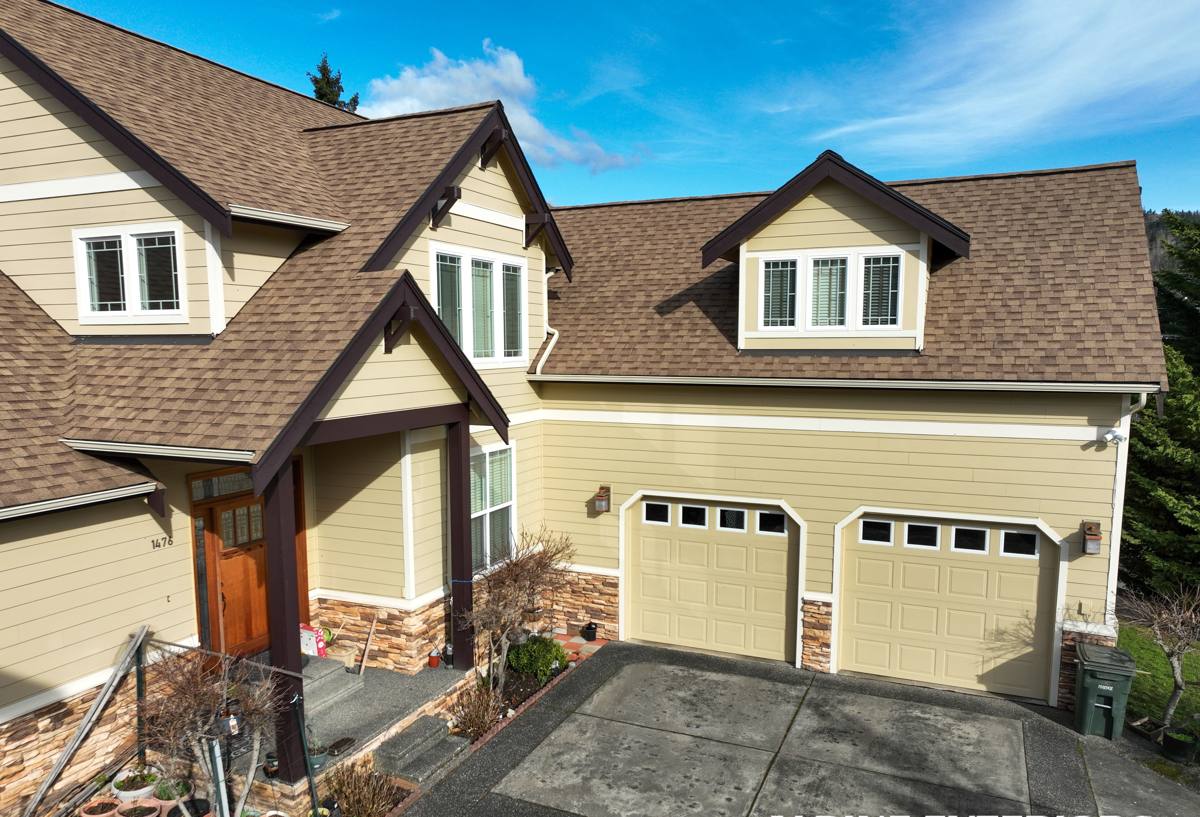
Why Metal Makes Sense Here
Metal roofing isn't the right fit for every house or every budget, and we'll say so plainly if it isn't yours. But for Whatcom County homes exposed to salt air and heavy moss growth, it solves three problems at once that other roofing types struggle with:
- Moss resistance: Moss needs a rough, porous surface to take hold. A properly installed metal panel gives it almost nothing to grip, which cuts down on the moss removal and treatment cycle that shingle roofs need every year or two.
- Rain shedding: Standing seam and properly lapped panel systems move water off fast, with fewer horizontal seams for wind-driven rain to work into compared to shingle courses.
- Longevity under exposure: A correctly specified metal roof with the right coating can outlast two or three shingle roof cycles, which matters when you're weighing total cost over the life of the house, not just the install invoice.
Standing Seam vs. Exposed Fastener Panels
Not all metal roofing is the same product wearing a different name, and the difference matters more here than in a dry climate. Standing seam panels use concealed clips and no exposed screws through the panel face — nothing for salt air to corrode over time and nothing for a screw gasket to fail on. Exposed fastener (screw-down) panels cost less up front but rely on a rubber washer under every screw head to stay watertight; those washers age faster in coastal, high-UV, high-moisture conditions and eventually need re-torquing or replacement. We'll walk you through both honestly rather than upselling standing seam if your budget and roof shape make screw-down the sensible choice.
What a Correct Metal Roof Install Actually Involves
A metal roof is only as good as what's underneath it and how it's fastened down. The panels themselves are the visible 10%; the other 90% is detail work that doesn't show up in a photo.
Underlayment and Moisture Barrier
Given how much rain Whatcom County sees, we install a high-temp synthetic underlayment rated for the ice-and-water conditions this region actually gets, with self-adhered membrane at eaves, valleys, and any low-slope transitions where wind-driven rain is most likely to find a way in.
Fasteners and Flashing Rated for Coastal Exposure
Standard zinc-plated fasteners corrode faster this close to saltwater. We spec stainless or coated fasteners and matched flashing metal so you don't end up with rust streaks bleeding down a panel face within a few years — a common callback issue when a roof gets built to a generic spec instead of a coastal one.
Ventilation
Metal roofs need proper attic and roof-deck ventilation to prevent condensation from forming on the underside of the panels — a mistake that traps moisture where you can't see it and rots decking from the inside. We check and correct ventilation as part of every metal roof install, not as an upsell add-on.
Metal Roofing vs. Asphalt Shingle in This Climate
| Factor | Metal Roofing | Asphalt Shingle |
|---|---|---|
| Moss and algae resistance | High — little for moss to root into | Low to moderate — needs regular treatment/removal |
| Typical lifespan | 40–60+ years with correct coating | 15–25 years in this climate |
| Upfront cost | Higher | Lower |
| Performance in driving rain | Very good, especially standing seam | Good when properly installed, more seam exposure |
| Maintenance over time | Low — periodic inspection | Moderate — moss treatment, granule loss checks |
| Roof weight | Lighter per square than most shingle systems | Heavier |
Neither option is objectively "better" for every homeowner — it depends on how long you plan to own the house, your roof's slope and complexity, and your budget horizon. We'll give you real numbers for your specific roof rather than a generic pitch either way.
Our Process
Every metal roofing job in Ferndale starts the same way, regardless of how small or large the project is:
- On-site inspection: We walk the roof, check the decking condition, look at ventilation, and assess how exposed each slope is to prevailing rain and salt air.
- Honest scope and options: We tell you whether a tear-off is needed or whether an overlay is realistic, what panel type fits your roof shape and budget, and what it will cost — in writing, before any work starts.
- Prep and protection: Landscaping, gutters, and siding get protected before tear-off begins. Old material is removed and the deck is inspected and repaired where needed before anything new goes down.
- Install to a coastal-climate spec: Underlayment, flashing, fasteners, and ventilation are all installed to hold up specifically to Whatcom County conditions, not a generic national spec.
- Final walk-through and cleanup: We walk the finished roof with you, confirm everything is sealed and flashed correctly, and make sure the site is left clean.
Living With a Metal Roof in a Moss-Prone, Salty Climate
A correctly installed metal roof in Ferndale needs far less upkeep than a shingle roof, but "far less" isn't "none." A few simple habits keep it performing the way it should for decades:
- Clean gutters and downspouts at least twice a year so water isn't backing up against the eave edge.
- Check shaded, north-facing slopes for moss or organic buildup where tree cover blocks sun and airflow.
- Look for any granular debris or overhanging branches that could scratch panel coatings during wind events.
- Have fastener heads and sealant at penetrations (vents, flashing) inspected every few years, especially on exposed-fastener systems.
- Rinse off accumulated salt residue and grime periodically if your home is on a more wind- and spray-exposed lot.
- Address any scratched or exposed bare metal promptly — small touch-ups now prevent corrosion starting points later.
What Affects the Cost of a Metal Roof
| Cost Factor | Why It Matters |
|---|---|
| Panel type (exposed fastener vs. standing seam) | Standing seam costs more but reduces long-term maintenance and failure points |
| Roof complexity | Valleys, dormers, and multiple pitches add labor and flashing detail |
| Tear-off vs. overlay | Removing old roofing adds cost but lets us inspect and fix the deck |
| Coating and gauge | Heavier gauge and marine-grade coatings cost more upfront, less over time in this climate |
| Ventilation corrections | Adding or fixing attic ventilation during install avoids costlier problems later |
We don't quote metal roofing off a square-footage guess. Costs vary enough between a simple gable roof and a roof with multiple valleys and penetrations that a real number only comes from an on-site look.
Why a Crew That Already Works Ferndale Matters
A metal roof installed to a spec that works fine in Spokane or Eastern Washington isn't automatically right for a roof sitting in Whatcom County's rain and salt exposure. A crew that already works this area knows which fastener and coating upgrades are worth the extra cost here, which roof details tend to fail first in this specific climate, and how local moss growth patterns affect where extra attention is needed. That's not something you can fully verify from a sales brochure — it comes from having actually installed and serviced roofs in these conditions.
When you're vetting a contractor for a metal roof in Ferndale, ask directly what fastener and underlayment spec they use for coastal-exposed homes, and ask them to explain the trade-offs between panel types rather than just recommending the one with the biggest margin.
Signs It's Time to Look at Your Roof
You don't need to wait for a leak to have your roof evaluated. Common signs a Ferndale homeowner should get a roof looked at include persistent moss growth that keeps coming back after cleaning, granule buildup in gutters from an aging shingle roof, visible rust streaking or corroded fasteners on an older metal roof, soft spots or sagging on the decking, or daylight visible through the roof deck from inside the attic. Catching these early is almost always cheaper than waiting for interior water damage to show up.
If you're weighing a metal roof for your Ferndale home, or you're not sure whether your current roof needs repair or replacement, we're happy to take a look and give you a straight answer. Fill out the form below for a free, no-pressure estimate.