 Whatcom County
 Birchwood's Climate Is Harder on Siding Than It Looks
Birchwood sits inside a stretch of Whatcom County where three things work against exterior siding at the same time: salt-laden air moving in off the water, long stretches of driving rain, and a moss season that can run the better part of the year. Individually, none of these is unusual for Western Washington. Together, on a home that's been sided with the wrong material or installed poorly, they add up fast — chalking finishes, swelling seams, soft trim, and green-black streaking that no amount of pressure washing fixes for long.
Salt air is the one homeowners underestimate most. It doesn't just come from a direct ocean view — moisture carrying salt moves inland on wind and settles on any exposed surface, where it accelerates the breakdown of paint films, corrodes exposed fasteners, and speeds up the freeze-thaw-style stress that comes with a wet climate. Combine that with rain that gets driven sideways into wall assemblies during a windstorm, and you have a recipe for problems that show up behind the siding long before they're visible on the surface.
Why Moss Season Matters More Than People Think
Moss isn't just cosmetic. In a marine climate like Whatcom County's, moss and algae hold moisture against a wall surface for months at a stretch. On a material that can absorb water — bare wood, some engineered wood products — that constant dampness is what starts rot from the outside in. On a material that resists water absorption, moss is still unsightly, but it's not structurally dangerous. That distinction matters a lot when you're choosing what goes on a Birchwood home.
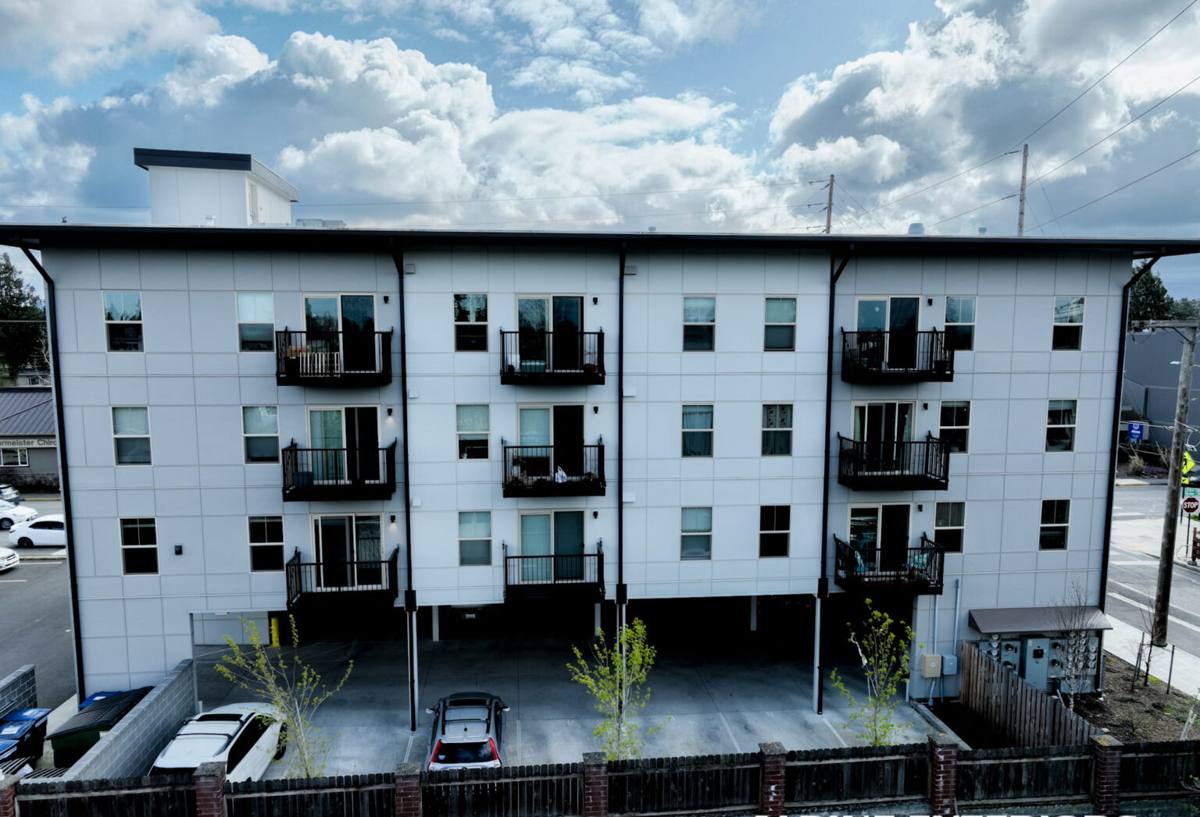
Why We Only Install James Hardie Fiber Cement Here
We install James Hardie fiber cement exclusively — not vinyl, not LP SmartSide, not primed wood or cedar. That's a deliberate standard, not a lack of options. Fiber cement is made from cellulose fiber, sand, and cement, which makes it non-combustible and dimensionally stable in a way wood-based and vinyl products can't match. It doesn't absorb water the way engineered wood siding can, it doesn't warp or buckle in heat the way vinyl can, and it holds paint and factory finish far longer than bare or site-primed wood.
For a climate like ours — wet more months than not, with real wind exposure and salt in the air — that combination is what actually holds up. Hardie's ColorPlus factory finish is baked on under controlled conditions and backed by its own finish warranty, which matters a lot more here than in a dry inland climate, because a field-applied paint job on wood siding is fighting moisture from the day it's rolled on.
What We Don't Install, and Why
- Vinyl siding — can warp and distort in direct sun and doesn't hold up structurally the way fiber cement does; seams and panel movement are harder to keep watertight over time.
- LP SmartSide and other engineered wood — combustible, and more sensitive to sustained moisture exposure than fiber cement, which is a real concern in a climate this wet.
- Primed spruce or cedar — beautiful when new, but requires ongoing refinishing to keep water out, and Whatcom County's rain season doesn't give a wood finish much recovery time between soakings.
None of these are bad products in every climate. They're just not the products we're willing to warranty and stand behind on homes that face what Birchwood faces every winter.
What a Correct Fiber Cement Installation Involves
Fiber cement siding is only as good as the installation underneath it. James Hardie publishes specific installation requirements, and the difference between a siding job that lasts decades and one that fails early almost always comes down to whether those requirements were actually followed.
The Details That Matter Most in This Climate
- Correct clearances — siding held off decks, patios, and grade at the manufacturer's specified minimum gap, so splash-back and standing water don't wick into the bottom edge.
- Proper flashing and water-resistive barrier — every window, door, and penetration flashed and integrated with the house wrap so wind-driven rain has nowhere to get behind the cladding.
- Correct fastening — fasteners set to the right depth and pattern, using corrosion-resistant fasteners appropriate for a salt-air environment, since under- or over-driven nails are one of the most common causes of early failure.
- Proper joint and seam treatment — butt joints and trim seams caulked or flashed per spec, not just butted together and painted over.
- Ventilation behind the cladding — allowing the wall assembly to dry out between the frequent wet stretches our weather produces.
Skip any one of these and the siding itself can be excellent while the wall behind it still takes on moisture damage. This is the part of the job that doesn't show up in a driveway estimate but shows up in a moisture reading five years later.
Our Process for a Birchwood Siding Project
1. On-Site Assessment
We walk the home, check existing siding and trim condition, look for signs of moisture intrusion at windows and penetrations, and talk through which Hardie product line and profile fits the house and the budget.
2. Tear-Off and Wall Inspection
Once old siding comes off, we inspect the sheathing underneath. This is often the first time hidden moisture damage from years of exposure becomes visible, and it's addressed before anything new goes on — covering damaged sheathing with new siding just hides the problem.
3. Water-Resistive Barrier and Flashing
A new weather barrier goes on with correctly lapped and sealed flashing at every window, door, and penetration — the layer that does the real work of keeping driving rain out of the wall assembly.
4. Hardie Installation to Spec
Siding, trim, and accessories go on following James Hardie's fastening, clearance, and joint-treatment requirements, matched to Whatcom County's climate zone.
5. Final Detailing and Walkthrough
Caulking, touch-up, and a walkthrough so you know what was done and what maintenance, if any, to expect going forward.
Signs a Birchwood Home May Need New Siding
- Soft or spongy spots when you press on siding or trim, especially near the bottom courses
- Paint that's peeling, bubbling, or needing repainting more often than every few years
- Persistent moss or dark streaking that returns quickly after cleaning
- Visible warping, buckling, or gaps at seams and corners
- Rising energy bills that suggest the wall assembly isn't sealing the way it should
- Cracked or crumbling caulk at joints, windows, or trim lines
Any one of these on its own might just need a repair. Several at once, especially combined with a home's age, usually points to a siding system that's reached the end of what it can protect against.
What Drives Cost on a Fiber Cement Project
| Factor | Why It Matters |
|---|---|
| Home size and wall complexity | More corners, dormers, and trim detail mean more cutting, fitting, and labor time |
| Condition of existing sheathing | Hidden moisture damage found during tear-off adds repair work before new siding can go on |
| Siding profile and product line | Lap width, shingle-style panels, and trim options vary in material and installation time |
| Access and site conditions | Tight lots, steep grades, or limited staging area can add time to a project |
| Color and finish choice | Factory ColorPlus finishes cost more upfront than primed siding but remove the future repainting cost |
We give a firm, itemized estimate after the on-site assessment — not a ballpark based on square footage alone, since so much of the real cost depends on what's underneath the existing siding.
Maintenance in Whatcom County's Climate
Fiber cement is low-maintenance, not no-maintenance. In a climate with this much rain and moss pressure, a periodic rinse to keep moss and algae from taking hold, an annual look at caulking around windows and trim, and prompt attention to any impact damage go a long way toward getting the full life out of the material. Because the ColorPlus finish is factory-applied and warrantied, you're not signing up for a repaint cycle the way you would with wood — but the salt air and rain don't take a break just because the siding can handle them, so a little attention still pays off.
Why Local Experience Matters for This Job
A crew that only occasionally works in Whatcom County can install fiber cement correctly by the book and still miss what our specific conditions demand — the clearances that matter more with this much rain, the fastener choices that hold up against salt air, the flashing details that matter when wind-driven rain is a regular event rather than an occasional storm. A crew that works Birchwood and the surrounding area regularly has already seen how homes here age, what fails first, and what holds up, and builds that into every install rather than learning it on your house.
If you're weighing siding options for a Birchwood home, we're happy to take a look and give you a straightforward, no-pressure estimate — use the form below to get started.