 Whatcom County
 Board & Batten in a Place Where the Weather Doesn't Let Up
Blaine sits about as close to the water and the Canadian border as a Whatcom County home can get, and that location comes with a specific set of siding problems. Board and batten has been a popular choice here for good reason — the vertical lines read as clean and modern on newer builds, but they also echo the barn-and-farmhouse look that fits a lot of the older housing stock in this part of the county. Done right, it's one of the more durable siding profiles available. Done wrong, the same design that makes it attractive creates extra seams and edges for water and salt to work into.
This page is specifically about board and batten siding for homes in and around Blaine — what the local climate demands from the material and the install, what a correct job looks like, and how we handle it.
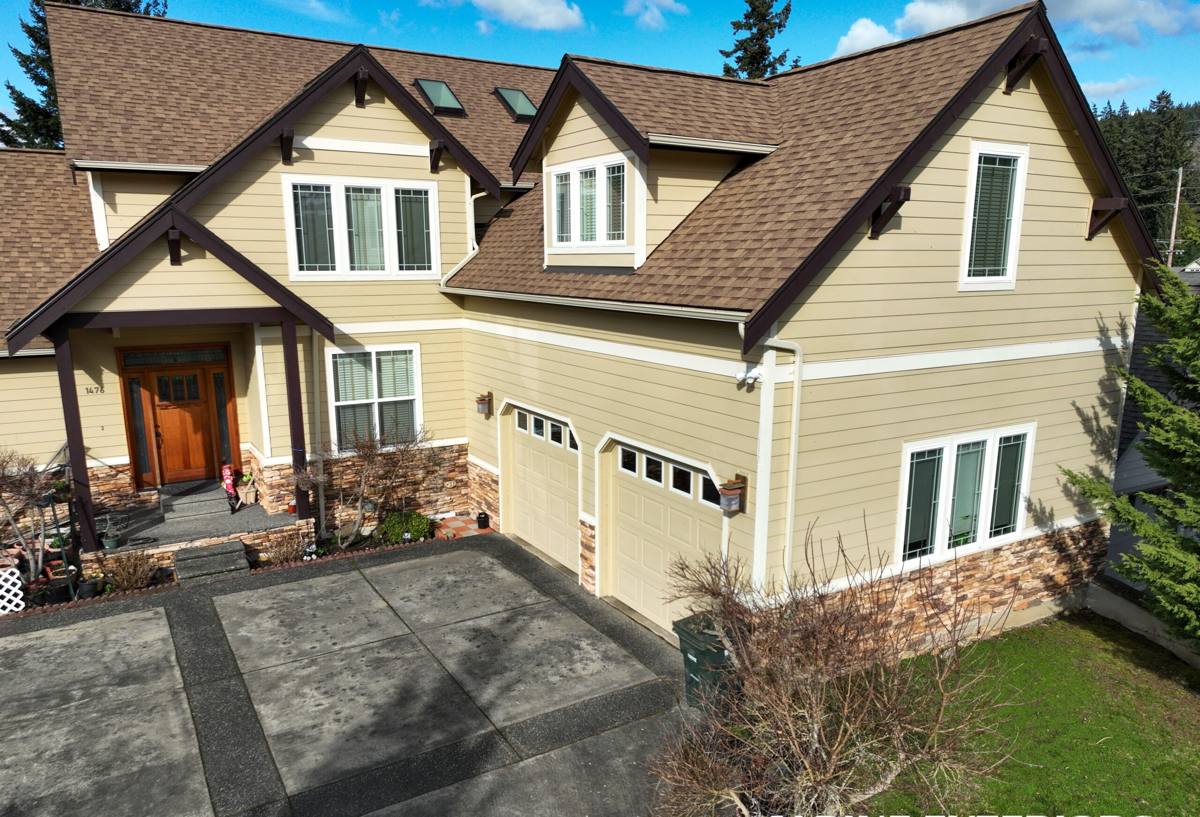
What Blaine's Climate Actually Does to Siding
Three things drive most of the siding failures we see on homes near Blaine, and they compound each other over time.
Salt Air
Proximity to Semiahmoo Bay and the Strait of Georgia means airborne salt is a constant, low-level presence on exterior surfaces. Salt is corrosive to exposed metal fasteners and flashing, and it accelerates the breakdown of lower-grade paint films and caulking. Siding that isn't rated for coastal exposure, or that's fastened with the wrong hardware, ages faster here than it would twenty miles inland.
Driving Rain
Whatcom County gets a lot of rain in general, but the wind off the water in Blaine tends to drive it sideways rather than straight down. That matters a lot for board and batten specifically, because the vertical battens create dozens of extra seams compared to a lap or panel product. Every one of those seams is a potential entry point if the water management behind the siding isn't handled correctly.
A Long Moss Season
Cool, damp, shaded conditions for much of the year mean moss and algae growth start early and don't fully stop until summer. Moss holds moisture against the siding surface, which is bad news for any substrate that isn't dimensionally stable, and it's a maintenance headache on any siding with a texture or finish that gives it something to grip.
Why the Installation Details Matter More Than the Style
Board and batten looks simple — vertical boards with narrow strips covering the seams — but the installation is less forgiving of shortcuts than a standard lap siding job. A correctly installed board and batten wall in Blaine's climate should include:
- A drainage plane (weather-resistive barrier) installed and lapped correctly behind the siding, with all penetrations sealed
- A rain screen gap — a vertical furring strip system that lets any water that gets behind the siding drain and the wall assembly dry out, rather than sitting against the sheathing
- Correct batten spacing and reveal, consistent across the wall, with fasteners landing in framing rather than just the sheathing
- Stainless steel or hot-dip galvanized fasteners rated for coastal/salt exposure — not standard interior-grade hardware
- Proper flashing at every horizontal transition: window and door heads, roof-to-wall intersections, and the base of the wall where it meets the foundation
- Factory-finished boards wherever possible, so the color coat isn't relying on field-applied paint to hold up against salt air and UV
Skip the rain screen gap or use the wrong fasteners, and a board and batten wall in this environment can trap moisture and corrode from the inside out well before the siding itself would otherwise need replacing.
The Material Question
We install James Hardie fiber cement exclusively, and board and batten is one of the profiles where that choice matters most in a climate like Blaine's. Fiber cement doesn't swell, cup, or rot the way wood and wood-composite battens can when they take on repeated moisture, and it doesn't require the same repainting cycle that field-finished wood does. Hardie's ColorPlus factory finish is baked on under controlled conditions and backed by its own finish warranty, which holds up better against salt air and UV exposure than most site-applied paint jobs.
| Factor | James Hardie Fiber Cement | Wood / Engineered Wood | Vinyl |
|---|---|---|---|
| Moisture response near salt air | Dimensionally stable, non-combustible, engineered for moisture exposure | Prone to swelling, checking, and rot without diligent upkeep | Doesn't rot, but can warp or crack in temperature swings |
| Finish durability | Factory-baked ColorPlus finish, multi-year finish warranty | Field-applied paint, typically needs repainting every 3-7 years | Color molded in, but can fade and chalk over time |
| Board and batten seam performance | Holds true, tight seams over time when installed with proper rain screen | Seams can open as boards move seasonally | Limited authentic board and batten profiles available |
| Long-term maintenance | Periodic wash and caulk check | Regular inspection, repainting, and rot repair | Low maintenance but limited repairability if damaged |
This isn't a knock on every alternative product across the board — it's why we standardized on one material system rather than installing whatever's cheapest for a given job. For board and batten specifically, in a coastal, moss-prone climate, fiber cement is the product we're willing to put our name behind.
Our Process for a Blaine Board & Batten Job
1. On-Site Assessment
We look at your home's exposure — which walls take the most wind-driven rain, where moss is already establishing, and what condition the existing sheathing and framing are in before we ever talk board width or reveal.
2. Water Management Plan
Before a single board goes up, we plan the drainage plane, rain screen furring, and flashing details for every window, door, and roofline transition on the house. This is the part of the job that determines how the siding performs in year ten, not just how it looks on day one.
3. Installation
Battens and boards go up with fasteners rated for coastal exposure, consistent reveal, and factory-finished Hardie material so field touch-up is minimal. We keep panel and batten layout consistent across elevations so the finished wall reads clean from the street.
4. Final Inspection and Walkthrough
We check flashing, caulking, and fastener patterns before we consider the job finished, and we walk the exterior with you so you know what maintenance, if any, to expect going forward.
Keeping Board & Batten Looking Right in This Climate
Fiber cement cuts down on maintenance significantly compared to wood, but no siding in Blaine is completely maintenance-free. A short annual routine keeps a board and batten exterior performing and looking the way it should:
- Rinse siding down once or twice a year to clear salt residue and organic buildup before moss gets a foothold
- Check caulking at window and door trim, and at batten-to-trim transitions, for cracking or gaps
- Keep gutters clear so overflow isn't running down the wall face during heavy rain events
- Trim back vegetation and tree cover that keeps a wall section shaded and damp longer than the rest of the house
- Watch north-facing and wind-shadowed walls first — they're usually where moss shows up earliest
What Board & Batten Costs to Do Right
Pricing depends on the size of the home, the amount of trim and detail work, and how much of the existing wall assembly needs attention before new siding goes on. The table below covers the main cost drivers rather than a flat number, since a fair quote should reflect your specific house.
| Cost Factor | Why It Matters |
|---|---|
| Wall area and home height | More square footage and multi-story walls mean more material and labor, plus staging/lift needs |
| Existing sheathing condition | Rot or moisture damage found during tear-off adds repair scope before new siding can go on |
| Rain screen system | A proper furring/drainage gap adds labor but is what makes board and batten last in this climate |
| Trim and detail complexity | Corners, window surrounds, and roofline transitions take more time than flat wall runs |
| Board width and reveal choice | Wider boards and battens cover more per piece but affect material takeoff and layout planning |
Why It Matters That We Already Work in Blaine
A crew that regularly works Blaine and the rest of Whatcom County already knows which walls take the worst of the weather off the water, how early moss tends to start in a given yard's exposure, and what flashing details actually hold up here versus what looks fine on paper. That's not something you get from a general regional installer working from a spec sheet — it comes from having done this specific siding profile, in this specific climate, on homes near yours.
If you're planning a board and batten project in Blaine, we're happy to walk your home, look at your exposure and existing wall condition, and give you a straightforward, no-pressure estimate using the form below.