 Whatcom County
 Why Blaine Decks Take More Abuse Than Most
Blaine sits right on the water, at the edge of Whatcom County and the Canadian border, which means homes here catch weather that inland neighborhoods simply don't deal with. Salt-laden air blows in off Semiahmoo Bay and the Strait of Georgia almost year-round, driving rain comes in sideways during winter storms, and the long gray stretch from fall through spring keeps every horizontal surface damp long enough for moss and algae to take hold. A deck built with generic, catalog-standard specs might look fine the day it's finished and still be a problem three winters later.
None of this is exotic knowledge — it's just what building on this coast requires. A deck in Blaine needs to shed water fast, resist corrosion in every fastener and connector, and be framed so that moisture never gets trapped where it can quietly rot a joist or ledger board out of sight.
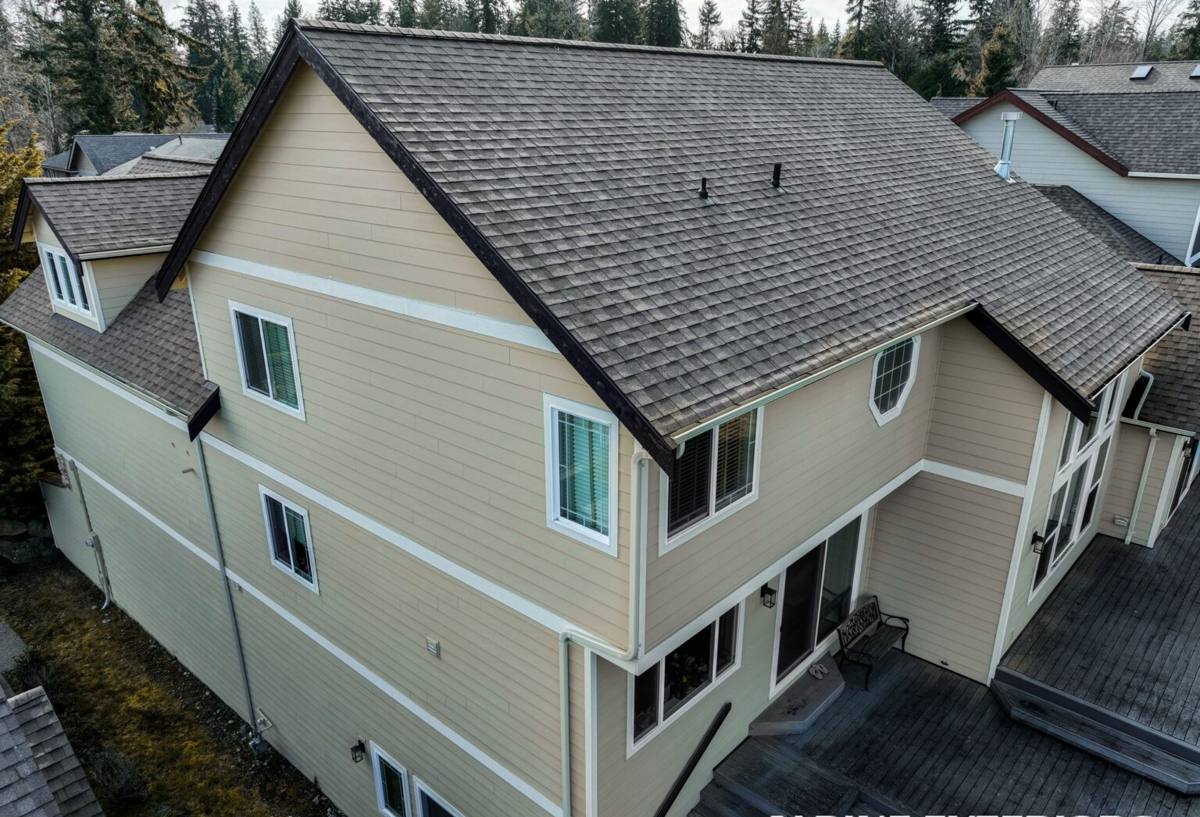
What Salt Air, Rain, and Moss Actually Do to a Deck
Salt Air and Corrosion
Airborne salt accelerates corrosion on anything metal — screws, joist hangers, post bases, flashing. Hardware that would last decades in a drier inland climate can start rusting and staining within a few seasons this close to the water. Once a fastener corrodes, it loses holding strength long before it looks obviously bad, which is exactly why the hardware spec matters more here than the visible decking.
Driving Rain and Water Intrusion
Wind-driven rain doesn't just fall straight down — it gets pushed sideways and upward into gaps, under flashing, and behind ledger boards. Any place where two materials meet (deck-to-house connection, post-to-footing, board-to-joist) is a spot where water can be forced in if the detailing is sloppy.
Moss, Algae, and Standing Moisture
Whatcom County's long damp season gives moss and algae plenty of time to establish on any deck surface that doesn't drain and dry quickly. Beyond being unsightly, a mossy, algae-slick deck surface is a genuine slip hazard, and trapped moisture under debris accelerates wood decay wherever it collects.
What a Correctly Built Deck Needs in This Climate
A deck that's going to hold up in Blaine isn't built differently in some dramatic way — it's built with more attention to the details that don't show up in a quick estimate:
- Ledger board flashing that actually sheds water away from the house rim joist, not just a bead of caulk
- Corrosion-resistant fasteners and structural connectors rated for coastal or treated-wood exposure
- Framing with enough airflow underneath to let the structure dry out between storms
- Decking material and spacing chosen to drain quickly and resist moss growth
- Footings set below frost depth and sized for our soil, not just code minimums
- Post bases that keep wood off standing water and off direct concrete contact
Material Options for a Blaine Deck
There's no single "right" decking material for every home — it depends on budget, how much upkeep you want to do, and how exposed the site is to wind and salt spray. Here's how the common options compare for this climate specifically:
| Material | Moisture/Salt Resistance | Maintenance | Typical Lifespan Here |
|---|---|---|---|
| Pressure-treated fir/pine | Good if properly sealed and re-coated | Annual cleaning, re-sealing every 2-3 years | 15-20 years with upkeep |
| Cedar | Naturally decay-resistant, handles damp well | Periodic cleaning and staining/sealing | 20-25 years with upkeep |
| Composite decking | Excellent — won't rot or absorb water | Occasional washing to slow moss/algae film | 25-30+ years |
| Tropical hardwood (e.g., ipe) | Excellent, very dense and stable | Periodic oiling to maintain color, otherwise low | 30+ years |
Composite has become a common choice for waterfront and near-waterfront homes specifically because it removes the rot risk entirely — the tradeoff is a higher upfront cost. Cedar and quality pressure-treated lumber are still solid, honest choices if you're willing to keep up with sealing on a schedule. What we won't do is put a low-grade treated board down and call it good for a site that's catching direct salt spray — it's not a product failure so much as a mismatch between the material and the exposure.
Framing, Footings, and the Ledger Connection
The parts of a deck nobody looks at are the parts most likely to cause problems later. The ledger board — where the deck attaches to the house — is the single most common failure point on decks generally, and it's worse in a climate that drives rain sideways. We flash it so water is directed out and away from the house structure, not just sealed and hoped for.
Footings need to go below frost depth and be sized appropriately for the soil conditions on your lot, which can vary noticeably between a site right on the bluff and one a few blocks inland. Post bases should hold the post above grade and off standing water, since ground-level moisture combined with salt air is a fast track to a post base that looks fine from a few feet away but is corroding underneath.
Joist spacing and under-deck airflow matter too — a deck framed tight to the ground with poor ventilation stays damp longer after every rain, which is exactly the condition moss and rot both need to establish.
Fasteners and Hardware: The Detail That Actually Determines Lifespan
This is worth its own section because it's the detail most likely to get skipped by a crew that doesn't build on the coast regularly. Standard galvanized fasteners and connectors are fine inland, but this close to salt water they can start showing corrosion well before the wood around them shows any wear. We spec stainless steel or heavy-duty coated fasteners and connectors rated for coastal and treated-lumber exposure, because a deck is only as strong as its weakest fastener, and a rusted-out hanger doesn't announce itself until it fails.
Our Deck Building Process
- Site visit and assessment — we look at sun/wind/rain exposure, existing structure (if attaching to the house), soil, and drainage before talking materials.
- Design and material selection — sized and specced for how exposed your particular lot is, not a one-size-fits-all package.
- Permitting — we handle the Whatcom County or City of Blaine permit paperwork so you don't have to chase it down.
- Footings and framing — footings set to depth, ledger flashed correctly, corrosion-resistant hardware throughout.
- Decking installation — spacing and fastening set for drainage and quick drying between rains.
- Final walkthrough — we go over the finished deck and what maintenance (if any) your chosen material needs.
Permits and Local Requirements
Deck construction in and around Blaine generally requires a building permit once the deck exceeds a certain height or size, and there are often setback requirements from property lines — and, for waterfront lots, additional shoreline-related rules can apply depending on your parcel's location. Requirements can vary depending on exactly where your property falls relative to city limits and county jurisdiction, so this is something we confirm for your specific address rather than assume. We manage this process as part of the job so the deck is built to code from the footings up, not just the parts that show.
Keeping a Blaine Deck Looking Good Year-Round
Whatever material you choose, a little seasonal attention goes a long way in this climate:
- Sweep off leaves and debris regularly, especially in fall — trapped organic matter holds moisture and feeds moss
- Rinse the surface periodically to slow algae and moss buildup, particularly on shaded or north-facing sections
- Check and re-seal wood decking on the schedule appropriate to that material
- Keep gutters and downspouts near the deck clear so runoff isn't dumping directly onto or under it
- Inspect fasteners and connectors annually for early signs of corrosion
- Confirm under-deck ventilation isn't blocked by stored items or overgrown landscaping
Why It Matters to Hire a Crew That Already Works Blaine
A contractor who mostly builds decks in drier, inland parts of Whatcom County can still do competent framing — but the material choices, hardware specs, and flashing details that keep a deck sound in salt air and driving rain are the kind of thing you learn by actually working this coastline, not from a general how-to guide. We build decks throughout the Whatcom County area and know which details matter on an exposed waterfront lot versus a more sheltered inland site, and we spec accordingly rather than treating every job the same.
If you're planning a new deck or replacing one that hasn't held up to Blaine's weather, we're happy to take a look and give you a straightforward, no-pressure estimate — just fill out the form below and we'll get in touch.