 Whatcom County
 Why Blaine Homes Wear Out Siding Faster Than Most
Blaine sits at the northern tip of Whatcom County, right where the Strait of Georgia meets the mainland. That location is beautiful, but it's also hard on a house. Salt-laden air moves in off the water almost daily, wind-driven rain hits siding at an angle instead of falling straight down, and the marine layer keeps humidity high for weeks at a stretch. Add in a moss and algae season that can run eight or nine months out of the year in this part of the Pacific Northwest, and you have a climate that actively works against whatever is nailed to your walls.
Most siding products were engineered for a national average climate — hot, dry summers and short, mild winters. Blaine doesn't get that average. It gets salt corrosion on fasteners and trim, sustained moisture exposure that swells and rots wood-based products, and near-constant organic growth on any surface that stays damp and shaded. Siding that looks fine in a showroom in a dry climate can fail here in a fraction of the time.
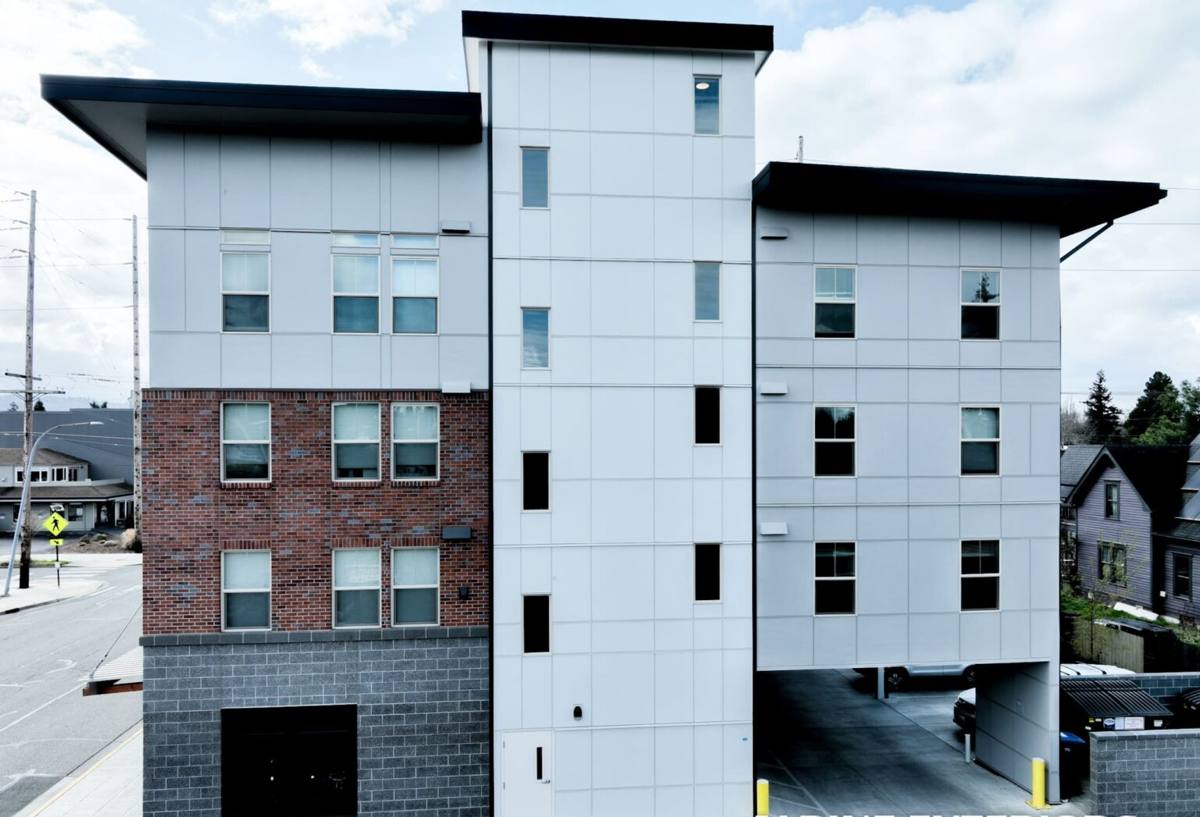
What Blaine's Climate Actually Does to Siding
Salt Air and Corrosion
Homes closer to the water — along Semiahmoo Bay, Drayton Harbor, and the shoreline neighborhoods around them — take the brunt of salt exposure, but even properties several miles inland get a steady dose of marine air carried on the prevailing wind. Salt is corrosive to unprotected metal fasteners, staples, and flashing, and it accelerates the breakdown of many paint and coating systems. Siding installed with the wrong fastener spec or a thin factory finish shows chalking, pitting, and fastener bleed years before it should.
Driving Rain
Whatcom County storms don't just drop rain straight down — wind off the Strait pushes it sideways into wall assemblies. That means lap siding needs correct overlap, properly flashed penetrations, and a drainage plane that actually drains, not just a product that's technically "water resistant" on a spec sheet. Any gap in the water management system turns into a slow leak that rots sheathing long before it shows up as a visible stain.
Extended Moss and Algae Season
Shaded north walls, tree-lined lots, and the region's long damp stretch from fall through spring create ideal conditions for moss, algae, and mildew to colonize a wall surface. Once organic growth takes hold on a porous or wood-based siding, it holds moisture against the substrate and speeds up rot from the surface inward — a slow-motion problem that's easy to ignore until a section of wall is already soft.
Why We Only Install James Hardie in Blaine
We install James Hardie fiber cement exclusively — not vinyl, not LP SmartSide, not primed spruce or cedar. That's a deliberate standard, not a sales preference. Fiber cement is non-combustible and dimensionally stable, meaning it doesn't swell, cup, or rot the way wood-based siding can when it stays wet for weeks at a time. Hardie's ColorPlus finish is a factory-baked, multi-coat process engineered to hold color and resist fading, chipping, and cracking better than field-applied paint — which matters in a climate where a siding crew can't count on a long dry stretch to properly cure an on-site coat.
Hardie also builds region-specific product lines under its HZ5 engineering, which is formulated for wetter, harsher climates like ours in the Pacific Northwest. That's a meaningful difference from a one-size-fits-all siding product — the material itself is matched to the moisture load it has to handle.
How Fiber Cement Compares for a Blaine Property
| Factor | James Hardie Fiber Cement | Vinyl | Wood-Based (LP SmartSide, cedar, primed spruce) |
|---|---|---|---|
| Salt air resistance | Strong — cement composition doesn't corrode; factory finish holds up | Can become brittle and discolored with prolonged UV/salt exposure | Coatings degrade faster; substrate vulnerable once finish fails |
| Moisture/rain exposure | Dimensionally stable, engineered for wet climates (HZ5) | Water-resistant but can trap moisture behind panels if installed poorly | Wood fiber or solid wood absorbs moisture; swelling and rot risk |
| Moss/algae resistance | Dense, low-porosity surface resists organic growth better than wood | Resists rot but growth can still cling to the surface | Porous surface holds moisture, feeds organic growth |
| Fire resistance | Non-combustible | Melts/deforms under heat | Combustible |
| Finish longevity | Factory ColorPlus finish, long warranty period | Color molded in but can fade/chalk over time | Field-applied paint/stain needs recoating on a shorter cycle |
No siding product is maintenance-free, and Hardie isn't magic — it still needs to be installed correctly and it still benefits from periodic washing and inspection. But it starts from a material and finish system that's a genuinely better match for what a Blaine wall assembly actually deals with.
What a Correct James Hardie Install Involves Here
The material only performs as well as the installation. In a climate like this, a handful of details matter more than they would somewhere drier:
- Weather-resistive barrier: A continuous, properly lapped water/air barrier behind the siding, sealed at every penetration.
- Rainscreen or drainage gap: A furred-out air gap behind the siding lets bulk water drain and the wall assembly dry, instead of trapping moisture against the sheathing — important given how much wind-driven rain this area sees.
- Correct fastener spec: Corrosion-resistant fasteners, driven at the manufacturer's specified depth and location, not overdriven or underdriven — critical near salt air.
- Flashing at every penetration: Windows, doors, vents, and utility penetrations all need proper flashing and sealant, not caulk alone standing in for flashing.
- Manufacturer-specified clearances: Bottom-of-siding clearance from grade, decks, roofs, and other horizontal surfaces so water doesn't wick up into the board.
- Correct joint and butt treatment: Sealed or shiplapped joints installed per Hardie's published details, not field-improvised.
Any one of these done wrong can undercut the material's advantages. This is why installer experience matters as much as product choice.
Our Process for a Blaine Job
1. On-Site Assessment
We walk the exterior, check the current siding and any signs of moisture intrusion, evaluate trim, flashing, and window details, and note site-specific exposure — waterfront wind load, shaded north walls prone to moss, tree cover, and drainage around the foundation.
2. Scope and Product Selection
We go over Hardie's plank, panel, and shingle options, the ColorPlus color palette versus field-painted options, and which HZ product line fits the exposure on each elevation of the house.
3. Tear-Off and Sheathing Check
Removing the old siding lets us inspect sheathing condition underneath — this is often where hidden rot or past water damage shows up, especially on homes that have carried wood-based or older vinyl siding through several wet seasons.
4. Water Management Install
Weather-resistive barrier, rainscreen furring, and flashing go in before a single piece of Hardie board is hung. This step is invisible once the job is done, but it's the part that determines how the wall performs in year ten and year twenty, not just year one.
5. Siding Installation
Boards, panels, or shingles are installed to Hardie's fastening and clearance specifications, with careful attention to joints, corners, and penetrations.
6. Final Walkthrough
We review the finished job with the homeowner, cover basic care and what to watch for, and answer questions about the warranty coverage.
Why Hiring a Crew That Already Works Blaine Matters
Manufacturer specs are the baseline, but a crew that's worked other properties in this specific stretch of Whatcom County has already seen how salt exposure, prevailing wind direction, and shade patterns play out on real houses here — not just in a training manual. That experience shows up in small decisions: which elevations need extra attention to flashing, where moss tends to establish first, how much clearance to build in near grade on a lot with poor drainage. A crew installing Hardie for the first time in this climate is learning those lessons on your house. A crew that already has that local pattern recognition is applying them from day one.
Signs Your Current Siding Is Already Behind the Climate
- Soft or spongy spots when you press on a wall, especially near the bottom courses or under windows
- Persistent moss or algae staining that comes back within weeks of cleaning
- Visible fastener rust or streaking below nail heads
- Paint that's chalking, peeling, or needs recoating more often than every few years
- Gaps, warping, or cupping at board joints and corners
- Rising heating or cooling costs that track with drafts around the exterior walls
None of these are emergencies on their own, but together they're a pattern worth having a professional look at before a small problem becomes a sheathing repair.
What to Expect Cost-Wise
Every Blaine project is priced around the actual scope — square footage, number of stories, trim complexity, tear-off condition, and product line selected. Waterfront and higher-exposure properties sometimes call for additional water management detailing, which affects labor more than material cost. We won't quote a number without seeing the house, but we're glad to walk through the general cost factors and what drives them up or down during an on-site visit.
If you're planning a siding replacement in Blaine or anywhere else in Whatcom County, we'd be glad to take a look at your home and talk through what James Hardie siding, installed correctly for this climate, would involve. Reach out for a free, no-pressure estimate using the form below.