 Whatcom County
 Why Blaine Roofs Wear Differently Than Roofs Inland
Blaine sits right on the water at the northern edge of Whatcom County, and that location changes what a roof deals with every year. Salt-laden air off the bay works on exposed fasteners, flashing, and metal roof edges in a way that inland Whatcom County homes rarely see. Add in driving rain that comes sideways off the water during winter storms, and a roof here needs details — flashing laps, fastener choice, underlayment overlap — done correctly the first time, not just "good enough" for a dry-weather roof.
Then there's moss. Shade from evergreens, extended damp stretches, and mild temperatures give moss a long growing season on north-facing slopes and anywhere debris collects. Moss isn't just cosmetic — it holds moisture against shingles and roof decking for months at a time, and that's where a lot of the repair calls we get actually start. Salt air, wind-driven rain, and a long moss season don't act one at a time; they overlap through most of the year, which is why a repair built for average weather somewhere else tends to fail faster out here.
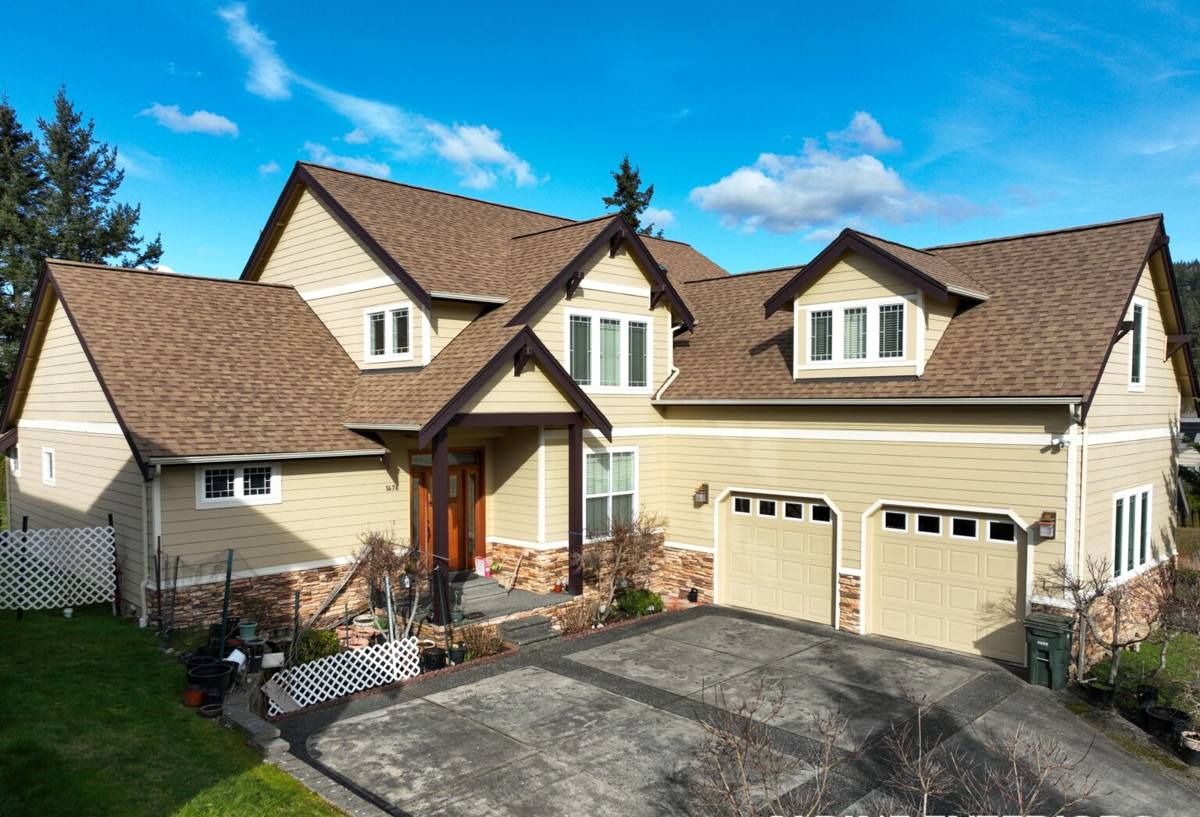
The Repairs We Actually See in Blaine
Moss-related decking and shingle damage
By the time moss is visible from the ground, it's usually been lifting shingle edges and holding water against the roof surface for a while. Repair here isn't just scraping moss off — it's checking whether the shingles underneath have curled, whether granules have washed off, and whether the decking beneath has started to soften. Treating the surface without checking what's under it just delays the real repair.
Flashing and valley leaks
Valleys, chimney flashing, and any place two roof planes meet are where most active leaks show up first. Wind-driven rain finds gaps that a straight-down rain never would, and worn or improperly lapped flashing is the most common cause of a leak we trace on an older Blaine roof.
Wind-driven rain intrusion at edges and penetrations
Vent boots, skylight curbs, and roof-to-wall junctions take the brunt of storms coming off the water. Rubber boot gaskets crack faster in this climate than generic manufacturer estimates assume, and a small gap at a penetration can put water into an attic long before anyone sees a stain on the ceiling below.
Corrosion on metal components
Exposed fasteners, drip edge, and metal flashing corrode faster this close to salt water. We look at fastener condition and metal flashing integrity as part of every repair call in Blaine, even when the visible problem is somewhere else on the roof.
Signs a Blaine Roof Needs a Look Now
Some problems are obvious from the ground. Others sit quietly until they've already done real damage. Worth checking for:
- Granules collecting in gutters or at downspout outlets — a sign shingles are wearing faster than they should
- Dark streaks or moss patches on north-facing or shaded slopes
- Soft spots underfoot on a walked roof, or sagging visible between rafters from the attic
- Daylight visible through roof boards in the attic, especially around chimneys or vents
- Water stains on ceilings that show up only during wind-driven storms, not steady rain
- Rust streaking below metal flashing or fasteners
Catching any of these early usually keeps the fix in repair territory instead of pushing it toward full replacement.
What a Correct Roof Repair Actually Involves
Diagnosis before patching
A repair that just covers the spot where water shows up inside the house often misses the real entry point — water travels along the underside of decking and rafters before it ever shows on a ceiling. A correct repair traces the leak back to its actual source, which sometimes means checking flashing and shingles several feet from where the stain appears.
Matching materials and technique to what's already there
Shingles fade and weather over time, so a patch using new material next to old will always look slightly different — that's normal and unavoidable, not a sign of a bad repair. What matters more is that the repair uses compatible materials (matching shingle profile, correct flashing metal, proper underlayment) and follows manufacturer installation methods, especially around nailing patterns and exposure, so the patched section performs the same as the rest of the roof.
Sealing details that hold up to storm-driven rain
In a climate with regular wind-driven rain, sealant is a backup, not the primary defense — flashing geometry and shingle overlap should stop water on their own. We use sealant to finish a detail correctly, not to cover a shortcut.
Ventilation's role in moss and moisture problems
A roof deck that can't breathe stays damp longer after every storm, and that extra dwell time is exactly what moss and rot need. Blocked soffit vents, insulation crammed against the roof deck, or an undersized exhaust vent at the ridge all trap warm, moist air in the attic, and that moisture works its way into the decking from underneath while moss works on it from above. Part of a correct repair, especially where we're already finding soft decking or heavy moss, is checking whether ventilation is part of the problem, not just patching the spot that failed.
What we won't do
We won't recommend a full tear-off when a targeted repair will hold, and we won't quote a repair that only covers the symptom when the real problem is soft decking or blocked ventilation that will bring the leak right back in a year. If a repair is genuinely the wrong call for a given roof, we say so and explain why, rather than selling a patch job that won't last through the next wet season.
Repair or Replace? What Actually Drives That Decision
Not every roof problem in Blaine needs a full replacement, and not every leak can be permanently fixed with a patch. The table below covers the factors that actually matter when deciding which way to go — cost alone is not a reliable guide on its own.
| Factor | Points Toward Repair | Points Toward Replacement |
|---|---|---|
| Roof age | Under roughly two-thirds of expected shingle lifespan | At or beyond expected lifespan for the material |
| Extent of damage | Isolated to one section, flashing, or penetration | Widespread granule loss, curling, or multiple leak points |
| Decking condition | Solid, no soft spots found on inspection | Soft or delaminated decking in more than one area |
| Moss/moisture history | First occurrence, addressed promptly | Long-term recurring moss with repeated moisture staining |
| Cost over time | Repair cost is a small fraction of replacement cost | Repeated repairs are approaching replacement cost |
Roof repair costs vary a lot depending on how many areas need attention, roof pitch and access, and whether decking needs to be opened up and replaced. A single flashing or vent boot repair is a modest job; a repair that involves removing and replacing sections of decking costs more. We give a firm number after inspection, not a phone estimate, because guessing on a roof repair usually means guessing wrong in one direction or the other.
Our Process for a Blaine Roof Repair
- Inspection: We get on the roof (not just a look from the ground) and check the suspected problem area plus flashing, valleys, and penetrations nearby, since leaks rarely stay contained to one spot.
- Written estimate: You get a clear explanation of what's actually wrong, what the repair involves, and what it costs — before any work starts.
- The repair: We match materials where possible, correct the underlying cause (not just the visible symptom), and follow proper flashing and fastening technique for this climate.
- Cleanup and check-in: Debris and old material are hauled off, and we walk the repair with you so you know exactly what was done and why.
Timing Repairs Around Whatcom County Weather
Roof repairs can be done most of the year here, but timing still matters. A few things worth knowing before you schedule one:
- Late summer and early fall are the most reliable window for repair work, with the fewest weather delays.
- Winter repairs are still possible and often necessary — active leaks don't wait for good weather — but expect more scheduling flexibility to work around storms.
- Moss treatment and removal is most useful done before the wet season sets in, not after months of moisture have already worked into the roof surface.
- A small leak addressed in fall is almost always cheaper than the same leak addressed in spring after a winter of wind-driven rain has made it worse.
- Gutter and downspout condition matters as much as the roof itself — clogged gutters back water up under the roof edge even when the shingles themselves are fine.
Why a Crew That Already Works Blaine Matters
A roof repair contractor who works Whatcom County regularly already knows which failure patterns show up on this coast — where moss builds up fastest, which flashing details fail first under wind-driven rain, and how salt air shortens the useful life of exposed metal. That's not something you can fully substitute with a generic checklist. It means less time spent diagnosing and more time spent fixing the actual problem, and it means a repair that's built for what this specific stretch of coastline actually throws at a roof, not for average weather somewhere else.
It also means straight answers about what a repair will and won't solve. Some roofs have enough age and damage that a repair is really just buying time, and we'll tell you that plainly rather than selling a patch as a permanent fix when it isn't. Local knowledge also helps in smaller practical ways — knowing typical roof pitches and access on Blaine homes, and what inspection windows work around this coast's weather pattern.
Get a Straight Answer About Your Roof
If you've got a leak, moss buildup, or storm damage on a Blaine roof and aren't sure whether it needs a repair or something more, an inspection will tell you more than guessing ever will. Fill out the form below for a free, no-pressure estimate — we'll look at what's actually going on and give you a clear picture of what it takes to fix it right.