 Whatcom County
 Why South Hill Homes Suit Board & Batten
South Hill's mix of older bungalows, craftsman-era homes, and newer infill construction sits on sloped, tree-shaded ground above Bellingham, and that combination of terrain and vintage housing stock is exactly where board and batten siding earns its keep. The style's wide vertical boards and narrow cover strips create strong shadow lines on steep gables and dormers, and they read as substantial rather than busy on the taller, narrower facades common on hillside lots. It's also a natural fit for partial-wall accents — a gable end, a dormer, a porch surround — paired with horizontal lap siding elsewhere on the same house, which is a look we install often in this part of Whatcom County.
But board and batten is not a style choice you can separate from how it performs. Every vertical board has a bottom edge exposed to weather, more seams per square foot than lap siding, and, on some products, a batten strip that can trap moisture behind it if it's installed wrong. In a climate that stays wet for most of the year, those details decide whether the siding looks good for three decades or needs attention in five.
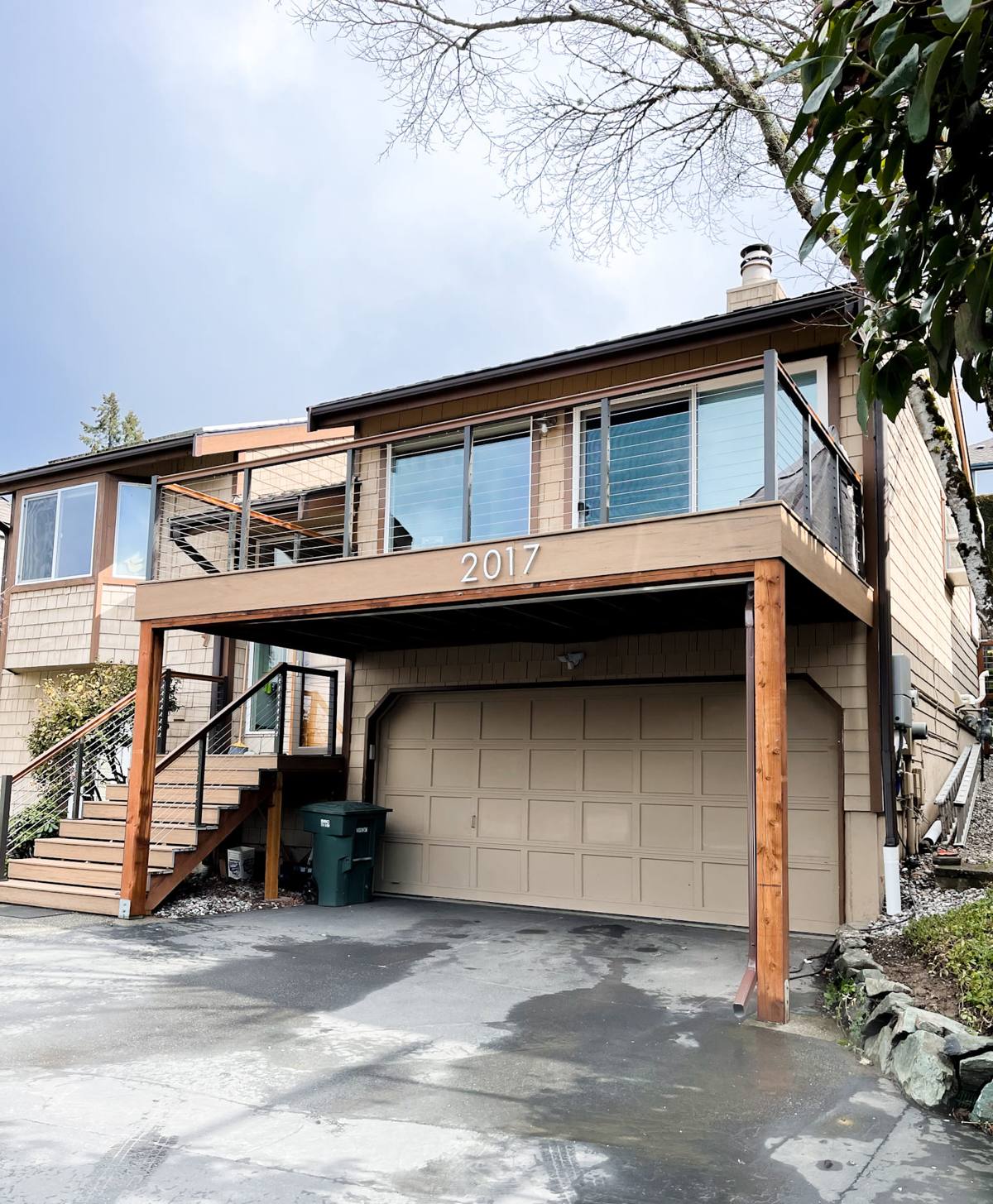
What Whatcom County's Coastal Climate Does to Vertical Siding
Whatcom County sits on Puget Sound with the Cascade foothills close behind, which gives South Hill three weather realities that matter to any exterior:
- Salt air off the Sound accelerates corrosion on the wrong fasteners and trim, and it degrades finishes that aren't formulated to handle it.
- Driving rain off winter storms hits vertical siding at an angle, which means water is constantly testing every seam, joint, and batten edge rather than running straight down a flat wall.
- A long moss season — shaded, tree-covered lots and mild, wet winters keep north- and east-facing walls damp for months at a time, which is exactly the environment moss, algae, and mildew need to take hold.
None of that means board and batten is a poor choice here. It means the product and the installation both have to be built for this climate, not for a drier one. A siding system that performs fine in eastern Washington or the Midwest can fail faster on a shaded South Hill slope than it would just a few miles away in full sun and open wind.
Why Shade and Elevation Matter More Than People Expect
Two homes a block apart in South Hill can have very different exposure. A wall tucked under mature trees on the north side of a hillside lot dries out far slower after rain than a south-facing wall in the open, and that difference shows up first in board and batten because the vertical seams and batten shadows give moss and algae more edges to grip. We factor orientation and tree cover into the product line and finish we recommend on every estimate — it's not a one-size-fits-all decision.
What a Correct Board & Batten Installation Actually Involves
Board and batten looks simple from the street, but the assembly behind it has more failure points than lap siding if it's rushed. A correct installation includes the following.
The Drainage Plane Comes First
A weather-resistive barrier goes on the sheathing before any siding, and in a climate this wet we install it with a rainscreen gap behind the panels whenever the wall assembly allows it. That gap gives bulk water and incidental moisture a path to drain and dry instead of sitting against the back of the siding — which matters more with board and batten than lap siding because vertical seams can channel water downward along the wall rather than shedding it outward.
Flashing and Fastening
Every horizontal transition — window heads, water tables, roof-to-wall intersections — needs proper flashing, not caulk standing in for it. Fasteners have to be corrosion-resistant given the salt air off the Sound, driven at the manufacturer's spacing, and placed so the board can move slightly with temperature and moisture changes without splitting or popping loose. Battens are face-nailed or blind-nailed per the manufacturer's spec, not just tacked on for looks.
Gaps, Not Tight Joints
Vertical siding needs expansion clearance at trim, corners, and butt joints. Installers who caulk every seam tight because it "looks cleaner" are setting the wall up to trap water and crack that caulk within a season or two. Correct board and batten uses minimal caulk and relies on lapped or flashed details to do the actual water management.
Starter Strips and Bottom Terminations
The bottom edge of every board is the most exposed point on the wall. It needs a starter strip that holds the first course at the right angle and keeps it off grade or hardscape, with clearance maintained so splashback and irrigation don't keep the bottom edge wet.
Material Options for Board & Batten — And Why We Install Only One
Board and batten is sold in several materials, and the differences aren't cosmetic — they show up directly in how the siding handles South Hill's rain and moss exposure over time.
| Material | How It Handles Driving Rain & Damp Shade | Maintenance Over Time | Typical Lifespan Here |
|---|---|---|---|
| James Hardie fiber cement | Non-combustible and dimensionally stable; factory ColorPlus finish sheds water and resists moss growth better than field-painted surfaces | Occasional wash; no repainting for the life of the ColorPlus finish | Decades, backed by Hardie's transferable warranty |
| LP SmartSide (engineered wood) | Cut edges and exposed board ends can absorb moisture and swell if sealant isn't maintained; board and batten has more edges to watch than lap siding | Regular inspection and re-sealing of cut edges and joints | Shorter than fiber cement if edge maintenance lapses |
| Vinyl board and batten | Thin profile can look flat under raking light; panels expand and contract with temperature swings and can warp or gap over time | Low, but limited repair options if a panel cracks or fades | Variable; UV exposure and cold snaps shorten it |
| Cedar | Handsome natural look but absorbs moisture readily; shaded, damp walls are prime territory for moss, mildew, and rot without diligent upkeep | Regular staining or sealing, ongoing moss and mildew treatment | Depends heavily on maintenance discipline |
| Primed spruce/wood board and batten | Needs a complete, well-maintained paint film to stay dry; any gap in coverage lets moisture into the grain | Repainting on a fixed cycle, more often in shaded, wet exposures | Shorter without consistent repainting |
We're not going to tell you any of these products are junk — cedar looks great, LP SmartSide is engineered to a real standard, and vinyl is inexpensive for a reason. What we will say is that after years of working on homes in this climate, we stopped installing anything other than James Hardie fiber cement, because it's the one material in that table that doesn't ask a homeowner to stay ahead of a maintenance schedule just to keep moisture out.
Why We Standardized on James Hardie
For board and batten specifically, we use James Hardie's vertical siding panels paired with Hardie trim boards as battens. A few things about that system matter in Whatcom County:
- It's non-combustible. Fiber cement doesn't feed a fire the way wood-based products can, which is a meaningful difference in a region that still sees dry-season wildfire smoke and occasional ember exposure even west of the Cascades.
- The ColorPlus finish is baked on at the factory under conditions no field paint job can match, formulated to resist the fading and film breakdown that shaded, damp, salt-air exposure causes faster than it would inland.
- It's engineered for this climate specifically. Hardie makes climate-specific product formulations, and installers who work this region know which one belongs on a damp, shaded South Hill wall.
- The warranty is real and transferable. That matters to resale, which matters in a hillside neighborhood where homes turn over and buyers ask about exterior condition.
We don't say this to knock every other product on the market — we say it because after seeing how siding actually ages on shaded, rain-exposed Whatcom County walls, this is the system we're willing to put our own installation warranty behind.
Our Process for a South Hill Board & Batten Project
- On-site assessment. We look at sun exposure, tree cover, drainage around the foundation, and the condition of the existing wall assembly before recommending a product line or finish.
- Scope and product selection. We walk through panel width, batten spacing, and ColorPlus color options, and explain the trade-offs in plain terms — no pressure toward the most expensive option.
- Tear-off and wall prep. Old siding comes off, sheathing is inspected and repaired if needed, and the weather-resistive barrier and rainscreen go on correctly the first time.
- Installation to Hardie's fastening and clearance specifications. Not "close enough" — the actual spec, because that's what the warranty depends on.
- Final flashing, trim, and caulk detail check. We walk the finished wall looking specifically for the small gaps and terminations that cause callbacks a wet season or two later if they're missed.
What to Look For When Hiring a Board & Batten Installer Here
Board and batten hides sloppy work well right after installation — problems usually show up a wet season or two later, once moisture finds the gaps. Before you hire anyone for a South Hill project, ask about:
- Experience with vertical siding specifically, not just lap siding — the fastening pattern and drainage details differ
- Whether they install a rainscreen gap or drainage plane behind the panels, and why or why not on your wall
- Which manufacturer's installation manual they follow, and whether they'll show it to you
- Corrosion-resistant fastener specs, given the salt air off the Sound
- A written, transferable manufacturer warranty — and what voids it
- Local references or completed work they can point to in Whatcom County's climate, not just photos from a drier region
Keeping Board & Batten Looking Right Through Moss Season
Even a correctly installed system benefits from basic upkeep on a shaded lot. A soft wash once a year on north- and east-facing walls keeps moss and algae from getting a foothold, and keeping gutters clear and grading sloped away from the foundation prevents splashback from constantly wetting the bottom courses. With a factory-finished fiber cement system, that's close to the entire maintenance list — no repainting, no re-caulking cycle, no annual sealant check on cut edges.
If you're weighing board and batten for a South Hill home, we're happy to walk the property, talk through what your specific exposure calls for, and give you a straightforward estimate — no pressure, no hard sell. Use the form below to get started.