 Whatcom County
 Building Decks That Actually Hold Up in Columbia
Columbia sits close enough to the water and the weather patterns that roll through Whatcom County that a deck here lives a harder life than the same deck would a hundred miles inland. Salt-laden air accelerates corrosion on fasteners and hardware. Driving rain off the water finds its way into every gap a builder didn't seal correctly. And the long stretch of gray, damp months each year gives moss and algae months to get established on any surface that doesn't drain and dry properly. A deck built without those three factors in mind will look fine for a season or two, then start showing soft spots, rust streaks, and slick green growth well before it should.
We build and repair custom decks for homeowners in the Columbia area, and most of the calls we get for deck failures trace back to the same handful of shortcuts: undersized or unflashed ledger boards, fasteners that weren't rated for coastal exposure, and decking laid tight with no thought to drainage or airflow underneath. None of that is expensive to get right the first time. It's expensive to fix after the fact, especially once rot has reached the framing.
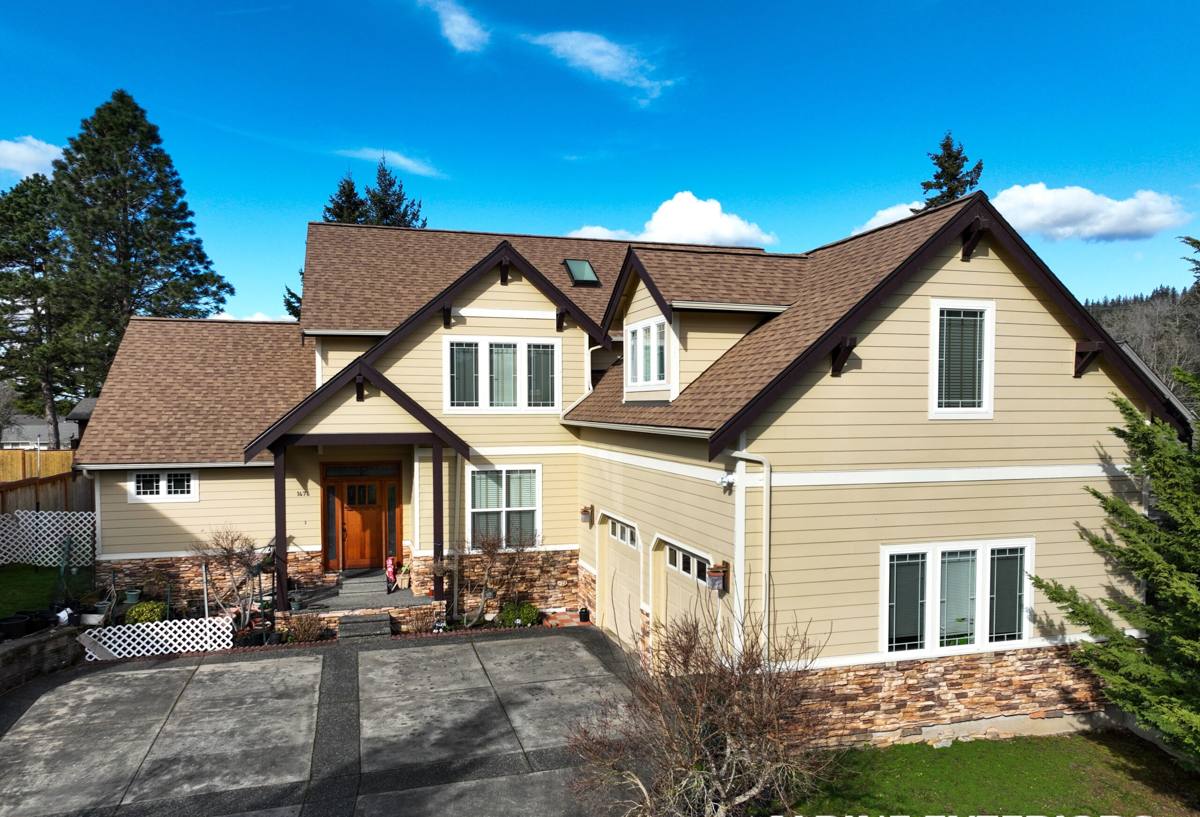
What Whatcom County's Climate Actually Does to a Deck
Salt Air and Metal Fatigue
Even a few miles from saltwater, airborne salt settles on exposed metal — joist hangers, screws, post bases, railing brackets — and speeds up corrosion compared to what you'd see in a drier inland climate. Standard zinc-coated fasteners can start rusting within a few years in this environment. That rust doesn't stay cosmetic; it weakens the connection long before it's visible from the top of the deck.
Driving Rain and Water Intrusion
Storms here don't always come straight down. Wind-driven rain gets pushed sideways into ledger connections, under poorly lapped flashing, and into end grain on decking that wasn't sealed. Once water gets behind a ledger board or into a joist end, it has no easy way to dry out between storms, and that's exactly where hidden rot starts.
Moss, Algae, and the Long Wet Season
Whatcom County's damp stretch runs long, and any deck surface that stays shaded or holds moisture becomes a growing medium for moss and algae. Beyond looking bad, a mossy deck surface is a genuine slip hazard, and moss holds moisture against the decking material, which shortens its life whether it's wood or composite.
What a Correctly Built Deck Involves Here
A deck that's going to perform in this climate needs a few things done right from the ground up, not added as an afterthought.
- Footings sized and set below frost depth per Whatcom County code, on undisturbed soil
- A properly flashed ledger connection where the deck attaches to the house — this is the single most common failure point we find on older decks
- Stainless steel or coated fasteners and hardware rated for coastal/high-moisture exposure, not standard interior-grade hardware
- Joist spacing and blocking sized for the actual decking material and expected snow/live loads, not just "what's always been done"
- A gap and slope built into the framing so water sheds off the deck instead of pooling
- Ventilation underneath the deck so the framing can dry out between rain events
- Decking material chosen and installed with the right spacing for expansion, contraction, and drainage
Skip any one of these and the deck may still look right on installation day. The problems show up in year three or four, not year one — which is exactly why so many decks in this area get replaced far earlier than they should have needed to.
Choosing the Right Decking Material for Columbia's Conditions
There's no single "best" decking material — it's a real trade-off between upfront cost, appearance, and how much maintenance you're willing to keep up with in a climate that doesn't give surfaces much of a break.
| Material | Upfront Cost | Maintenance in This Climate | Notes |
|---|---|---|---|
| Pressure-treated lumber | Lowest | Needs re-sealing every 1-2 years; prone to moss without upkeep | Good budget option if you'll stay on top of maintenance |
| Cedar | Mid-range | Regular sealing/staining; naturally rot-resistant but still needs care near salt air | Preferred look for many homeowners; ages gracefully if maintained |
| Composite decking | Higher | Low — occasional cleaning to keep moss/algae from taking hold | Doesn't rot, but still needs drainage/airflow underneath to avoid trapped moisture issues |
| PVC/capped decking | Highest | Lowest — most resistant to moisture and staining | Best moisture performance; higher material cost |
We install all of these and will walk you through the honest trade-offs for your specific deck rather than pushing whatever has the best margin. If you want the lowest-maintenance option and the budget allows it, composite or capped PVC makes sense in this climate. If you love the look of real wood and don't mind a maintenance routine, cedar built correctly will last a long time here too.
Framing and Fastener Details That Matter More Here Than Elsewhere
This is the part of the build that's invisible once the decking goes down, and it's also the part that determines whether the deck is still solid in fifteen years or needs major repair in five.
Ledger Flashing
The ledger board — where the deck bolts to the house — is the single highest-risk connection for water intrusion. We use proper flashing that directs water out and away from the house sheathing, not just a bead of caulk, which is a common shortcut that fails within a few years.
Hardware Grade
We use fasteners and structural hardware rated for coastal or high-moisture exposure. It costs more than standard interior-grade hardware, but given the salt air here, it's not optional if you want the connections to hold up.
Post Bases and Ground Contact
Posts that sit in or near standing water or wet soil need bases that keep the wood elevated off the ground and allow drainage, not buried posts or direct ground contact, which invites rot regardless of how well the wood was treated.
Our Process for a Columbia Deck Project
- Site visit and assessment — we look at drainage, sun/shade exposure, existing structure if it's a rebuild, and how the deck ties into the house
- Design and material discussion — we talk through decking material, railing style, and layout based on your budget and how you'll actually use the space
- Permitting — most deck projects in Whatcom County require a permit; we handle that process rather than leaving it to the homeowner
- Demolition (if replacing an existing deck) — including a check of the ledger and any framing that's been hidden from view
- Framing and structural work — footings, ledger flashing, joists, and hardware installed to hold up in this climate, not just to pass a quick inspection
- Decking, railing, and finish work — installed with correct spacing for drainage and material movement
- Final walkthrough — we go over care and maintenance specific to whatever material you chose
Permits and Code Considerations
Whatcom County has specific requirements around footing depth, guard rail height, and structural attachment for decks, and a raised deck typically needs a permit and inspection. Skipping that process might save a little time upfront, but it can create real problems later — unpermitted work can complicate a home sale or an insurance claim, and an inspector catching a bad ledger connection before it's covered up is a lot cheaper than finding rot behind it years later. We pull the permits and coordinate inspections as part of the job rather than treating it as extra paperwork you have to manage yourself.
Maintenance That Actually Fits This Climate
Whatever material you choose, a little seasonal upkeep goes a long way here.
- Clear leaves and debris out of gaps between boards so water and moss don't have anywhere to accumulate
- Rinse off salt residue and organic buildup a couple times a year, more often if the deck sits close to the water
- Check the ledger flashing and any visible fasteners annually for rust or gaps in caulking
- Re-seal or re-stain wood decking on the schedule the material calls for — don't wait until it's visibly graying
- Keep an eye on shaded, low-airflow corners where moss tends to establish first
None of this is a huge time investment, but skipping it is exactly how a well-built deck ends up needing early repairs anyway.
Why a Crew That Already Works Columbia Matters
A contractor who builds regularly in this specific area already knows which fastener grades hold up, how deep footings need to go for local soil and frost conditions, and which corners of a lot tend to stay wet longest through the winter. That's knowledge you don't get from a generic deck-building checklist — it comes from having built and repaired decks in this exact climate and seeing what fails and what doesn't. We're not learning Whatcom County's weather on your project; we've already built for it.
Hiring local also means faster response if something needs a warranty check or a follow-up adjustment, and a crew with an actual reputation in the community to protect — not a traveling outfit that's moved on by the time a problem shows up.
Questions Worth Asking Before You Hire
- Are you licensed and insured to do deck construction in Washington?
- What fastener and hardware grade do you use, and is it rated for coastal exposure?
- Will you pull the permit, or is that left to me?
- How do you flash and waterproof the ledger connection?
- What's the expected timeline, and how do you handle weather delays given how much rain we get here?
- What maintenance will this specific decking material need, and how often?
If a contractor can't give you clear, specific answers to those questions, that's worth noticing before you sign anything.
If you're planning a new deck or need an honest look at one that's showing its age, we're happy to come take a look. The estimate is free, there's no pressure, and you'll get a straight answer about what your deck actually needs — just fill out the form below to get started.