 Whatcom County
 Deck Repair Built for Columbia's Weather
Decks in Columbia and the surrounding Whatcom County area take a beating that decks in drier climates never see. Between salt-laced air rolling in off the water, months of driving rain, and a moss season that can stretch from October well into spring, wood and composite decking here age differently than the national average suggests. A deck that would need attention every ten years in a dry inland climate often needs real structural work by year six or seven out here if it wasn't built or maintained with our conditions in mind.
That's the gap we fill. We repair decks for the actual climate Columbia homes sit in, not the generic climate most deck-building guides are written for. This page walks through what typically goes wrong on decks in this area, what a correct repair actually involves, and how we approach the work.
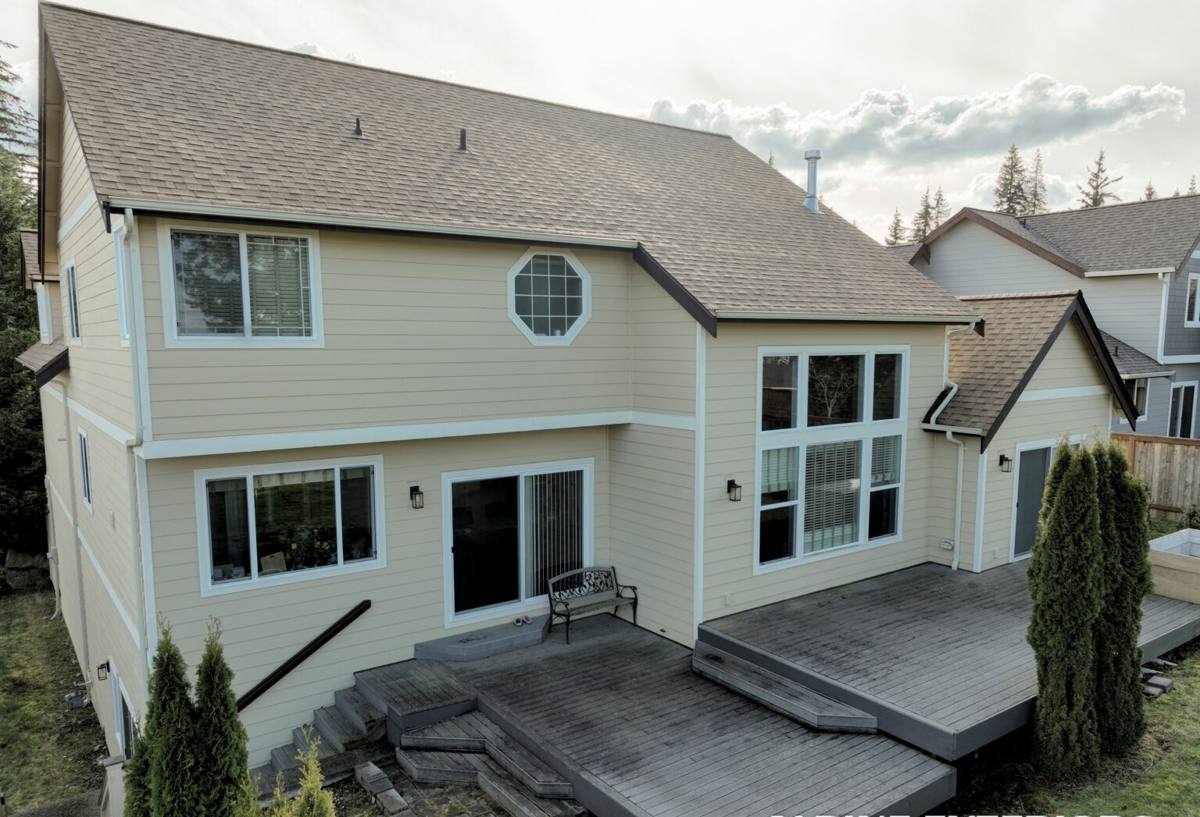
Why Whatcom County Decks Fail Differently
Three things drive most of the deck repair calls we get in this part of the county, and they compound each other.
Salt Air and Metal Fatigue
Homes closer to the water deal with airborne salt that accelerates corrosion on anything metal — joist hangers, structural screws, bolts, and flashing. Corroded hardware is one of the most common things we find once we pull decking boards, and it's almost never visible from the surface. A deck can look fine on top while the connectors holding it together are quietly failing underneath.
Driving Rain and Water Intrusion
Wind-driven rain doesn't fall straight down — it gets pushed sideways into ledger boards, under railings, and into any gap where flashing is missing or was never installed correctly. Over time this creates rot pockets in exactly the spots that matter most structurally: where the deck attaches to the house, and where posts meet footings.
Extended Moss and Algae Season
A long, damp moss season means organic growth has more time to establish itself on decking surfaces, especially in shaded areas or under overhangs where boards don't get a chance to dry out between rains. Moss and algae aren't just cosmetic — they hold moisture against the wood surface, and that constant dampness is what eventually leads to soft, spongy boards.
Signs a Columbia Deck Needs Repair
Most homeowners call us for one of two reasons: something looks wrong, or something feels wrong underfoot. Both are worth taking seriously. Here's what we look for during an inspection, and what you can check yourself before calling anyone.
- Soft or spongy spots when you walk across the deck, especially near the house or along the perimeter
- Visible gaps, staining, or dark streaking where the deck meets the siding or ledger board
- Wobble or movement in the railing when you push on it
- Rust streaks below joist hangers, screws, or bolts
- Persistent moss or algae that comes back within weeks of cleaning
- Boards that have cupped, split, or pulled away from fasteners
- Stairs that feel less solid than they used to, particularly at the stringer connections
- A noticeable gap or separation where support posts meet their footings
Any one of these on its own might be minor. Several together, especially involving the ledger board or support posts, usually means there's a structural issue that's been developing for a while.
What a Correct Deck Repair Actually Involves
Deck repair gets treated as a cosmetic job more often than it should be. Pressure washing and re-staining a deck with underlying rot or corroded hardware just hides the problem for another season. A correct repair starts with finding out what's actually happening below the surface, not just addressing what's visible.
Inspection Before Anything Else
We check the ledger board connection to the house first, since that's the single most safety-critical point on most decks and the place where water intrusion does the most damage. From there we look at post-to-footing connections, joist condition, hardware corrosion, and the decking surface itself. We're checking for soft wood with an awl or screwdriver, not just looking at color or surface texture.
Structural Repairs Come Before Cosmetic Ones
If we find rot at the ledger, compromised joists, or corroded structural hardware, that gets addressed before any surface-level work. This sometimes means replacing sections of framing, swapping out hardware to corrosion-resistant fasteners rated for coastal exposure, or in more serious cases, resetting or replacing support posts and footings.
Flashing and Water Management
A repair that doesn't fix the water intrusion path is a temporary fix. Where we find or suspect flashing problems at the ledger board, we correct them as part of the repair rather than just patching the wood around them. This is the step that determines whether the repair lasts five years or fifteen.
Decking, Railing, and Surface Work
Once the structure is sound, we address the surface: replacing individual damaged boards, resecuring loose decking, tightening or rebuilding railings, and dealing with stair stringers if needed. For boards affected by moss or algae staining that are otherwise structurally fine, cleaning and treatment is usually enough — replacement isn't warranted just because a board looks weathered.
Repair vs. Replacement: How We Decide
Not every deck with problems needs to be torn out. The decision usually comes down to how much of the structural framing is affected versus how much is surface-level.
| Factor | Repair Usually Makes Sense | Replacement Worth Considering |
|---|---|---|
| Ledger board condition | Isolated rot, correctable with flashing fix | Widespread rot along the ledger length |
| Support posts/footings | One or two posts affected | Multiple posts undersized or failing |
| Decking boards | Scattered boards need replacing | Most boards cupped, split, or soft |
| Hardware | Localized corrosion | Corrosion throughout the connectors |
| Deck age | Under 15-20 years, built to code | Older deck with unknown or undersized framing |
| Overall footprint plans | You're happy with the current layout | You want a different size or configuration |
We'll always tell you honestly which side of this table your deck falls on. Most of the repair calls we get in Columbia are genuinely repairable — full replacement is the exception, not the default recommendation.
Materials and Hardware for This Climate
What we use to repair a deck matters as much as the repair itself, especially with salt air and sustained moisture in the picture.
Fasteners and Connectors
We use corrosion-resistant, coastal-rated hardware for structural connections — hangers, screws, and bolts rated for exterior and high-moisture exposure. Standard galvanized hardware can work inland but tends to underperform closer to salt air, which is exactly where we see the earliest hardware failures on this type of deck.
Framing Lumber
Pressure-treated lumber rated for ground contact is our standard for any framing member near grade or in persistent moisture, including posts and any joists in shaded, slow-to-dry areas.
Decking Material Trade-offs
When boards need replacing, homeowners usually choose between wood and composite. Wood costs less upfront and can be a good match if you're repairing a section of an existing wood deck, but it needs regular cleaning and refinishing to hold up against our moss season. Composite costs more initially and resists moss and moisture better, but it's not maintenance-free — algae can still grow on the surface if it's not periodically cleaned, and lower-quality composite can be sensitive to how it's installed and gapped. We'll walk you through what makes sense for your specific deck rather than pushing one material by default.
Our Repair Process
We keep the process straightforward and try not to waste your time or ours.
- Inspection: We walk the full deck, check the ledger, posts, footings, framing, and hardware, and probe for soft wood in key areas.
- Honest assessment: We tell you what's structural versus cosmetic, and whether repair or replacement is the better value.
- Written scope: You get a clear breakdown of what's being fixed and why, before any work starts.
- Repair work: Structural issues first, then flashing and water management, then decking and railing.
- Final check: We confirm the deck is solid — no soft spots, no movement in railings or stairs, hardware secured.
Maintenance That Extends the Life of a Repair
A good repair lasts a lot longer with basic upkeep, and none of it is complicated.
- Clean moss and algae off the surface at least once during moss season, more often in shaded spots
- Keep gutters and downspouts near the deck clear so runoff doesn't pool against ledger boards or posts
- Reseal or restain wood decking on the manufacturer's recommended schedule, not just when it looks faded
- Check railings for movement once or twice a year
- Look underneath the deck occasionally for standing water, staining, or new rust on hardware
Why Hire a Crew That Already Works Columbia
Deck repair advice written for a generic national audience often misses what actually matters in Whatcom County — how much flashing detail matters with our rain patterns, which hardware grade actually holds up to salt exposure over years rather than months, and how aggressive moss growth really gets on a shaded, north-facing deck here. Working decks throughout this area regularly means we're not guessing at these things. We see the same failure patterns repeatedly and know where to look first.
We also don't upsell a full rebuild when a targeted repair will do the job. Our reputation in Columbia and the surrounding Whatcom County communities depends on giving homeowners an accurate assessment, not the most expensive one.
Get a Free Estimate
If your deck has a soft spot, a wobbly railing, or you just want a second opinion before moss season does more damage, we're happy to take a look. Fill out the form below for a free, no-pressure estimate on deck repair for your Columbia home.