 Whatcom County
 Why Metal Roofing Makes Sense for Nooksack Homes
Nooksack sits in the Nooksack River valley, tucked against the foothills of the North Cascades, and that location comes with a specific weather pattern: long stretches of steady rain, heavy cloud cover for much of the year, and the kind of damp, shaded conditions that let moss and moisture-loving growth take hold on a roof and never really let go. Homeowners here who are shopping for a new roof or replacing an aging one are increasingly looking at metal, and for good reason. A properly installed metal roof sheds water fast, gives moss almost nothing to grip onto, and holds up to decades of Whatcom County weather with far less maintenance than a shingle roof demands.
This page is about metal roofing specifically for Nooksack properties — what the local climate actually does to a roof over time, what a correct installation looks like, and how to evaluate a contractor who claims to do this work well.
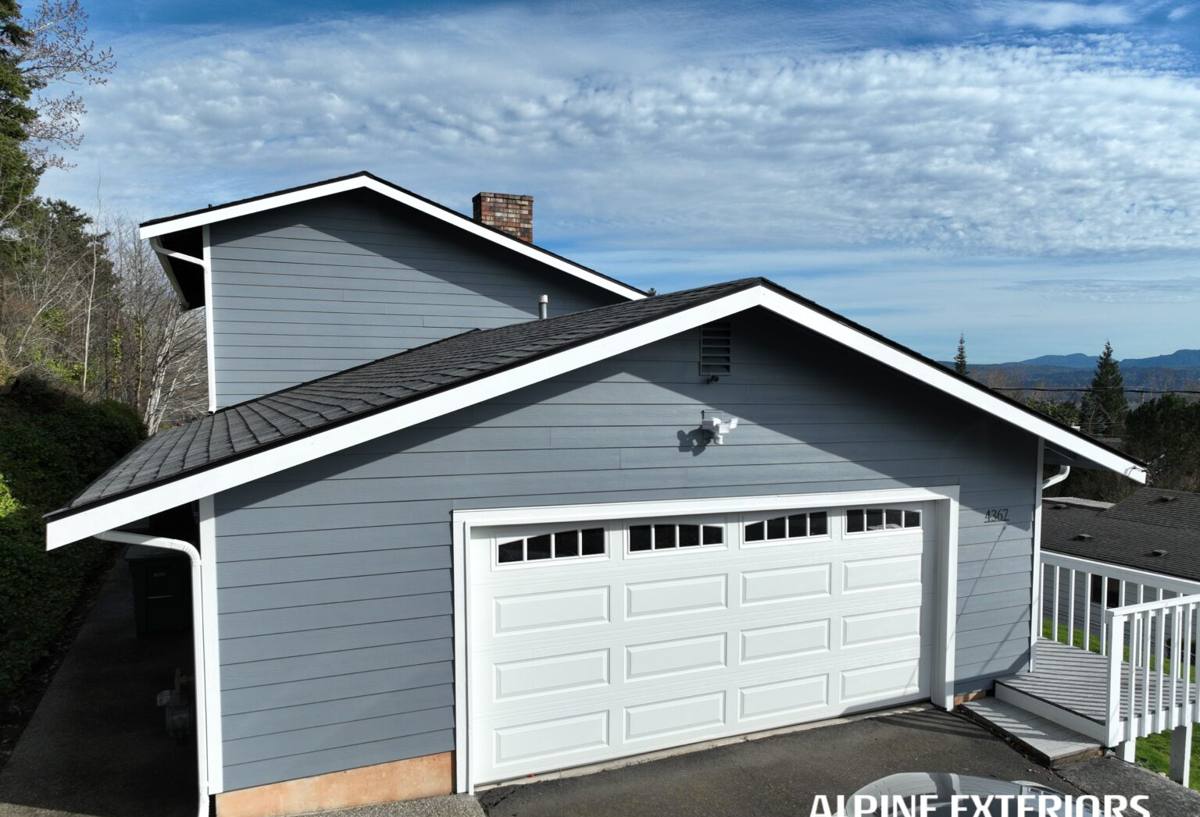
What Whatcom County Weather Does to a Roof Over Time
Whatcom County's climate isn't uniform. Closer to Bellingham Bay and the coastline, homes deal with salt-laden air that accelerates corrosion on unprotected metal fasteners and flashing. In Nooksack and the river valley communities further inland, the bigger daily concern is driving rain — often blown sideways during fall and winter storms — combined with a moss season that can run eight months or more thanks to shade, humidity, and mild temperatures. Both patterns matter to your roof:
- Driving rain finds its way under poorly lapped flashing, exposed fasteners, and low-slope transitions if they weren't detailed correctly the first time.
- Extended moss season means anything that gives moss a foothold — rough shingle texture, debris in valleys, shaded north-facing slopes — will grow it, and moss holds moisture against the roof surface long after the rain stops.
- Salt air exposure, more relevant the closer a property sits to open water, slowly attacks unprotected steel edges, screws, and cut panel ends over years.
A metal roof doesn't eliminate these forces, but it responds to them much better than most other roofing materials when it's specified and installed correctly for this specific climate.
Why Moss Struggles on Metal
Moss needs a rough surface to anchor spores and standing moisture to survive. A smooth, factory-finished metal panel with proper slope gives moss very little to grab onto, and the fast runoff means the surface dries out between rain events instead of staying damp for days. This is the single biggest reason Nooksack homeowners with heavily shaded lots — under conifers, along the river, in low-lying yards — move to metal after fighting moss on shingles year after year.
What a Correct Metal Roof Installation Actually Involves
Metal roofing has a reputation for being low-maintenance, and it is — but only if the installation itself was done right. Most metal roof problems we get called out to inspect trace back to shortcuts taken during install, not a failure of the material itself. A correct job includes:
- A full tear-off and deck inspection, replacing any water-damaged or soft sheathing before new material goes down.
- Synthetic underlayment rated for the panel type, with ice-and-water shield at eaves, valleys, and any low-slope transitions where wind-driven rain is likely to test the seams.
- Proper fastener spacing and, for standing seam systems, concealed clips that let the panel expand and contract with temperature changes without stressing the fastening points.
- Correctly lapped and sealed flashing at every roof penetration, chimney, and wall intersection — this is where most leaks actually start.
- Ridge and eave venting sized to the home's attic space, so trapped moisture doesn't condense against the underside of the panels.
Skipping any one of these steps doesn't usually cause an immediate problem — it causes a problem three, five, or ten years down the road, which is exactly why cutting corners on a metal roof is a false economy.
Choosing the Right Panel and Material for a Nooksack Home
Not every metal roofing product performs the same in this climate. The two big decisions are panel style and base metal.
| Option | How It Performs Locally | Trade-Offs |
|---|---|---|
| Standing seam steel | Concealed fasteners, excellent water shedding on driving rain, long service life | Higher upfront cost, requires a skilled installer for clean seams |
| Exposed-fastener steel panels | Good performance if fasteners are correctly torqued and gasketed, more budget-friendly | Exposed screws are the first thing to wear or loosen over decades and need periodic checking |
| Aluminum panels | Naturally corrosion-resistant, strong choice for properties nearer open water or salt air | Softer metal, more prone to denting from ladders, falling branches, or hail |
| Steel with premium coating (PVDF-type finishes) | Better long-term color retention and corrosion resistance under constant rain and humidity | Costs more than basic painted finishes but pays off in fewer surface issues over time |
For most Nooksack homes, a coated steel standing seam system hits the right balance of durability and cost. For properties closer to the water where salt air is a bigger factor, we'll often walk owners through aluminum as a more corrosion-resistant option.
Our Process for Nooksack Metal Roofing Projects
1. On-Site Assessment
We start by getting on the roof, not just estimating from the ground. We check deck condition, existing ventilation, slope, valleys, and any spots where past moss growth or ponding suggest a drainage issue worth addressing before new material goes on.
2. Honest Scope and Pricing
Metal roofing costs more upfront than asphalt shingles, and we'll tell you that plainly. What we walk through is the trade-off: fewer repairs, longer service life, and far less moss and maintenance work over the years you own the home. We give you real numbers based on your roof's size and complexity, not a generic estimate.
3. Installation
Tear-off, deck repair as needed, underlayment, flashing, panels, and ventilation — done in the sequence and to the spec outlined above, with attention to the transitions and penetrations that cause most leaks.
4. Final Walkthrough
We walk the finished roof with you, explain what was done, and cover the basic maintenance that keeps a metal roof performing the way it should for decades.
Metal Roofing Compared to Other Options in This Climate
Asphalt shingles remain common in Whatcom County because they're cheaper to install, but in a moss-heavy, high-rainfall environment like Nooksack, they typically need moss treatment, gutter and valley cleaning, and eventual granule loss repair well before a metal roof would need equivalent attention. Wood shake, while it has a traditional look some homeowners want, is especially vulnerable to moisture retention and rot in this climate and requires the most ongoing upkeep of the common options. Metal isn't the right fit for every budget or every roof design, but for homeowners planning to stay in their home long-term, it's usually the option that costs the least per year of ownership once you account for maintenance and replacement cycles.
Maintenance: What a Metal Roof Actually Needs
Low-maintenance doesn't mean no-maintenance. A simple annual routine keeps a metal roof performing at its best through Whatcom County's wet seasons:
- Clear leaves, needles, and debris from valleys and around penetrations before fall rains set in.
- Check gutters and downspouts are flowing freely — a metal roof moves a lot of water fast, and clogged gutters can back that water up under the edge.
- Visually inspect flashing around chimneys, vents, and skylights once a year for lifted edges or failed sealant.
- Look for any loose or backed-out fasteners on exposed-fastener systems and re-torque or replace as needed.
- Trim back overhanging branches that drop debris or scrape the panel finish during wind.
Why Hiring a Crew That Already Works Nooksack Matters
A metal roof installed by a crew that doesn't regularly work in this specific climate can still look fine on the day it's finished — the problems show up later, in a flashing detail that wasn't sealed for constant rain exposure, or a ventilation setup that wasn't sized for a shaded, damp attic space. Working across Whatcom County, from properties near the coast to river valley towns like Nooksack, means we've seen how this weather actually behaves on a roof over years, not just on install day. That's the difference between a roof that looks good at handoff and one that's still performing correctly a decade in.
If you're weighing a metal roof for your Nooksack property, we're happy to take a look and walk you through what your specific roof needs — no pressure, no obligation. Fill out the form below and we'll set up a free estimate.