 Whatcom County
 Building New in Columbia Means Building for This Climate
When you're framing a new home or a major addition in Columbia, the windows you choose and how they go in matter more than almost any other exterior decision you'll make. This is a corner of Whatcom County that sits close enough to the water to get real salt air, close enough to the mountains to get long stretches of driving rain, and shaded enough in places to grow moss on anything that stays damp too long. New-construction window installation is your one chance to get the water management right from the studs out. Get it wrong, and you're not looking at a cosmetic problem in five years — you're looking at rot in the sheathing and framing that's far more expensive to fix than it would have cost to do correctly the first time.
We install new-construction windows in Columbia on a regular basis, which means we're not guessing at how this climate behaves. We know what a window opening looks like after a decade of Whatcom County weather when it was flashed properly, and we know what it looks like when it wasn't.
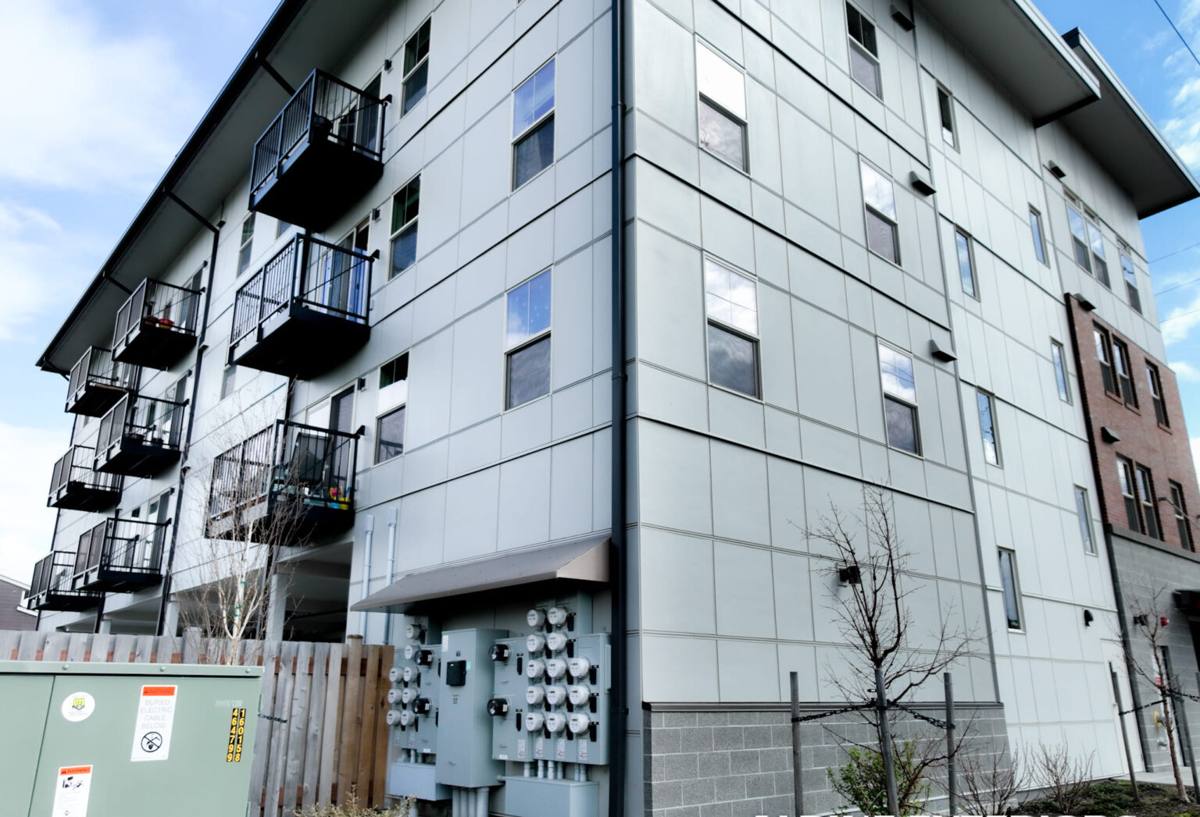
New-Construction Windows vs. Replacement Windows: Why It's a Different Job
New-construction windows have a nailing flange — a flat lip of material around the perimeter of the frame that gets fastened directly to the wall sheathing before siding goes on. Replacement windows (sometimes called pocket or insert windows) are built to slide into an existing frame without disturbing the siding around it. These are not interchangeable products, and installing them is not the same job.
On a new build, you have the sheathing exposed and the weather-resistive barrier (WRB) either not yet installed or freshly installed. That's an advantage — it means every layer of the water management system can be built in the correct order, with no old caulk, old trim, or hidden damage to work around. It also means there's no room for shortcuts, because unlike a replacement job, a badly flashed new-construction window won't announce itself with a leak right away. It can sit quietly failing behind the siding for years.
Why This Distinction Matters in Whatcom County
Builders and homeowners sometimes assume any window installer can handle new construction because "it's just screwing a window into a hole." In a dry climate, sloppy flashing might not cause visible problems for a long time. In Columbia, with wind-driven rain coming off the water and months of damp, low-sun conditions that keep wall assemblies from drying out quickly, a poorly flashed opening can start showing water intrusion within a single wet season.
What Columbia's Climate Actually Demands from an Installation
Salt Air and Corrosion
Proximity to Bellingham Bay and the Salish Sea means the air here carries salt that accelerates corrosion on unprotected metal — fasteners, flashing, and hardware included. We spec corrosion-resistant fasteners and flashing components for Columbia installs rather than standard interior-grade hardware, because a fastener that rusts and loosens is a fastener that stops holding the window's weather seal.
Wind-Driven Rain
Rain that falls straight down is relatively easy to shed. Rain that's being pushed sideways by wind off the water finds every gap, every reversed shingle-lap in the flashing, and every place where the WRB wasn't properly integrated with the window flange. This is the single biggest reason we're strict about flashing sequence — a system that would be "good enough" in a calmer inland climate isn't good enough here.
Moss Season and Prolonged Dampness
Whatcom County's moss season isn't just a roofing issue. Anywhere moisture sits and shade lingers — north-facing walls, areas under eaves with reduced airflow, spots shielded from direct sun for much of the year — organic growth can take hold on trim and siding, and that growth holds moisture against the wall assembly longer than it would otherwise sit. Correct flashing and a properly sloped sill are what keep water from lingering at the window opening in the first place, which matters more here than in a climate with shorter, drier winters.
Anatomy of a Correct New-Construction Window Install
There's a specific order of operations for installing a new-construction window, and every step exists to make sure water that gets behind the siding — and in this climate, some always will eventually — has a clear path back out instead of a path into your wall.
1. Sill Pan First
Before the window ever goes in, the rough opening gets a sloped, sealed sill pan. This is the backstop that catches any water that makes it past the window itself and directs it back outside rather than letting it pool on the sill framing.
2. WRB Integration in Shingle-Lap Order
The weather-resistive barrier around the opening has to be cut and folded so that every layer overlaps the one below it, shingle-style, so water is always directed downward and outward. This sounds simple; it's the step most often rushed or done out of sequence on lower-quality installs.
3. Setting the Window and Fastening the Flange
The window gets set level, plumb, and square in the opening, shimmed as needed, and fastened through the nailing flange with corrosion-resistant fasteners at the spacing the manufacturer specifies — not wider spacing to save time.
4. Flashing Tape Over the Flange
Flashing tape goes over the top and side flanges in the correct shingle-lap order relative to the WRB, with the head flashing lapped last so it sheds water down and over everything beneath it, never behind it.
5. Head Flashing or Drip Cap
A metal or engineered head flashing above the window directs bulk water away from the top of the opening before it ever reaches the flange — an extra layer of protection that matters more in a driving-rain climate than in a sheltered one.
6. Interior and Exterior Sealant, Not Foam Alone
Low-expansion foam handles air sealing and insulation at the rough opening, but it is not a substitute for proper exterior flashing and sealant at the joints where water actually travels. We use both, in the roles each is meant for.
Choosing the Right Window Frame Material for Columbia
Frame material affects how a window performs against salt air, moisture, and temperature swings over the long run. There's no single "best" choice for every home — it depends on your budget, your home's style, and how much upkeep you want to take on.
| Frame Material | Moisture & Salt Air Performance | Maintenance | Typical Fit |
|---|---|---|---|
| Vinyl | Good — won't rust or rot; seams need quality welds | Low | Budget-conscious new builds, rental properties |
| Fiberglass | Excellent — dimensionally stable, resists moisture and salt corrosion | Low | Homes wanting long-term durability with minimal upkeep |
| Wood-Clad | Good if detailed correctly — exterior cladding protects the wood core | Moderate — finish and seals need periodic attention | Traditional or high-end architectural styles |
| Aluminum | Fair — prone to corrosion near salt air unless marine-grade or well-coated | Moderate to high in coastal exposure | Modern designs where narrow sightlines matter |
For homes in Columbia with direct exposure to marine air, we lean toward vinyl or fiberglass for most new-construction projects, and we're upfront if a homeowner is set on an aluminum-frame look that we'll want to talk through the coating and maintenance implications before committing.
Our Installation Process
- Rough opening inspection — we verify the opening is correctly sized, square, and that sheathing is sound before anything goes in.
- Sill pan and WRB integration — installed and inspected in the shingle-lap sequence described above.
- Window set and fastened — leveled, plumbed, squared, and fastened per manufacturer spec.
- Flashing and head flashing installed — tape and drip cap sequenced over the flange.
- Air seal and interior finish prep — low-expansion foam at the perimeter, ready for interior trim.
- Final walk-through — we check operation, seals, and flashing lap before we call the opening complete.
Common Mistakes We See on New-Construction Window Jobs
Most of the water problems we get called to diagnose in older Whatcom County homes trace back to a handful of installation shortcuts:
- Skipping or improvising the sill pan instead of using a proper sloped, sealed pan
- WRB and flashing tape layered in the wrong order, so water gets directed inward instead of outward
- Relying on caulk alone to seal the flange instead of proper flashing tape
- Fastener spacing wider than the manufacturer requires, leaving the flange under-secured
- No head flashing or drip cap above the opening
- Using standard fasteners instead of corrosion-resistant ones in a salt-air environment
Any one of these can look fine on installation day and still fail years later — which is exactly why the sequence matters more than the finished appearance.
What Affects the Cost of New-Construction Window Installation
| Factor | Why It Matters |
|---|---|
| Number and size of openings | More or larger windows mean more flashing, labor, and material |
| Frame material | Fiberglass and wood-clad typically cost more upfront than vinyl |
| Wall assembly complexity | Multi-layer WRB systems or rainscreen details take more time to integrate correctly |
| Exposure level | Openings facing prevailing wind-driven rain may warrant additional flashing detail |
| Access and building stage | Coordinating with framing and siding schedules affects labor efficiency |
We'll walk through these factors with you during an estimate so there are no surprises once framing is underway.
Keeping Your New Windows Performing for the Long Haul
A correct install gives you a strong foundation, but a little seasonal attention keeps it that way — especially through a wet Whatcom County winter and a mossy spring.
- Rinse pollen, dust, and salt residue off frames and glass a few times a year
- Check exterior caulk lines annually for cracking or separation, particularly after the first winter
- Keep gutters and downspouts clear so roof runoff isn't cascading past window heads
- Trim back vegetation that's keeping a wall or window shaded and damp longer than necessary
- Operate and lubricate hardware periodically so weatherstripping seats properly
Why Hiring a Crew That Already Works in Columbia Matters
New-construction window installation is unforgiving of guesswork, and a crew that's only worked in drier, calmer climates may not instinctively over-build the flashing details that Whatcom County's combination of salt air, wind-driven rain, and moss season actually requires. We work in Columbia and the surrounding Whatcom County area regularly, which means our flashing sequence, fastener choices, and material recommendations are already calibrated to what this specific stretch of coastline throws at a house — not adapted after the fact from a different region's standards.
If you're framing a new home or addition in Columbia and want windows installed the way this climate actually requires, we're happy to walk the plans with you and put together a free, no-pressure estimate — just fill out the form below.