 Whatcom County
 Siding Built for Columbia's Bay-Influenced Climate
Columbia sits close enough to Bellingham Bay that homes here deal with a specific combination of weather stresses: salt-laden air drifting off the water, wind-driven rain that hits siding sideways instead of just running down it, and a long, damp shoulder season that gives moss and algae months to get established on anything that stays wet. Siding in this part of Whatcom County isn't just cosmetic — it's the first line of defense against moisture intrusion, and the wrong material or a sloppy install shows its weaknesses fast.
We install James Hardie fiber cement siding exclusively, and Columbia is a good example of why. The bay air is mildly corrosive to exposed metal fasteners and hardware over time, the rain doesn't fall straight down often enough to rely on face-sealed systems, and the moss season means whatever's on your walls needs to resist sustained moisture contact without softening, swelling, or feeding organic growth. Fiber cement handles all three conditions structurally in a way that wood-based and vinyl products don't.
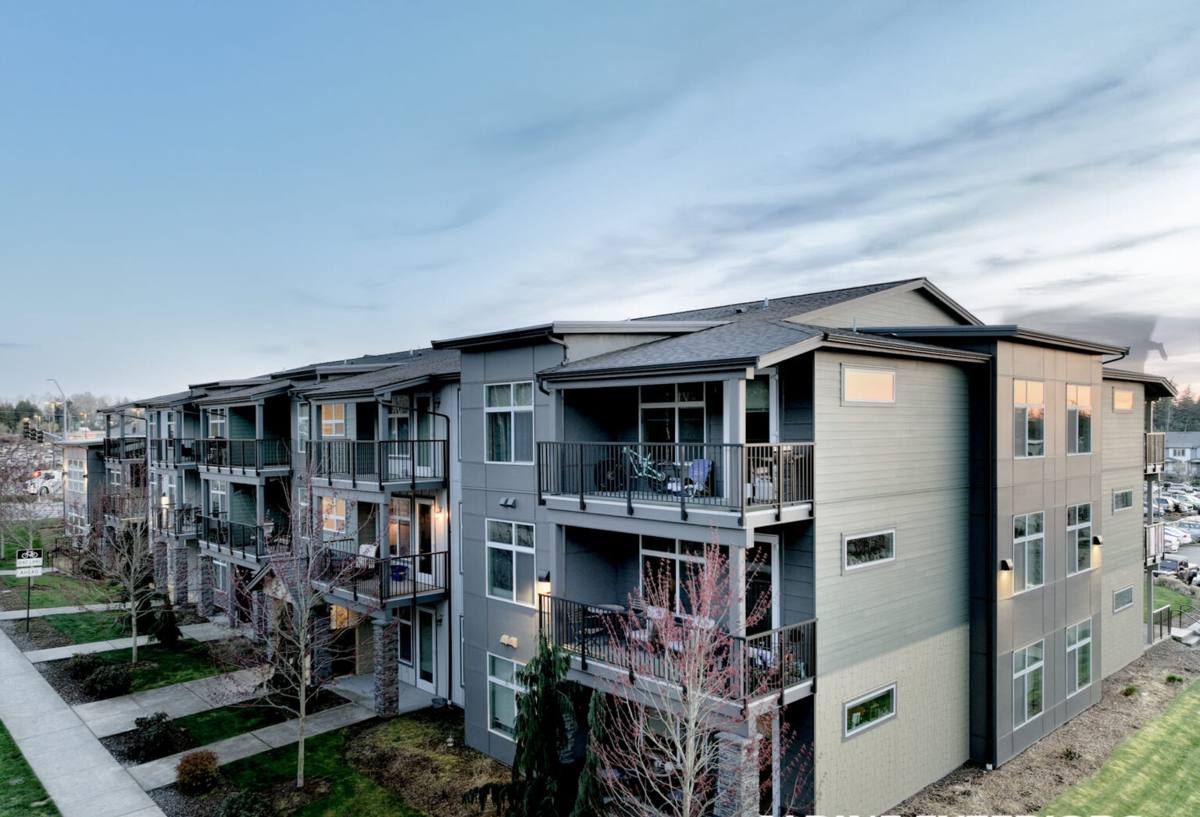
What Columbia Homes Actually Need From Their Siding
Salt Air Resistance
Homes within a few miles of Bellingham Bay see slightly accelerated wear on anything with exposed metal or untreated wood fiber. Salt-laden moisture accelerates corrosion on fasteners and hardware, and it can speed up the breakdown of caulks and finishes that aren't rated for coastal exposure. Fiber cement siding doesn't corrode, and when it's installed with the right fastener and flashing details, the assembly as a whole holds up far better in this environment than most alternatives.
Driving Rain Performance
Whatcom County's rain frequently comes in at an angle, pushed by wind off the water. That matters because a lot of siding failures aren't about the material getting wet — they're about water getting behind it. A correct installation depends on proper water-resistive barrier prep, flashing at every horizontal joint, window, and penetration, and rain-screen or drainage detailing where the wall assembly calls for it. Fiber cement itself is dimensionally stable and won't swell or cup from moisture exposure the way wood-based products can, but the installation details are what actually keep water out of the wall cavity.
Moss and Algae Resistance
The long wet season here — often stretching from fall through spring — gives moss and algae plenty of time to colonize any surface that holds moisture at the surface. Untreated wood and some engineered wood products are more susceptible to surface-level organic growth because the substrate itself can absorb and hold moisture. James Hardie's ColorPlus factory-applied finish is baked on and cured before it ever reaches the job site, giving it a harder, more consistent surface that sheds water and resists the kind of surface staining and growth that shows up on porous or field-painted siding within a few seasons.
Why We Only Install James Hardie
We get asked fairly often why we don't offer vinyl, LP SmartSide, primed wood, or cedar as options. The honest answer is that we standardized on one product system because we were tired of seeing callbacks tied to the same handful of failure modes — swelling at cut edges, moss creeping into lap joints, caulk lines failing at year three, fasteners bleeding rust through paint. James Hardie fiber cement is non-combustible, dimensionally stable in wet climates, holds paint and factory finish far longer than wood-based alternatives, and carries a strong transferable warranty when installed to the manufacturer's spec. For a bay-adjacent property in Whatcom County, that combination isn't a luxury upgrade — it's the baseline we think the climate actually requires.
We're not going to tell you every other product is unusable everywhere. Vinyl and engineered wood siding both have a place in drier climates or lower-exposure applications. But for what Columbia's weather does to a wall over 20-30 years, we've made a professional call: fiber cement, installed correctly, is what goes on the houses we work on.
What Correct Fiber Cement Installation Involves
Installing James Hardie siding correctly is not the same job as installing vinyl or wood lap siding — the tolerances, fastening pattern, and moisture management details are specific to the product, and skipping steps is exactly what turns a 30-year siding job into a 10-year one.
- Full tear-off of failing existing siding, with the sheathing inspected for hidden rot or moisture damage before anything new goes up
- Water-resistive barrier installed or repaired to current code, lapped correctly at every seam
- Flashing integrated at all windows, doors, roof-to-wall intersections, and horizontal trim — this is the single most common place we find prior installs cut corners
- Rain-screen or drainage gap detailing where the wall assembly and exposure warrant it, so incidental moisture can drain and dry instead of sitting against the sheathing
- Hardie panels or lap siding fastened per manufacturer spec — correct nail type, spacing, and penetration depth, not "close enough"
- Proper clearance maintained at grade, roofing, decks, and other siding-to-material transitions so the bottom edge of the siding isn't sitting in standing water or trapped debris
- Caulking limited to where it's actually specified — over-reliance on caulk instead of proper flashing is a common shortcut that fails within a few years
Our Process on a Columbia Job
- On-site assessment of your existing siding, sheathing condition, and any moisture or rot already present
- Honest walkthrough of what we find, including areas where the existing wall assembly needs repair before new siding goes on
- Written estimate covering material, labor, flashing and drainage detailing, and a realistic timeline
- Full installation following James Hardie's fastening and moisture-management specifications, not a shortcut version
- Final walkthrough so you know what was done and what to expect from the finished product over time
Cost Factors for Columbia Homes
Every siding job is priced on its specifics, but the same handful of factors drive cost on most Columbia properties. We won't quote a number without seeing the house, but here's what tends to move the estimate:
| Factor | Why It Matters Here |
|---|---|
| Existing wall condition | Hidden rot or moisture damage behind old siding is more common on bay-exposed walls and adds repair scope before new siding goes on |
| Siding profile chosen | Lap siding, panel siding, and shingle-style Hardie products all have different material and labor costs |
| Trim and detail work | Homes with more window/door openings and architectural detail require more flashing and cut work |
| Drainage plane requirements | Higher-exposure walls facing prevailing wind and rain may need more robust rain-screen detailing |
| Access and site conditions | Lot layout, height, and staging space affect labor time |
| Color and finish | Factory ColorPlus finishes vs. field painting affect both cost and long-term maintenance |
Why Hiring a Crew That Works Columbia Already Matters
Siding installation is detail-sensitive work, and the details that matter change with the microclimate. A crew that mostly works drier inland areas of Whatcom County may not automatically build in the same drainage and flashing margin that a bay-exposed Columbia property benefits from. Local experience means we already know what kind of moisture exposure, wind direction, and moss pressure to expect on this side of the county, and we build the installation around that instead of applying a generic spec and hoping it holds up.
It also means faster response if something needs a look after installation — a follow-up question, a warranty item, a storm-damage check — because we're not driving in from out of the area to get to you.
Maintenance Expectations After Installation
One of the real advantages of James Hardie in a climate like this is how little maintenance it asks for compared to wood-based siding. You're not refinishing it every few years or chasing moss with a pressure washer every spring. That said, a few habits go a long way in Columbia's environment:
- Rinse siding periodically to clear salt residue and organic buildup, especially on north-facing and shaded walls where moss pressure is highest
- Keep gutters clear so overflow doesn't run down the face of the siding repeatedly in one spot
- Trim back vegetation that keeps a section of wall shaded and damp longer than the rest of the house
- Have flashing and caulk joints checked periodically, particularly after major storms
None of this is heavy maintenance — it's the kind of upkeep that keeps a correctly installed fiber cement system performing at its best for decades rather than years.
If your Columbia home's siding is showing moss staining, soft spots, failing caulk lines, or you're just planning ahead for a replacement, we're glad to come take a look. The estimate is free, there's no pressure, and you'll get a straight answer about what your walls actually need.