 Whatcom County
 Why Sunnyland Decks Take More Abuse Than People Expect
Sunnyland sits close enough to the water and open enough to weather that decks here go through a rougher cycle than decks fifty miles inland. You get salt-laden air moving off the bay, long stretches of driving rain through fall and winter, and a moss season that can run from October well into spring. None of that is exotic — it's just Whatcom County — but it adds up on any outdoor structure that isn't built and maintained with that pattern in mind.
A deck built without that context in mind will usually look fine for the first year or two. The problems show up later: fastener corrosion, slick green film on shaded boards, soft spots where water sat too long, and joints that never fully dry out between storms. Composite decking done right handles this cycle a lot better than untreated wood, but "composite" isn't a magic word — the material, the substructure underneath it, and how it's installed all matter just as much as the boards themselves.
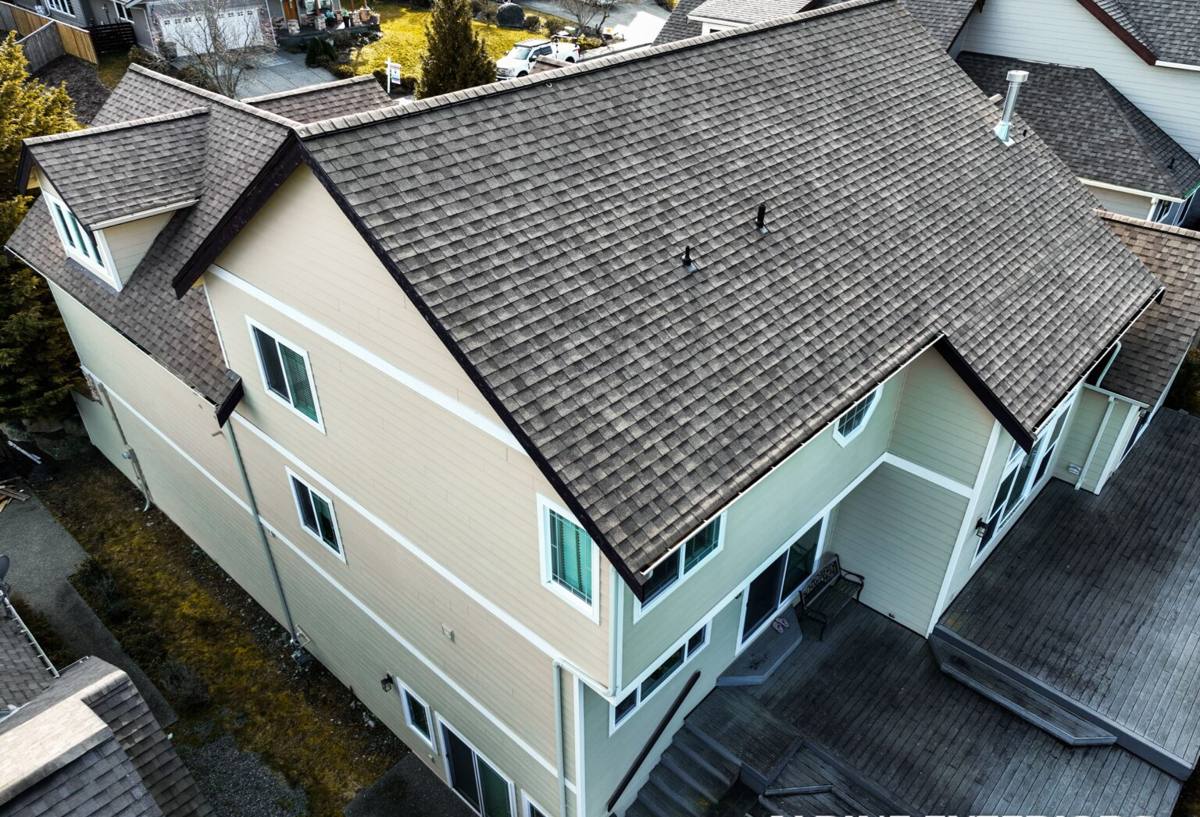
What Composite Decking Actually Is
Composite decking is a mix of wood fiber and plastic (usually polyethylene or polypropylene), formed into boards that are then either left as a solid profile or capped with a protective polymer shell on some or all sides. The wood content gives it the look and feel of lumber; the plastic content is what keeps it from rotting, splintering, or absorbing water the way solid wood does.
Not all composite is built the same, and the differences matter more in a wet coastal climate than they would somewhere dry:
- Uncapped composite — the older style, wood fiber and plastic blended all the way through with no protective shell. Cheaper, but more prone to surface moisture absorption, fading, and mold growth in a climate like ours.
- Capped composite — a polymer cap on the top and sides resists moisture, staining, and UV fading much better. This is what we recommend for anything exposed to Whatcom County's rain and low winter light.
- Fully encapsulated composite — capped on all four sides, including the underside. Worth the extra cost on any deck low to the ground or over a crawlspace where the underside stays damp.
There's also PVC decking, which is 100% synthetic with no wood fiber at all. It resists moisture completely but has a different feel underfoot and a different price point. We'll talk through composite versus PVC honestly during an estimate — for most Sunnyland homes, capped composite hits the right balance of durability, appearance, and cost.
Composite vs. Wood vs. PVC: An Honest Comparison
Homeowners in Sunnyland usually narrow it down to three choices. Here's how they actually compare for our climate, not in general terms.
| Factor | Pressure-Treated Wood | Capped Composite | PVC |
|---|---|---|---|
| Moisture resistance | Poor without ongoing sealing | Strong, especially fully capped | Excellent |
| Moss/mildew resistance | Low — porous surface holds spores | Good — sealed surface, still needs cleaning | Very good |
| Upfront cost | Lowest | Mid-range | Highest |
| Maintenance | Annual staining/sealing | Periodic washing, no sealing | Periodic washing, no sealing |
| Expected lifespan (local conditions) | 10–15 years with upkeep | 25–30+ years | 25–30+ years |
| Feel/appearance | Natural wood grain, ages unevenly | Wood-look grain, consistent color | Smoother, more uniform, less "wood-like" |
Wood is not a bad choice on principle — it's a legitimate, lower-cost option if a homeowner is committed to sealing it on a real schedule. Where wood struggles in Sunnyland specifically is consistency: skip a year of sealing during a wet stretch and the moisture damage compounds faster here than it would in a drier part of the state.
What a Correct Installation Actually Involves
The boards get most of the attention, but the substructure underneath is what determines whether a composite deck lasts 10 years or 30 in this climate. A few things we treat as non-negotiable on every Sunnyland install:
Joist Spacing and Framing
Composite boards flex differently than solid wood, and manufacturers specify tighter joist spacing for composite than what's typical for a wood deck — often 16 inches on center, sometimes tighter at angles, stair treads, or diagonal patterns. Framing a composite deck to old wood-deck spacing standards is one of the most common shortcuts we see, and it leads to bounce and long-term board sag.
Ventilation Underneath
Trapped moisture under a deck is the root cause of most of the joist rot and fastener corrosion we get called out for. Proper joist tape, correct ledger flashing, and enough clearance for air to move underneath are what keep the framing dry even when the surface boards are handling rain just fine on top.
Fasteners and Hardware
Salt air corrodes standard fasteners faster than people expect, even a few miles inland from open water. We use stainless steel or coated fasteners rated for coastal exposure, along with hidden fastener systems where the board profile allows it — this also keeps water from pooling in screw heads on the walking surface.
Flashing and Ledger Connection
Where the deck attaches to the house is the single most water-vulnerable point on the whole structure. Correct flashing here — installed so water sheds outward and never behind the siding — is what prevents the slow hidden rot that shows up years later as a soft spot near the door threshold.
Moss, Mildew, and Salt Air: What Ongoing Care Looks Like
Composite decking doesn't need staining or sealing, but "low maintenance" doesn't mean "no maintenance" — especially with a moss season as long as ours. A few realities worth planning around:
- Shaded areas under trees or on the north side of a house will grow moss and algae film faster than sun-exposed sections, even on capped composite.
- A soft-bristle brush and a mild deck cleaner, a couple times a year, keeps most boards from ever getting slick. Pressure washers can be used on composite but only at low pressure and a wide fan tip — tight, close-range pressure washing can etch even a capped surface.
- Salt air accelerates corrosion on any exposed metal — railing brackets, stair hardware, light fixtures — faster than it affects the decking itself. It's worth a visual check of hardware once a year.
- Gaps between boards should stay clear of leaf litter and debris; clogged gaps hold moisture against the board edges and undercut composite's main advantage over wood.
Quick Seasonal Checklist for Sunnyland Deck Owners
- Fall: clear leaf debris from board gaps and drainage points before the heavy rains start
- Winter: brush off standing moss on shaded boards and stair treads to reduce slip risk
- Spring: rinse the full deck surface and check railing hardware for corrosion
- Summer: inspect ledger flashing and under-deck ventilation while it's dry and accessible
Signs an Existing Deck Needs Attention
We get a lot of calls in Sunnyland for decks that look fine from a distance but have real problems underneath. Worth checking for before they become bigger repairs:
- Soft or spongy spots when you walk the deck, especially near the house ledger
- Persistent green or black staining that comes back within weeks of cleaning
- Visible rust streaking around fastener heads
- Boards that have separated, cupped, or gap unevenly compared to when they were installed
- Railing posts that feel loose or flex under light pressure
Any one of these is worth a look before it turns into a full rebuild. Sometimes it's a framing or flashing fix rather than a full deck replacement — we'll tell you honestly which one it is.
Our Process, Start to Finish
For a Sunnyland composite deck project, our process is straightforward and we don't skip steps to speed things up:
- On-site assessment — we look at the existing structure (if there is one), site drainage, sun/shade exposure, and how the deck ties into the house.
- Material selection — we walk through composite options and, if relevant, PVC or wood, with real cost and maintenance trade-offs for your specific site conditions.
- Framing plan — joist spacing, ledger flashing, and ventilation are planned to the manufacturer's specs for the composite product chosen, not generic wood-deck standards.
- Installation — framing first, then decking, railing, and stair components, with fastening and flashing details built for coastal exposure.
- Final walkthrough — we go over basic care with you before we consider the job done, so you know what upkeep actually looks like for your deck's exposure.
Why a Crew That Already Works Sunnyland Matters
A lot of what makes a composite deck last here isn't in the product spec sheet — it's in knowing how this particular stretch of Whatcom County behaves. How much shade a given lot actually gets through winter, how fast moss establishes on a north-facing run of boards near the water, which fastener and flashing details hold up against salt air over years rather than months. That's the kind of knowledge that comes from working decks in this area repeatedly, not from a one-size-fits-all install manual.
It also matters for warranty and follow-up. A composite deck built to spec, with the right joist spacing, flashing, and hardware, should hold its manufacturer warranty for decades — but only if the install was done correctly in the first place. A crew that's local and around for the long haul is also a crew you can actually call back if something needs a look five or ten years down the road.
Getting an Honest Estimate
Every deck site is a little different — sun exposure, drainage, what's underneath an existing deck, how it ties into the house. If you're weighing composite decking for a home in Sunnyland, we're glad to come take a look, talk through what your site actually needs, and give you a straightforward estimate. No pressure, no upsell on materials you don't need — just an honest read on what the job involves. Use the form below to request a free estimate.