 Whatcom County
 Windows Built for Cordata's Weather, Not Just Its Look
Cordata sits far enough inland from the open Sound to feel a little sheltered, but it still gets the same weather pattern that defines Whatcom County: long stretches of wind-driven rain, damp air carrying salt off Bellingham Bay, and a moss season that can run from October clear through April. None of that is dramatic on any given day. It's the accumulation that gets you — years of moisture cycling in and out of a window frame, UV breaking down seals, and condensation forming on glass that isn't rated for our humidity. By the time a homeowner notices a problem, it's usually been building for a while.
Custom windows done right for this area aren't about chasing a style. They're about picking materials and glass packages that actually hold up here, and installing them so water has nowhere to go but out. That's the whole job in one sentence — everything else is detail.
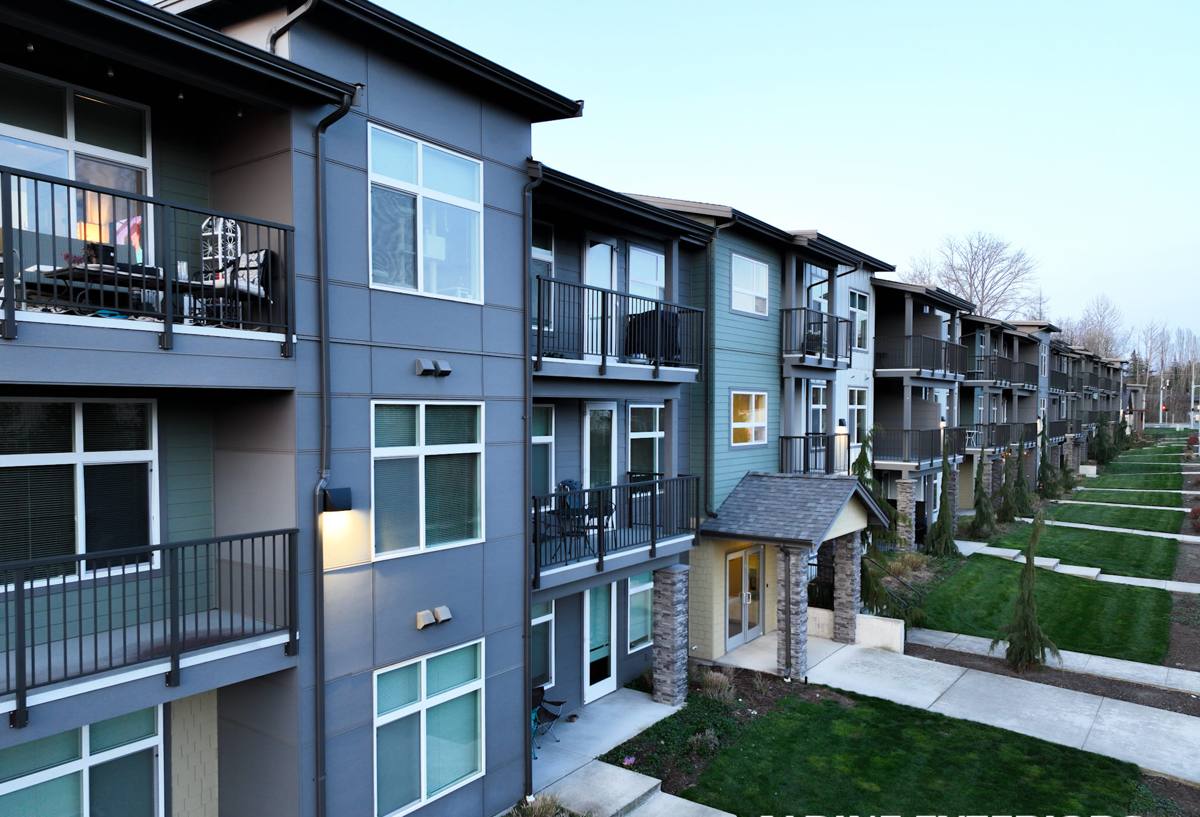
What "Custom" Actually Means for a Window Job
"Custom" gets thrown around loosely in this trade, so it's worth being specific. For us it means three things:
- Windows sized and shaped to the actual rough openings in your home, not the nearest stock size with shims and extra trim to make it fit
- Frame material, glass package, and hardware chosen for the exposure of that specific wall — a north-facing window catching prevailing rain gets different treatment than a sheltered one under an eave
- Flashing and integration detailed to work with your home's existing siding and water management, not a generic install that assumes every wall assembly is the same
A lot of homes in Cordata were built across different decades, with different siding types and window openings that have settled or shifted slightly over the years. Custom work means measuring what's actually there instead of assuming a catalog size will fit.
Frame Materials: What Holds Up in Whatcom County
There are three materials we install regularly, and each has a real trade-off. We won't tell you one is universally best — the right call depends on your budget, your home's exposure, and how much upkeep you want to take on.
| Material | How it handles our climate | Maintenance | Typical trade-off |
|---|---|---|---|
| Vinyl | Won't rot, doesn't need painting, handles moisture well when properly sealed | Low — occasional cleaning | Frame profiles are thicker; color options are more limited |
| Fiberglass | Very stable in temperature swings, strong resistance to warping and moisture | Low to moderate | Higher upfront cost than vinyl |
| Wood-clad | Exterior cladding protects the wood, interior can be stained or painted | Moderate — cladding seams need periodic inspection | If the exterior seal fails, moisture can reach the wood core |
For most Cordata homes we lean toward vinyl or fiberglass because they don't give moisture a foothold the way an exposed or poorly maintained wood frame can. Wood-clad still has a place — particularly on homes where the interior wood look matters — but we're upfront that it asks more of the homeowner in terms of watching the seal over time. That's a maintenance conversation we have honestly, not a sales pitch either direction.
Glass Packages: Where Performance Actually Lives
The frame gets most of the attention, but the glass package is doing most of the performance work. A few numbers actually matter here:
- U-factor — how well the window resists heat loss. Lower is better for our heating-dominant climate.
- SHGC (Solar Heat Gain Coefficient) — how much solar heat passes through. Less critical here than in sunnier climates, but still worth balancing against natural light on south-facing walls.
- Condensation resistance — how well the glass edge and frame resist interior moisture forming on cold surfaces. This one matters more in Whatcom County than almost anywhere, because our indoor-outdoor humidity gap sits high for months at a time.
Double-pane with a low-E coating and argon fill is the baseline we recommend for most Cordata replacements. Triple-pane is worth the added cost on north-facing or particularly exposed walls, or for homeowners who've had ongoing condensation or comfort complaints near existing windows. We size the glass package to the wall, not to a blanket standard for the whole house.
Installation Is Where Windows Actually Succeed or Fail
Here's something that doesn't get said enough in this trade: the window unit itself is rarely the reason a job fails. It's almost always the installation — specifically, how the opening is flashed and how the new window ties into the existing wall assembly and siding.
What a correct install includes
- A sloped sill pan under the window so any water that gets past the exterior seal drains back out, not into the wall cavity
- Flashing tape integrated in the correct shingle-lap order — sill, jambs, then head — so water is always directed outward and downward, never trapped
- A continuous bead of the right sealant at the exterior, sized and placed so it doesn't block the weep path built into the sill pan
- Proper reintegration with the surrounding siding so the water-shedding layer isn't interrupted at the window edges
- Shimming and fastening that keeps the frame square without over-compressing it, which can distort the seal and cause premature failure
Skip any one of these steps and you can end up with a window that looks fine and performs fine — for a while — and then starts showing rot or staining at the sill in a few years. In a climate with as much cumulative rain exposure as Whatcom County gets, installation quality is the single biggest factor in how long a window job actually lasts.
Signs Your Current Windows Are Already Losing the Fight
Homeowners often wait until a window is visibly failing before calling. A few earlier warning signs worth acting on:
- Condensation forming between the panes (a sign the seal has failed, not just a humidity issue)
- Soft or discolored trim or sill wood, especially on north- or west-facing walls
- Drafts you can feel with a hand near the frame on a windy day
- Difficulty opening, closing, or latching that wasn't there a few years ago
- Visible moss or dark staining building up on the sill or below the window
Any one of these on its own isn't an emergency. Several together, especially on the same wall, usually mean water has been getting past the seal for a while and it's worth having someone actually look rather than guess.
Our Process, Start to Finish
- Walkthrough and assessment — we look at each opening individually, note exposure, siding type, and any signs of existing moisture damage
- Honest recommendation — we tell you which openings genuinely need custom sizing versus which could take a standard size, and why, rather than upselling every window on the house
- Measurement and ordering — precise measurements for each opening so the units arrive built to fit, not built to be forced in
- Removal and inspection — when we pull the old window, we check the framing underneath for rot or moisture damage before anything new goes in
- Correct flashing and installation — sill pan, flashing tape in proper order, and reintegration with your siding's water management
- Interior and exterior finish work — trim, caulking, and a final check that everything operates smoothly and seals properly
- Walkthrough with you — we show you what was done and what to expect for care going forward
If we find rot or damage in the framing during removal, we stop and talk to you before proceeding rather than covering it up and moving on. That's not an upsell tactic — it's the only honest way to do this work, because a new window over a compromised opening just hides the problem for a few more years.
Permits and Code Considerations Worth Knowing
Depending on the scope of the job, window replacement in Whatcom County may require a permit — particularly if you're changing the size of an opening, adding an egress window to a bedroom, or doing structural work around the opening. Straight swaps of like-sized units in existing openings are often more straightforward, but requirements can vary by jurisdiction and project scope. If your home has a bedroom without a code-compliant egress window, that's worth flagging early, since it can change both the scope and the opening size needed. We handle the permit conversation as part of planning the job so there are no surprises partway through.
Why a Crew That Already Works Cordata Matters
Window installation looks similar on paper everywhere, but the details that matter — how much exposure a given wall gets, how the local building stock was typically framed, what siding types are common on homes of a certain age in this area — come from having actually worked on houses nearby, not from a general playbook. A crew that regularly works in and around Cordata and the rest of Whatcom County has seen how these specific conditions play out over years, not just at the moment of installation. That matters more with windows than with almost any other exterior component, because a flashing detail that's fine in a drier climate can be exactly the wrong call here.
It also means someone who's easy to reach if a question comes up after the job is done — not a call center or a crew that finished the project and moved three counties away.
Getting a Straight Answer on Your Windows
If you're dealing with drafts, condensation, sticking sashes, or just windows that are past their working life, the first step is a real look at each opening — not a phone estimate. We'll walk the house, tell you honestly which windows need attention and which can wait, and give you options at different price points without pushing you toward the most expensive one. If you're in Cordata or elsewhere in Whatcom County and want a straightforward, no-pressure estimate, the form below is the easiest way to get started.