 Whatcom County
 Roofing in Cordata: A Different Set of Conditions
Cordata sits close enough to Bellingham Bay and the Salish Sea that homes here deal with a steady mix of moist marine air, wind-driven rain off the water, and long stretches of gray, damp weather that can run from October well into spring. Add in the tree cover common to this part of Whatcom County, and you get a roofing environment that's tougher on shingles than drier inland climates. Salt-tinged air accelerates the breakdown of poor-quality granules and fasteners. Driving rain finds every weak seam, gap, or under-nailed shingle. And moss doesn't just sit on a roof looking messy — it lifts shingle edges, holds moisture against the deck, and shortens the life of even a well-installed roof if it's left unchecked.
An asphalt shingle roof that's built and installed correctly for these conditions can still deliver good, predictable service life. The problem is that a lot of roofs in this area were installed to a generic spec, not to what Whatcom County actually throws at a house. This page covers what a Cordata home genuinely needs from its shingle roof, what correct installation looks like, and how we approach the work.
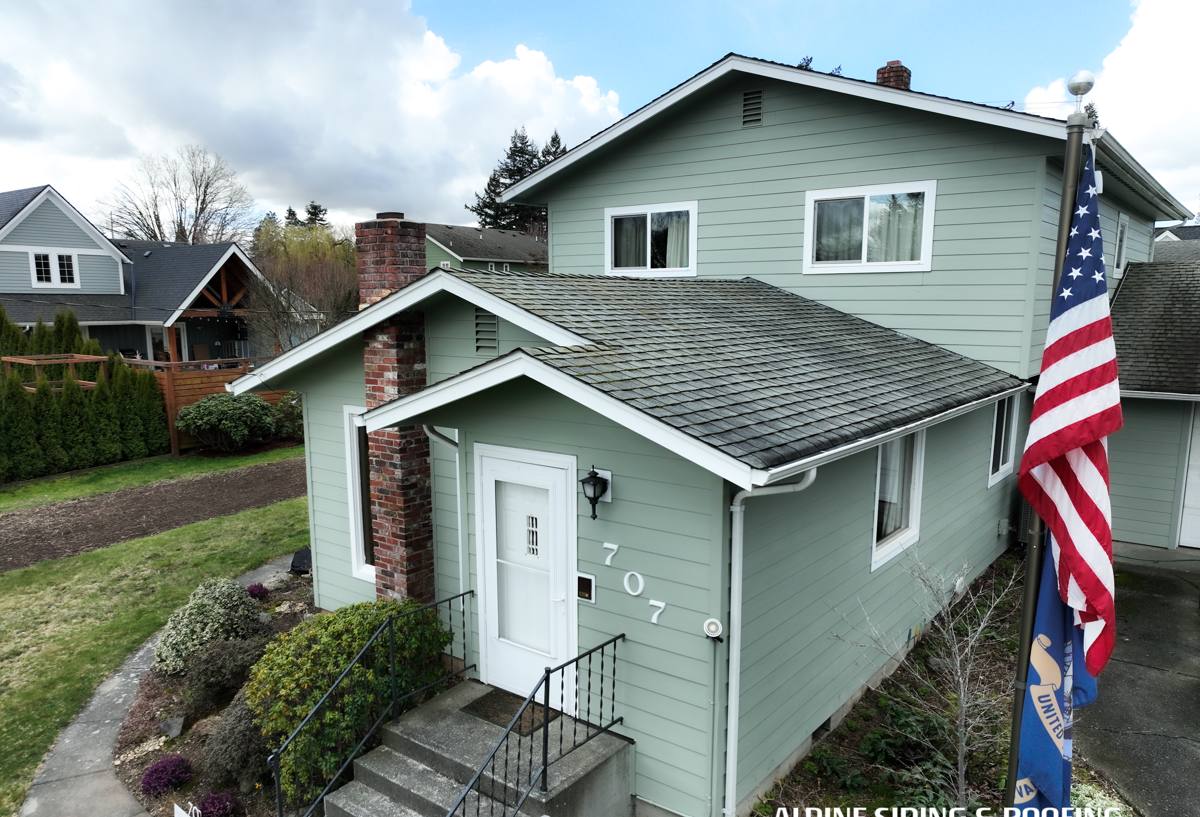
What the Local Climate Actually Does to a Roof
Salt Air and Moisture
Homes closer to the bay pick up airborne salt that speeds up corrosion on exposed metal — nail heads, flashing edges, and vent hardware. Over time this shows up as rust streaking, loosened fasteners, and premature wear on lower-grade metal components. It's not dramatic, but it's constant, and it's one reason we don't cut corners on fastener and flashing quality here.
Driving Rain
Rain in this area frequently comes in at an angle rather than straight down, pushed by wind off the water. That matters because a shingle roof doesn't rely on shingles alone to keep water out — it relies on correct overlap, proper nailing height, and underlayment doing its job at every seam, valley, and penetration. Driving rain exposes any shortcuts in that system faster than a calm, straight-down rain ever would.
Moss and Organic Growth
Whatcom County's tree cover and damp, mild winters are close to ideal conditions for moss and algae. Moss growth on a shingle roof isn't just cosmetic — it holds water against the shingle surface and deck longer than the shingle was designed to tolerate, which accelerates granule loss and can lead to soft spots on the decking underneath if it's left for years. Roofs in shaded or north-facing sections of Cordata lots tend to show this first.
Signs Your Cordata Roof Needs a Closer Look
- Granules collecting in gutters or at downspout outlets
- Shingles that look curled, cupped, or lifted at the edges
- Dark streaking (algae) or green/black moss patches, especially on shaded slopes
- Soft or spongy spots when walking the roof (a sign of deck moisture)
- Daylight visible through the attic roof deck, or damp insulation below it
- Missing shingles or exposed nail heads after a windstorm
- A roof that's 18-25 years old with no major work done, depending on shingle grade
None of these mean you automatically need a full replacement — some are maintenance issues, others point to a bigger problem. That distinction is worth an honest inspection before spending money either way.
What a Correct Shingle Roof Installation Actually Involves
A shingle roof is a system, not just a layer of shingles. Skipping or downgrading any one part of that system is usually where premature leaks and shortened lifespans come from, especially in a wet climate like this one.
Tear-Off and Deck Inspection
We remove the old roofing down to the deck rather than layering over it. This lets us actually see the plywood or OSB underneath, replace any sections that have soft spots or rot — common where moss has held moisture for years — and confirm the deck is sound before anything new goes on.
Underlayment and Ice/Water Protection
A synthetic underlayment goes down as the roof's real waterproofing backup. In areas prone to driving rain and wind, we pay particular attention to self-adhered membrane at eaves, valleys, and any low-slope transitions, since these are the spots where wind-driven water is most likely to work its way backward under the shingle field.
Flashing
Flashing around chimneys, skylights, sidewalls, and roof-to-wall transitions is one of the most common failure points on older roofs — not the shingles themselves. Corroded or improperly lapped flashing is a frequent source of the leaks we get called out to diagnose. We use new flashing rather than reusing old pieces, and we lap it correctly with the underlayment and shingle courses so water is always directed downhill and outward.
Nailing and Fastening
Manufacturer nailing patterns exist for a reason, and in high-wind, high-rain areas, correct nail placement (not staples, not overdriven or underdriven nails) is what keeps shingles locked down through winter storms. This is a detail that's easy to rush and hard to catch after the fact, which is why it matters who's actually on your roof doing the work.
Ventilation
Proper intake and exhaust ventilation keeps the attic space dry and temperature-balanced. In a marine climate, poor ventilation traps moisture in the attic, which can lead to condensation, mold, and premature deck deterioration from the inside — a problem that has nothing to do with the shingles themselves but will void warranties and cause damage if ignored.
Choosing a Shingle for Whatcom County Conditions
Not every asphalt shingle product is built the same way, and the right choice depends on your budget, roof exposure, and how long you plan to stay in the home.
| Shingle Tier | Typical Lifespan | Best Fit For | Trade-Offs |
|---|---|---|---|
| 3-tab (economy) | 15-20 years | Budget-conscious projects, rentals, short-term ownership | Thinner profile, less wind resistance, shows wear faster in this climate |
| Architectural / dimensional | 25-30 years | Most Cordata homes | Better wind rating and moisture resistance; good balance of cost and durability |
| Premium / algae-resistant | 30+ years | Shaded lots, homes near heavy tree cover | Higher upfront cost, but copper/zinc-infused granules resist moss and algae growth longer |
For most homes in and around Cordata, we lean toward algae-resistant architectural shingles specifically because of the moss pressure in this area. It's a modest upfront difference in cost that pays off in reduced maintenance and a cleaner-looking roof for longer.
What Drives the Cost of a Roof Here
| Factor | Why It Matters Locally |
|---|---|
| Roof pitch and complexity | Steeper or multi-valley roofs take longer and require more careful flashing work in wet weather |
| Deck condition | Moisture-damaged decking found during tear-off adds material and labor |
| Shingle grade | Algae-resistant and higher-wind-rated products cost more per square but reduce future maintenance |
| Ventilation upgrades | Older Whatcom County homes often need added intake or exhaust vents to meet current standards |
| Access and tear-off volume | Layered old roofing or difficult access adds disposal and labor time |
We give a firm, itemized quote after an on-site inspection rather than a ballpark over the phone — roof condition varies too much house to house to estimate it any other way honestly.
Our Process
- Inspection: We walk the roof and attic, check the deck, flashing, and ventilation, and document what we find.
- Written estimate: A clear, itemized quote covering materials, labor, tear-off, and disposal — no vague allowances.
- Scheduling: We plan around the weather where possible, since a dry install window matters for underlayment and deck protection.
- Tear-off and deck repair: Old roofing removed, deck inspected and repaired as needed before anything new is installed.
- Installation: Underlayment, flashing, ventilation, and shingles installed to manufacturer spec.
- Cleanup and final walkthrough: Site cleared of debris and nails, roof reviewed with you before we consider the job done.
Moss and Long-Term Maintenance
Even a well-installed roof benefits from periodic moss and debris removal in this climate, particularly on shaded slopes. We're happy to talk through simple maintenance steps — keeping gutters clear, trimming overhanging branches, and addressing moss before it spreads — that extend the life of a shingle roof without requiring a service contract. A roof that's checked occasionally rarely turns into an emergency.
Why Hire a Crew That Already Works in Cordata
A roofer who works regularly in this part of Whatcom County already knows which details matter here: where wind-driven rain tends to find weak spots, how much moss pressure a given lot's tree cover creates, and which flashing and ventilation details hold up over years of marine exposure rather than just looking fine on installation day. That local pattern recognition is hard to substitute with a generic install checklist.
- Ask for proof of licensing, bonding, and insurance before any work begins
- Ask what underlayment and ice/water shield products they use, and where
- Ask how they handle deck repairs if rot is found during tear-off
- Ask about manufacturer warranty requirements and whether they're a certified installer
- Get the scope of work and cleanup terms in writing, not just verbally
- Ask how they handle weather delays mid-project
If you're weighing a repair versus a full replacement, or just want an honest read on how much life is left in your current roof, we're glad to take a look. Fill out the form below for a free, no-pressure estimate on your Cordata home.