 Whatcom County
 Building Decks That Actually Hold Up in Cordata
Cordata sits in one of the wetter pockets of Whatcom County, and that shows up fast on a deck that wasn't built with the local climate in mind. Between the marine-driven rain that rolls in off the Salish Sea, the humidity that settles into low-lying yards, and the long stretch of gray months where wood surfaces rarely get a chance to fully dry, a deck here works harder than the same structure would twenty miles inland. We build and repair decks in Cordata with that reality built into every decision, from footing depth to fastener choice.
A deck that looks fine on installation day can start showing problems within two or three winters if the framing, flashing, or drainage details were rushed. Our approach is to slow down on the parts nobody sees once the boards are down, because those are the parts that determine whether you're maintaining a deck or replacing one.
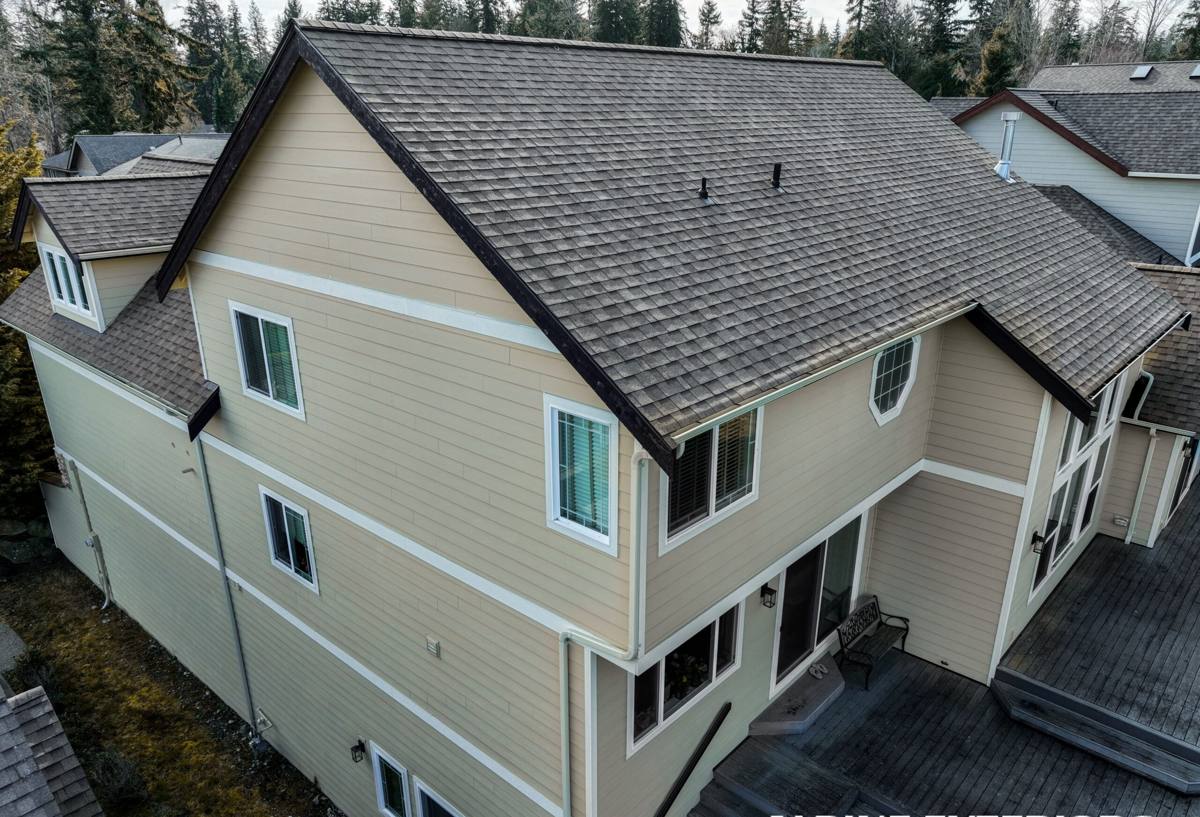
What Whatcom County's Climate Does to a Deck
Understanding the local conditions is the starting point for any deck built to last in this area, not an afterthought.
Salt Air and Metal Fatigue
Cordata isn't right on the water, but Whatcom County as a whole sits close enough to the coast that salt-laden air travels inland on prevailing winds. Over years, that air accelerates corrosion on unprotected fasteners, hardware, and railing brackets. Standard hardware store screws and brackets can start showing rust streaks and pitting well before the wood itself shows its age, which is why hardware selection matters as much as lumber selection.
Driving Rain and Water Intrusion
Wind-driven rain doesn't fall straight down — it gets pushed sideways into ledger connections, stair stringers, and any spot where the deck meets the house. If those junctions aren't flashed and sealed correctly, water works its way behind the siding or into the rim joist, and that damage is often invisible until a board goes soft or a railing post starts to wobble.
Moss, Algae, and a Long Wet Season
Whatcom County's moss season runs long — often eight months or more of conditions damp enough for moss and algae to gain a foothold on horizontal wood surfaces. Moss holds moisture against the decking, blocks airflow, and turns walking surfaces slick and dangerous. Deck boards with poor spacing or ventilation underneath give moss exactly the environment it wants.
What a Correctly Built Deck Includes
A deck built for this climate isn't dramatically different in appearance from one built anywhere else — the difference is almost entirely in details you won't notice until they either work or fail.
- Ledger board properly flashed and sealed at the house connection, with a drainage gap where required
- Joist tape or equivalent protection on top of every joist to stop standing water from soaking into end grain
- Stainless steel or heavy-coated fasteners and hardware rated for coastal/marine exposure, not generic interior-grade hardware
- Adequate board spacing and under-deck airflow so surfaces can actually dry between rain events
- Footings set below frost depth and sized correctly for our local soil conditions
- Stair and railing connections built to current code, with hardware that won't loosen as wood shrinks and swells seasonally
- A drainage plan for the ground underneath the deck, not just the deck surface itself
Decking Material Options for Cordata Homes
There's no single "right" decking material for every home — the right choice depends on budget, how much maintenance you're willing to do, and how long you plan to stay in the house. Here's how the common options compare under Whatcom County's wet conditions.
| Material | Moisture Performance | Maintenance | Typical Lifespan Here |
|---|---|---|---|
| Pressure-treated lumber | Good if sealed regularly; end grain is the weak point | Annual cleaning, re-sealing every 2-3 years | 15-20 years with upkeep |
| Cedar | Naturally rot-resistant, ages well in wet climates | Periodic cleaning, optional staining | 20-25 years with upkeep |
| Composite decking | Excellent, doesn't absorb water like wood | Occasional washing to keep moss/algae from gripping the surface | 25-30+ years, manufacturer-backed |
| PVC decking | Excellent, fully synthetic | Low, mainly washing | 30+ years |
We don't push one material on every homeowner. Pressure-treated and cedar cost less up front but ask more of you over the years in this climate — sealing, staining, and watching for soft spots. Composite and PVC cost more initially but are built to shrug off the moisture cycle that wears down wood, which is worth factoring into the real cost over a decade, not just the installed price.
New Builds vs. Repairs and Restorations
New Deck Construction
For a new deck, we start with the site itself — grading, drainage, and how water moves through the yard before we ever talk board patterns or railing style. Getting the substructure and drainage right the first time is far cheaper than fixing a deck that was built without that groundwork.
Deck Repair and Rot Remediation
Many of the repair calls we get in Cordata start with a soft spot near the ledger, a wobbly railing post, or discoloration where two boards meet. Often the visible damage is smaller than the hidden damage — a soft board is frequently a sign that moisture has been sitting in that joint for a season or more. We open up affected areas, assess how far the damage actually extends, and repair to the point where the fix will hold, not just patch the surface.
Structural Inspections
If a deck is more than 10-15 years old and hasn't been inspected recently, it's worth having someone check the ledger connection, footings, and joist condition before you plan a summer around it. Older decks built before current flashing standards were common are especially worth a look.
Our Process for a Cordata Deck Project
- On-site assessment — we walk the yard, look at drainage patterns, sun/shade exposure, and how the deck will connect to the house.
- Design and material conversation — honest talk about what fits your budget and how much upkeep you actually want to take on.
- Permitting — most deck projects in Whatcom County require a permit depending on height and size; we handle that process rather than leaving it to you.
- Site prep and footings — set to proper depth for our soil and frost conditions.
- Framing with moisture protection built in — joist tape, correct fastener grade, proper ledger flashing.
- Decking, railing, and stairs — installed with spacing and hardware suited to a wet climate.
- Final walkthrough — we go over maintenance basics specific to the material you chose.
Maintenance That Actually Matters Here
Every deck material benefits from some upkeep, but in a climate like Whatcom County's, a few habits make an outsized difference in how long a deck lasts.
- Sweep debris off the deck surface regularly, especially fallen leaves and needles that trap moisture
- Rinse or scrub moss and algae off horizontal surfaces before they get established — it's far easier to prevent than to remove
- Check railing posts and stair connections annually for movement or loosening
- Re-seal wood decking on the schedule appropriate to that product, not "whenever it looks dry"
- Keep gutters and downspouts near the deck clear so runoff isn't dumping directly onto or under the structure
- Look underneath the deck once a year for standing water or soft framing members
Why Hire a Crew That Already Works in Cordata
A deck contractor who's worked around Whatcom County knows what generic building guides don't tell you — which fastener grades actually hold up against the salt air here, how far moss season really runs, and where water tends to collect in yards with our typical soil and drainage patterns. That local knowledge shows up in the small decisions: the flashing detail at the ledger, the hardware spec on the railing, the drainage slope under the joists. Those are the choices that separate a deck that's still solid in fifteen years from one that starts needing repairs in five.
We also know the local permitting process, which keeps your project from stalling out waiting on paperwork nobody warned you about.
Cost Factors to Expect
Deck pricing varies a lot based on size, material, height off the ground, and site conditions, so we won't quote a number that doesn't mean anything without seeing your yard. What we can tell you is what tends to move the price:
| Factor | Impact on Cost |
|---|---|
| Decking material (treated lumber vs. composite/PVC) | Largest single factor; composite/PVC costs more up front |
| Deck height and need for stairs/railing | Taller decks require more framing, footings, and code-required railing |
| Site access and grading | Difficult access or poor drainage adds prep work |
| Ledger and structural condition (repairs) | Hidden rot or undersized framing found during a repair can add scope |
| Custom features (built-in seating, multi-level design) | Adds labor and material beyond a standard rectangular deck |
If you're in Cordata and thinking about a new deck, a repair, or just want an honest read on whether your current deck is holding up, we're happy to come take a look. We offer a free, no-pressure estimate — use the form below to get started.