 Whatcom County
 Deck Repair Built for Cordata's Climate, Not a Generic Checklist
Cordata sits in the part of Whatcom County where marine air off the bay, long wet winters, and shaded, tree-lined lots combine to age a deck faster than most homeowners expect. A deck that looks fine from the back door can be hiding soft framing, rusted fasteners, or a ledger connection that's slowly pulling away from the house. We repair decks in this neighborhood regularly, and the failures we find here follow a pattern shaped by the local climate — which is exactly why a generic "deck repair" checklist misses things a crew that actually works this area catches.
This page covers what deck repair really involves in Cordata: what the climate does to decks here, how to tell repair from replacement, what a correct repair job looks like structurally, and how our process works from first look to finished deck.
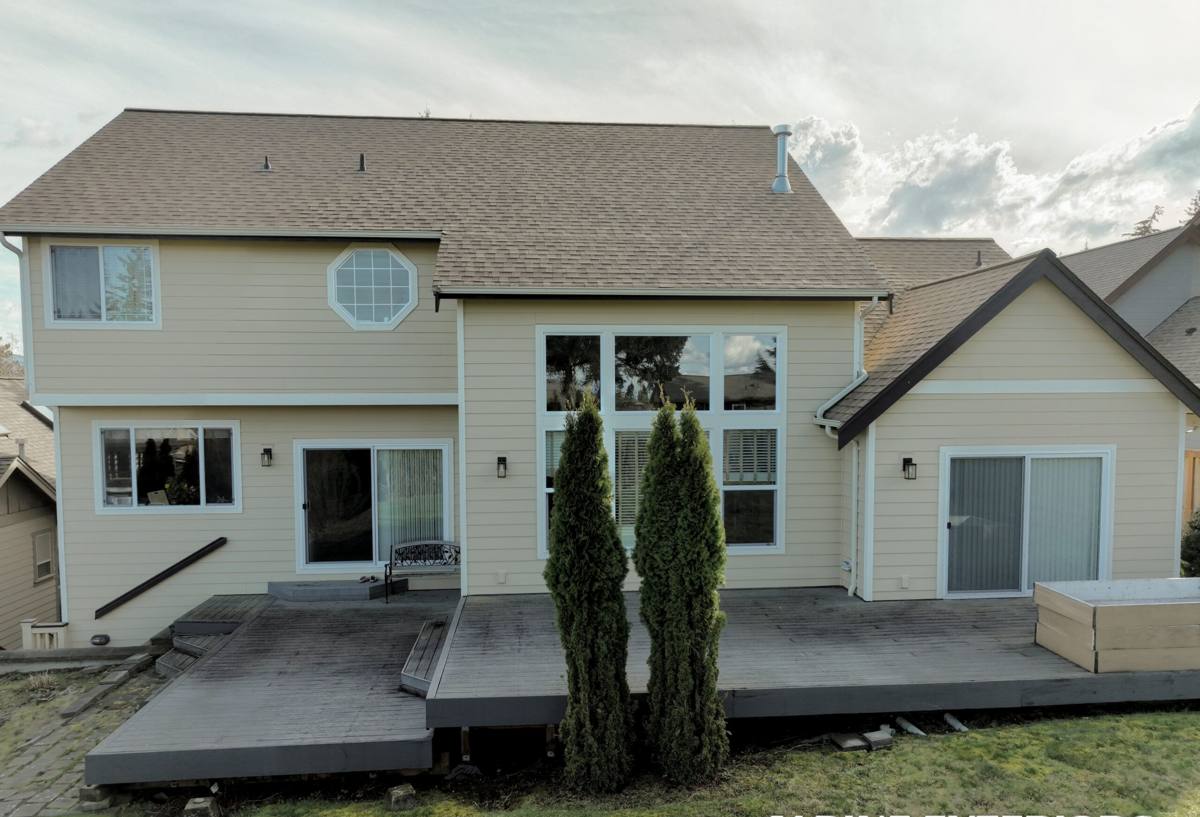
What Whatcom County's Climate Does to a Deck
Three things drive most of the deck damage we see in this part of the county, and they compound each other:
Salt Air
Proximity to Puget Sound and Bellingham Bay means the air carries a low, steady dose of salt. It's not the harsh coastal exposure you'd get right on the water, but over years it accelerates corrosion on any fastener, bracket, or hardware that isn't rated for exterior or coastal use. Galvanized nails and standard screws that would last decades inland can start rusting, weeping stains into the wood, and losing grip strength well before that.
Driving Rain
Whatcom County gets a lot of rain, and a good share of it arrives sideways in wind-driven storms. That matters for decks because driving rain gets pushed into joints, under ledger flashing, and behind rim boards in ways that straight-down rain never would. Any gap in flashing or any spot where two boards meet without a drainage path becomes a place water collects instead of shedding.
A Long Moss Season
Shaded lots, tree cover, and months of damp, mild weather give moss and algae a long window to establish on deck boards, especially on the north side of a house or under overhangs. Moss holds moisture against the wood surface far longer than bare wood would dry on its own, and it makes boards slick and dangerous underfoot long before it does structural damage.
None of these three things alone destroys a deck quickly. Together, over several Whatcom County winters, they're what turns a squeaky board into a rot problem and a rusted joist hanger into a safety issue.
Signs a Cordata Deck Needs Repair
Most deck problems don't announce themselves. Catching them early is the difference between a repair bill and a full rebuild. Walk your deck and check for these:
- Boards that feel spongy, springy, or noticeably softer underfoot than the rest of the deck
- Any board you can push a screwdriver or awl into more than a quarter inch without much resistance
- Dark staining or a musty smell near the ledger board where the deck meets the house
- Rust streaks running down from screw heads, joist hangers, or railing posts
- Railings or posts that wobble or flex when you lean on them
- Gaps opening up between the deck and the house siding or foundation
- Persistent moss or green film that comes back within weeks of cleaning
- Stairs that feel uneven, bouncy, or have visibly sagging stringers
Any one of these on its own might be minor. A railing that wobbles and rust streaks near the connection points usually means the fastening hardware has failed, not just the wood — that's a structural issue, not cosmetic.
What a Correct Deck Repair Actually Involves
A repair that just replaces the boards you can see and skips what's underneath doesn't hold up in this climate. We treat every repair as three layers, and we check all three even when the visible damage looks like just one.
The Structure
Joists, beams, posts, and the ledger board connection to the house are what actually hold the deck up. If moisture has been getting behind flashing or into end grain at joist connections, the framing can be compromised even when the decking boards on top look fine. We probe framing at the ledger, at post bases, and anywhere staining suggests water has been sitting.
The Fasteners and Hardware
Joist hangers, structural screws, post bases, and railing brackets all need to be rated for exterior or coastal exposure to hold up to the salt air here. Reusing standard interior-grade hardware, or hardware that's already showing rust, is one of the most common shortcuts we see in decks that fail early — and it's one of the cheapest things to do correctly the first time.
The Water Management
This is the layer most repairs skip, and it's the one that determines whether the repair lasts. Proper flashing at the ledger board, gapping between deck boards for drainage, and keeping wood-to-wood or wood-to-concrete contact points ventilated all matter more here than in a dry climate. A repair that replaces rotted boards but doesn't fix the flashing or drainage that caused the rot is going to fail again in a few Whatcom County winters.
Repair or Replace? How We Make That Call
Not every deck problem needs a full rebuild, and not every deck is worth patching. The honest answer depends on how much of the structure is affected, not just how it looks.
| Situation | Usually Repair | Usually Replace |
|---|---|---|
| Damage location | Isolated to a few boards or one section | Spread across multiple framing members |
| Ledger board condition | Solid, properly flashed once corrected | Rotted or improperly attached originally |
| Age of the deck | Under 15 years, built to a reasonable standard | Older deck nearing the end of its service life |
| Framing material | Structurally sound, surface issues only | Undersized or rotted joists and beams |
| Code compliance | Railings and stairs already meet current code | Railing height, spacing, or footings out of code |
We'll always tell you plainly which category your deck falls into. If a repair is genuinely the right call, we won't push a rebuild — and if the framing is too far gone to repair safely, we'll explain exactly why rather than just quoting a bigger job.
Our Process for a Deck Repair
- Inspection. We check decking, framing, ledger connection, hardware, and railings — not just the spot you called about, since deck problems often extend beyond the visible damage.
- Written assessment. You get a clear explanation of what's failing, why, and whether it's a repair or a replacement situation, in plain language.
- Repair plan. We scope exactly what gets replaced, what hardware gets upgraded, and how we're correcting the water management issue that caused the damage in the first place — not just swapping boards.
- The work. Removal of compromised material, structural repair, correct flashing and fastening, and reinstallation of decking or railing to match the rest of the deck as closely as possible.
- Cleanup and walkthrough. We clear debris and walk the repair with you so you know what was done and what to watch for going forward.
Materials We Use — and Why
For framing repairs, we use pressure-treated lumber rated for ground contact where it's called for, with structural screws and connectors rated for exterior or coastal exposure rather than standard galvanized fasteners. For flashing, we use self-adhering flashing membrane at the ledger board connection rather than relying on caulk alone, since caulk degrades faster than a proper membrane in a climate with this much rain.
On decking material, we work with whatever your existing deck uses — wood or composite — and repair to match rather than defaulting to a different product. When a homeowner is deciding on decking for a new section or a larger repair, we'll walk through the honest trade-offs: wood costs less up front but needs regular maintenance and refinishing to handle moss and moisture here; composite costs more up front but needs less upkeep, though it still requires correct ventilation underneath to avoid trapping moisture against the framing. Neither is objectively better — it depends on how much maintenance you want to do.
Moss and Ongoing Maintenance
Repair fixes what's already damaged. Maintenance is what keeps the next repair from being necessary. In Whatcom County's climate, that mostly comes down to managing moss and moisture:
- Sweep debris and standing leaves off the deck regularly, especially in fall and through the wet months
- Clean moss and algae off boards before it builds up a thick mat that traps moisture
- Check that gaps between boards haven't closed up with debris or swelling, which blocks drainage
- Reseal or refinish wood decking on the schedule the product calls for — skipping a cycle in this climate shows up fast
- Look at the ledger board and post bases once a year for early staining or rust before it becomes a repair
None of this eliminates the need for repairs eventually — wood and hardware wear out no matter what. But consistent maintenance is the single biggest factor in how many years you get before that repair is needed.
What Deck Repair Typically Costs
Costs vary a lot depending on scope, so treat these as rough starting points for planning, not a quote.
| Repair Scope | What's Involved | Rough Range |
|---|---|---|
| Board replacement | Swapping a handful of damaged decking boards | Several hundred dollars |
| Railing repair | Re-securing or replacing posts, rails, or balusters | Several hundred to low thousands |
| Ledger/flashing correction | Re-flashing the house connection, addressing rot at the ledger | Low to mid thousands |
| Structural framing repair | Replacing joists, beams, or posts | Mid thousands, scope-dependent |
The biggest cost swing factor isn't the visible boards — it's whether the framing and ledger connection underneath are sound. That's exactly why our inspection covers the structure first, so the quote reflects what's actually needed rather than a guess.
Why Hiring a Crew That Already Works Cordata Matters
Deck repair done by a crew unfamiliar with this specific climate tends to under-spec hardware, skip flashing details that matter here, or misjudge whether moss staining is cosmetic or a sign of deeper rot. Working regularly in Cordata and the surrounding Whatcom County area means we've already seen how ledger connections, framing, and railings hold up — or don't — in exactly this combination of salt air, driving rain, and shaded, moss-prone lots. That translates into a repair scoped correctly the first time, with hardware and flashing chosen for the exposure your deck actually faces rather than a one-size-fits-all approach.
If you've noticed soft boards, a wobbly railing, or moss that keeps coming back no matter how often you clean it, we're happy to take a look. We offer a free, no-pressure estimate — walk us through what you're seeing and we'll give you a straight answer on what it needs, whether that's a small repair or something bigger. Use the form below to get started.