 Whatcom County
 Why Siding Installation in Cordata Isn't a One-Size-Fits-All Job
Cordata sits in north Bellingham, close enough to Bellingham Bay and the Salish Sea that salt-tinged air is part of daily weather, and far enough into Whatcom County's marine climate that rain isn't an occasional event — it's a season that runs most of the year. Add in the shade from mature trees on many lots and the humidity that never fully lets up, and you get conditions that are genuinely tougher on exterior siding than what you'd find in a drier inland climate. A siding job that would hold up fine in Spokane or Yakima can fail early here if it isn't built for this specific mix of moisture, salt exposure, and moss pressure.
That's the lens we bring to every Cordata siding installation: not "what's a good siding job" in the abstract, but "what does siding need to do to actually last on a home in this neighborhood, in this climate, for the next 30-plus years."
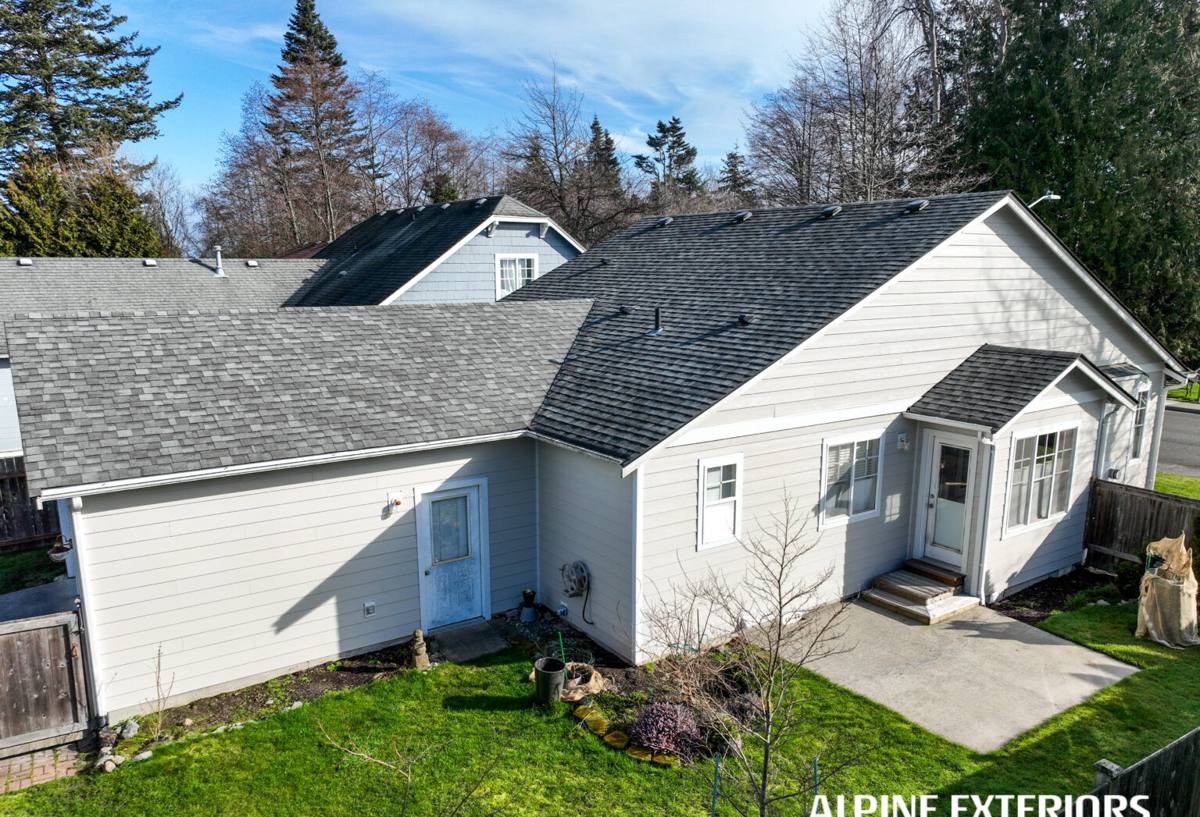
What Whatcom County's Climate Actually Does to Siding
Driving Rain and Wind-Driven Moisture
Storms coming off the Pacific don't just drop rain straight down — wind pushes it sideways into wall assemblies, especially on exposed elevations. If the water-resistive barrier, flashing, and siding laps aren't installed correctly, that wind-driven rain finds its way behind the cladding. Once moisture gets behind siding and can't dry out, you're looking at rot, mold, and damaged sheathing long before the siding itself shows visible wear.
Salt Air
Homes closer to the bay deal with airborne salt that accelerates corrosion on fasteners, flashing, and any metal trim components. It also breaks down lower-quality paint finishes faster than it would in a landlocked climate, which is part of why the type of finish on your siding matters as much as the siding material itself.
Moss and Extended Damp Season
Whatcom County's moss season is long — shaded, north-facing walls and anything under tree canopy stay damp for weeks at a time. Moss and algae don't just look bad; they hold moisture against the siding surface and, over years, can work into seams, laps, and caulk joints if those details weren't sealed correctly to begin with.
What a Correct Siding Installation Actually Involves
A siding job is only as good as what's underneath it. The visible board is the last five percent of the work — the first ninety-five percent is the water management system behind it.
Weather Barrier and Flashing
Every penetration — windows, doors, hose bibs, light fixtures, vents — needs to be flashed so water sheds outward and down, never inward. The weather-resistive barrier underneath needs to be lapped correctly (upper layers over lower layers, always shedding down) and taped or sealed at every seam.
Rainscreen Gap
In a climate this wet, a drainage gap between the weather barrier and the siding gives any moisture that does get past the outer layer somewhere to go, and lets the wall assembly dry out instead of staying saturated. Skipping this detail is one of the more common shortcuts that causes early failures in the Pacific Northwest.
Fastening and Clearances
Fasteners have to be the right type, spaced correctly, and driven to the manufacturer's specification — not just "close enough." Siding also needs proper clearance from grade, roof lines, decks, and other transitions so water doesn't wick up into the bottom edge of the boards.
Caulking and Trim
Every joint, corner, and trim intersection is a potential entry point for water if it isn't sealed with the right product and technique. This is also where a lot of siding jobs quietly start to fail — caulk that was rushed or the wrong type gives out years before the siding itself would.
Why We Only Install James Hardie Fiber Cement
We don't offer a menu of siding brands, and that's intentional. James Hardie's fiber cement is non-combustible, dimensionally stable in wet-dry cycling, and comes with a factory-applied ColorPlus finish that's baked on rather than field-painted — which matters directly in a climate where salt air and UV break down lesser finishes faster. Hardie also engineers its HardieZone system by climate: homes here fall in the HZ5 zone, built for regions with real moisture exposure, as opposed to the HZ10 formulation made for hot, dry climates.
We've made the call not to install vinyl, LP SmartSide, primed wood, or other fiber cement brands on the homes we work on — not because every one of those products is without merit, but because after years of doing this work in this specific climate, Hardie's combination of moisture performance, factory finish durability, and warranty backing is what we're willing to put our name behind. If you want the honest breakdown of why we made that call, we're glad to walk through it — it's a real trade-off discussion, not a sales pitch.
Our Process for a Cordata Siding Installation
- On-site assessment. We look at the existing siding, sheathing condition, trim, flashing at windows and doors, and any moisture damage before quoting anything.
- Tear-off and sheathing inspection. Old siding comes off and we check the sheathing underneath for rot or soft spots — this is the point where hidden moisture damage from a previous installation usually shows up.
- Weather barrier and rainscreen installation. New water-resistive barrier, correctly lapped and flashed, with a drainage gap behind the siding.
- Hardie installation to spec. Fastener type, spacing, clearances, and joint treatment all follow James Hardie's installation manual — not shortcuts.
- Trim, caulking, and touch-up. Every seam and joint sealed correctly; any factory finish touch-up done with matched product.
- Cleanup and walkthrough. Site cleared, and we walk the finished job with you before calling it done.
Signs Your Current Siding Is Already Failing
A lot of siding problems in Whatcom County stay hidden until they're serious. Here's what to look for before it gets there:
- Paint that's bubbling, peeling, or chalking, especially on shaded or bay-facing walls
- Soft or spongy spots when you press on the siding, particularly near the bottom edge or window trim
- Persistent moss or dark streaking that keeps coming back after cleaning
- Visible gaps at seams, corners, or trim joints where caulk has shrunk or pulled away
- Warping, buckling, or boards that no longer sit flat against the wall
- A musty smell near exterior walls inside the home, which can indicate trapped moisture
- Fastener heads showing rust or corrosion stains bleeding down the siding
Any one of these on its own isn't necessarily an emergency, but a few of them together usually means the siding — or what's behind it — needs a real look, not just a pressure wash.
What Drives the Cost of a Siding Installation
Every home is different, and we won't throw out a number without seeing the house, but these are the factors that actually move the price:
| Factor | Why It Matters in Cordata | Effect on the Job |
|---|---|---|
| Tear-off vs. new construction | Most Cordata work is re-siding, which means removing old material and checking sheathing | Adds labor and sometimes sheathing repair |
| Sheathing condition | Years of wind-driven rain can hide rot behind old siding | Repairs are priced separately once uncovered |
| Home size and wall complexity | Multiple gables, dormers, and cutouts take more time regardless of climate | More trim and cutting labor |
| Siding profile chosen | Lap width, shingle-style, or panel siding all install differently | Material and labor cost varies by profile |
| Accessibility | Trees, tight side yards, and multi-story walls common in this neighborhood | Scaffolding or lift access adds cost |
| Trim and detail work | More window and corner detail means more flashing and caulk joints | Increases labor time |
Maintenance That Actually Matters Here
Hardie siding is low-maintenance, not zero-maintenance, and in this climate a little attention goes a long way:
- Rinse siding annually, especially shaded and north-facing walls, to keep moss and algae from taking hold
- Keep gutters clear so overflow doesn't run down the face of the siding during heavy rain
- Trim back vegetation that keeps walls damp and shaded longer than they need to be
- Check caulk joints every couple of years and have any cracked or shrunk sections resealed
- Repaint or touch up trim on the manufacturer's recommended schedule, even though the ColorPlus finish itself lasts far longer than field paint
Why a Crew That Already Works in Cordata Makes a Difference
Siding installation isn't just a product — it's a set of judgment calls made on-site: how much rainscreen gap a particular wall needs, how to flash around an unusual window detail, when to stop and check sheathing instead of siding over a soft spot. A crew that's already done this work throughout Whatcom County has run into this neighborhood's particular mix of tree cover, bay-adjacent humidity, and older housing stock enough times to know what to check for before it becomes a problem. That's not something you can shortcut with a generic install approach built for a drier region.
Local permitting requirements, typical wall assemblies for homes built in this area, and the realistic weather windows for scheduling installation are all things that come from doing this work here repeatedly — not from a manual.
If your Cordata home's siding is showing wear, or you're planning ahead of a problem rather than reacting to one, we're happy to take a look and give you a straight, no-pressure estimate — just fill out the form below.