 Whatcom County
 Storm Damage Roof Repair for Cordata Homes
Cordata sits in north Bellingham, close enough to Bellingham Bay and the Strait of Georgia that roofs here take on a specific combination of weather stress: salt-laden air moving in off the water, long stretches of driving rain, and a moss season that can run most of the year in shaded, north-facing sections of a roof. Add in the outflow wind events that push cold, dry air down out of the Fraser Valley into Whatcom County during the fall and winter, and you get gusts that can lift shingles, drive rain sideways under flashing, and stress roof edges that never see that kind of load in a typical Western Washington storm. None of this means Cordata roofs fail faster than roofs anywhere else in the county — it means storm damage here tends to show up in particular places, and a repair that doesn't account for those places doesn't hold.
This page covers what storm damage roof repair actually involves for a Cordata home, what we look for, and how we decide between a targeted repair and something more involved.
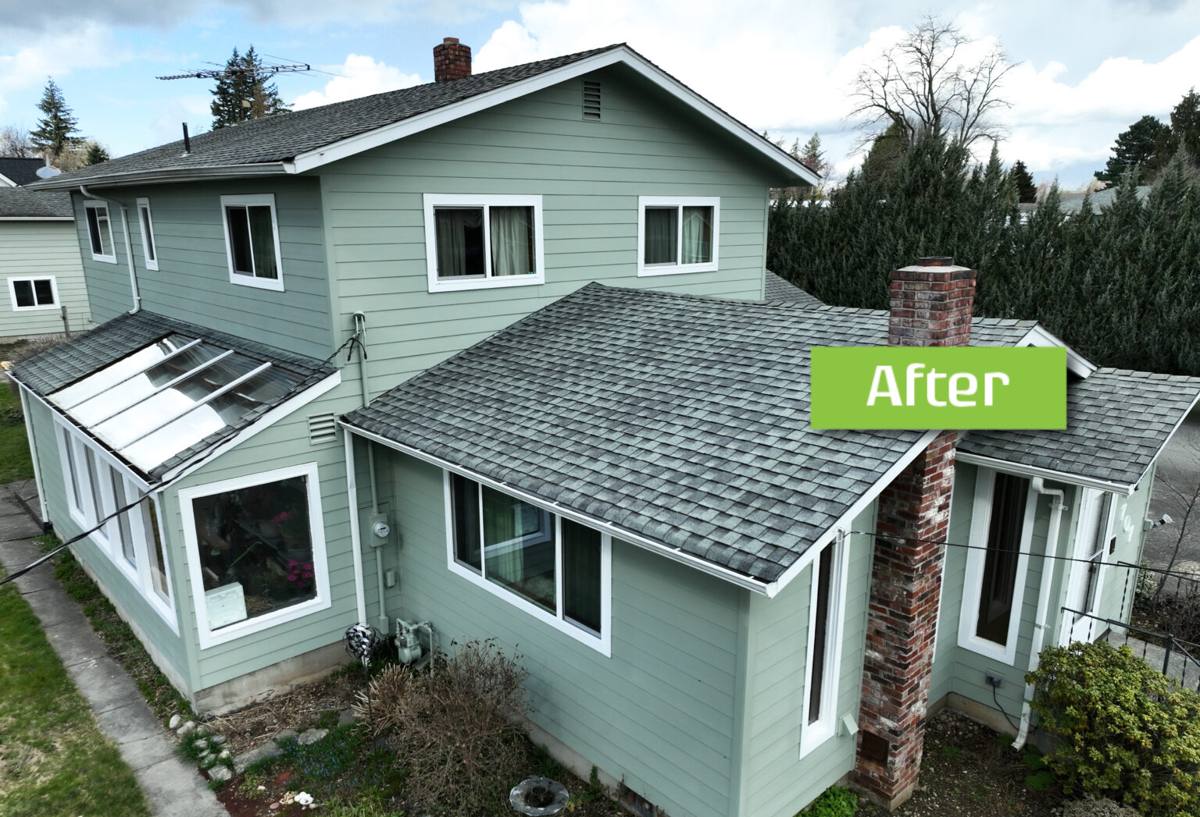
What Whatcom County Weather Does to a Roof Over Time
Wind and outflow events
Whatcom County gets more wind exposure than a lot of people expect, especially in neighborhoods like Cordata that aren't tucked into dense tree cover. Outflow winds moving down from Canada tend to be gusty and directional rather than a steady blow, which is exactly the pattern that works shingle tabs loose over several seasons before a single bad storm finishes the job. We often find wind damage that's been building for years and only becomes obvious after the storm that pushed it over the edge.
Driving, wind-driven rain
Straight-down rain is rarely the problem. Rain pushed sideways by wind finds its way under lifted shingle edges, around flashing that's lost its seal, and into any gap that would stay dry in calmer weather. This is how storm damage turns into water damage inside the attic or ceiling weeks after the actual storm — the entry point was created by wind, but the damage accumulates with every rain after that.
Salt air and moss
Proximity to the water means a slow, steady corrosive effect on exposed metal — nail heads, flashing, vent stacks — that shortens the service life of components that would otherwise last much longer. Moss is the other constant here. Whatcom County's mild, wet winters are close to ideal moss growing conditions, and moss doesn't just sit on top of shingles — it holds moisture against the roof surface and works its way under tabs and around granules, which weakens the exact areas that need to hold up under wind and rain.
Signs a Cordata Roof May Have Storm Damage
Some storm damage is obvious right after a bad weather event. A lot of it isn't, and shows up later as a stain, a soft spot, or a spike in a utility bill. Here's what we tell Cordata homeowners to check after any significant wind or rain event:
- Shingles that look curled, cracked, or are missing outright, especially along roof edges and ridges
- Granules collecting in gutters or at the base of downspouts (a sign shingles are losing their protective surface)
- Flashing around chimneys, skylights, or vent pipes that looks bent, lifted, or separated from the roof surface
- New or growing water stains on interior ceilings or in the attic, particularly near exterior walls
- Visible sagging anywhere on the roofline
- Moss buildup that's thick enough to hold water, especially on the shaded side of the roof
- Debris — branches, needles, blown material from neighboring properties — that's been sitting on the roof long enough to trap moisture
- Gutters pulling away from the fascia or holding standing water
Any one of these on its own might be minor. Two or three together, especially after a wind event, is worth a proper inspection before the next storm finds the weak spot.
What a Correct Storm Damage Repair Actually Involves
A repair that just replaces the shingles someone can see from the ground often misses the reason those shingles failed in the first place. A correct repair starts with figuring out the cause, not just patching the symptom.
Full-roof assessment, not just the damaged section
Wind damage rarely stays confined to one spot. If we find lifted shingles on one slope, we check the rest of the roof for the same wind exposure pattern — because if one section got hit, others likely took stress too, even if it isn't visible yet.
Underlayment and decking check
If water has gotten past the shingle layer, the underlayment and the roof decking underneath need to be checked for saturation or rot. Replacing shingles over compromised decking is a repair that looks fine and fails again within a season or two.
Flashing done right, not just resealed
A lot of storm-related leaks trace back to flashing, not shingles. Caulking over failed flashing is a short-term fix. A correct repair re-forms or replaces the flashing so it sheds water the way it's supposed to, particularly around chimneys, skylights, and roof-to-wall transitions, which are the spots most exposed to wind-driven rain.
Matching materials, not just covering the hole
Shingle color and profile change over the years, and a patch that doesn't match doesn't just look bad — a poor physical match can also mean a poor seal. We match as closely as the existing roof allows, and we're upfront when an exact match isn't possible.
Our Process for a Cordata Storm Repair
- Inspection. We get on the roof (not just a look from the driveway) and document the damage, including areas that aren't obviously affected yet but show early wear.
- Written scope and estimate. You get a clear explanation of what's damaged, what needs to be repaired, and what it costs — no vague line items.
- Temporary protection if needed. If there's active leaking or exposed decking, we address that first so the damage doesn't spread while a full repair is scheduled.
- Repair. We do the actual work — shingle replacement, flashing repair or replacement, decking repair, moss and debris removal — in the order that protects the home fastest.
- Final check. We walk the repair with you, confirm the fix addresses the cause (not just the visible damage), and cover any maintenance steps that will extend its life given the salt air and moss conditions in the area.
Repair or Replacement: How We Make the Call
Not every storm-damaged roof needs a full replacement, and not every roof is a good candidate for another round of patching. We look at the roof's age, overall condition, and how much of it was actually affected before recommending either path.
| Factor | Favors Repair | Favors Replacement |
|---|---|---|
| Roof age | Under 10-15 years, otherwise sound | Near or past expected shingle lifespan |
| Extent of damage | Isolated to one section or slope | Spread across multiple areas or slopes |
| Decking condition | Solid, no rot or soft spots | Saturated, soft, or rotted decking found |
| Shingle wear elsewhere | Rest of roof still has good granule coverage | Granule loss and brittleness widespread |
| History of repairs | First significant repair needed | Repeated patch jobs in recent years |
Homeowners sometimes assume storm damage automatically means a new roof, and sometimes assume a leak can always be spot-patched. Neither is reliably true — the honest answer depends on what we actually find once we're up there.
Materials and Methods Suited to This Climate
Given the salt air and moss exposure common in Cordata and the rest of north Bellingham, we pay particular attention to a few things during any storm repair:
- Corrosion-resistant fasteners and flashing metal where budget allows, since standard materials degrade faster this close to the water
- Proper attic and roof ventilation, which reduces the moisture buildup that feeds moss and accelerates decking rot
- Ice-and-water shield or equivalent underlayment reinforcement at vulnerable points — eaves, valleys, and flashing transitions — where wind-driven rain is most likely to find a gap
- Moss treatment and removal as part of the repair, not just a cosmetic afterthought, since leaving moss in place undermines the repair's lifespan
We're not going to recommend premium upgrades on every job — a lot of storm repairs are straightforward and don't need it. But where the added cost meaningfully extends the life of the repair given our climate, we'll tell you, and explain the trade-off honestly rather than assuming you want the upsell.
Insurance and Documentation
Many storm damage repairs in Whatcom County involve a homeowner's insurance claim, particularly after a named wind event. We provide the kind of documentation — photos, a written damage assessment, and a clear scope of work — that insurance adjusters need to process a claim fairly. We're not a public adjuster and we won't promise a claim outcome, but we will give you an honest, well-documented account of what the storm actually did to your roof, which is the foundation of any legitimate claim.
Why Local Experience in Cordata Matters
A crew that already works in this part of Whatcom County knows the difference between generic storm damage and the specific patterns that show up here — where outflow wind tends to hit hardest, which roof orientations hold moss longest, and how salt air exposure changes maintenance timelines compared to homes further inland. That local pattern recognition means less time spent diagnosing and more time spent fixing the actual problem, and it means the repair recommendations you get are based on what actually happens to roofs in this area, not a generic checklist.
If you've had storm damage or just want a roof checked after a recent windstorm, we're happy to take a look. Reach out for a free, no-pressure estimate using the form below.