 Whatcom County
 Why Edgemoor's Location Changes What a Deck Needs
Edgemoor is one of the closest-to-the-water neighborhoods we work in across Whatcom County, and that changes the calculation on almost every deck we build there. A deck design that holds up fine a few miles inland can fail early here because of three things working together: salt-laden air off the water, wind-driven rain that hits the structure sideways instead of straight down, and a moss season that runs long into the year in this part of Washington. None of that means you can't have a great deck in Edgemoor — it means the build has to account for conditions a generic deck spec doesn't.
Salt Air and Corrosion
Salt air doesn't just affect boats and dock hardware. It settles on metal fasteners, railing brackets, post bases, and hidden connectors, and it accelerates rust and corrosion in materials that would otherwise last decades. On an inland deck, a mid-grade coated fastener might be fine for the life of the structure. On a deck close to open water, that same fastener can start showing rust bleed through the decking within a few years. This is one of the most common callback issues we see on older Edgemoor decks — not rotten wood, but corroded hardware that was never rated for a salt-air environment.
Wind-Driven Rain Off the Water
Rain that comes off open water often arrives at an angle, driven by wind, rather than falling straight down. That matters for ledger board flashing, for how railings and post wraps are detailed, and for whether water gets pushed into seams that a straight-down rain would never reach. A deck built to a generic inland standard can still take on water at the ledger connection or around fasteners if it wasn't detailed for driven rain specifically.
What a Correctly Built Deck Actually Involves
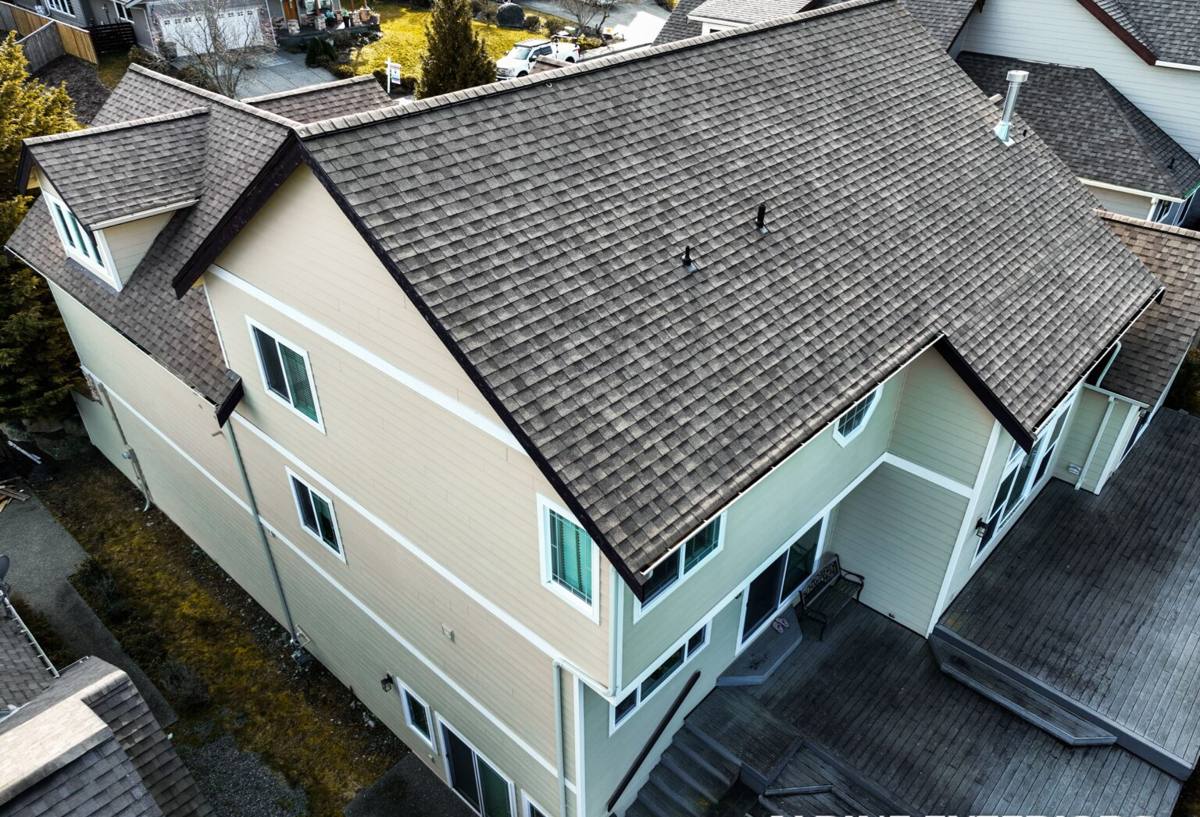
A deck is a structure, not just a surface to walk on, and most of what determines whether it lasts is invisible once the project is finished. Getting it right the first time matters more here than in drier climates, because a mistake in the framing or flashing doesn't just shorten the life of the deck — it can lead to hidden rot against the house itself.
The Structural Layer
This includes the ledger board connection to the house (properly flashed so water can't get behind it), joists sized and spaced for the actual load and span, footings set below frost depth and bearing on solid ground, and beams sized for the span and the region's snow and wind load requirements. This is the part of the job that's easiest to shortcut and hardest to inspect later, which is exactly why it's worth getting right the first time.
The Weather-Facing Layer
This is everything that sheds or resists water and salt air: ledger flashing, joist tape or joist caps that protect the top of every framing member from standing moisture, drainage slope built into the frame, and hardware chosen for the exposure rather than just the budget. Decking, railings, and fascia sit on top of this layer — but if this layer is wrong, no amount of nice decking material fixes it.
Choosing Decking Material for Salt Air and a Long Wet Season
There's no single "best" decking material — there's a best material for your budget, your maintenance appetite, and how exposed your specific lot is to salt air and standing moisture. Here's how the common options actually compare in Edgemoor's conditions, not in a showroom.
| Material | Performance Near Salt Air / Moisture | Maintenance | Typical Cost Position |
|---|---|---|---|
| Pressure-treated wood | Decent if fasteners and hardware are upgraded; the wood itself handles moisture reasonably well | Needs regular cleaning and re-sealing to resist moss and graying | Lowest upfront cost |
| Cedar | Naturally moisture- and insect-resistant, but softer and more prone to surface wear near driven rain | Higher — regular sealing/staining to maintain appearance and weather resistance | Mid-range |
| Capped composite | Very good — the cap resists moisture absorption and staining, holds up well to salt air | Low — periodic washing, no staining or sealing | Mid-to-upper range |
| PVC / cellular decking | Excellent moisture resistance since there's no wood fiber to absorb water at all | Lowest — occasional washing | Highest upfront cost |
For a lot with heavier salt exposure or a lot of shade (which keeps surfaces damp longer and feeds moss growth), we usually steer homeowners toward capped composite or PVC decking, because the maintenance savings offset the higher material cost over the life of the deck. For a more sheltered Edgemoor lot, a well-built wood deck with upgraded hardware is still a legitimate, more affordable option — it just needs more attention from the homeowner over time.
Fasteners, Fixtures, and Hardware: The Part Homeowners Don't See
This is the single biggest difference between a deck built for salt air and a deck that just happens to be near the water. Every screw, bracket, post base, and railing fastener is a potential corrosion point, and the failure often shows up as unsightly rust streaks on the decking long before it's a structural problem — but it eventually becomes one if ignored.
Stainless Steel vs. Coated Fasteners
Standard coated deck screws are built for general exterior use, not sustained salt exposure. On or near the water, stainless steel fasteners (or fasteners specifically rated for coastal/marine exposure) are the right call for anything structural or visible. It costs more upfront and it's a cost we're upfront about, but it's cheap compared to the labor of replacing corroded hardware later.
Hidden Fastener Systems
Hidden fastener systems, which clip decking boards from underneath instead of screwing through the top face, do two things well here: they keep water from pooling in screw heads on the walking surface, and they eliminate one of the most common points where surface rust bleeds into the decking. They're not required, but on a composite or PVC deck we usually recommend them.
Railings and Metal Accents
Metal railing systems and cable railing in particular need to be rated for coastal or marine environments if the home is close to open water. A railing system that isn't will show corrosion at the connection points well before the rest of the deck shows its age.
Designing Against Moss and Standing Water
Whatcom County's wet season runs long, and Edgemoor's water-adjacent, often tree-shaded lots hold moisture longer than a more open, sun-exposed site. Moss and mildew aren't just cosmetic here — moss holds moisture against the decking surface and, on wood, accelerates rot underneath.
Board Spacing and Drainage
Correct gapping between deck boards lets water and debris pass through instead of collecting, and the frame underneath should be built with a slight slope so water moves off rather than pooling. This is a framing decision, not something you can fix later by changing the decking material on top.
Under-Deck Conditions
If the space underneath the deck stays damp and shaded, that's exactly the environment moss and mildew need. Keeping vegetation clear of the underside, and in some cases adding an under-deck drainage system if the space below is used as living area, both help.
Surface Texture
Some composite and wood surfaces hold moisture (and moss spores) in their texture more than others. A smoother-finish board is easier to keep clean in a high-moss environment, though it's a smaller factor than spacing and drainage.
Permits and Site Considerations in Edgemoor
Most new decks and significant deck rebuilds in Whatcom County require a building permit, and homes close to shoreline or critical areas can have additional review depending on setbacks and local shoreline regulations. Every lot is different, and we don't guess on this — as part of our process we confirm what applies to your specific property with the local jurisdiction before finalizing a design, rather than assuming a standard setback applies everywhere in the neighborhood.
What This Means for Your Timeline
Permit review adds time to a project, and that's true everywhere, not just in Edgemoor. Building it into the schedule from day one — instead of treating it as a surprise delay — is part of running the project honestly.
Our Process for an Edgemoor Deck Project
The process is straightforward, but each step exists for a reason specific to this kind of site and climate.
- Site visit and assessment: We look at sun exposure, shade patterns, proximity to water, existing structure condition (for rebuilds), and drainage on the actual lot — not a generic checklist.
- Design and material consultation: We walk through decking material options honestly, including the maintenance trade-offs, based on how exposed the specific site is to salt air and moisture.
- Permit handling: We confirm what's required for the property and handle the paperwork rather than leaving it to the homeowner.
- Build: Structural framing and flashing first, with fasteners and hardware upgraded appropriately for the exposure, then decking, railings, and finish work.
- Final walkthrough: We go over the finished deck together and explain what maintenance will actually keep it looking and performing well, specific to the material chosen.
Maintaining a Deck Through Whatcom County's Moss Season
Whatever material you choose, a little regular maintenance goes a long way toward getting the full lifespan out of it. This is a realistic checklist, not a sales pitch for add-on services.
- Sweep debris and standing leaves off the deck surface regularly, especially in fall when moss growth accelerates
- Rinse or wash the surface periodically to remove early moss and mildew before it takes hold, especially in shaded areas
- Check railing connections and visible fasteners once a year for early rust staining, which is easier to address early than late
- Keep the area underneath the deck clear of vegetation so it can dry out between rain events
- For wood decks, plan on re-sealing or re-staining on a regular cycle rather than waiting until it visibly needs it
- For composite or PVC decking, an occasional wash is usually all that's needed — resist the urge to seal or stain a capped product
Why a Crew That Already Works Edgemoor Matters
Deck building isn't unique to this neighborhood, but building one that actually holds up here benefits from having done it before, on this kind of site, in this exact climate. Knowing which fasteners actually hold up to the salt air locally, how the permitting process runs for water-adjacent Whatcom County properties, and which decking materials are worth the extra cost on a shaded, moisture-heavy lot isn't something you get from a general contractor working the area for the first time. It comes from having built and maintained decks in these exact conditions before.
If you're considering a new deck or a rebuild in Edgemoor, we're happy to come take a look at your specific site, talk through material options honestly, and put together a straightforward estimate — no pressure, no upsell. The form below is the easiest way to get that started.