 Whatcom County
 Why South Hill Decks Take More Punishment Than Most
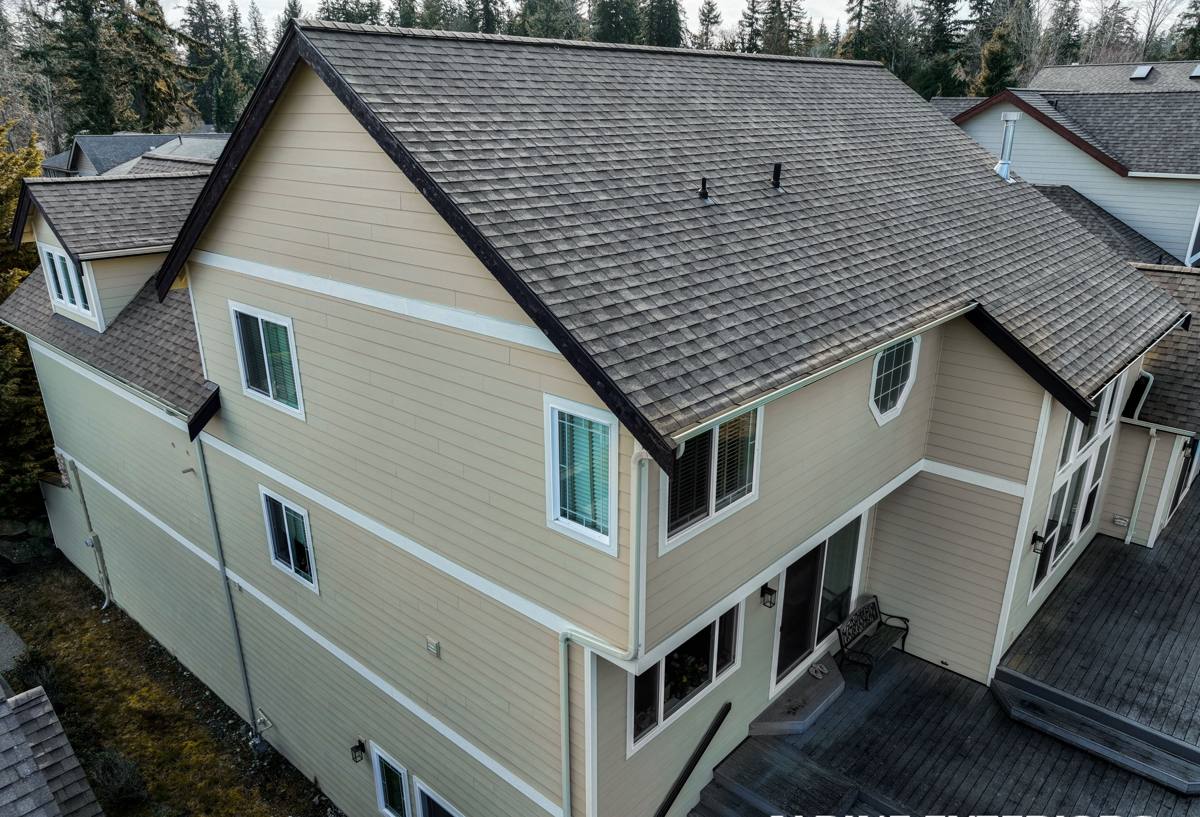
South Hill sits up on the slope above downtown Bellingham, which means most decks up here get more weather exposure than a deck tucked into a low, sheltered yard elsewhere in Whatcom County. Higher ground means more wind-driven rain hitting the deck surface and the house wall behind it, more direct exposure to salt-laden air off Bellingham Bay, and shade patterns from mature trees that keep the boards damp longer after a storm. None of that is unusual for this part of Washington, but it adds up faster on an elevated or hillside deck than it does on a ground-level patio deck somewhere inland.
We repair decks all over Whatcom County, and the failure patterns we see on South Hill are consistent enough that we can usually guess what we'll find before we even climb the ladder: corroded fasteners, soft spots near the house connection, and a green film of moss that's been trapping moisture against the wood since October.
Salt Air and Fastener Corrosion
Homes within a few miles of the bay get a steady dose of salt in the air, and that salt accelerates corrosion on anything metal — nails, screws, joist hangers, post brackets. Once a fastener starts rusting, it loses grip strength long before it looks obviously broken. Rust streaks bleeding out around deck screws or hanger nails are one of the clearest early warning signs we look for.
Driving Rain and the Ledger Connection
The single most important — and most commonly mishandled — connection on any deck is where it attaches to the house (the ledger board). Wind-driven rain pushes water sideways and up, not just straight down, and if that connection wasn't flashed correctly when the deck was built, water works its way behind the ledger and into the house framing. This is slow, hidden damage, and it's the single most expensive thing to ignore.
The Long Moss Season
Whatcom County's moss season runs long — often eight months or more of consistently damp conditions favor it. Moss on a deck surface isn't just a slip hazard; it holds water against the wood fibers around the clock, which is exactly the condition that causes rot and encourages the boards to cup and split.
Signs Your Deck Needs Repair
Most decks don't fail all at once — they show warning signs for a season or two first. Here's what we tell South Hill homeowners to check for before calling anyone:
- Soft or spongy spots when you press on the decking, especially near the house or around post bases
- Rust streaks below screw heads, nail heads, or joist hangers
- Boards that have cupped (curled at the edges) or visibly split along the grain
- A gap, crack, or water staining where the deck meets the house siding
- Wobble or movement in the railing when you lean on it
- Moss or green growth building up on the walking surface year after year
- Posts that feel loose at the base, or visible gaps at the footing
- A musty smell or visible mold on the underside of the deck
Any one of these on its own might be minor. Two or three together, especially near the ledger or a support post, usually means it's worth a proper inspection before the next wet season makes it worse.
What a Correct Deck Repair Actually Involves
"Deck repair" covers a wide range of work, and a lot of what determines whether a repair holds up is what happens below the decking boards, not the boards themselves.
Structural Framing
Joists, beams, and posts are the skeleton. If a joist has soft, rotted wood along its top edge where water has been sitting, the fix is usually sistering (bolting a new joist alongside the damaged one) rather than just patching it. Post bases that have wicked up moisture from grade contact need to be replaced with a proper standoff base that keeps the post end off wet soil or concrete.
The Ledger and Flashing
Any repair that touches the ledger connection is a chance to correct flashing that was never done right in the first place. Proper flashing sheds water away from the house wall instead of behind it — this is the detail we check most carefully on older South Hill decks, since a lot of them predate current flashing standards.
Decking and Railings
Individual board replacement is straightforward when the framing underneath is sound. Railings get inspected for post attachment strength, not just wobble at the top rail — a railing that looks fine but is only held by a few corroded screws at the base is a safety issue, not a cosmetic one.
Fasteners
We use stainless steel or high-grade hot-dip galvanized fasteners rated for treated lumber contact, especially anywhere within reach of salt air. Standard coated deck screws are cheaper, but they're also the first thing we find failing on repair calls in this area — matching the fastener to the environment matters more here than it would forty miles inland.
Repair vs. Replace: How We Decide
Not every deck with problems needs to be torn out. The decision usually comes down to how much of the structure — versus just the surface — is affected.
| Factor | Repair Usually Makes Sense | Replacement Is Usually Better |
|---|---|---|
| Framing condition | Isolated rot at one or two joists or a single post | Rot or corrosion spread across multiple framing members |
| Ledger connection | Flashing can be corrected without full demo | Ledger board itself is compromised or improperly sized |
| Decking surface | Individual boards cupped, split, or worn | Most boards are past their service life at once |
| Age of deck | Structure is younger, problem is localized | Deck is old enough that a repair just delays the same work |
| Budget approach | Lower upfront cost, targeted fix | Higher upfront cost, resets the clock on the whole structure |
We'll always tell you honestly which category your deck falls into. A repair that's really just postponing a full rebuild isn't a good use of anyone's money.
Materials We Use, and Why
For structural framing repairs, pressure-treated lumber rated for ground contact is the standard, even for elevated framing — it's the most reliable option for resisting the moisture cycling that's normal in this climate. For decking surfaces, homeowners generally choose between a few paths:
- Cedar — a natural look that a lot of South Hill homeowners want, but it requires regular sealing or staining to hold up against the county's rain totals
- Pressure-treated decking — the most budget-friendly option, durable when properly maintained, but it will show wear and needs periodic refinishing
- Composite decking — higher upfront cost, but far less maintenance and better resistance to moss staining and moisture absorption over time
There's no universally "right" answer — it's a trade-off between upfront cost and long-term maintenance, and we'll walk through the honest pros and cons for your specific deck rather than push whatever happens to be easiest for us to install.
Our Repair Process
- Inspection — we check framing, fasteners, the ledger connection, posts, and footings, not just the visible decking surface
- Scope and estimate — a clear, honest breakdown of what's structural versus cosmetic, with a straightforward price
- Permitting — structural work (framing, ledger reattachment, footings) typically needs a permit; we handle that so you don't have to chase it down
- Repair — framing and connections fixed first, then decking, railings, and finish work
- Final walkthrough — we go over what was done and what maintenance, if any, will keep it in good shape
Code and Safety Basics Worth Knowing
Washington follows the International Residential Code with state amendments, and decks get specific attention because ledger failures and railing collapses are among the most common residential deck injuries nationally. A correct repair respects guardrail height and spacing requirements, uses joist hangers rated for the load rather than just toe-nailing, and ties the ledger to the house with lag screws or through-bolts sized for the span — not just whatever fastener happens to be on hand. If a repair crew skips these details because they're "just doing a patch job," you end up with a deck that looks fixed but isn't actually safer.
Why Hire a Crew That Already Works South Hill
A deck repair contractor who works around Bellingham Bay regularly knows which fastener grades hold up against salt air, how long moss season really runs here, and where driving rain tends to find its way into a ledger connection on a hillside lot. That's not a guess — it's pattern recognition from doing this work repeatedly in this exact climate, on homes with the same slope, exposure, and weather as yours. It also means we're not learning on your project; we already know what tends to fail first on a South Hill deck and where to look for it.
Keeping Your Deck in Good Shape After the Repair
Once a deck is repaired correctly, a little seasonal upkeep goes a long way in this climate: sweep debris and moss off the surface before it has a chance to sit wet, keep gutters and downspouts clear so runoff isn't pooling near posts or footings, and re-seal or re-stain wood decking on the schedule the product calls for rather than waiting until it's visibly gray and dry. None of this is complicated, but skipping it is how a good repair turns into a repeat repair a few years down the road.
If your deck has soft spots, rust stains, or just doesn't feel as solid as it used to, we're happy to take a look. Fill out the form below for a free, no-pressure estimate — we'll tell you honestly what needs fixing and what can wait.