 Whatcom County
 Building a Deck That Actually Holds Up in Sunnyland
Sunnyland sits in one of the wetter, greener pockets of Whatcom County, and that's exactly what makes it a nice place to live — and a hard place to keep an outdoor structure looking good. A deck here isn't just furniture for the yard. It's a wood or composite structure that sits exposed to driving rain for months at a time, catches falling debris from mature trees, and spends a long stretch of the year shaded and damp enough for moss and algae to take hold. A deck built the way it might be built in a drier climate will show its age fast here. One built for this specific area holds up for decades.
We work on decks throughout Bellingham and the surrounding county, and Sunnyland's mix of established tree canopy, older housing stock, and sloped lots comes up often enough that we've got a good feel for what these properties need. This page covers what actually matters for a deck build in this neighborhood — not generic deck-building advice, but the specifics that come from working this climate and these lots.
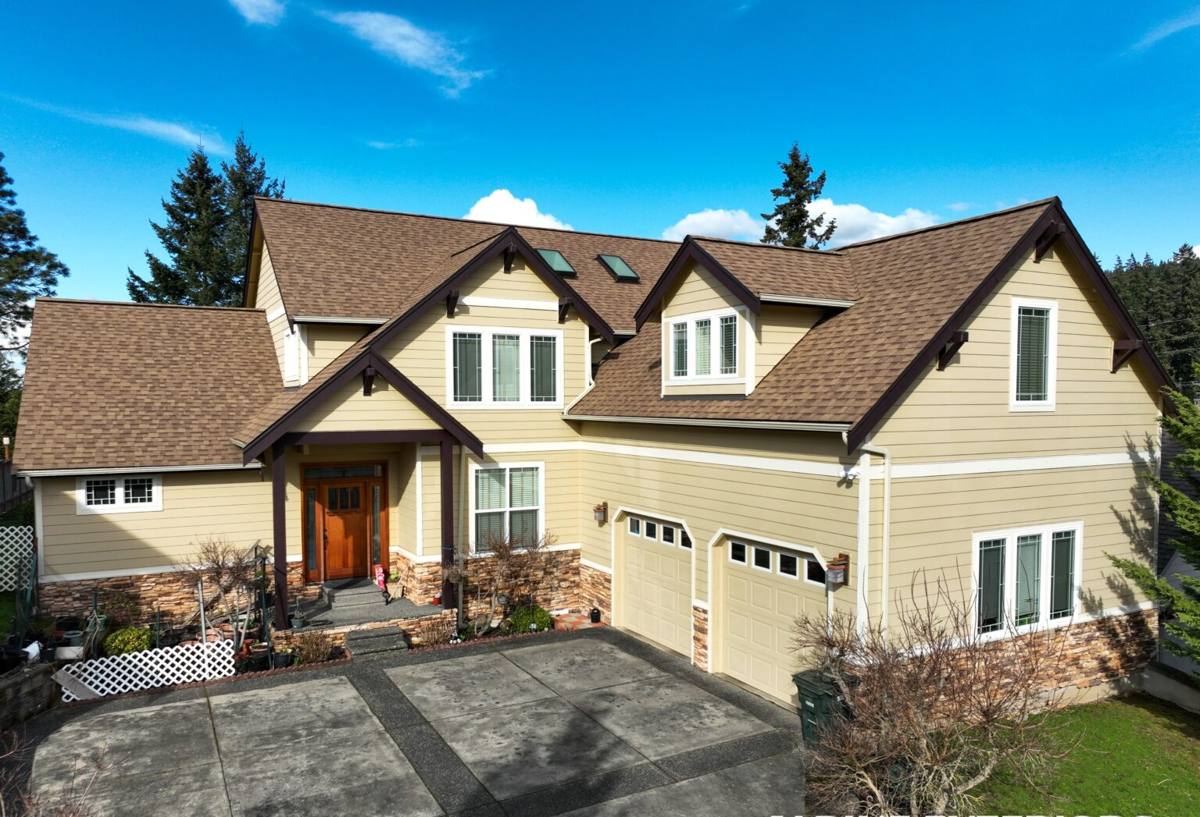
What Whatcom County Weather Does to a Deck
Three things drive almost every deck problem we get called out for in this region: sustained moisture, moss and organic buildup, and the salt-laden air that moves inland off the Sound and the Strait during storms. None of these are dramatic on their own, but stacked together over a Whatcom County winter, they're relentless.
- Driving rain gets pushed sideways by wind, which means it reaches surfaces a straight-down rain never would — the undersides of rail caps, the backs of fascia boards, ledger connections tucked against the house.
- Moss and algae need shade, moisture, and time, and Sunnyland's tree cover provides all three for a good chunk of the year. Once moss establishes on a deck surface, it holds water against the wood or composite cap and stays wet long after the rest of the yard has dried out.
- Salt air corrodes exposed metal — screw heads, joist hangers, railing hardware — faster than most homeowners expect, especially on fasteners that weren't rated for exterior or coastal exposure to begin with.
None of these are reasons to avoid building a deck. They're reasons to build one with the right materials, the right fasteners, and the right drainage details from the start.
Choosing the Right Decking Material for This Neighborhood
There's no single "best" decking material — there's a best material for your budget, your maintenance appetite, and how much shade your lot gets. We walk every Sunnyland client through the real trade-offs rather than pushing whatever's easiest for us to install.
| Material | How it handles moss/moisture | Maintenance | Typical lifespan here |
|---|---|---|---|
| Pressure-treated wood | Absorbs moisture readily; needs airflow and regular sealing to resist moss and rot | Annual cleaning, re-staining every 2-3 years | 15-20 years with upkeep |
| Cedar | Naturally rot-resistant but still holds moisture without maintenance; moss will still colonize a neglected surface | Cleaning and oil/sealer every 1-2 years | 15-25 years with upkeep |
| Composite decking | Won't rot, but textured caps can still hold surface moss if never cleaned | Occasional wash; no staining or sealing | 25-30+ years, manufacturer-backed |
| PVC decking | Fully moisture-resistant, sheds surface water well | Lowest maintenance of the group | 25-30+ years, manufacturer-backed |
For heavily shaded Sunnyland lots, we lean toward composite or PVC when budget allows — not because wood can't work, but because wood in deep shade needs a homeowner who's genuinely going to clean and reseal it on schedule. If that's not realistic for your household, a low-maintenance material saves you from a deck that looks tired within a few seasons regardless of how well it was built.
If You Want Real Wood
We're not going to talk anyone out of a wood deck — a well-built cedar or treated-wood deck has a warmth composite can't fully match, and plenty of Sunnyland homes carry that look well. The condition is honest maintenance: cleaning debris off the surface before it composts into moss food, and re-sealing on the schedule the wood actually needs, not just when it starts looking gray.
Framing and Structure: Where Most Deck Failures Actually Start
The decking surface is what you see, but the framing underneath is what determines whether the deck is still safe in fifteen years. This is where a lot of older decks in this area run into trouble, and it's the part of the job we spend the most time getting right.
Ledger Attachment
The ledger board — where the deck ties into the house — is the single most common point of moisture failure we find on older decks. If it wasn't flashed correctly when installed, water works its way behind it and rots both the ledger and the house's rim joist behind it. We flash every ledger connection properly and use structural fasteners rated for exterior exposure, not just whatever was in the box.
Footings and Post Bases
Whatcom County's clay-heavy, often-saturated soil means footings need to be sized and set to local frost depth and drainage conditions, not just "deep enough to look right." Post bases should sit above grade on a standoff so the post end itself never sits in standing water.
Joist Protection and Airflow
Joist tape over the tops of framing lumber, proper joist hanger hardware rated for exterior use, and enough airflow underneath the deck to let framing dry out between rain events all matter more here than in a drier climate. A deck built low to the ground with poor ventilation underneath will trap moisture against the framing regardless of what decking material sits on top.
Fasteners and Hardware: Small Parts, Big Consequences
This is an easy detail to skip and a costly one to fix later. Standard interior-grade or mismatched fasteners corrode faster in this region's humid, occasionally salt-tinged air, and a corroding screw head or joist hanger weakens the connection it's supposed to be holding. We use stainless or hot-dip galvanized hardware rated for exterior and treated-lumber contact throughout the structure — not just on the visible surface boards.
Moss, Drainage, and Keeping the Deck Usable Year-Round
A deck that sheds water well needs less maintenance and lasts longer, full stop. A few details we build in on every Sunnyland project:
- Decking boards spaced correctly for drainage rather than tight-fit for looks alone
- Slight slope away from the house so water doesn't pool against the ledger
- Stair stringers and rail posts set to shed water rather than trap it at the base
- Material and finish choices matched to how much direct sun the deck actually gets
Even with good drainage, moss will eventually try to establish on a shaded deck. A seasonal rinse and sweep — before fall debris builds up and before spring growth takes hold — is the single most effective thing a homeowner can do to keep a deck from looking neglected, regardless of material.
Our Process for a Sunnyland Deck Build
- On-site assessment — we look at your lot's grade, shade pattern, existing structure (if replacing a deck), and how the space will actually be used.
- Design and material selection — we walk through material options and layout based on your budget and maintenance preference, not a one-size template.
- Permitting — most new decks and significant rebuilds in Bellingham and unincorporated Whatcom County require a permit; we handle that process and build to the inspected standard.
- Framing — footings, ledger flashing, joist layout, and hardware selection built for this region's moisture exposure.
- Decking, railing, and finish work — installed with attention to drainage and fastener placement, not just visual fit.
- Final walkthrough — we go over maintenance expectations specific to the material you chose so there are no surprises a year in.
Permits and Inspections
Deck permitting requirements in Whatcom County and the City of Bellingham depend on the deck's height, size, and attachment to the house — a low, freestanding deck may fall under different rules than a raised deck tied into a second-story living space. We pull the correct permits and build to pass inspection the first time, which matters both for your safety and for resale down the road; an unpermitted deck is a common snag in home sales here.
Signs an Existing Deck Needs Attention
If you've got a deck already and aren't sure whether it needs repair or full replacement, these are the checks worth doing before the next wet season:
- Soft or spongy spots underfoot, especially near the house or stairs
- Rust streaks running from screw heads or hardware
- Persistent moss or dark staining that returns quickly after cleaning
- Gaps or separation where the ledger meets the house
- Wobble in railings or posts when pushed firmly
- Visible daylight or rot at post bases near grade
Any of these are worth a professional look before they become a safety issue rather than a maintenance item.
Why Local Experience with Sunnyland Lots Matters
A deck built by a crew that doesn't regularly work this climate can still look fine on installation day — the problems show up two or three winters later, once the flashing detail that worked in a drier region has let water behind the ledger, or a decking material chosen without accounting for heavy shade starts holding moss it was never rated to resist. We work Sunnyland and the surrounding Whatcom County neighborhoods regularly enough to know which details actually matter here versus which are just upsells, and we build accordingly.
If you're planning a new deck or need an honest look at an existing one, we'd be glad to walk your property and put together a straightforward, no-pressure estimate — just fill out the form below.