 Whatcom County
 Windows That Have to Work in a Marine Climate
Columbia sits inside Whatcom County's marine climate zone, which means windows here deal with a different set of stresses than windows almost anywhere inland. Salt-laden air moves in off the water and settles on glass, frames, and hardware. Rain doesn't just fall here — it drives sideways for days at a stretch, pushed by wind that finds every weak seal. And for a good chunk of the year, shaded north- and west-facing walls stay damp long enough for moss and algae to take hold on sills, tracks, and exterior trim. None of that is a problem a generic window install is built to solve.
When we talk about "custom windows" for a Columbia property, we mean windows and installation details chosen specifically for this exposure — not just a size that fits the rough opening, but a frame material, glazing package, and flashing detail that will still be doing its job in fifteen years of Whatcom County weather.
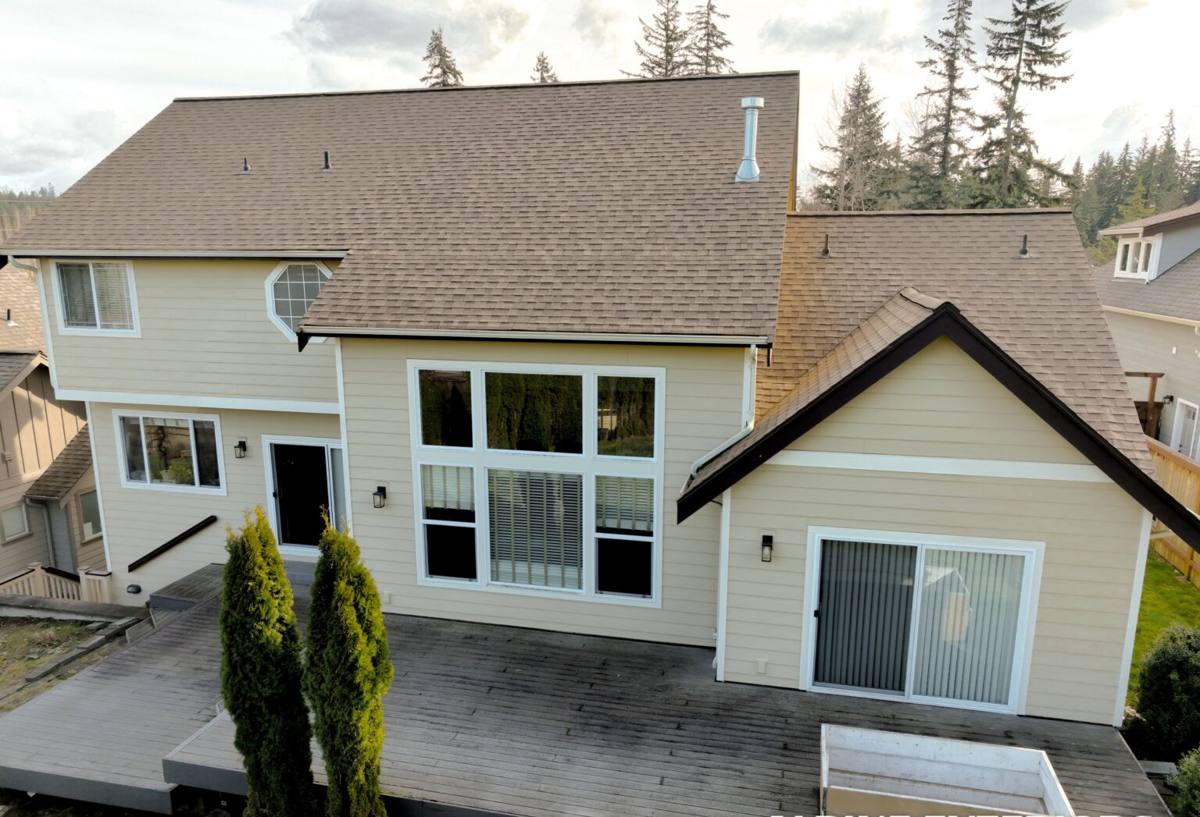
Why Columbia Homes Have Particular Window Needs
Age and construction of the housing stock
Like much of Whatcom County, Columbia has a mix of older homes with original single-pane or early double-pane windows and newer construction with builder-grade units. Older homes often have wood-framed openings that have taken on decades of moisture cycling — expanding, contracting, and occasionally rotting at the sill. Newer homes sometimes have windows that were installed fast during a building boom, with flashing details that were adequate but not built for long-term coastal exposure.
Exposure and orientation matter more here
A window on the weather-facing side of a Columbia home is doing a fundamentally different job than one tucked under an eave on the leeward side. Driving rain hits exposed walls at an angle that can force water past marginal seals, and salt air accelerates corrosion on hardware and metal components regardless of which direction the window faces. A correct custom window plan accounts for each elevation separately instead of specifying one window type for the whole house.
What a Correct Window Job Actually Involves
Swapping glass into an existing frame is not the same as a proper window replacement, and in this climate the difference shows up within a couple of wet seasons. A correct job includes:
- Removing the old unit down to the rough opening and inspecting the sill, jack studs, and sheathing for rot or moisture damage before anything new goes in
- Repairing or replacing any water-damaged framing — installing a new window into a compromised opening just hides the problem
- Installing a sloped sill pan so any water that gets past the window sheds outward instead of sitting against the frame
- Flashing the opening in the correct shingle-lap order (sill, sides, then head) so water is always directed outward and downward
- Using a compatible sealant and backer rod at the exterior joint, sized and placed so it can flex with seasonal movement
- Confirming the window is level, plumb, and square before final fastening, since a racked frame stresses seals and hardware early
- Insulating the gap between frame and rough opening properly — overpacking or underfilling both cause problems
Any one of these steps done wrong can undo the benefit of an expensive, high-performance window. We've seen quality units fail early in Whatcom County homes purely because of flashing or sill-pan mistakes, not because the window itself was bad.
Choosing Materials for Salt Air and Constant Moisture
Frame material is one of the biggest decisions in a custom window project, and it's where climate should drive the choice more than style preference alone.
| Frame Material | How It Handles This Climate | Trade-Offs |
|---|---|---|
| Vinyl | Won't rot or corrode from salt air; low maintenance | Limited color/finish options; can look less premium on higher-end homes |
| Fiberglass | Very stable in wet, temperature-swinging conditions; resists warping | Higher upfront cost than vinyl |
| Wood (clad exterior) | Classic look, good for period homes; exterior cladding protects from moisture | Requires that cladding stay intact — any breach exposes wood to rot |
| Aluminum | Strong and slim sightlines | Prone to corrosion and condensation in salt air unless properly coated and thermally broken |
For most Columbia homes we lean toward vinyl or fiberglass for full exterior exposure, and reserve clad-wood for covered or less-exposed elevations where the look is worth the added upkeep. We don't push uncoated or bare aluminum in this climate — the corrosion and condensation issues aren't worth the trade-off, in our experience with coastal Whatcom County exposure.
Glass and Weatherstripping Choices That Matter Here
Beyond frame material, two other choices affect how a window performs against this specific climate:
Glazing package
Double-pane with a low-E coating and argon fill is the baseline we recommend for Whatcom County. It cuts condensation risk on cold, damp mornings and improves comfort near the glass in winter. For west- or north-facing walls that take the brunt of driving rain, we'll also discuss upgraded glazing spacers that resist seal failure longer under constant moisture exposure.
Weatherstripping and hardware
Cheap weatherstripping compresses and loses its seal faster in constantly damp conditions. We spec compression-style seals and corrosion-resistant hardware (stainless or coated steel, not bare) so locks and hinges keep working smoothly instead of seizing or staining after a few wet seasons.
Signs Your Current Windows Are Losing the Fight
Homeowners in Columbia often live with early warning signs for years before addressing them. Worth checking for:
- Fogging or moisture between panes — a sign the seal has failed and the insulating gas is gone
- Soft or discolored wood at the sill or lower frame corners
- Drafts you can feel near the frame even when the window is fully closed and locked
- Moss or dark streaking building up on the sill or bottom track that comes back quickly after cleaning
- Difficulty opening, closing, or locking that wasn't there a year or two ago
- Visible daylight or a whistling sound around the frame during wind-driven rain
Any of these usually means the seal or flashing has already been compromised — worth having looked at before it turns into framing damage.
How Our Process Works
1. On-site assessment
We look at each window opening individually — orientation, current condition, any signs of past water intrusion — rather than quoting a blanket package for the whole house.
2. Material and glazing recommendation
Based on that assessment, we recommend frame material and glazing per elevation, not per house, since a south-facing window under an eave and an exposed west-facing window often call for different specs.
3. Removal and opening inspection
Old units come out, and we inspect the framing before anything new is installed. If there's rot or damage, we address it before proceeding — not after.
4. Installation to a consistent flashing and sealing standard
Every opening gets the same sill-pan, flashing, and sealant sequence regardless of which crew member is on it, so the result doesn't depend on who happened to do the work that day.
5. Final check
We test operation, check for square and level, and walk the exterior seal line before calling the job done.
What Affects Cost
Every custom window project is different, but the main cost drivers on a Columbia job tend to be:
| Factor | Why It Matters |
|---|---|
| Frame material chosen | Vinyl is typically the most affordable; fiberglass and clad-wood cost more upfront |
| Number and size of openings | Larger and custom-shaped windows cost more than standard sizes |
| Condition of existing framing | Rot or water damage found during removal adds repair work before the new window goes in |
| Glazing upgrades | Enhanced low-E coatings or upgraded seals add cost but extend service life in this climate |
| Access and elevation | Upper-story or hard-to-reach windows take more time and equipment |
We'd rather walk your specific windows and give you real numbers than throw out a broad estimate that doesn't hold up once we see the actual openings.
Why It Matters to Hire a Crew That Already Works Columbia
A contractor who mostly works dry inland climates doesn't always think about sill pans, shingle-lap flashing order, or corrosion-resistant hardware as non-negotiables — because where they usually work, a lesser installation gets away with it for years. In Whatcom County's driving rain and salt air, those shortcuts show up fast. Working this area regularly means we've seen which details actually matter here, and we build every custom window job to that standard rather than a generic one.
If your windows are drafty, fogged, hard to operate, or just original to a home that's had enough seasons of Whatcom County weather, we're glad to take a look. Reach out for a free, no-pressure estimate — someone will walk your windows in person and give you a straight answer on what's needed and what it'll cost, using the form below.