 Whatcom County
 Windows Built for Happy Valley's Climate
Homes in Happy Valley sit close enough to the water and the weather patterns coming off it that windows take a beating most homeowners never fully see until something starts failing — a foggy pane, a sticky sash, soft trim around a frame, or a draft that wasn't there five years ago. Whatcom County's mix of salt-laden air, driving wind-blown rain, and a long, damp moss season puts real, sustained stress on window assemblies, especially anything installed without proper flashing or with materials not suited to constant moisture exposure. Custom windows done right in this neighborhood aren't about upgrading style for its own sake — they're about matching the window, the frame material, and the installation detail to what this specific microclimate actually does to a house year-round.
We work Whatcom County exteriors regularly, and Happy Valley homes show a consistent pattern: older aluminum or builder-grade vinyl windows that were fine when installed but were never detailed to handle decades of wind-driven rain hitting the same wall plane. Custom window work here means solving that problem permanently, not just swapping glass.
What "Custom" Actually Means for Window Replacement
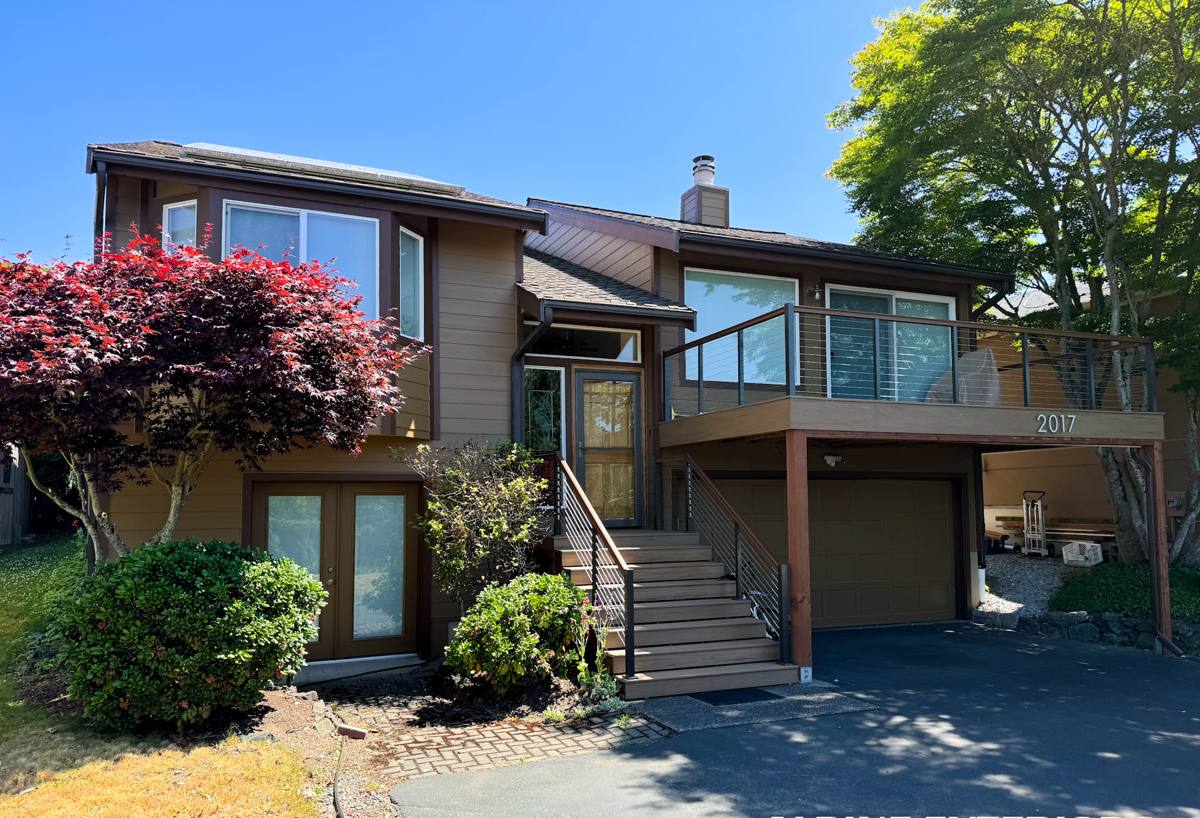
Custom windows aren't necessarily unusual shapes or high-end architectural statements, though we do that work too. In most Happy Valley projects, "custom" simply means the window is built to the exact opening — not a standard stock size forced into a rough opening with shims and hope. That distinction matters more here than in drier climates, because every gap and inconsistency in fit is a potential path for water intrusion once wind pressure gets involved.
Common Custom Window Scenarios We See Locally
- Replacing failed aluminum-frame windows from the 1970s–90s with properly insulated, moisture-resistant frames
- Non-standard openings in additions, dormers, or older farmhouse-style homes common in this part of the county
- Matching window profiles across a renovation where some original windows are staying
- Larger view or picture windows sized for a specific wall opening rather than off-the-shelf dimensions
- Bay, bow, or angled window replacements where factory-standard units don't fit the existing rough framing
Why the Local Climate Changes the Job
A window sold in Arizona and a window installed correctly in Happy Valley are not solving the same problem, even if the glass package looks identical on paper. Three things drive our approach here:
Salt Air and Metal Components
Proximity to marine air accelerates corrosion on hardware, weep hole screens, and any exposed metal fasteners or flashing. We spec corrosion-resistant hardware and flashing on every install near the water, and we avoid raw or poorly coated aluminum components in favor of finishes rated for coastal exposure.
Driving, Wind-Blown Rain
Whatcom County storms don't just fall straight down — wind pushes rain sideways into wall assemblies, which means flashing details at the head, sill, and jambs matter more here than in sheltered inland areas. A window that's watertight in a calm rain but leaks under 30 mph gusts is a window that was installed without proper flashing integration into the water-resistive barrier.
Moss, Shade, and Prolonged Dampness
Many Happy Valley lots carry mature tree cover that keeps siding and trim shaded and damp for extended stretches, especially fall through spring. That moisture doesn't evaporate quickly, which means wood trim around windows, if not properly primed, back-primed, and sealed, stays wet long enough to rot from the inside out — often invisible until the trim is soft to the touch.
Our Process for a Custom Window Job
- On-site assessment. We check the existing opening, look for signs of past water intrusion (staining, soft sheathing, rot at the sill), and measure the actual rough opening rather than assuming it matches the old window's nominal size.
- Material and product selection. Based on sun exposure, wind exposure, and your home's existing trim and siding, we recommend frame materials and glass packages suited to the specific wall, not a one-size answer for the whole house.
- Removal and opening inspection. Once the old window is out, we inspect the framing and sheathing underneath. This is where hidden rot or past flashing failures show up, and it's addressed before anything new goes in — installing a new window over a compromised opening just hides the problem for a few more years.
- Flashing and water management. Proper integration with the house wrap or building paper, correctly lapped flashing at the head and sill, and sealant only where it belongs — not as a substitute for correct flashing sequence.
- Install and air seal. The window is set square and level, shimmed correctly, fastened per manufacturer spec, and insulated around the frame without over-packing, which can bow the frame and cause operational issues.
- Interior and exterior trim. Trim is fit, primed on all sides (including back-priming, which gets skipped constantly and is a major reason trim rots from behind), and sealed at all joints.
- Final check. We verify smooth operation, confirm locks and hardware seat correctly, and walk the exterior with you before calling the job done.
Frame Material Comparison for This Climate
There's no single "best" frame material for every home — it depends on your budget, your home's style, and how much upkeep you want to take on. Here's how the common options hold up specifically under Whatcom County's salt air, rain, and shade conditions:
| Frame Material | Moisture Performance | Maintenance | Notes for This Area |
|---|---|---|---|
| Vinyl | Good — won't rot or corrode | Low | Solid value option; quality varies a lot by manufacturer, so we stick with lines that hold up to UV and temperature swings without warping |
| Fiberglass | Very good — dimensionally stable, resists moisture | Low | Handles temperature and humidity shifts well; a strong pick for exposed, weather-facing walls |
| Wood (clad exterior) | Depends entirely on cladding and finish quality | Higher | Beautiful interior look, but the exterior cladding and sealant joints need to be right, or moisture gets behind the clad shell |
| Aluminum | Poor without thermal break; prone to corrosion near salt air | Moderate | We generally steer clients away from bare aluminum in this specific area — it's the material most likely to show corrosion and condensation issues here |
Signs a Happy Valley Home Needs Custom Window Work
Most homeowners don't think about their windows until something's visibly wrong, but by then the fix is often bigger than it needed to be. Watch for:
- Fogging or moisture between panes on double- or triple-glazed units (a sign the seal has failed)
- Soft, discolored, or peeling trim around the window frame
- Drafts or noticeable temperature difference near the window when it's closed
- Windows that stick, won't stay open, or don't latch fully
- Visible gaps between the frame and siding or trim
- Water staining on interior sills or walls below windows after storms
- Moss or dark streaking on trim or siding directly around the window opening
What a Correct Job Costs You in the Long Run
Custom window pricing depends heavily on size, quantity, frame material, and glass package, so we won't quote a number that doesn't reflect your actual house. What we will say is that the real cost difference between a correct install and a rushed one isn't in the window itself — it's in what happens behind the wall. A window installed without proper flashing can look fine for two or three years and then produce a rot repair bill that dwarfs what the window cost in the first place. We price the job to include doing the flashing and trim work correctly the first time, because in this climate, cutting that corner just moves the cost down the road and makes it bigger.
Why Local Experience Matters Here
Happy Valley isn't a uniform climate zone — lot by lot, tree cover, wind exposure, and proximity to open water change how hard a given wall takes weather. A crew that installs windows across the whole county regularly develops a feel for which walls need extra flashing attention, which trim details fail first locally, and which materials are worth the upfront cost versus which hold up fine without it. That's the kind of judgment that doesn't come from a manufacturer's install manual alone — it comes from seeing how windows in this specific area actually age.
We also know what past installs in this area tend to look like when we open up a wall, which means we're rarely guessing about what we'll find once an old window comes out.
Get a Straightforward Estimate
If you're dealing with a failing window, planning a renovation, or just want an honest read on whether your current windows are holding up the way they should, we're glad to take a look. The estimate is free, there's no pressure, and we'll tell you plainly what we find — including if the answer is that your windows are fine for now. Fill out the form below to get started.