 Whatcom County
 Building a Deck That Holds Up in Sehome
Sehome sits close enough to Bellingham Bay that every outdoor structure in the neighborhood deals with the same combination of factors: salt-laden air, long stretches of driving rain, and a moss season that can run from October well into spring. A deck built with generic, one-size-fits-all methods might look fine the day it's finished and start showing problems within two or three winters. A deck built for this specific climate is a different project from the start — different fasteners, different drainage details, different material choices, and a different maintenance conversation with the homeowner before the first board goes down.
This page covers what actually matters for deck building in Sehome and the surrounding Whatcom County area: what the climate does to decks over time, what a properly built deck involves at the structural level, how our process works from first visit to final walkthrough, and why working with a crew that already builds in this specific microclimate is worth more than it might seem on paper.
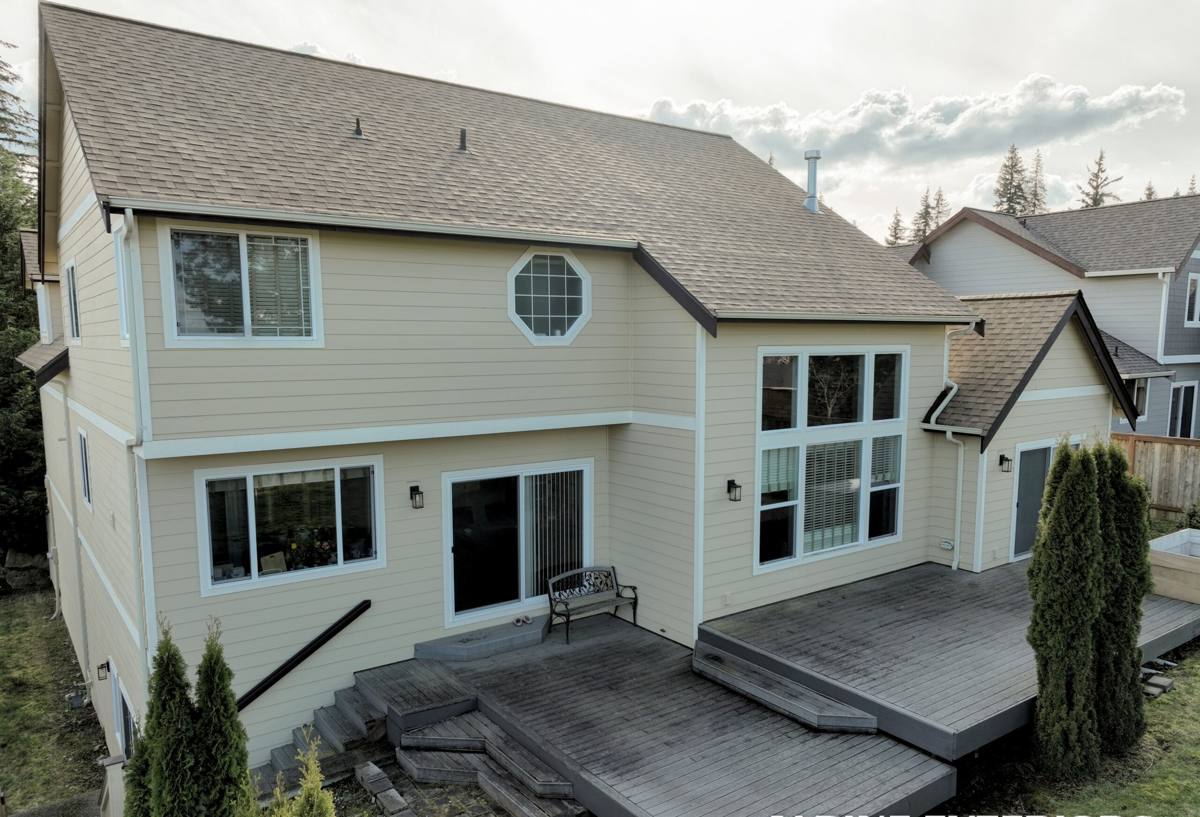
What Whatcom County Weather Does to a Deck
Three climate factors drive almost every deck failure we get called out to inspect or repair in this area:
Salt Air
Proximity to the bay means airborne salt settles on every exposed surface, including fasteners, hardware, and metal flashing. Standard zinc-coated screws and nails corrode faster here than they would inland, and once a fastener starts rusting, it weakens the connection long before the wood around it shows any visible damage. This is why fastener selection is not a minor detail on a coastal deck — it's one of the first things that determines whether the structure is still sound in fifteen years.
Driving Rain
Whatcom County doesn't just get a lot of rain — it gets rain that comes in sideways during storms, which pushes water into joints, ledger connections, and end grain that a vertical-rain climate would never reach. Any gap in flashing or any decking board installed without a proper drainage gap becomes a place where water sits instead of shedding.
Moss and Sustained Moisture
A long moss season means extended periods where a deck surface stays damp even between rain events. Moss and algae hold moisture against the wood or composite surface, which accelerates rot in untreated lumber and can make composite decking surfaces slick and stained if the product wasn't chosen with drainage and airflow in mind. Decks built in full or partial shade — common on tree-lined Sehome lots — are especially prone to this.
Choosing the Right Decking Material for This Climate
There's no single "best" decking material — there's a best material for a given budget, sun exposure, and maintenance tolerance. Here's how the common options actually perform under Whatcom County conditions:
| Material | Moisture Behavior Here | Maintenance Burden | Typical Lifespan (local conditions) |
|---|---|---|---|
| Pressure-treated lumber | Resists rot when properly sealed and drained; end grain is the weak point | Needs re-sealing every 1–2 years to fight moss and graying | 10–15 years with upkeep |
| Cedar | Naturally rot-resistant but softer; holds moisture in shaded spots | Regular sealing or staining, more sensitive to neglect | 12–18 years with upkeep |
| Composite decking | Doesn't rot, but lower-quality composites can absorb moisture at cut edges | Occasional cleaning to prevent surface algae; low overall | 20–30 years depending on product line |
| PVC / capped polymer | Fully moisture-resistant surface and core | Lowest — mostly just periodic washing | 25+ years |
We don't push one product on every job. A shaded backyard deck under mature trees is a different call than a sunny south-facing deck, and budget is a legitimate factor we'll talk through honestly rather than upsell around.
A Note on Composite Decking
Composite and capped-polymer products have gotten better over the years, but they're not all built the same, and installation sensitivity is real — hidden fastener systems, expansion gaps, and proper ventilation underneath all matter more with composite than with solid wood. We install composite when it fits the homeowner's goals, but we're upfront that a poorly installed composite deck can trap moisture just as badly as a poorly installed wood one. The product doesn't fix bad technique.
Structural Details That Matter More Here Than Elsewhere
The visible decking surface is maybe a third of what determines how long a deck lasts. The parts underneath and behind it do most of the work — and they're exactly where a rushed job cuts corners you can't see until something fails.
Footings and Post Bases
Whatcom County's clay-heavy, often saturated soil means footings need to be sized and set to local frost and drainage conditions, not a generic minimum. Post bases should sit above grade with a gap that keeps the post end grain out of standing water — a detail that's easy to skip and expensive to fix later.
Ledger Board Flashing
Where a deck attaches to the house is the single most common point of rot failure we see on older Sehome decks. Correct flashing — installed in the right order relative to the house's existing weather barrier — keeps driving rain from working its way behind the ledger board and into the rim joist. This is not optional trim work; it's the difference between a deck lasting decades and a deck rotting from the house outward.
Fasteners and Hardware
Given the salt air, we use stainless steel or heavy hot-dip galvanized fasteners and structural hardware rated for coastal exposure, not standard interior-grade coated screws. It costs a little more up front and it's one of the cheapest ways to add years to a deck's life.
Joist Spacing and Airflow
Tighter joist spacing than the bare code minimum, combined with enough clearance underneath the deck for air to move, reduces the sustained dampness that feeds moss and rot. A deck built low to damp ground with no airflow will grow moss on the underside of the boards even if the top surface looks fine.
Our Deck Building Process
Every deck we build goes through the same sequence, adjusted for the specific lot and design:
- Site visit and design conversation — we look at sun exposure, drainage patterns, tree cover, and how the deck will connect to the house before recommending materials.
- Permitting — decks above a certain height or attached to the structure typically require a permit through the local building department; we handle that paperwork as part of the job.
- Footings and framing — footings sized for the actual soil conditions, ledger flashing done correctly, coastal-rated fasteners throughout.
- Decking installation — proper spacing and fastening method for the material chosen, with attention to drainage gaps and cut-edge sealing where needed.
- Railings and finishing details — built to code for guard height and baluster spacing, with the same fastener standards as the frame.
- Final walkthrough — we go over the maintenance schedule for the specific material installed so there are no surprises down the road.
Permits and Local Code Considerations
Sehome falls within Bellingham's building jurisdiction, and most attached or elevated decks require a permit and inspection. This isn't extra bureaucracy for its own sake — the inspection process catches exactly the kind of structural shortcuts (undersized footings, missing ledger flashing, wrong fastener spacing) that cause failures years later. We build to pass inspection the first time and keep documentation of the work so it's on record if the home is ever sold or refinanced.
Maintenance Checklist for Coastal Deck Longevity
Whatever material a deck is built from, a few habits make a real difference in how it holds up to Whatcom County conditions:
- Sweep debris and standing leaves off the deck surface regularly, especially in fall and winter — trapped organic matter feeds moss growth
- Clean visible moss or algae off the surface at least once a year with a deck-safe cleaner, not a pressure washer set aggressively enough to damage the wood or composite surface
- Check and re-seal or re-stain wood decking every 1–2 years, sooner if water stops beading on the surface
- Inspect the ledger board flashing and any visible fasteners for rust or gaps once a year
- Keep gutters and downspouts near the deck clear so runoff isn't dumping extra water onto or under the structure
- Trim back overhanging branches to reduce shade and debris buildup where moss thrives
Why a Local Sehome Crew Matters
A crew that already works Whatcom County jobs isn't guessing about what this climate does to a deck — we've seen the ledger boards that rotted from the house out, the pressure-treated posts that failed at grade because the end grain sat in standing water, and the composite boards installed without the manufacturer's ventilation spec that stayed damp all winter. That experience shapes every material recommendation and every framing detail on a new build, and it's why a deck built for Sehome shouldn't be built the same way as one going up somewhere dry and inland.
We're also local enough to respond quickly if something needs a look after the job is done — a warranty callback, a question about maintenance, or a follow-up a year or two down the line isn't a long drive for us.
If you're planning a new deck or replacing an aging one in Sehome, we're happy to take a look and talk through what makes sense for your lot, budget, and how you actually plan to use the space. Fill out the form below for a free, no-pressure estimate.