 Whatcom County
 Why Decks in Edgemoor Wear Differently
Edgemoor sits right up against Bellingham Bay, and that waterfront position is exactly what makes deck repair here different from a repair job ten miles inland. The same view that makes these homes desirable also means the decks take a steady diet of salt-laden air, wind-driven rain, and shade from mature trees that keeps everything damp longer than it should be. A deck built to a generic spec, or repaired with whatever lumber was on hand, tends to show its age faster in this pocket of Whatcom County than in a drier, more sheltered yard.
Salt Air and Metal Fasteners
Airborne salt off the bay accelerates corrosion on anything metal — nails, screws, joist hangers, bolts, and railing hardware. Once a fastener starts rusting, it swells slightly and weakens its grip on the wood around it, and rust stains bleed into the decking itself. On an older Edgemoor deck, corroded hardware hidden under the boards is one of the most common problems we find, and it's rarely visible until someone walks the structure looking for it.
Moss, Algae, and Trapped Moisture
Whatcom County's long wet season, combined with tree cover common in Edgemoor's lots, gives moss and algae months to establish themselves on deck boards, especially anywhere sun doesn't reach directly. Moss holds moisture against the wood surface far longer than open air would, which softens the top grain and eventually leads to rot at board edges and around fasteners. It's a slow problem — most homeowners notice the green film before they notice what it's doing underneath.
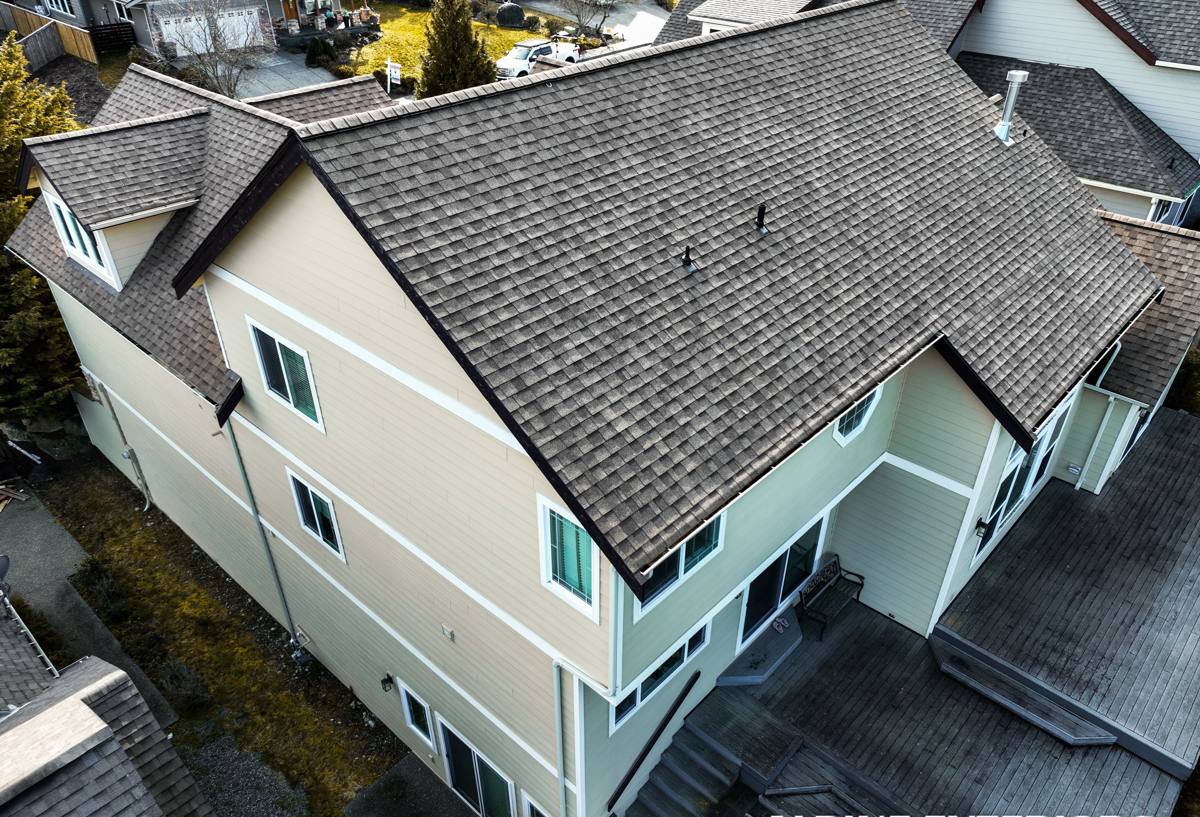
Common Deck Problems We Find in Edgemoor
Ledger Board and Rim Joist Rot
The ledger board — where the deck attaches to the house — is the single most safety-critical connection on most decks, and it's also the part most exposed to splash-back and driving rain if flashing was installed poorly or has failed over time. We check this connection closely on every inspection because a compromised ledger is a structural issue, not a cosmetic one.
Post Bases and Footings
Wood posts that sit directly on or too close to grade, or in a post base that traps water instead of shedding it, are a recurring issue on older decks in wetter yards. Standing water at the base of a support post is a slow but steady path to structural failure, and it's often the least visible problem until the post is probed with a screwdriver.
Railings and Guard Posts
Guard rails and posts take direct weather exposure on all sides and get less airflow than the open deck surface, so they can rot from the inside while looking sound on the outside. Since railings are also a fall-safety item, any softness or movement here should be treated as a priority repair, not something to defer.
What a Correct Repair Actually Involves
A proper deck repair isn't just swapping out a bad board and calling it done. It means identifying why that board failed in the first place — moisture intrusion, poor drainage, a failed fastener, missing flashing — and fixing the cause, not just the symptom. Surface-level patch jobs on a deck with an underlying moisture or structural problem tend to fail again within a season or two, which ends up costing more than doing it right the first time.
Structural Assessment First
Before we touch a board, we get underneath the deck (or pull sample boards) to check joists, the ledger connection, post bases, and hardware condition. This tells us whether we're looking at a targeted repair or something more extensive, and it's the difference between an honest estimate and a guess.
Matching Materials, Not Mixing Them Blind
Replacement lumber needs to match the existing deck's rating and, ideally, its finish plan. Mixing a new pressure-treated board into an older cedar deck without accounting for how each material takes stain or sealant leads to a patchwork look and uneven weathering — a cosmetic issue, but one that's easy to avoid with the right planning up front.
Repair or Rebuild? Cost Factors
Not every deck issue calls for a full rebuild, and not every deck is worth patching indefinitely. These are the factors that actually drive that decision:
| Factor | Leans Toward Repair | Leans Toward Rebuild |
|---|---|---|
| Ledger board condition | Solid, properly flashed | Soft, rotted, or unflashed |
| Framing (joists, beams) | Sound, isolated damage | Widespread rot or undersized framing |
| Age of structure | Under 15-20 years | Original construction decades old |
| Fastener corrosion | Limited to a few spots | Rust bleed throughout |
| Code compliance | Meets current guard/attachment rules | Predates current safety standards |
Costs on the repair side generally run from a few hundred dollars for isolated board and hardware replacement up into the low thousands for larger sections including framing work. A full rebuild is a bigger investment — often into five figures depending on size, decking material, and railing style — but it resets the clock on the whole structure instead of chasing recurring failures on a deck that's fighting you.
Our Deck Repair Process
- On-site inspection: we check the ledger, framing, post bases, and decking surface, including areas hidden from casual view.
- Honest scope discussion: we tell you what's failing, what's still sound, and what your realistic options are — repair, partial rebuild, or full rebuild.
- Written estimate: clear pricing before any work starts, with no surprise add-ons for problems we should have caught during inspection.
- Repair work: replacing rotted framing and decking, correcting flashing at the ledger, upgrading corroded hardware, and resecuring loose connections.
- Final walkthrough: we go over what was done and what to watch for going forward, including any maintenance recommendations specific to your deck's exposure.
Materials We Use and Why
For structural repairs, we use pressure-treated lumber rated for ground contact where posts or framing are near grade, since that rating is what actually resists the moisture cycling common in a marine climate. For fasteners and hardware, we use stainless steel or hot-dip galvanized hardware appropriate to the coastal exposure in Edgemoor — standard electro-galvanized hardware corrodes noticeably faster this close to the bay, and we treat that as a false economy rather than a place to cut cost.
Wood vs. Composite for Repairs
Where a homeowner is replacing significant sections of decking rather than doing a spot repair, composite decking is worth considering — it resists moss staining and doesn't need refinishing, though it carries a higher material cost and isn't always a clean match to an existing wood deck's appearance. For smaller repairs on an otherwise sound wood deck, matching the existing material is usually the more sensible call, both for looks and for cost.
Permits and Code in Whatcom County
Deck work in Whatcom County and the City of Bellingham can trigger permit requirements depending on the scope — generally tied to deck height above grade, structural changes, and any new or reconstructed guard rails. Guard height, baluster spacing, and ledger attachment methods are all governed by current building code, and a deck built decades ago may not meet today's standard even if it looks fine. We handle the permit process on jobs that require it and won't cut that corner to save time, since it's the homeowner who's exposed if an unpermitted structural repair causes a problem later — at resale or otherwise.
Maintenance Checklist for Edgemoor Homeowners
Between repairs, a few habits go a long way toward slowing the damage that salt air, rain, and moss cause:
- Sweep debris and needles out from between boards regularly — trapped organic matter holds moisture against the wood.
- Rinse off salt residue and moss growth with a garden hose or soft-bristle brush; avoid high-pressure washing, which can strip wood fibers and force water into seams.
- Check for rust streaks around fasteners each spring — an early sign of hardware corrosion worth addressing before it spreads.
- Probe railing posts and deck posts near grade with a screwdriver periodically, checking for soft or spongy wood.
- Reseal or restain on the schedule appropriate to your finish — sun and shade patterns vary enough within a single deck that some boards weather faster than others.
- Keep gutters and downspouts near the deck clear so runoff isn't draining directly onto or under the structure.
Why Hire a Crew That Already Works Edgemoor
A contractor who mostly works drier, inland properties can still do competent carpentry, but they may not think to spec stainless hardware over standard galvanized, or to flag moss buildup as an early warning sign rather than just a cleaning issue. Working regularly in Whatcom County's waterfront neighborhoods means we've seen how salt air, driving rain, and the long moss season actually play out on a deck over years, not just what a spec sheet says should happen. That local pattern recognition is what turns a repair into one that actually holds up through the next few wet seasons instead of needing attention again soon.
If you've got a deck in Edgemoor showing rust stains, soft boards, moss buildup, or just a general sense that it's due for a look, we're happy to come out and take an honest look. There's no pressure and no cost for the estimate — just a straight assessment of what your deck needs and what it doesn't.