 Whatcom County
 Edgemoor Sits Right Where Salt Air Meets Heavy Rain
Edgemoor's location near the water is part of what makes it a desirable place to live, but that same proximity to Bellingham Bay puts homes in a tougher environment than a roof further inland ever has to deal with. Salt-laden air drifts across roofs year-round, driving rain off the water hits at angles that push water uphill under poorly lapped materials, and the mild, wet Whatcom County climate keeps moss growing on shaded roof slopes for most of the year. None of this is dramatic on its own, but stacked together over a decade or two, it's exactly the combination that shortens the life of a roof that wasn't built or installed with these conditions in mind.
A metal roof, done correctly, handles this combination better than most other roofing materials available to homeowners in this area. Done incorrectly, it can develop the same moss, corrosion, and leak problems as anything else — sometimes faster, because a poorly installed metal roof hides its early warning signs differently than a shingle roof does.
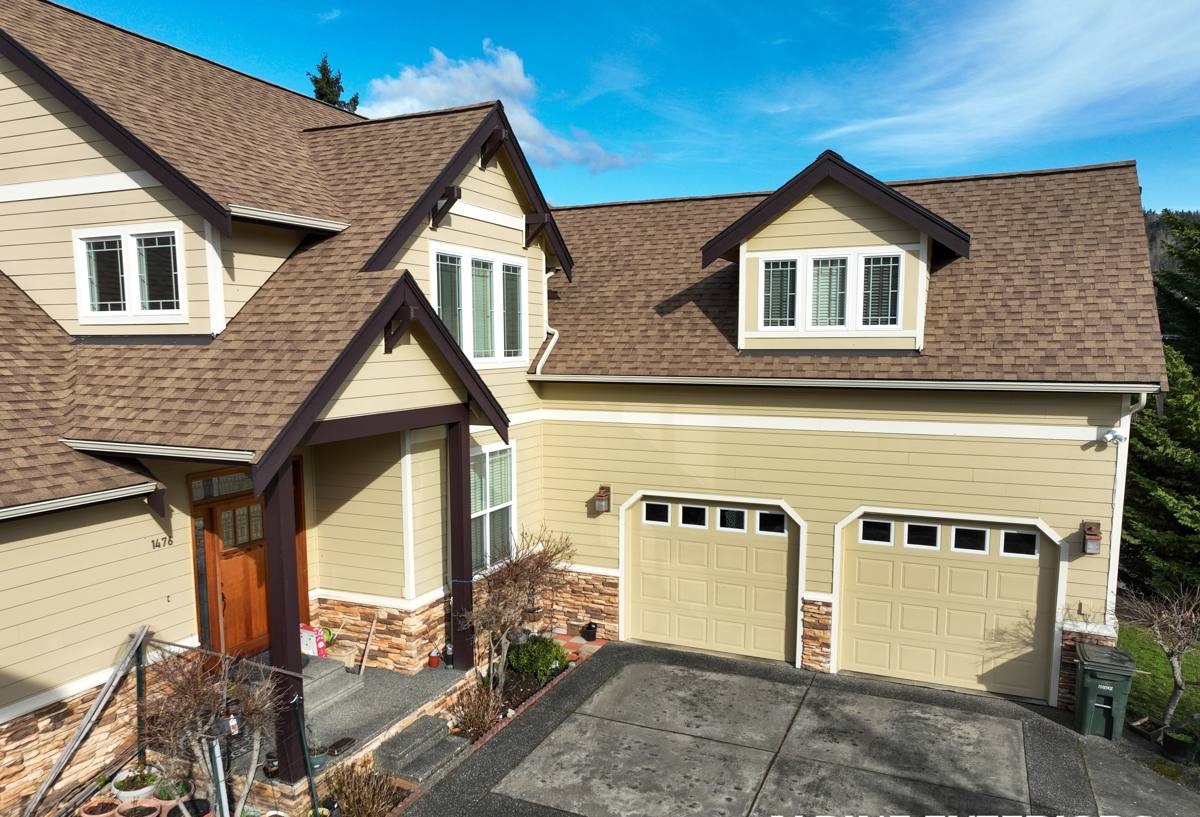
Why Metal Roofing Makes Sense for This Specific Location
We install metal roofing across Whatcom County, but Edgemoor's exposure changes a few things about how we spec and detail the job:
- Moss doesn't get a foothold on metal the way it does on shingles — there's no granule surface for spores to anchor into, which matters on the shaded, moisture-holding slopes common in this neighborhood's mature tree canopy.
- Steep water shedding means less time for rain to sit on the surface, which reduces the freeze-thaw and moisture-cycling stress that wears down other materials faster near the water.
- A quality metal roof with the right coating system resists salt-air corrosion far longer than bare or poorly coated fasteners and flashing, which is where most coastal metal roof failures actually start.
- Metal sheds wind-driven rain more predictably than layered materials when it's installed with the correct lap, fastening pattern, and underlayment — important given how often storms here come with a sideways component off the water.
The trade-off is that metal roofing is less forgiving of installation shortcuts than asphalt shingles. Fastener spacing, panel expansion allowance, and flashing detail all matter more, which is really the whole argument for hiring a crew that's done this specific work in this specific climate before.
Where Metal Roofing Isn't Automatically the Right Call
We don't recommend metal for every Edgemoor home. On a roof with a lot of complex hips, valleys, and dormers, a panel system can end up with more flashing seams than a shingle roof would, and every seam is a place moisture can eventually find its way in if it's not detailed well. We'll tell you honestly if your roof geometry favors a different approach — the goal is a roof that performs, not a sale.
Panel Types: What's Actually Available
"Metal roofing" covers more than one product, and the differences matter more on a coastal, moss-prone roof than they would somewhere drier.
| Panel Type | Fastening | Best For | Coastal Considerations |
|---|---|---|---|
| Standing seam | Concealed clips, no exposed screws | Long-term, low-maintenance roofs | No exposed fasteners to corrode over time — the stronger choice this close to the water |
| Exposed-fastener panel | Screws through the panel face | Budget-conscious projects, outbuildings | Fastener gaskets and washers wear faster in salt air and need periodic checking |
| Metal shingle/shake panels | Interlocking, concealed fastening | Homes wanting a traditional look with metal performance | Performs similarly to standing seam if installed with proper underlayment |
For homes in Edgemoor specifically, we lean toward standing seam or a quality interlocking shingle-style panel more often than exposed-fastener systems, simply because there are fewer penetration points for salt-laden moisture to work on over the years. Exposed-fastener panels aren't a bad product — they're just a higher-maintenance one in this environment, and we'll say so up front rather than let a homeowner find that out in year eight.
What a Correct Metal Roof Installation Actually Involves
The panels themselves get most of the attention, but on a roof exposed to driving rain and salt air, the layers underneath and around the panels are where a job succeeds or fails.
Underlayment and Deck Prep
We check the roof deck for soft spots and moisture damage before anything goes down — a common issue on older homes where a prior roof trapped condensation. A synthetic, high-temperature underlayment goes over the deck, with self-adhered membrane at eaves, valleys, and any low-slope transitions where wind-driven rain is most likely to push water backward.
Fastening and Panel Layout
Metal panels expand and contract with temperature more than shingles do. Fastener spacing and clip placement need to allow for that movement, especially on longer runs — get this wrong and you get oil-canning or, worse, fasteners that work themselves loose over a few seasons of thermal cycling.
Flashing and Penetrations
Every pipe boot, chimney, and wall transition is a place water can get in if it's flashed with a one-size-fits-all part instead of custom-formed metal. This is the single most common source of leaks we find on metal roofs that were installed quickly rather than correctly.
Ventilation
A metal roof that's sealed too tight can trap moisture in the attic, which shows up as condensation on the underside of the panels — sometimes mistaken for a leak. Proper ridge and intake ventilation matters just as much on a metal roof as it does on any other roofing material.
Salt Air and Moss: The Two Things We Detail Differently in Edgemoor
Salt air accelerates corrosion on fasteners, flashing, and any cut panel edges where the protective coating has been compromised. We use fastener and flashing hardware rated for coastal exposure, and we seal cut edges rather than leaving raw metal exposed to the air. It's a small detail that makes a real difference over fifteen or twenty years.
Moss is less about the metal itself and more about what collects on and around it — needles, leaves, and debris in valleys and behind chimneys can hold moisture against flashing even on a metal roof. We size and pitch valley flashing to shed debris rather than trap it, and we talk homeowners through a simple debris-clearing routine so moss and organic buildup don't get the chance to hold moisture against any seams.
Our Process for an Edgemoor Metal Roofing Project
- On-site assessment — we look at roof geometry, deck condition, existing ventilation, and how exposed the roof is to wind and salt air off the water.
- Honest recommendation — we tell you which panel system fits your roof and budget, and we'll say if metal isn't the best fit for a particular section of the house.
- Written estimate — clear scope, materials, and timeline, no vague allowances.
- Tear-off and deck repair — any soft or damaged decking gets replaced before underlayment goes down, not covered up.
- Installation — underlayment, panels, custom flashing, and ventilation installed to manufacturer spec and adjusted for coastal exposure.
- Final walkthrough — we go over the finished roof with you and explain what basic maintenance, if any, it'll need going forward.
What Drives the Cost of a Metal Roof in This Area
| Factor | Why It Matters Here |
|---|---|
| Panel type and gauge | Heavier-gauge, coastal-rated coatings cost more up front but hold up better against salt air |
| Roof complexity | More hips, valleys, and penetrations mean more custom flashing labor |
| Deck condition | Older Edgemoor homes sometimes need deck repair discovered only after tear-off |
| Access and pitch | Steeper roofs and tighter lots near the water can affect staging and labor time |
| Ventilation upgrades | Bringing older attics up to proper ventilation adds cost but protects the new roof |
Metal roofing generally costs more up front than asphalt shingles, and the honest range varies widely by roof size and complexity — we'll give you real numbers once we've actually looked at your roof rather than guessing over the phone. The trade-off is a roof that typically needs far less attention over its life, particularly against moss, which is one of the more persistent maintenance headaches for homes in this part of the county.
A Simple Maintenance Checklist for Metal Roofs Near the Water
- Clear needles, leaves, and debris from valleys and behind chimneys once or twice a year
- Check gutters and downspouts for buildup that can back water up under eave flashing
- Look at exposed fasteners (if you have an exposed-fastener system) every year or two for early corrosion or loosening
- Trim back overhanging branches that keep sections of the roof shaded and damp longer than they need to be
- Have flashing around penetrations inspected after any major windstorm off the water
Why It Matters That We Already Work in Edgemoor
A metal roof installed the same way you'd install it in a dry, inland climate will eventually show its weak points on a home this close to Bellingham Bay — usually at the fasteners, the flashing, or the ventilation first. We work throughout Whatcom County and have seen how salt air, driving rain, and moss season actually play out on roofs in this specific area, not just in a manufacturer's install manual. That's the difference between a metal roof that looks right on day one and one that still performs correctly in year twenty.
If you're weighing metal roofing for a home in Edgemoor, we're glad to take a look and give you a straight answer about what your roof needs — no pressure, no upsell, just an honest assessment. Reach out for a free estimate using the form below.