 Whatcom County
 New Roof Installation in Edgemoor, Washington
Edgemoor sits close enough to the water that salt air, wind-driven rain, and shade from mature trees are simply part of owning a home here. Those same conditions are hard on roofing. A new roof installed in Edgemoor needs to handle more than an average install elsewhere in Whatcom County — it needs materials, flashing details, and ventilation planned around this specific microclimate, not a one-size-fits-all spec pulled off a shelf.
This page covers what a correct new roof installation looks like for Edgemoor homes: what the climate actually does to a roof over time, how we approach the job, what materials make sense, and what questions to ask before you hire anyone.
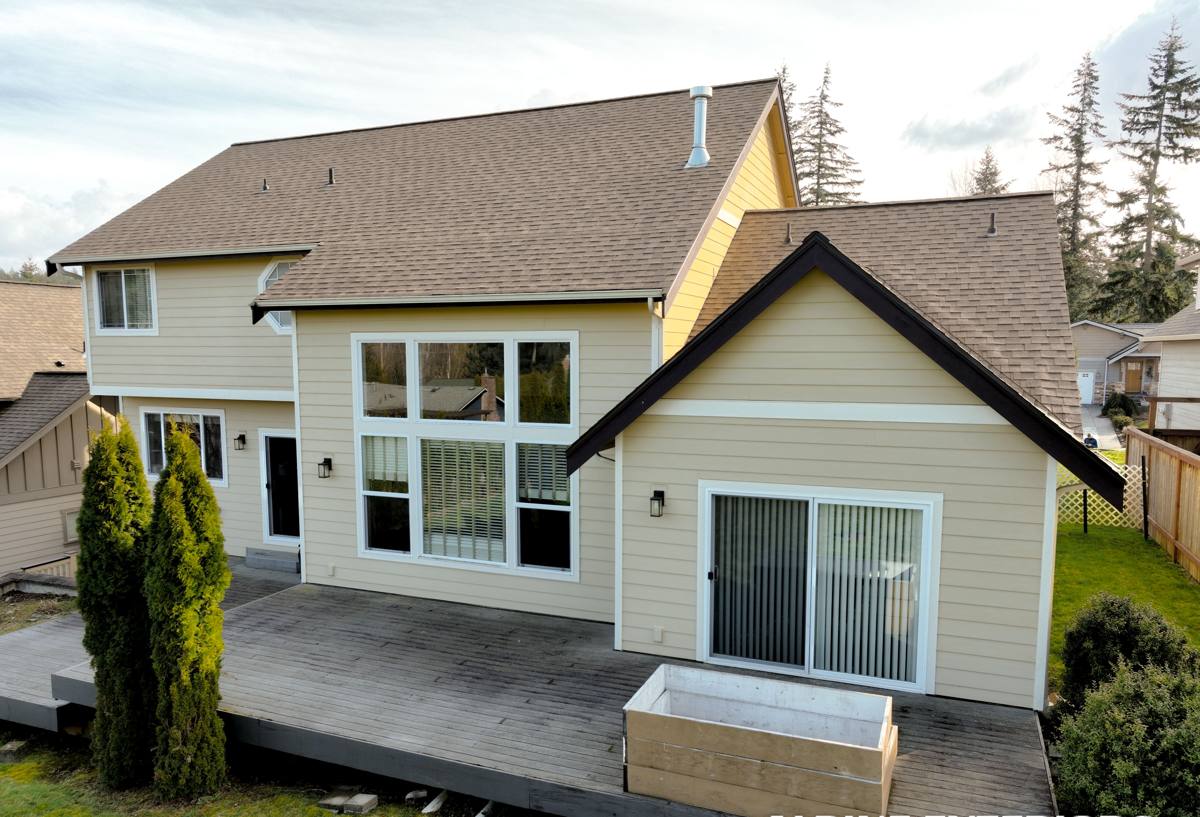
Why Edgemoor's Climate Is Hard on Roofs
Salt Air and Corrosion
Homes closer to the water pick up airborne salt that settles on roofing metal — flashing, fasteners, vents, and gutters. Over years, salt exposure accelerates corrosion on lower-grade metal components. It won't ruin a roof overnight, but it shortens the life of anything that isn't rated for coastal exposure, especially cheap fasteners and unprotected flashing edges.
Driving Rain
Whatcom County storms don't always come straight down. Wind-driven rain pushes water sideways and upward under roof edges, around vents, and into any gap in the flashing. A roof that would shed water fine in a calmer climate can leak in Edgemoor if the underlayment, flashing laps, and edge details aren't built for wind-blown moisture specifically.
Moss and Shade
Tree cover and a long damp season give moss and algae plenty of time to take hold, particularly on north-facing slopes and anywhere debris collects. Moss holds moisture against the roof surface, works into shingle laps, and can lift edges over time. It also adds weight and traps organic debris that clogs valleys and gutters.
None of this means Edgemoor homes need exotic materials — it means the standard install has to be done with these three factors in mind from the first nail.
What a Correct New Roof Installation Involves
Tear-Off and Deck Inspection
We remove the old roofing down to the deck rather than laying over it. This lets us actually see the plywood or plank sheathing underneath — soft spots, old water staining, and rot are common findings on older Edgemoor homes, especially near valleys and chimneys where past leaks may have gone unnoticed. Any damaged decking gets replaced before anything new goes down; installing new roofing over a compromised deck just hides the problem.
Underlayment
Given the driving rain in this area, we don't treat underlayment as an afterthought. Self-adhered ice-and-water membrane goes in the vulnerable zones — eaves, valleys, around penetrations, and roof-to-wall intersections — with synthetic underlayment across the rest of the field. This is the layer that protects the deck if wind ever drives water past the roof covering itself.
Flashing Details
Flashing is where most roof leaks actually start, not in the field of the shingles. Step flashing at walls, counter-flashing at chimneys, and properly lapped valley metal all matter more in a wind-driven-rain climate. We use corrosion-resistant metal and fastener types suited to the salt exposure common closer to the water in Edgemoor, rather than standard-grade hardware that corrodes faster here.
Ventilation
A roof deck that can't breathe traps moisture, which speeds up rot and gives moss more to grow on. We check intake (soffit) and exhaust (ridge or roof vents) balance during every install. Many older homes in this area are under-ventilated by today's standards, and correcting that during a re-roof is far cheaper than doing it as a separate project later.
Final Roof Covering
The visible layer — shingles, metal panels, or another covering — goes on last, but it's only as good as everything underneath it. Nailing pattern, exposure, and starter courses all get done to manufacturer spec, not shortcuts, because a warranty is only valid if the installation matches the spec it was written for.
Choosing a Roofing Material for Edgemoor
There isn't one "best" roofing material for every home — the right choice depends on your roof's slope, your home's style, your budget, and how much long-term maintenance you're willing to do. Here's how the common options compare for a coastal-influenced, damp-climate area like Edgemoor.
| Material | Typical Lifespan | Moss/Moisture Behavior | Maintenance |
|---|---|---|---|
| Architectural asphalt shingles | 25–30 years | Can hold moss if not treated/cleaned; algae-resistant granules help | Periodic cleaning, gutter maintenance |
| Metal roofing (standing seam) | 40–50+ years | Sheds water fast, moss struggles to hold on smooth metal | Low; check fasteners/sealant over time |
| Cedar shake | 20–30 years (with upkeep) | Absorbs moisture, needs active moss/rot management | Higher; regular treatment required |
| Synthetic/composite shingles | 30–50 years | Non-organic surface resists moss better than wood | Low to moderate |
We'll walk through these trade-offs honestly during your estimate — including where a lower-maintenance option might save you money over the roof's lifetime even if the upfront cost is higher.
What Drives the Cost of a New Roof
Every roof is priced individually, but the same handful of factors move the number up or down on almost every Edgemoor job we estimate.
| Factor | Why It Matters |
|---|---|
| Roof size and number of planes | More square footage and more valleys/hips mean more material and labor |
| Roof pitch and access | Steep or hard-to-access roofs take longer and require more safety setup |
| Deck condition | Rot or soft sheathing discovered at tear-off adds replacement cost |
| Material choice | Asphalt, metal, and composite options carry different material costs |
| Layers to remove | Tearing off multiple existing layers costs more than a single layer |
| Ventilation and flashing upgrades | Bringing an under-ventilated or poorly flashed roof up to standard adds scope |
We give firm, written estimates after an in-person inspection — not a phone-quoted range that changes once we're on the roof.
Our Process for an Edgemoor Re-Roof
- Inspection and estimate: We walk the roof, check the attic or deck for existing moisture and ventilation issues, and give you a written scope and price.
- Material selection: We go over options suited to your roof's slope, style, and your maintenance preferences — including how each holds up against local moss and moisture conditions.
- Scheduling around weather: We plan install timing with Whatcom County's rain patterns in mind and tarp exposed sections if weather turns mid-job.
- Tear-off and deck repair: Old roofing comes off, the deck gets inspected, and any damaged sheathing is replaced before moving forward.
- Underlayment and flashing: Ice-and-water membrane, synthetic underlayment, and corrosion-resistant flashing go in at every vulnerable point.
- Ventilation correction: Intake and exhaust venting is balanced to current standards where needed.
- Final covering and cleanup: Your chosen material is installed to spec, and the site is cleaned of nails, debris, and old material — including a magnetic sweep of the yard.
- Walkthrough: We review the finished roof with you and go over warranty paperwork and any maintenance recommendations.
Signs Your Edgemoor Roof May Need Replacing
- Shingles that are cracked, curling, or missing granules in large patches
- Moss buildup that keeps returning despite cleaning
- Daylight visible through the roof deck from the attic
- Water stains on ceilings or in the attic after heavy rain
- Soft or spongy spots when walking the roof (or reported by a roofer)
- Flashing that's rusted, lifted, or separating from walls and chimneys
- A roof that's nearing or past its material's expected lifespan
- Rising energy bills that may point to failing attic ventilation or insulation tied to roof condition
Why Hire a Crew That Already Works in Edgemoor
A roofer who works this area regularly already knows which flashing grades hold up near the water, how much ventilation a typical Edgemoor attic actually needs, and which roof orientations tend to collect moss fastest. That's not something you learn from a manual — it comes from doing the work here, season after season, and seeing what actually fails and what doesn't.
It also means faster response if weather interrupts a job, straightforward access to local permitting requirements, and a crew that isn't guessing about Whatcom County's building and wind-exposure considerations. We're not driving in from out of the area to bid a job we'll never service again.
Maintaining Your New Roof
A properly installed roof still benefits from basic upkeep, especially in a moss-prone, salt-air area like Edgemoor:
- Keep gutters and valleys clear of needles and leaves so water doesn't back up under the roofing
- Have moss growth addressed early rather than letting it spread across a slope
- Trim back overhanging branches to reduce shade and debris buildup
- Schedule a periodic roof check, particularly after major storms
- Watch for granule buildup in gutters, which can signal accelerated shingle wear
If you're weighing a new roof for your Edgemoor home, we're happy to take a look and give you a straight answer — no pressure, no inflated scope. Fill out the form below for a free estimate.