 Whatcom County
 Edgemoor's Waterfront Exposure Is a Different Kind of Wear
Edgemoor sits close to Bellingham Bay, and that proximity to open water changes how siding ages compared to a home ten minutes inland. Salt-laden air moves off the water and settles on exterior surfaces year-round, not just during storms. Combine that with Whatcom County's driving rain — the kind that comes in sideways off the Sound rather than falling straight down — and you have a wall assembly that's under near-constant moisture pressure for eight or nine months of the year.
The tree cover that makes Edgemoor's lots so appealing also keeps siding shaded and slow to dry. Add the region's long moss and lichen season, and you end up with siding that stays damp longer, grows organic material faster, and shows wear in ways that homes in drier parts of the state simply don't. This is a page about one thing: what it takes to replace siding correctly on an Edgemoor home, and why the climate here changes the job.
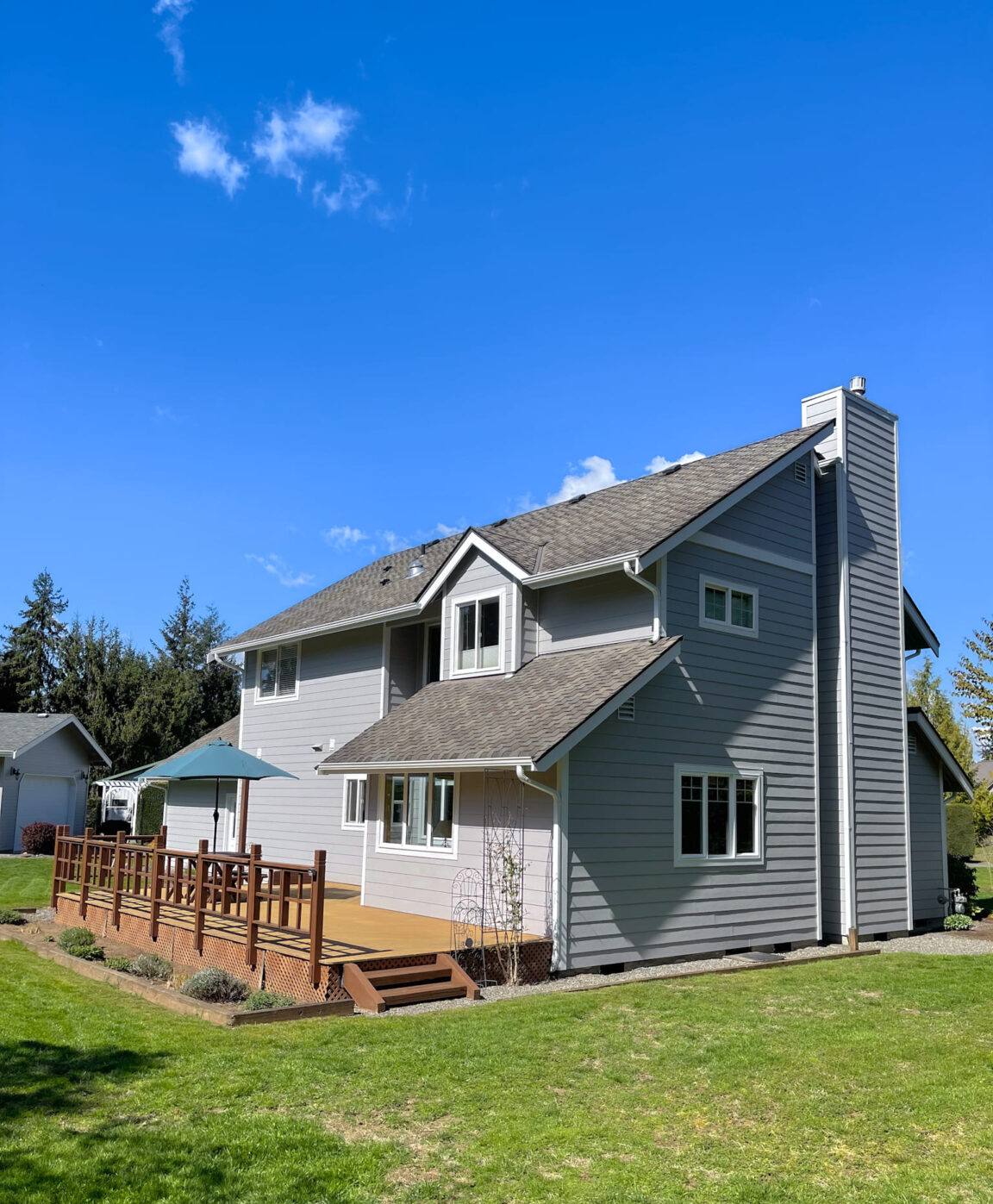
How Salt Air, Rain, and Moss Actually Damage Siding
Salt Air
Airborne salt doesn't just sit on the surface — it works into seams, fastener heads, and any place paint or factory finish has thinned. On wood-based and engineered wood siding, that moisture-salt combination accelerates swelling, delamination, and paint failure. On metal fasteners and trim, it accelerates corrosion, which shows up as rust streaking below nail heads and screws.
Driving Rain
Wind-driven rain off the bay pushes water horizontally against wall surfaces instead of letting it run off vertically. That means water finds its way behind loose or poorly lapped siding, into butt joints, and around window and door trim far more aggressively than in calmer inland conditions. A siding system's water-shedding details — laps, flashing, caulking joints — matter more here than almost anywhere else in the county.
Moss and Lichen
Shaded, moisture-retentive surfaces are exactly what moss and lichen need to establish. Once organic growth takes hold on siding, it holds moisture against the surface even longer, creating a cycle that degrades paint, caulking, and in some cases the substrate itself. On homes with mature landscaping — common throughout Edgemoor — north- and west-facing walls are usually the first to show it.
Signs an Edgemoor Home Needs Siding Replacement, Not Just Repair
- Soft or spongy spots when you press on siding, especially near the bottom courses and around window trim
- Paint that's failing repeatedly in the same spots within a year or two of repainting
- Visible gaps opening at butt joints or where panels meet trim
- Persistent moss or algae staining that returns within a season of cleaning
- Bubbling, cracking, or delamination on wood-based or engineered wood panels
- Rust streaking below fasteners or trim pieces
- Rising energy bills with no other explanation, which can point to a failing weather barrier behind the siding
- Visible daylight or drafts at interior wall penetrations (outlets, switch plates) on exterior walls
Any one of these can sometimes be handled with a repair. Several at once, especially on a wall that catches direct weather off the bay, usually means the underlying moisture barrier has been compromised and full replacement is the more honest recommendation.
What a Correct Siding Replacement Involves
Replacing siding well is not just removing old panels and nailing up new ones. In a high-exposure setting like Edgemoor, the sequence matters as much as the material.
Tear-Off and Inspection
Full removal of the old siding lets us see the sheathing underneath. This is the step that reveals whether there's hidden rot, soft sheathing, or prior water intrusion that a re-side-over-existing approach would simply bury.
Sheathing Repair
Any damaged sheathing gets cut out and replaced before anything new goes up. Installing new siding over compromised sheathing just resets the clock on the same failure.
Weather-Resistive Barrier
A new, continuous weather-resistive barrier goes over the sheathing, lapped correctly from the bottom up so water is directed outward at every seam. This layer is what actually keeps driving rain out of the wall assembly — the siding itself is the first line of defense, not the only one.
Flashing at Penetrations
Windows, doors, hose bibs, vents, and any other wall penetration need proper flashing integrated with the weather barrier. This is where a large share of real-world leaks originate, and it's the detail that's easiest to rush.
Siding Installation
Panels are installed to the manufacturer's specified nailing pattern, gap tolerances, and clearances from grade, decks, and roof lines. Correct clearances matter more here because ground-level moisture and splashback are more persistent in a wet, shaded neighborhood.
Caulking and Trim
Joints get sealed with the right sealant for the substrate, and trim is finished to shed water rather than trap it.
Quick Pre-Job Checklist for Homeowners
- Ask whether the quote includes full tear-off or a re-side over existing siding
- Confirm sheathing inspection and repair is priced separately or included as an allowance
- Ask what weather-resistive barrier product will be used and how it's lapped
- Get the fastener and nailing spec in writing, not just "manufacturer standard"
- Confirm who pulls the permit and who's responsible for inspections
Why We Only Install James Hardie Fiber Cement
We don't install vinyl, LP SmartSide, primed spruce, cedar, or other fiber cement brands. That's not a marketing position — it's a standard we hold because of exactly the conditions Edgemoor deals with: salt air, sustained moisture, and heavy shade.
| Material | How it holds up near the bay | Why we don't install it |
|---|---|---|
| Vinyl siding | Doesn't rot, but can warp or become brittle with UV and temperature swings; seams are a moisture entry point | Limited ability to shed driving rain at seams; appearance and stiffness degrade over decades |
| LP SmartSide (engineered wood) | Reasonable performance if perfectly maintained, but wood-based core is vulnerable where moisture gets past the finish | Higher sensitivity to sustained moisture exposure common in shaded, coastal-adjacent settings |
| Primed spruce / cedar | Attractive, but natural wood needs consistent repainting and sealing to resist rot and moss | Ongoing maintenance burden is high in a climate that stays damp much of the year |
| James Hardie fiber cement | Non-combustible, dimensionally stable, factory ColorPlus finish resists fading and holds paint far longer | This is what we install — engineered for exactly this kind of exposure |
James Hardie's HZ product lines are engineered around climate zones, and the Pacific Northwest's wet, moderate-temperature conditions are specifically what the HZ5 formulation addresses. The ColorPlus factory finish holds up better against the salt-and-moisture cycle than field-applied paint on wood-based products, and because the core material is fiber cement rather than wood, it isn't feeding the moss and mildew cycle the way organic substrates can. The transferable warranty also matters to Edgemoor homeowners who may sell in the years ahead — it's a selling point during a home inspection, not just a comfort during ownership.
Our Process for an Edgemoor Siding Replacement
- On-site walkthrough of the home, checking siding, trim, window flashing, and any visible moisture damage
- Written estimate detailing tear-off, sheathing allowance, weather barrier, flashing, and Hardie product line/color
- Scheduling built around Whatcom County's wetter months, sequencing work to minimize open-wall exposure time
- Tear-off and sheathing inspection, with photos and a direct conversation if repairs are needed beyond the original scope
- Weather barrier and flashing installation, inspected before siding goes up
- Hardie siding and trim installation to manufacturer spec
- Final walkthrough with the homeowner before we consider the job complete
We sequence around weather deliberately. A wall that's open to a driving rain event, even overnight, is a wall that can take on water it didn't need to. Crews familiar with Edgemoor's weather patterns plan tear-off and dry-in stages around realistic forecast windows rather than a fixed calendar.
What Siding Replacement Typically Costs to Plan For
| Cost factor | Why it moves the number |
|---|---|
| Home size and wall complexity | More corners, dormers, and trim details mean more labor and cut waste |
| Sheathing condition | Hidden rot found at tear-off adds material and labor not visible in an initial walkthrough |
| Siding profile and color | Lap width, texture, and factory-finish color selection affect material cost |
| Trim and accessory scope | Full trim replacement versus reusing sound existing trim changes both cost and long-term appearance match |
| Access and site conditions | Mature trees, tight side yards, and slope common on Edgemoor lots can affect staging and labor time |
We don't quote a number without seeing the house — anyone who does is guessing. What we can say honestly is that full tear-off with proper weather barrier and flashing work costs more up front than a quick re-side over old siding, and on a home exposed to bay weather, that difference is what determines whether the job lasts fifteen years or fifty.
Why a Crew That Already Works Edgemoor Matters
Whatcom County's siding conditions aren't uniform. A crew that mostly works drier, more sheltered inland neighborhoods can still do fine work, but they may not default to the flashing details, barrier lap sequencing, and clearance judgment calls that matter most near open water. A crew that already works Edgemoor and similar Bellingham Bay-adjacent neighborhoods has seen which walls fail first, which trim details hold up, and which shortcuts don't survive a decade of salt air and driving rain. That familiarity shows up in fewer callbacks and a longer-lasting result, not in anything flashy on the surface.
Keeping New Siding Performing Long-Term
Even correctly installed siding benefits from basic upkeep in this climate:
- Rinse siding annually to remove salt residue and organic buildup before it stains or takes hold
- Keep gutters clear so overflow doesn't run down and saturate wall surfaces
- Trim back vegetation that shades walls and keeps them from drying out between rain events
- Re-caulk trim joints if you notice separation, rather than waiting for a leak to show up inside
- Watch for moss regrowth on shaded elevations and address it early rather than letting it establish
James Hardie's factory finish reduces how much of this maintenance falls on the homeowner compared to field-painted wood products, but no siding is entirely maintenance-free in a coastal-influenced climate.
If your Edgemoor home is showing any of the signs above, or you just want an honest read on whether repair or full replacement makes sense, we're happy to take a look. The estimate is free, there's no pressure, and you'll get a straight answer about what your home actually needs.