 Whatcom County
 Windows Built for Barkley's Weather, Not Just the Showroom
Barkley sits close enough to the water and the marine air pattern that moves through Whatcom County that its homes take a specific kind of beating: salt-laden air, long stretches of driving rain off the water, and a moss season that seems to start earlier and last longer every year. None of that is unique to any one street or subdivision in the neighborhood, but it adds up differently on windows than it does on roofs or siding. A window is a hole in the building envelope with moving parts, seals, and a frame that has to manage water, air, and temperature all at once. When that assembly is undersized, poorly sealed, or simply worn out, the house pays for it every month in the utility bill and every winter in cold drafts and condensation on the glass.
This page is about one thing: replacing windows in Barkley with energy-efficient units, installed correctly for this climate. Not a general overview of window brands, and not a sales pitch for the most expensive option on the shelf — just what actually matters for a home in this part of Whatcom County.
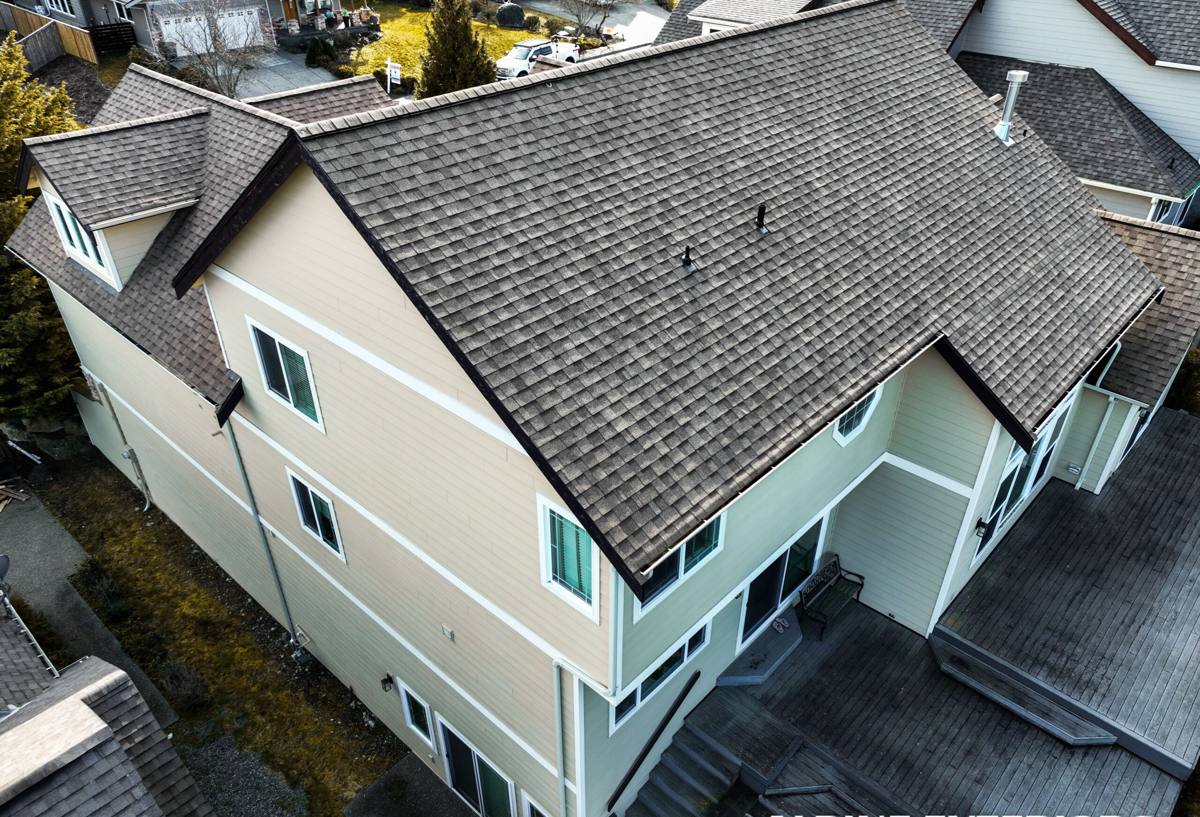
What Whatcom County's Climate Does to Windows Over Time
A few regional realities shape how windows perform and fail here, and they're worth understanding before you start comparing quotes.
Salt Air and Moisture
Proximity to the water means more airborne salt and moisture than an inland location would see. Over years, that moisture works into anything with a weak seal — aluminum hardware corrodes faster, wood sashes that aren't properly finished start to swell and stick, and any gap in the exterior sealant becomes a slow entry point for water. It's rarely dramatic. It's a slow degradation that homeowners often don't notice until a window won't latch properly or the sill starts showing soft spots.
Driving Rain
Rain here doesn't just fall — wind pushes it sideways against west- and south-facing walls for days at a time during the wet months. A window that's watertight in a light, vertical rain can still leak under sustained wind-driven rain if the flashing detail behind the trim isn't right. This is one of the most common failure points we see on older installs: the window itself is fine, but whoever installed it didn't flash it to shed water past the rough opening, so water gets behind the frame and into the wall assembly.
Moss and Shade
Whatcom County's tree cover and overcast stretches mean a lot of homes have windows that stay shaded and damp for long periods, especially on north-facing walls. That's ideal growing conditions for moss and mildew on sills, exterior trim, and anywhere water sits instead of draining. It doesn't damage glass, but it accelerates rot on wood components and can trap moisture against frames that aren't detailed to drain properly.
What "Energy-Efficient" Actually Means for a Window
"Energy-efficient" gets used loosely in this industry. For a real answer, there are three numbers and one construction detail that actually determine how a window performs:
- U-factor — how well the window resists heat flow. Lower is better. This is the single biggest factor in how much heat you lose through the glass and frame in winter.
- SHGC (Solar Heat Gain Coefficient) — how much solar heat passes through the glass. In a climate with mild summers like ours, this matters less for cooling than it does in hotter regions, but it still affects comfort near south- and west-facing glass.
- Air leakage rating — how much air passes through the window assembly itself, independent of the glass performance. A window can have great glass and still perform poorly if the sash doesn't seal tightly against the frame.
- Installation quality — not a spec on the label, but it's the factor that determines whether the window's rated performance actually shows up in your energy bill. A well-rated window installed with gaps in the insulation or a poor air seal will underperform its numbers.
For this region specifically, we weight air leakage rating and water management detail highly — more so than in a drier climate — because the combination of wind and rain here punishes any weakness in the seal.
Frame Material Comparison
| Frame Material | How It Handles This Climate | Maintenance |
|---|---|---|
| Vinyl | Good moisture resistance, no corrosion risk from salt air, consistent performance | Low — occasional cleaning, no painting or sealing needed |
| Fiberglass | Excellent dimensional stability, handles temperature swings and moisture well, strong long-term option | Low — very stable material, minimal upkeep |
| Wood (clad or unclad) | Can perform well but is the most sensitive to the salt air and driving rain described above if seals or finish fail | Higher — finish and seals need periodic attention, especially on exposed elevations |
| Aluminum | Conducts heat and cold readily and is more prone to corrosion in salt-influenced air unless properly treated | Moderate to high depending on coating and exposure |
We're not going to tell you wood windows are a bad product — plenty of well-built wood windows perform fine for decades. But on a home in Barkley with real exposure to wind-driven rain, we hold ourselves to installing frame materials and details that don't depend on perfect long-term maintenance to stay watertight. That's a standard we apply based on what this climate actually does to a building, not a knock on any manufacturer.
Signs Your Barkley Home's Windows Are Underperforming
Most homeowners don't think about window performance until something forces the issue. Here's what to actually look for:
- Condensation or fogging between the panes of a double- or triple-pane window — this means the seal has failed and the insulating gas has escaped
- Noticeable draft near the frame when it's windy, even with the window fully latched
- Sashes that are hard to open, close, or lock — often a sign of frame swelling or warping from moisture
- Soft or discolored wood at the sill or exterior trim, especially on north-facing or shaded windows
- Visible moss or persistent green growth on the sill or trim that keeps returning after cleaning
- A noticeably cold spot in the room near the window even when the heat is running
- Rooms that are harder to keep comfortable than the rest of the house, particularly on the sides of the home that face prevailing weather
Any one of these on its own might just mean a tune-up or a resealing job. Several together, especially on an older home, usually mean it's time to talk about replacement rather than repair.
What a Correct Installation Actually Involves
The window unit itself is maybe half the job. The other half — the part that determines whether it actually performs and stays watertight — is the installation detail. A correct job in this climate includes:
Proper Flashing and Water Management
Water needs a planned path around and out of the window opening, not just a bead of caulk hoping to stop it. That means flashing tape or membrane integrated with the house wrap in the right shingled order — so water that does get behind the trim drains back out instead of pooling against the sheathing.
Air Sealing Around the Frame
The gap between the window frame and the rough opening needs to be filled with an appropriate low-expansion foam or backer rod and sealant — not stuffed with fiberglass insulation alone, which doesn't stop air movement the way a proper air seal does.
Level, Plumb, and Square Setting
A window that's slightly out of square will bind, won't seal evenly against the sash, and will wear unevenly over time. This is a basic step, but it's also the one that gets rushed on a fast job.
Exterior Trim and Sealant Detail
The exterior finish work — trim, caulking, and any cladding tie-in — has to be done in a way that sheds water rather than trapping it, particularly important given how much moss and mildew growth we see on window trim in shaded parts of Whatcom County.
Our Process for a Barkley Window Replacement
- On-site assessment — we look at each window's current condition, the exposure of each elevation to wind and rain, and any existing water damage or rot at the openings.
- Honest recommendation — not every window on a home needs replacing at the same time. We'll tell you which ones are a priority and which can wait.
- Written estimate — a clear scope covering the window units, installation method, and any trim or siding tie-in work required.
- Installation — including proper flashing, air sealing, and setting, as described above — not just swapping the sash and calling it done.
- Final check — operation, seal, and exterior finish reviewed before we consider the job complete.
What Drives the Cost of a Window Project
| Factor | Why It Matters |
|---|---|
| Number of windows | Whole-house projects typically cost less per window than one-off replacements due to setup and material efficiency |
| Frame material | Vinyl and fiberglass generally cost less upfront than clad wood; performance and longevity should factor into the comparison, not just sticker price |
| Existing condition of the opening | Rot or water damage found behind an old window adds repair scope before the new unit goes in |
| Exposure of the elevation | Windows on the sides of the house facing prevailing wind and rain may warrant a more robust flashing detail |
| Trim and exterior finish work | Matching existing siding or trim, or upgrading it during the same project, affects labor and materials |
We give honest ranges during the estimate, not a number pulled from a brochure — every home and every opening is a little different, especially once we see what's actually happening behind the old trim.
Why It Matters That We Already Work in Barkley
A crew that works this neighborhood regularly already knows what the exposure patterns look like street to street — which elevations take the worst of the driving rain, where moss and shade are a persistent issue, and what kind of wear is typical on homes of a given age in this part of Whatcom County. That's not a guess we make on day one of a project; it's context built from doing this work locally, repeatedly. It also means we're not learning on your house how the salt air and rain interact with a given installation detail — we've already seen what holds up and what doesn't.
Get a Free, No-Pressure Estimate
If your windows in Barkley are drafty, fogging, hard to operate, or just old enough that you're wondering whether it's time, we're happy to take a look and give you a straight answer — including telling you if a repair or reseal makes more sense than full replacement. Use the form below to request a free estimate.