 Whatcom County
 Why Fairhaven Windows Face a Tougher Job Than Most
Fairhaven sits close to Bellingham Bay, which means homes here deal with a combination of weather stresses that inland Whatcom County properties simply don't see as often. Salt-laden air off the water accelerates corrosion on hardware, fasteners, and lower-quality frame materials. Driving rain — wind-blown rather than straight-down — gets pushed sideways into window assemblies, testing flashing and seals in ways that calm-weather installations never encounter. And the long moss season that defines this part of the Pacific Northwest keeps wood sills, cladding, and window perimeters damp for months at a stretch, which is exactly the environment that rot, mildew, and seal failure need to take hold.
None of this means Fairhaven homes need exotic products. It means the windows and the installation have to be matched to the actual conditions, not to a generic spec sheet. A window that performs fine in a dry inland climate can underperform here if the frame material, glazing, and flashing details weren't chosen with coastal exposure in mind.
What "Energy-Efficient" Actually Means in This Climate
Energy efficiency in a window isn't a single number — it's a combination of properties that matter differently depending on climate. For Fairhaven and the rest of Whatcom County, three factors matter most:
- U-factor: measures how well the window resists heat transfer. Lower is better for our cool, wet winters, since it directly affects how much heat escapes through the glass and frame.
- Air infiltration rating: how much air leaks through the assembly under wind pressure. This matters more here than in calmer inland areas because Fairhaven catches more direct wind off the bay.
- Condensation resistance: how well the window resists moisture forming on interior surfaces during cold, damp stretches. Poor condensation resistance leads to sill damage, mildew, and eventually wood rot — a real risk given how long our wet season runs.
Solar heat gain coefficient (SHGC) matters less here than it would in a sunnier climate — Fairhaven doesn't have the intense summer sun load that drives cooling costs in other regions, so we don't recommend homeowners over-prioritize it at the expense of U-factor and air sealing.
Signs a Fairhaven Home's Windows Are Underperforming
Before recommending replacement, we look for concrete signs that a window is actually failing rather than just older-looking. Common indicators we find in this neighborhood include:
- Visible fogging or a permanent haze between panes — a sign the seal on a double-pane unit has failed and the insulating gas or air gap is gone
- Drafts felt near the frame even with the window fully latched
- Soft, discolored, or spongy wood at the sill or lower frame corners
- Aluminum frames with pitting, white corrosion, or stiff-operating hardware
- Condensation forming on the inside of the glass regularly during fall and winter
- Visible daylight or gaps around the exterior trim where caulk has failed
A window showing one or two of these signs can sometimes be repaired. Multiple signs on the same unit, or the same issues across several windows on a wall that faces the water, usually point to replacement being the more cost-effective long-term move.
Frame Material: What Holds Up on the Fairhaven Waterfront
Frame material choice matters more here than in a drier, calmer climate. Here's how the common options actually perform under salt air, driving rain, and sustained dampness:
| Frame Material | Coastal Performance | Maintenance | Trade-offs |
|---|---|---|---|
| Vinyl | Good — won't corrode or rot, handles moisture well | Low | Limited color/finish options for period-style homes |
| Fiberglass | Very good — stable in temperature swings, resists moisture and salt exposure | Low | Higher upfront cost than vinyl |
| Wood (clad exterior) | Good if properly clad and flashed; the interior wood look works well for Fairhaven's older character homes | Moderate — cladding needs inspection, interior wood needs occasional attention | More installation-sensitive; a poor seal invites moisture into the wood core |
| Aluminum (uncoated or budget-grade) | Poor near the bay — prone to pitting and corrosion from salt air over time | Higher over time | We steer homeowners away from budget aluminum in this specific location; it's a maintenance burden we'd rather they avoid than sell them on |
For most Fairhaven homes, we end up recommending vinyl or fiberglass for straightforward efficiency and low upkeep, or clad-wood when matching the character of an older home is a priority and the homeowner is comfortable with the added installation precision it requires.
What a Correct Installation Actually Involves
The window unit itself is only part of the performance equation. In a climate that pushes rain sideways and keeps humidity high for months, the installation details are what actually determine whether a window stays efficient and dry for the next 20+ years.
Flashing and Water Management
Proper flashing directs any water that gets past the window trim back out and away from the wall assembly, rather than letting it pool at the sill or track down into the wall cavity. This is the single most common point of failure we find in older installations around Fairhaven — flashing that was skipped, undersized, or installed in the wrong sequence relative to the house wrap.
Sealing Without Trapping Moisture
Sealing has to work in both directions: keeping bulk water and air infiltration out, while still allowing any incidental moisture that does get in to dry out rather than getting sealed inside the wall. Over-sealing with the wrong materials can trap moisture against wood framing — exactly the wrong outcome in a climate this damp.
Integration With Existing Siding
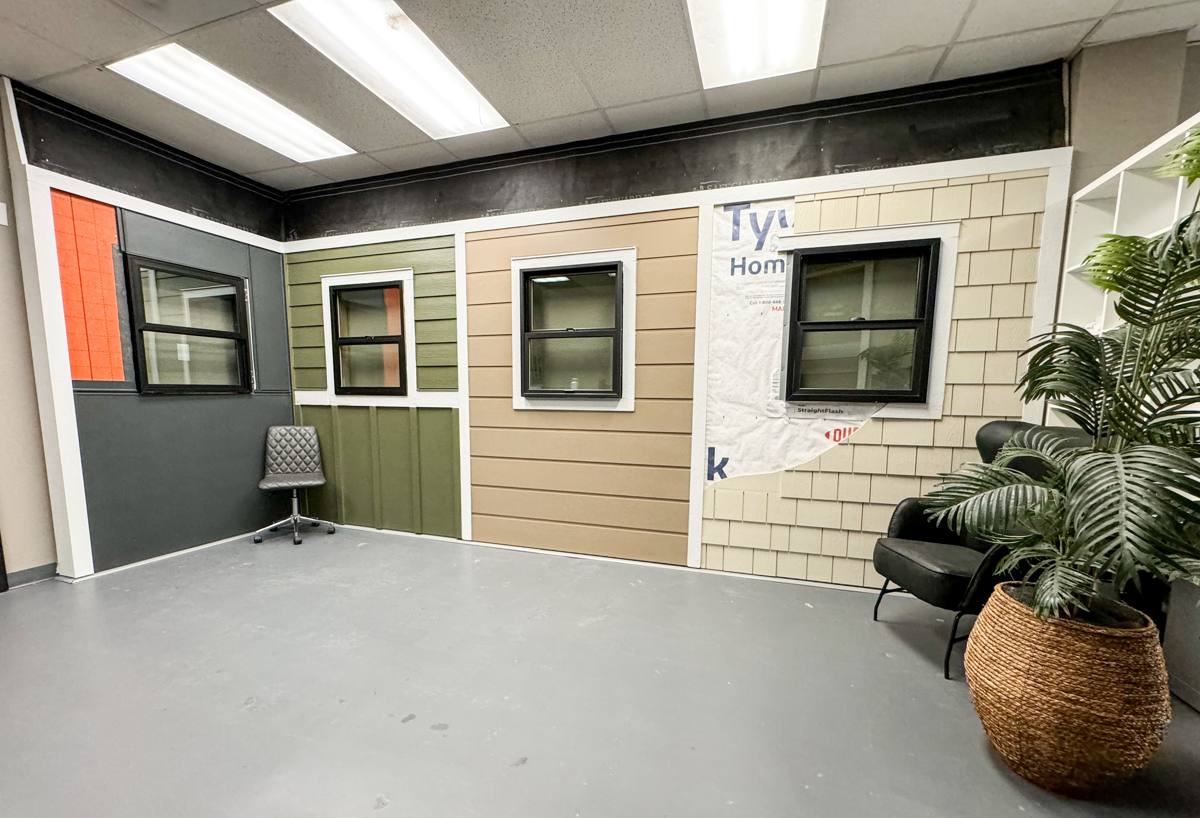
Window replacement almost always means disturbing the siding and trim around the opening. Doing this correctly means re-integrating the window flashing with the existing water-resistive barrier and siding overlap, not just caulking around the gap. This is where experience with the specific siding types common on Fairhaven homes matters — the right sequence changes depending on what's already on the wall.
Insulation Around the Frame
The gap between the window frame and the rough opening needs to be insulated with a low-expansion foam or backer rod and sealant — not packed tight with fiberglass, which does little for air sealing, and not overfilled with high-expansion foam, which can bow the frame and affect operation.
Our Process for a Fairhaven Window Project
- On-site assessment: we inspect existing windows, sills, and surrounding siding/trim for hidden moisture damage before quoting anything.
- Measurement and product selection: exact opening measurements, plus a frame material and glazing recommendation matched to the wall's exposure — a wall facing the water gets different treatment than a sheltered side yard.
- Removal and inspection: old units come out carefully so we can check the rough opening and sheathing underneath for rot or prior water intrusion before anything new goes in.
- Flashing and installation: new flashing integrated with the existing water-resistive barrier, unit set plumb and level, and fastened per manufacturer spec.
- Sealing and insulation: perimeter sealed and insulated using materials suited to this climate, not a one-size-fits-all approach.
- Trim and siding restoration: exterior trim and siding reinstalled or replaced to match, with attention to water shedding at every joint.
- Final walkthrough: operation check on every window, plus a review of what to watch for during the first wet season.
What Drives the Cost of a Window Project
Every Fairhaven home is different, so we don't quote sight-unseen — but the main cost factors are consistent from job to job:
| Factor | Why It Matters |
|---|---|
| Number of openings | More windows means more labor, materials, and flashing work; whole-house projects have better per-unit economics than one-off replacements |
| Frame material | Vinyl is typically the most economical; fiberglass and clad-wood cost more upfront but often make sense for exposure or appearance reasons |
| Glazing package | Double vs. triple pane, and the specific low-E coating, affect both price and long-term energy performance |
| Condition of the rough opening | Hidden rot or prior water damage discovered during removal adds repair scope before a new window can go in properly |
| Siding and trim complexity | Matching existing trim profiles on an older character home takes more time than a simple vinyl-sided wall |
| Access and site conditions | Upper-story or hard-to-reach windows add labor time and equipment needs |
We'd rather walk a homeowner through these factors honestly during an estimate than give a number that doesn't hold up once we're inside the wall.
Why It Matters That We Already Work in Fairhaven
Fairhaven isn't a generic subdivision — it's a mix of older character homes near the water and newer construction, often with siding and trim details that call for judgment rather than a standard checklist. A crew that regularly works this neighborhood already knows what to expect when trim comes off: what the flashing conditions typically look like on homes of a certain age, how the bay-facing exposure tends to affect the north and west walls differently than the sheltered sides, and what moisture patterns show up after a normal Whatcom County wet season versus what signals a deeper problem.
That local familiarity shortens the assessment phase, reduces surprises once a wall is opened up, and means the flashing and sealing choices are based on how this specific area actually behaves — not a generic install method applied the same way everywhere in the county.
Keeping New Windows Performing Long-Term
A correctly installed, energy-efficient window should need very little attention — but a little seasonal awareness goes a long way in this climate:
- Check exterior caulk lines each fall before the wet season sets in, and have any cracked or separated sections resealed
- Keep gutters and downspouts clear so runoff isn't sheeting down over window heads
- Wipe down sills periodically to prevent moss and organic buildup from holding moisture against the frame
- Operate each window a few times through the year so weatherstripping and hardware don't seize up from disuse
- Watch for any new condensation on interior glass during cold snaps — a change from prior years can be an early sign a seal is starting to fail
- Have wood-clad frames inspected periodically, since cladding failures are gradual and easy to miss until moisture reaches the core
If your Fairhaven home has drafty, fogged, or aging windows, we're happy to take a look and give you a straightforward, no-pressure assessment of what's actually going on and what your options are — just fill out the form below to get started.