 Whatcom County
 Windows Built for Sehome's Weather, Not Just Any Weather
Sehome sits close enough to Bellingham Bay that homes here deal with a different mix of weather stress than houses further inland in Whatcom County. Salt-laden air off the water, long stretches of driving rain, and a moss season that can run from fall through spring all put steady pressure on window frames, seals, and glazing. A window that performs fine in a dry climate can fail early here if it wasn't chosen or installed with this specific combination in mind.
Energy-efficient windows aren't just about a lower power bill, though that matters. In this climate they're also about keeping moisture out of your wall cavities, resisting corrosion around hardware and frames, and holding up to repeated wet-dry cycling without the seals breaking down. When we talk about "energy-efficient windows" for a Sehome home, we mean windows and an installation approach that address both the energy side and the moisture side together, because around here they're the same problem.
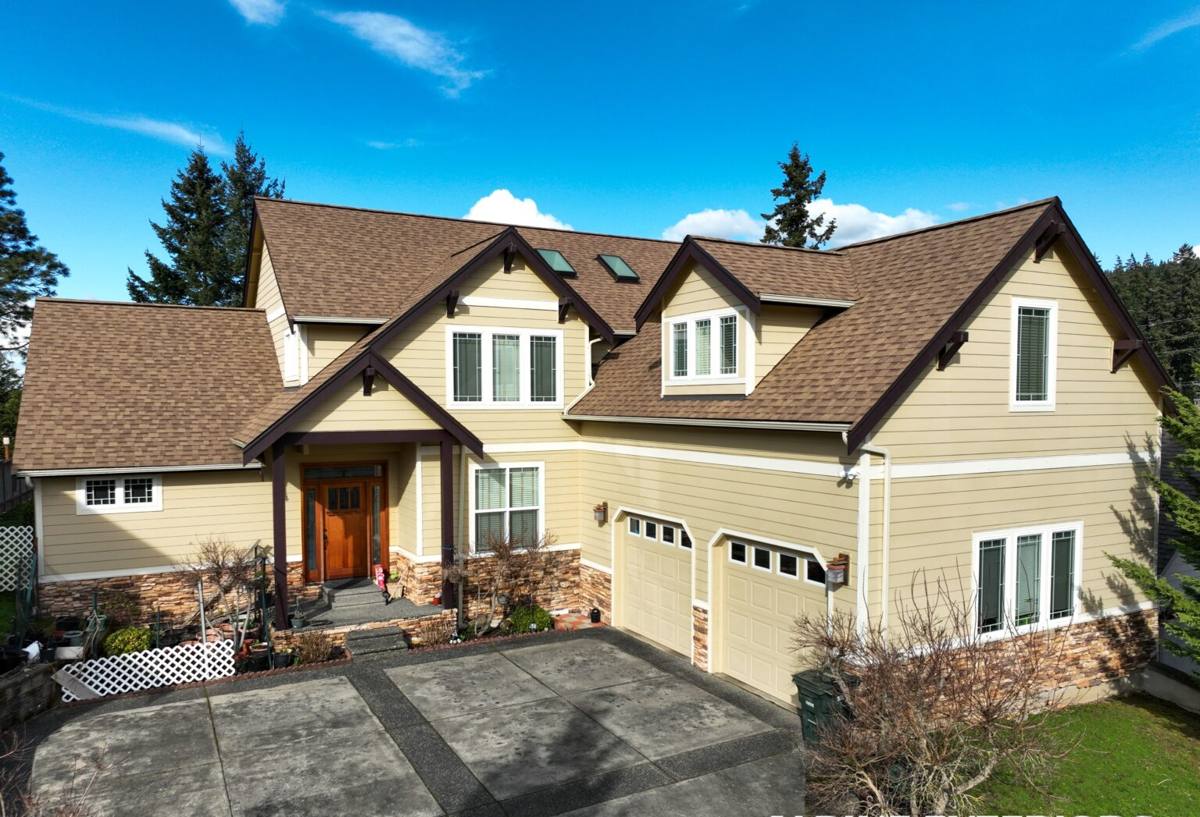
Signs Your Current Windows Are Working Against You
Most homeowners don't think about window performance until something obvious goes wrong. In our experience working on homes throughout Whatcom County, the early warning signs are usually quieter than that. A few worth paying attention to:
- Cold drafts near the frame edges even when the window is fully latched
- Condensation or fogging between the glass panes, which usually means the seal on a double-pane unit has failed
- Visible moss, algae, or dark staining building up on sills or the lower frame
- Wood trim around the window that feels soft, or paint that's bubbling or peeling near the frame
- Rooms that feel noticeably colder or draftier than the rest of the house, especially on the side that faces prevailing weather
- A noticeable jump in heating costs without any other explanation
Any one of these on its own might not mean much. Two or three together, especially on a home that's had its original windows for 20+ years, usually means it's time for a real evaluation rather than a patch job.
What "Energy-Efficient" Actually Means
Glazing and Gas Fills
Most energy-efficient windows today use double- or triple-pane glass with an inert gas, usually argon, sealed between the panes. The gas slows heat transfer through the glass. Low-E (low-emissivity) coatings are a thin, virtually invisible layer that reflects heat back to its source — keeping indoor heat in during our cold, wet winters without turning the glass into a mirror.
Frame Material
The frame matters as much as the glass, sometimes more, in a coastal-influenced climate. Frame material affects how the window handles moisture, temperature swings, and salt exposure over its lifespan. We'll walk through the tradeoffs below.
U-Factor and Air Leakage Ratings
Every quality window carries an NFRC label with a U-factor (lower is better for insulation) and an air leakage rating (lower means less air sneaking through the frame). For Whatcom County's climate, we generally steer homeowners toward windows with U-factors that qualify for ENERGY STAR's Northern climate zone, since that zone reflects the kind of winters we actually get here.
Choosing the Right Window for a Sehome Home
There's no single "best" window for every house — it depends on your home's exposure, your budget, and how much upkeep you want to do. Here's how the common frame options compare for a home in this climate:
| Frame Material | Moisture / Salt Air Behavior | Maintenance | Typical Fit |
|---|---|---|---|
| Vinyl | Won't rot or corrode; performs well against salt air and rain | Low — occasional cleaning | Most Sehome homes; strong value for the performance |
| Fiberglass | Excellent moisture and temperature stability; very low expansion/contraction | Low | Homes wanting a higher-end, longer-lifespan option |
| Wood (unclad) | Attractive but vulnerable to moisture intrusion and rot if seals or paint fail | High — regular repainting/sealing | Historic-style homes where appearance is the priority |
| Wood-clad (vinyl or aluminum exterior) | Good — exterior cladding shields the wood from weather | Moderate | Homes wanting a wood interior look with better exterior protection |
| Aluminum | Prone to condensation and can corrode faster in salt air without a quality finish | Moderate | Generally not our first recommendation for this area |
We install several of these depending on what the homeowner wants, but we'll tell you honestly which options carry more long-term maintenance in a salt-air, high-rainfall setting like Sehome — that's part of an honest estimate, not an upsell.
How We Approach an Energy-Efficient Window Job
Assessment First
We start by looking at what's actually happening at each window — not just the glass, but the flashing, the sill pan, the trim, and how water has historically moved (or pooled) around that opening. On older homes, a window replacement is also a chance to fix drainage details that were never right to begin with.
Correct Flashing and Sealing
This is where a lot of window jobs go wrong, and it's the step that matters most in a wet climate. A window can have a great energy rating and still let water into the wall if it's not flashed correctly — sill pan, weather-resistant barrier integration, and proper sealant placement all have to work together so water sheds outward instead of finding a path inward.
Installation
We set the window level, plumb, and square, insulate the gap around the frame properly (over- or under-insulating both cause problems), and finish with exterior trim and sealant details built to handle driving rain, not just light drizzle.
Final Check
Before we call a job done, we check operation, seal integrity, and that all exterior details are finished to shed water the way they're supposed to.
Mistakes We See From Past Installs
We get called out to a lot of homes in the Sehome area to look at windows that were installed by someone else, or replaced years ago under different standards. The recurring issues are rarely about the window product itself — they're almost always about how it was installed. Common problems include sealant used in place of proper flashing, gaps insulated with the wrong material, or trim reinstalled without addressing the water path underneath. None of that shows up on day one. It shows up two or three wet seasons later as soft trim, interior staining, or a draft that wasn't there before. We flag this not to criticize other contractors' work sight unseen, but because it's the single biggest factor in whether a window job lasts 10 years or 30.
Living With Moss Season and Salt Air
Even a well-installed, high-quality window needs some basic upkeep in this climate. A short list that keeps windows performing as designed:
- Rinse sills and frames periodically to clear salt residue and organic buildup before it holds moisture against the frame
- Keep gutters and downspouts clear so runoff isn't sheeting directly across upper windows
- Check exterior caulk lines once a year, especially after a hard winter, and touch up any cracking before wet season
- Trim back vegetation or moss growth that's shading a window and keeping it damp longer than it should be
- Open weep holes on vinyl and fiberglass frames if you notice water sitting in the frame track
None of this is difficult, but skipping it is how a good window starts performing like a mediocre one after a few years.
What Affects the Cost
Every home is different, but the main cost drivers on a Sehome window project are fairly consistent:
| Factor | Why It Matters |
|---|---|
| Frame material | Vinyl is typically the most budget-friendly; fiberglass and wood-clad cost more upfront but can offer longer service life |
| Number and size of windows | Larger openings and picture windows cost more per unit than standard operable windows |
| Condition behind the existing window | If we find rot, poor flashing, or water damage once the old window is out, that repair adds to the scope |
| Access and second-story work | Upper-floor windows generally take more time and equipment to install safely |
| Full-frame vs. insert replacement | Full-frame replacement addresses the flashing and sill directly; insert replacement is faster and cheaper but leaves existing flashing in place |
We won't quote a number without seeing the home, but we'll always explain what's driving the estimate so you're not guessing at what you're paying for.
Why It Matters to Hire a Crew That Already Works in Sehome
Window installation standards that work in a dry, low-wind climate aren't automatically right for a neighborhood exposed to Bellingham Bay weather. A crew that regularly works throughout Whatcom County has already seen how salt air, driving rain, and moss buildup affect installations over years, not just on install day. That shows up in the small decisions — which sealants hold up, how much drainage capacity a sill pan needs, where flashing tends to fail first — that don't show up in a manufacturer's spec sheet.
It also means someone is close by and familiar with your home if a question comes up two years down the road, rather than chasing down a contractor who did one job in the area and moved on.
If your Sehome home has drafty, foggy, or aging windows, we're happy to take a look and walk you through honest options — no pressure, no obligation. The form below gets you a free estimate.