 Whatcom County
 Windows Built for Everson's Weather, Not Just Its Style
Everson sits in the part of Whatcom County where farmland, river bottom, and small-town neighborhoods all meet — and the weather doesn't treat any of them gently. Winters bring long stretches of driving rain, spring and fall carry heavy humidity off the surrounding fields and waterways, and the marine air that moves across the county even reaches inland communities like Everson, leaving a faint salt residue on siding, trim, and glass. Add a moss season that can run half the year on shaded or north-facing walls, and you've got a climate that is genuinely hard on windows — not because any one storm is dramatic, but because the moisture never really stops.
Custom windows for this area need to do more than look good. They need to shed water aggressively, resist the slow creep of humidity into the wall cavity, and hold their seals through decades of temperature swings between damp mornings and cold, clear nights. This page covers what that actually means for a house in Everson — what goes wrong with windows here, what a correct installation involves, and how we approach the job when we replace or install custom windows on local homes.
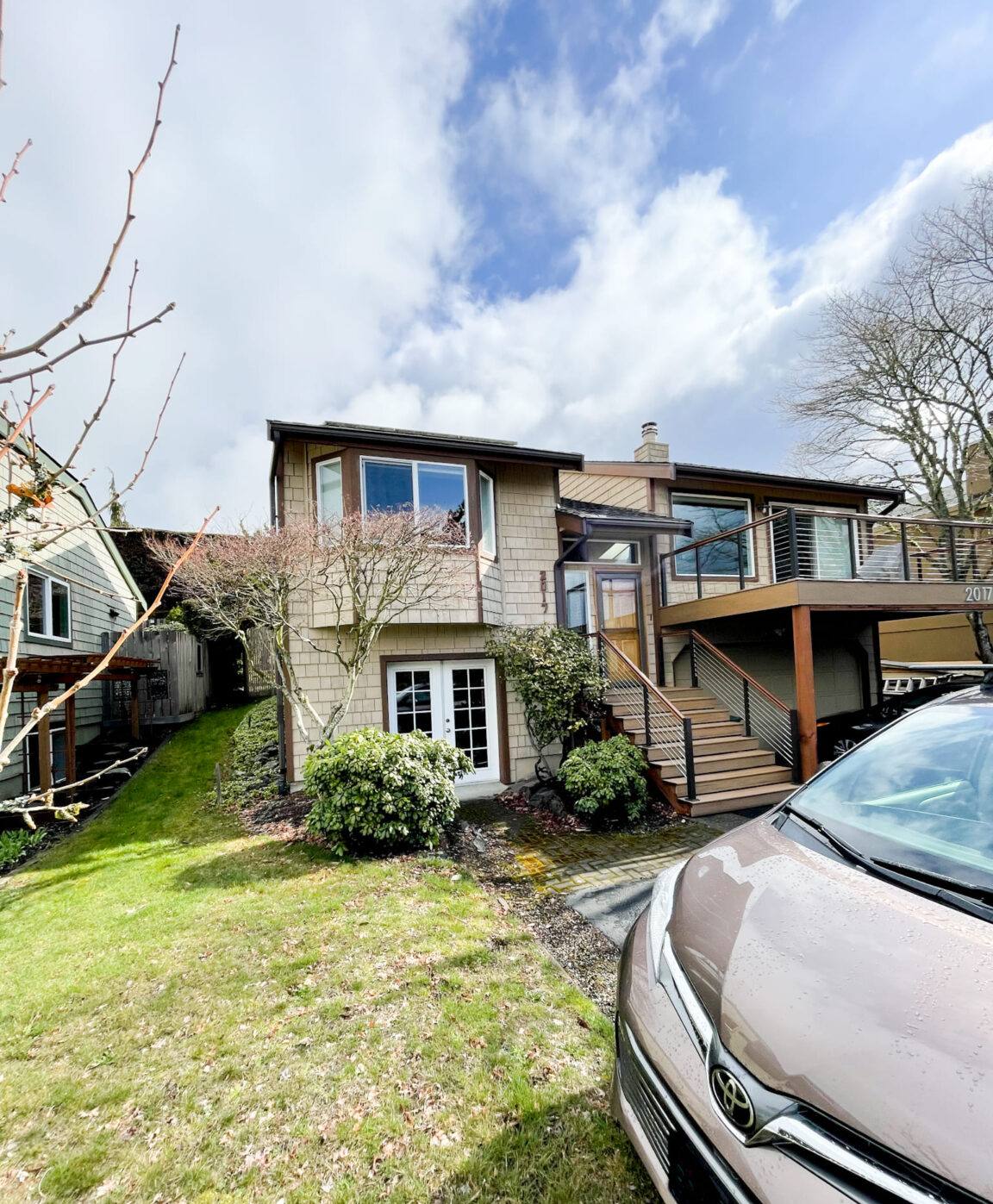
What Whatcom County's Climate Does to Windows Over Time
Moisture Intrusion Around the Frame
Most window failures we see aren't glass failures — they're frame and flashing failures. Driving rain doesn't just hit a window straight on; wind pushes it sideways and up under trim, sills, and J-channel. If the flashing detail behind the window isn't correct, water works its way behind the frame a little at a time. You won't see it for a year or two. Then you start noticing soft trim, peeling paint below the sill, or a musty smell in that corner of the room.
Seal and Glass Degradation
Double-pane and triple-pane windows rely on a sealed gas fill between the panes to perform. Constant humidity cycling — wet mornings, drier afternoons, cold nights — stresses that seal faster than it would in a drier climate. Once the seal fails, you get fogging between the panes that no amount of cleaning will fix, because the moisture is inside the unit, not on the glass surface.
Moss, Mildew, and Frame Materials
On shaded elevations, moss and mildew take hold on window sills and lower frame sections just like they do on roofs and siding. Wood frames without a durable factory finish will hold moisture against the material and start to soften at the corners first — that's usually where you'll see the earliest rot on an older window. Vinyl and fiberglass don't rot, but cheap vinyl can still discolor and get brittle from years of damp-then-dry cycling.
What a Correct Window Installation Involves Here
A window is only as good as the opening it sits in. In Everson's climate, we treat the installation detail as more important than the window brand, because a mediocre window installed correctly will outlast a premium window installed carelessly.
- Sill pan flashing — a sloped, sealed pan under the window that directs any water that gets past the frame back outside instead of into the wall.
- Proper weather-resistive barrier integration — the house wrap or building paper has to lap correctly over the flashing, shingle-style, so water always moves down and out.
- Backer rod and quality sealant at the exterior joint, not just caulk smeared over a gap.
- Shimming and squaring the frame so the sash operates correctly and the seals compress evenly — an out-of-square frame stresses weatherstripping and shortens its life.
- Interior air sealing with low-expansion foam or backer rod, which matters as much for condensation control as it does for energy bills.
Skipping any one of these doesn't cause an immediate problem — it causes a problem in year three or four, after the crew is long gone. That's the trap with window work: bad installation and good installation look identical on installation day.
Choosing the Right Frame and Glass Package
Frame Material
| Material | Moisture Behavior | Maintenance | Best Fit |
|---|---|---|---|
| Vinyl (quality grade) | Won't rot; handles humidity well | Low — occasional cleaning | Most Everson homes, budget-conscious replacements |
| Fiberglass | Excellent — very stable in wet/dry cycling | Low | Homes wanting minimal upkeep and long service life |
| Wood (clad exterior) | Good if cladding is intact; vulnerable if damaged | Moderate — watch cladding seams | Historic or traditional-style homes where wood interior look matters |
| Aluminum | Prone to condensation without thermal break | Low, but performance concerns | Generally not our recommendation for this climate |
We steer most Everson customers toward vinyl or fiberglass for exterior-exposed windows, simply because they don't give moisture anything to work on. That's a maintenance and moisture-behavior call, not a knock on wood — a well-detailed wood-clad window can perform fine, but it asks more of the homeowner over time.
Glass Package
Double-pane, low-E, argon-filled glass is the practical standard here. It cuts heat loss in winter, reduces solar gain on south and west exposures in summer, and the low-E coating helps limit interior condensation on cold mornings — a real issue in a climate this humid. Triple-pane is worth discussing on north-facing rooms or homes with persistent condensation complaints, but it adds weight, cost, and isn't always necessary if the wall assembly and ventilation are otherwise sound.
Older Farmhouses vs. Newer Builds in the Everson Area
A lot of homes around Everson are older farmhouses or ranch-style houses built well before current energy codes, alongside newer infill construction. The window approach differs:
- Older homes often have settled or slightly out-of-square openings, original wood trim worth preserving, and walls without modern vapor barriers — installation has to account for all three, sometimes with custom-sized units rather than off-the-shelf.
- Newer homes usually have square, code-built openings, which simplifies installation, but the windows themselves may be builder-grade units nearing the end of their seal life sooner than expected.
Custom sizing matters more here than in a lot of markets, because forcing a standard-size replacement into an odd or settled opening is exactly how you end up with the gaps and shim stacks that cause leaks down the road.
Our Process for a Custom Window Job
- On-site assessment — we look at existing frame condition, flashing, trim, and any signs of past moisture intrusion before we talk products.
- Accurate measurement — every opening gets measured individually; we don't assume uniformity even in newer construction.
- Product selection — frame material, glass package, and style matched to the exposure of that specific wall (south/west walls take more sun and rain than north/east).
- Removal and inspection — once the old window is out, we check the sheathing and framing underneath for hidden rot before installing anything new.
- Correct flashing and sealing — sill pan, WRB integration, backer rod and sealant, done in the order that actually sheds water.
- Interior and exterior finish work — trim, caulking, and touch-up so the job looks finished, not just functional.
- Final walkthrough — we operate every window with you before we call the job done.
What Drives the Cost of a Window Job
| Factor | Why It Matters |
|---|---|
| Number and size of openings | More direct cost driver than any other factor |
| Frame material | Fiberglass typically costs more upfront than vinyl; wood-clad more still |
| Glass package | Triple-pane and specialty coatings add cost per unit |
| Opening condition | Rot repair or reframing adds labor beyond a straight swap |
| Custom sizing | Non-standard openings cost more than stock sizes |
| Trim and finish work | Matching existing trim profiles or repainting adds scope |
We won't quote a whole-house number without seeing the openings — anyone who does is guessing, and guesses on window jobs tend to guess low and then surprise you later.
Signs Your Current Windows Need Attention
- Fogging or a permanent haze between the panes that cleaning doesn't remove
- Soft or discolored trim and sill wood, especially on south or west-facing walls
- Drafts you can feel near the frame even with the window closed and locked
- Windows that are hard to open, close, or lock — a sign the frame has shifted
- Visible moss or persistent mildew on the sill or lower frame
- Condensation forming on the inside of the glass regularly through the winter
Any one of these on its own isn't an emergency. Several of them together, or any sign of soft wood, is worth having looked at before it turns into a sheathing or framing repair.
Why a Crew That Already Works in Everson Makes a Difference
Window installation done right depends on understanding the specific conditions a house faces — which direction the weather comes from, how much shade a wall gets, what kind of construction is typical for homes built in this part of Whatcom County. A crew that already works Everson regularly isn't learning the local climate on your house; we've already seen how these conditions play out on homes like yours, from older farmhouses to newer builds on smaller lots. That translates into fewer surprises during removal, better judgment on flashing details for a given wall, and product recommendations based on what actually holds up here rather than a generic sales sheet.
It also means we're not disappearing after the invoice. If a seal fails or a trim joint opens up two winters from now, we're still working in the area and still stand behind the install.
If you're dealing with drafty, foggy, or hard-to-operate windows on your Everson home, we're happy to take a look and give you a straight assessment — no pressure, no inflated urgency. Fill out the form below for a free estimate.