 Whatcom County
 Why Siding Repair Looks Different in Everson
Everson sits in the Whatcom County countryside, close enough to the Nooksack River valley and the Salish Sea air mass that homes here take on a particular kind of weather beating. It's not one dramatic storm that wears out siding in this part of the county — it's the accumulation. Damp air moves through most months of the year, driving rain comes in sideways during fall and winter systems, and a long stretch of gray, low-sun months lets moss and algae get a foothold on anything shaded or north-facing. Add the salt-tinged moisture that rides inland off the Sound on a wet westerly wind, and you get a slow, steady erosion of paint, caulk, and the siding material itself.
None of that is dramatic enough to make a homeowner call a contractor right away. Instead, it shows up as small things: a soft spot near a downspout, a seam that's opened up, a patch of siding that never quite dries out after a rain. Left alone, those small things become the reason a wall sheathing has to be replaced instead of a few boards. Siding repair done right in Everson means understanding that pattern and fixing the cause, not just patching the symptom.
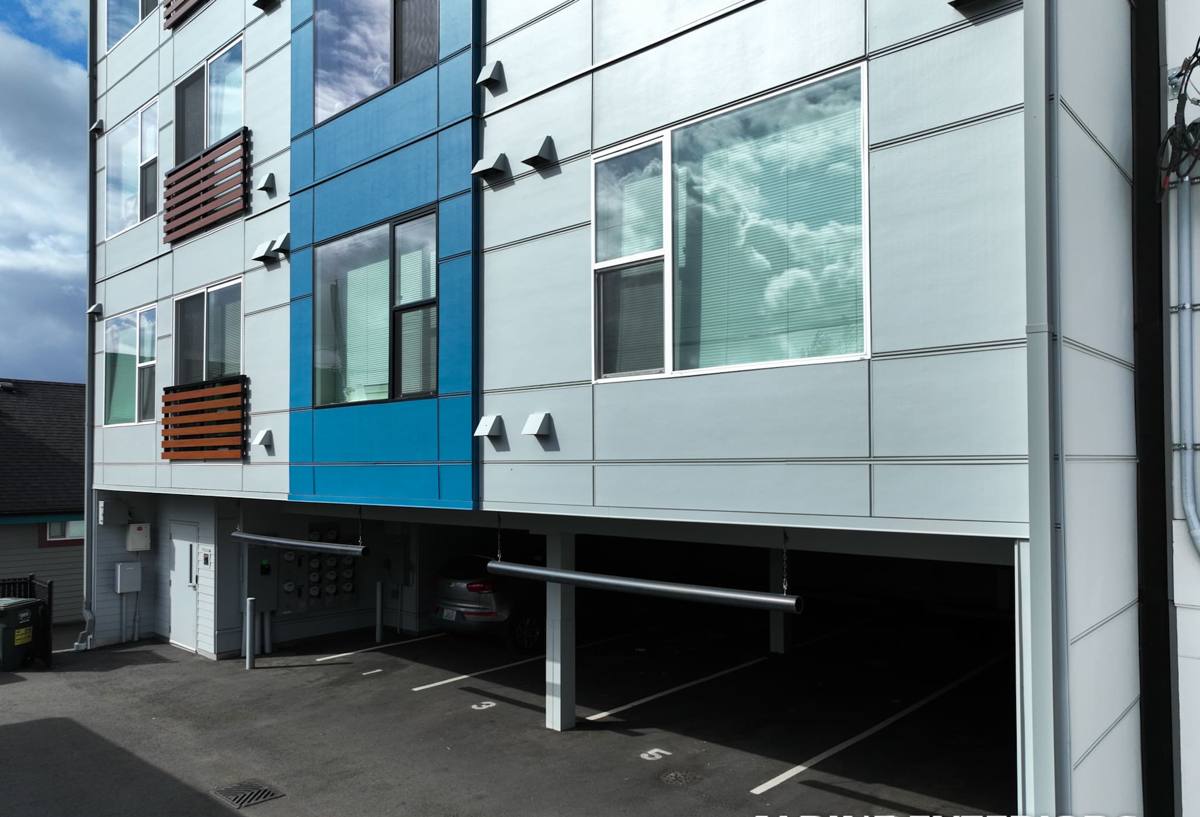
Signs Your Everson Home Needs Siding Repair
Most siding problems give warning signs well before they become structural. Homeowners in this area should walk the perimeter of the house at least once or twice a year, paying particular attention to north- and west-facing walls, areas under roof valleys, and anywhere gutters or downspouts run close to the siding.
- Boards that feel soft, spongy, or flex when pressed near the bottom edge or around windows
- Visible cracking, splitting, or buckling, especially after a cold snap followed by rain
- Paint that's peeling, bubbling, or chalking faster in one area than the rest of the house
- Persistent green or black staining that comes back within weeks of cleaning
- Gaps opening up at seams, corners, or where siding meets trim, window frames, or the foundation
- A musty smell near an exterior wall, or discoloration on interior drywall that lines up with an exterior spot
- Woodpecker holes or insect activity, which almost always means there's moisture underneath drawing them in
Any one of these on its own might be minor. Several together, or any sign near a lower corner, deck ledger, or plumbing penetration, usually means moisture has already gotten behind the siding — and that changes what the repair needs to include.
What a Correct Repair Actually Involves
A siding repair that only replaces what's visible from the driveway is a repair that will fail again. The visible board or panel is the last thing to go — by the time it shows damage, there's a good chance moisture has already reached the water-resistive barrier, the sheathing, or the framing behind it. A repair done to the standard we hold ourselves to always works backward from the source, not forward from the symptom.
Diagnosis before demolition
Before anything comes off the wall, we identify why that section failed. Was it a flashing detail that was never installed correctly, a caulk joint that dried out and cracked, a downspout dumping water against the wall, or just age and sun exposure catching up with old material? Repairing the same spot the same way, without addressing the cause, just buys a few more years before the same call comes in again.
Checking what's underneath
Once the damaged section is opened up, we inspect the sheathing and the water-resistive barrier behind it. In Whatcom County's damp climate, it's common to find soft or delaminated sheathing behind siding that looked fine from three feet away. If the substrate is compromised, that gets addressed as part of the repair — patching new siding over rotten sheathing is a short-term fix that guarantees a bigger job later.
Flashing and water management
A large share of the repairs we see trace back to flashing that was missing, undersized, or installed backward — around windows, at butt joints, above trim boards, or where a lower roof meets a wall. Correct water management is what actually keeps a wall dry; the siding itself is really the second line of defense, not the first.
Matching and finishing
Once the underlying issue is corrected, we match the replacement material as closely as possible in profile, exposure, and finish, then seal and paint or caulk to the same standard as new work — not a shortcut version because it's "just a repair."
Common Failure Points We See on Homes in This Area
| Problem | Typical Cause | Why It Matters Here |
|---|---|---|
| Soft or crumbling bottom edges | Splash-back from grade, missing kickout flashing, or poor drainage | Constant dampness means wicking moisture has more months of the year to do damage |
| Cracked or open caulk joints | UV and moisture cycling, original caulk reaching end of life | Driving rain finds any open joint quickly and pushes water behind the wall |
| Persistent moss and algae | Shade, low sun angle, poor airflow along the wall | Long gray season gives growth months to establish before it's ever fully dry |
| Panel or board buckling | Improper fastening, no expansion gap, or moisture-swollen material | Temperature swings and wet-dry cycles stress poorly installed material faster |
| Corrosion streaking on fasteners or trim | Non-coated fasteners, salt-laden moist air | Coastal-influenced air accelerates corrosion on the wrong hardware |
Repair vs. Replacement: How We Decide
Not every siding problem needs a full re-side, and we don't push replacement when a repair will genuinely hold up. The decision usually comes down to how much of the wall system is affected and how old the existing siding already is.
- Repair makes sense when damage is isolated to a section or two, the sheathing underneath is sound, and the rest of the siding is in reasonable condition for its age.
- Replacement makes more sense when the same failures are showing up in multiple spots, when the material itself (not just the installation) is the problem, or when the home is due for new siding within the next several years anyway and a patchwork repair would just be short-term spending.
- A hybrid approach — repairing the active problem now and planning a full re-side later — is sometimes the most honest answer, and we'll say so rather than upsell a job that isn't needed yet.
We'll always walk you through which category your home falls into and why, with photos of what we find once a section is opened up.
Our Process, Start to Finish
- On-site assessment — we walk the exterior with you, look at the problem areas, and check for related issues (grading, gutters, roof-to-wall transitions) that may be contributing.
- Honest scope and estimate — you get a clear explanation of what's failing, why, and what it will take to fix it correctly, with repair and replacement options laid out if both are reasonable.
- Investigative opening — where needed, we open a small section first to confirm what's happening behind the siding before finalizing scope, so there are no surprises mid-job.
- Correct repair — sheathing, flashing, and water management addressed first, then matching siding material installed and finished to the same standard as new work.
- Cleanup and walkthrough — we review the completed repair with you and point out anything worth keeping an eye on going forward.
Why We Repair and Replace with James Hardie Fiber Cement
When a repair calls for new material, or when a home's existing siding is failing broadly enough that replacement is the smarter path, we install James Hardie fiber cement exclusively. We don't install LP SmartSide, vinyl, Cemplank, Allura, primed spruce, or cedar, and in a climate like this one, that standard is based on how those materials actually perform over time rather than on brand preference.
Vinyl can crack in a hard freeze and warps under sustained heat and sun exposure; wood-based products like LP SmartSide and primed spruce depend on an intact factory or field-applied coating to keep moisture out, and any breach in that coating in a wet climate like Whatcom County's can lead to swelling at the edges. Cedar is a genuinely attractive natural product, but it demands ongoing maintenance — staining or sealing on a real schedule — to hold up against year-round moisture and moss growth, and skipping even one cycle of that maintenance shortens its life considerably. Fiber cement alternatives to Hardie exist, but we standardized on Hardie specifically for its ColorPlus factory finish, its HZ5 product engineering for wetter climates, and the strength of its transferable warranty when installation follows spec.
Hardie fiber cement is non-combustible, resists moisture intrusion far better than wood-based alternatives, and the ColorPlus finish is baked on at the factory rather than field-applied, which means the finish itself isn't the weak point the way it can be with site-painted materials. For repair work, that also means replacement sections can be matched cleanly without relying on a field paint job to blend in.
What Correct Hardie Repair Work Requires
- Cutting and fastening to Hardie's published installation specifications, including proper clearances and fastener spacing
- Using compatible caulk and touch-up products rather than generic hardware-store substitutes
- Maintaining proper clearance from grade, decks, and roof lines to avoid recreating the original failure point
- Confirming flashing and water-resistive barrier integrity before any new board goes on
Why a Crew That Already Works This Area Matters
Everson and the surrounding Whatcom County communities have a specific climate profile — enough rain, moisture, and moss pressure to punish shortcuts, but not so extreme that every home needs the same fix. A crew that works this area regularly recognizes the difference between cosmetic weathering and a real moisture problem without needing to guess, and knows which failure points show up again and again on homes built to the framing and drainage standards common in this part of the county. That local pattern recognition is what keeps a repair from turning into a return visit six months later.
It also means faster turnaround. A crew based locally can get out for an assessment sooner, doesn't need to mobilize from across the region for a small job, and is available for a follow-up check without a long lead time if you notice something after the work is done.
After the Repair: Keeping It From Happening Again
A good repair addresses today's problem, but a few habits help homeowners in this climate avoid a repeat visit:
- Keep gutters clear and downspouts directed away from the foundation, especially before the fall rains pick up
- Trim back vegetation that keeps a wall section shaded and slow to dry
- Rinse moss and algae buildup before it gets thick enough to hold moisture against the surface
- Do a quick visual check of caulk joints and paint condition once a year, before the wet season sets in
- Address small cracks or gaps as soon as you notice them rather than waiting for the next dry stretch
If you're seeing any of the warning signs above on your Everson home, or you just want an honest read on whether a section needs repair or the siding is due for a full replacement, we're happy to come take a look. The estimate is free, there's no pressure, and you'll get a straight answer either way — use the form below to get started.