 Whatcom County
 Why Everson Siding Wears Differently Than Siding Inland or in Drier Climates
Everson sits in the part of Whatcom County where weather doesn't let up for long stretches of the year. Homes here deal with a combination that's harder on exterior cladding than most homeowners realize: moisture-laden air moving in off the water, long stretches of driving rain, and a moss and mildew season that can run most of the year in shaded or north-facing exposures. None of these factors are dramatic on their own, but together they add up to steady, cumulative wear on siding that isn't built to handle sustained moisture exposure.
The practical result is that siding in this area often fails from the inside out. Paint and caulk can look fine on the surface while moisture is already working into seams, butt joints, and fastener penetrations underneath. By the time soft spots, bubbling paint, or visible rot show up, the damage has usually been developing for a while. That's the case for a siding replacement plan tailored to how Everson homes actually age, not a generic timeline pulled from a drier region.
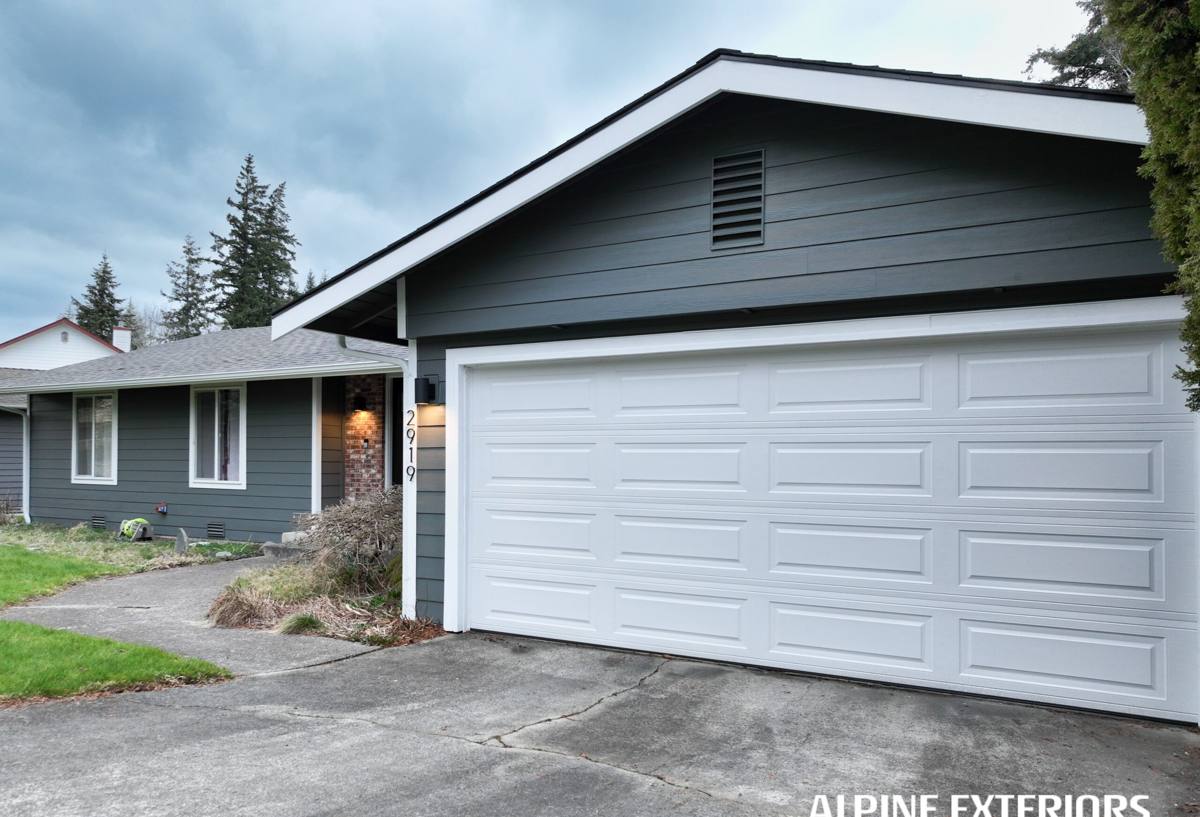
Signs a Home in This Area Needs Siding Replacement, Not Just Repair
Not every siding problem means a full tear-off. But in a climate with this much sustained moisture, certain signs point toward replacement being the more honest recommendation than patch repairs:
- Soft, spongy, or crumbling siding when pressed, especially near the bottom courses or below windows
- Paint that keeps failing in the same spots within a year or two of repainting
- Persistent moss or dark streaking on siding faces that stays damp even during dry spells
- Visible gaps at seams, corners, or trim where caulking has separated repeatedly
- Warping, cupping, or delamination on older wood-based or engineered wood siding
- Interior signs — musty smells, peeling interior paint, or damp drywall on exterior walls
If one or two of these show up in an isolated spot, targeted repair can make sense. If they're spread across multiple elevations, or the siding is original to a home built before more moisture-resistant materials were standard, replacement is usually the more cost-effective long-term call.
What a Correct Siding Replacement Actually Involves
Siding replacement is often sold as a cosmetic upgrade, but the work that actually protects a home happens underneath the new siding, not on its surface. A correct job in this climate includes:
Full Tear-Off and Substrate Inspection
Old siding comes off completely so the sheathing underneath can be inspected. Any rot, soft sheathing, or water-damaged framing gets found and repaired before anything new goes up. Covering over hidden damage is the single most common shortcut that leads to problems resurfacing within a few years.
Water-Resistive Barrier and Flashing
A properly lapped weather-resistive barrier, correctly integrated flashing at windows, doors, and roof lines, and attention to how water is directed away from penetrations matter more in a wet climate than almost anything else. This is where most premature siding failures actually originate — not the siding material itself, but gaps in the drainage plane behind it.
Manufacturer-Spec Fastening and Clearances
Fiber cement siding has specific fastening patterns, nailing zones, and minimum clearances from grade, decks, and roof lines that are engineered to manage moisture and movement. Installing it like generic lap siding voids warranty protection and defeats the product's actual performance.
Proper Joint and Caulk Detailing
Butt joints, trim intersections, and penetrations need to be sealed with the right materials and technique — not just caulked over gaps. This is one of the areas where rushed installs show up as failures within the first couple of wet seasons.
Our Process for Everson Siding Replacement Projects
- On-site assessment — We walk the exterior, check problem areas homeowners have flagged, and look for signs of hidden moisture damage before quoting anything.
- Scope and material plan — We spec out tear-off scope, sheathing repair allowances, trim and flashing details, and the Hardie product line and color that fit the home.
- Tear-off and repair — Old siding comes off, damaged sheathing or framing is repaired, and the substrate is confirmed sound before moving forward.
- Weather barrier and flashing install — This step gets done to spec, not eyeballed, since it's the layer that actually keeps water out long-term.
- Siding installation — Installed to James Hardie's fastening, clearance, and joint specifications so the manufacturer warranty stays intact.
- Final walkthrough — We go over the finished work with the homeowner and address anything before calling the job done.
Why We Install Only James Hardie Fiber Cement
We made a decision as a company to install one siding system: James Hardie fiber cement. That's not a marketing angle — it's because we've seen what different materials do over time in exactly this kind of climate, and we'd rather stand behind one product we trust fully than offer a menu of options with different failure modes.
Fiber cement is non-combustible, doesn't support moss and mildew growth the way wood-based products can, and holds its shape and finish in sustained damp conditions far better than engineered wood or vinyl. Hardie's ColorPlus factory finish is baked on under controlled conditions rather than field-painted, which matters in an area where field-applied paint has less time to properly cure between rain events. Hardie also makes climate-engineered HZ product lines specifically formulated for moisture-heavy regions like the Pacific Northwest, which is the version we spec for homes here.
It also carries a strong transferable warranty — meaningful if a home sells within the warranty period, which is common in this market.
Why We Don't Install the Alternatives
We get asked about vinyl, LP SmartSide, and cedar often enough that it's worth being direct. Vinyl is inexpensive and low-maintenance in mild climates, but it can warp or become brittle over time and doesn't hold up structurally to the kind of driving rain and wind this area sees the way a rigid fiber cement panel does. Engineered wood products like LP SmartSide perform reasonably when installation and maintenance are perfect, but they're more sensitive to sustained moisture exposure at cut edges and seams than fiber cement, which is a real liability in a climate that doesn't give siding much time to dry out between storms. Cedar and primed spruce look great initially but require ongoing maintenance — refinishing, caulking, moisture monitoring — that most homeowners underestimate until moss and staining show up a season or two in.
None of these are bad products in the abstract. They're just not the trade-off we're willing to make on homes in a climate this consistently wet.
Cost Factors to Understand Before You Get Quotes
| Factor | Why It Matters Here |
|---|---|
| Extent of hidden sheathing damage | Homes with long-deferred siding issues often need more substrate repair than expected once old siding comes off |
| Home size and number of stories | Affects labor time, staging/scaffolding needs, and material quantities |
| Trim and detail complexity | Corners, window returns, and dormers add labor beyond flat wall square footage |
| Siding profile and Hardie product line | Lap, shingle, and panel styles vary in material and install cost |
| Accessibility | Tight lot lines, fencing, or landscaping can add setup and cleanup time |
Any honest quote should walk through these factors specifically for your home rather than giving a flat per-square-foot number with no context.
What to Ask Before Hiring a Siding Contractor in This Area
- Do they inspect and repair sheathing before installing new siding, or install over existing damage?
- Are they a certified or experienced installer of the specific siding product they're proposing?
- Will they detail flashing and weather-barrier work in writing, not just "siding install"?
- Do they follow manufacturer fastening and clearance specs, and will that be confirmed in the contract?
- Have they worked on homes in Whatcom County specifically, and can they speak to how this climate affects the work?
Why Local Experience in Whatcom County Matters
A crew that already works in this part of Washington knows which details actually matter here — where moisture tends to collect on a typical home, how much drying time siding realistically gets between storms, and where moss and mildew show up first on a north or shaded wall. That's different knowledge than a crew that mostly works drier climates and treats every job the same way. For a homeowner in Everson, that local familiarity translates into fewer surprises during the tear-off and a system that's actually built for the weather it has to survive.
If your siding is showing wear, or you just want an honest read on whether repair or replacement makes more sense for your home, we're happy to take a look. Reach out for a free, no-pressure estimate using the form below.