 Whatcom County
 Building Decks for Fairhaven's Marine Climate
Fairhaven sits close enough to Bellingham Bay that salt air is a daily fact of life for anything built outdoors. Add Whatcom County's long, wet fall-through-spring stretch and the moss that comes with it, and a deck here works harder than a deck built inland. A custom deck for a Fairhaven home isn't just about layout and style — it's about choosing materials, fasteners, and drainage details that hold up to salt-laden moisture, near-constant rain for months at a time, and the shade from mature trees that keeps surfaces damp longer than they'd like to be.
We build decks throughout Whatcom County, and the jobs closest to the water — including Fairhaven — get a different set of decisions than a deck we'd build twenty miles inland. That's not marketing talk; it shows up in the hardware we specify, how we frame the substructure, and how we talk homeowners through maintenance expectations before we ever cut a board.
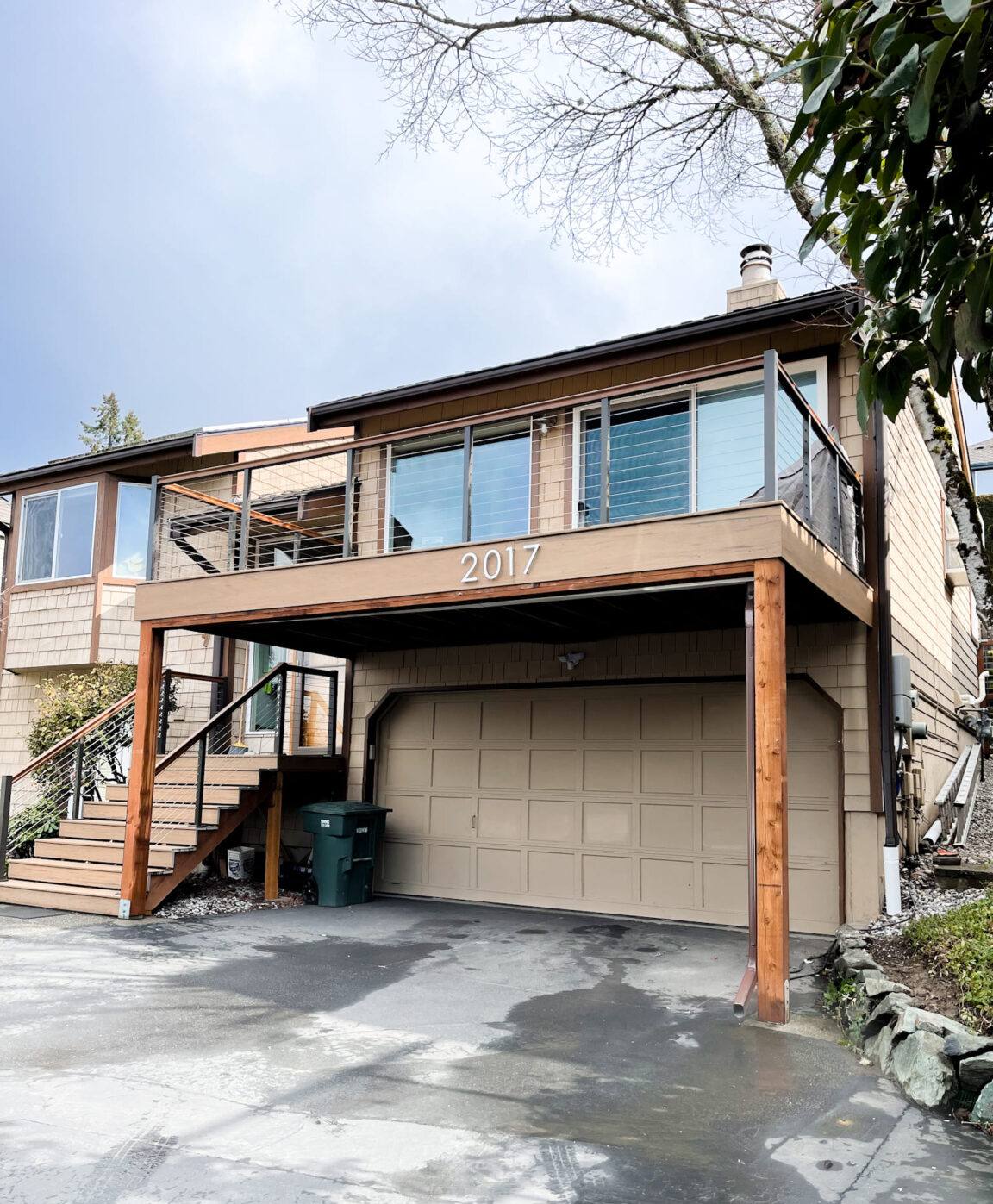
What Salt Air and Driving Rain Actually Do to a Deck
Salt air accelerates corrosion on any exposed metal — nails, screws, joist hangers, post bases. Over years, standard galvanized fasteners can start to bleed rust stains into decking boards, and worse, lose holding strength where it matters most: structural connections. Driving rain, meanwhile, doesn't just fall — in a coastal wind pattern it gets pushed sideways into ledger connections, under railings, and into any joint that isn't properly flashed or sloped to shed water.
The combination is why we see premature failure on decks that were built to a generic spec rather than a coastal one. It's rarely one dramatic problem. It's a slow accumulation: a fastener that rusts and loosens, a ledger board that stays damp two extra days a month, a shaded corner that never fully dries between storms. Each of those is manageable on its own. Ignored together over a decade, they add up to a deck that needs major rework well before it should.
Moss: The Slow, Steady Threat
Whatcom County's moss season isn't a minor cosmetic issue on a deck — it's a moisture and safety issue. Moss holds water against the deck surface far longer than bare wood or composite would dry on its own, which keeps the material below it perpetually damp. On wood decking, that accelerates rot. On any surface, a moss-covered deck board gets slick and dangerous underfoot, especially on stairs. Shaded, north-facing, or tree-covered sections of a Fairhaven lot are the areas we watch most closely during both design and follow-up maintenance conversations.
Design Considerations Specific to Fairhaven Homes
Fairhaven's mix of older homes on sloped lots and newer construction closer to the waterfront means no two decks we build here start from the same conditions. A few things we weigh on nearly every project in the area:
- Sun and shade mapping — where the deck sits relative to mature trees and neighboring structures determines how fast it dries out after rain, which drives both material choice and board spacing.
- Wind exposure — closer to the water, railings and any pergola or cover structure need to be engineered for higher wind loads than a sheltered inland lot.
- Grade and drainage — sloped lots common in this part of Whatcom County need careful footing placement and positive drainage away from the foundation, not just under the deck itself.
- View orientation — many Fairhaven homeowners want the deck to open toward water or tree-line views, which affects stair placement, railing style (cable or glass vs. traditional baluster), and how much of the structure is covered versus open.
We walk every site in person before drawing anything. A deck that looks right on paper but ignores how water actually moves across that specific lot is a deck that will need early repairs.
Decking Material Options: What Actually Holds Up Here
There's no single "best" decking material for every Fairhaven project — it depends on budget, how much shade the deck sits in, and how much maintenance the homeowner wants to take on. Here's how the common options actually compare under this region's conditions.
| Material | Moisture & Moss Behavior | Maintenance | Typical Lifespan Here |
|---|---|---|---|
| Pressure-treated wood | Absorbs moisture; needs to dry between rain events or moss and mildew take hold, especially in shade | Annual cleaning, periodic staining/sealing | 15-20 years with upkeep |
| Cedar | Naturally rot-resistant but still needs to breathe and dry; shaded areas still grow moss over time | Regular cleaning, sealing every 2-3 years | 20-25 years with upkeep |
| Composite decking | Doesn't rot, but moss and algae can still grow on the surface film in constantly shaded, damp spots | Periodic washing; no staining or sealing needed | 25-30+ years, manufacturer-warrantied |
| PVC/capped polymer | Fully moisture-resistant surface; best resistance to moss staining and surface mildew | Occasional washing | 25-30+ years, manufacturer-warrantied |
In shaded or heavily tree-covered Fairhaven lots, we often steer homeowners toward composite or capped polymer decking specifically because it removes the rot risk that wood carries in a spot that rarely gets full sun. On open, sunnier sites, a well-maintained cedar or treated wood deck can perform well and gives a warmer, more traditional look at a lower upfront cost.
What a Correctly Built Deck Involves Below the Surface
The decking boards get all the attention, but the structure underneath is what determines whether a deck lasts fifteen years or thirty in this climate. A correct build in Whatcom County's conditions includes:
Footings and Framing
Footings need to be sized and set to the local frost depth and soil conditions, with post bases that keep wood posts elevated off standing water rather than sitting in a wet footprint. Joists and beams get sized for the actual span and load — including snow load where applicable — not just decking weight.
Ledger Attachment and Flashing
Where a deck attaches to the house, the ledger board connection is the single most common point of long-term water damage on any deck in a wet climate. Proper flashing — metal flashing over the ledger, with a water-resistant barrier behind it — keeps rain from working its way behind the siding and into the wall framing. This detail is invisible once the deck is finished, which is exactly why it matters that it's done right the first time.
Fasteners and Hardware
For decks in salt-air exposure, we specify corrosion-resistant fasteners and structural hardware — stainless steel or high-grade coated fasteners rated for coastal/ACQ-treated lumber contact — rather than standard galvanized hardware that's more prone to premature rust in this environment.
Drainage and Airflow
Ground-level decks need clearance and grading underneath to let air move and water drain, rather than trapping moisture against the framing. Under-deck drainage systems are worth considering where the space below will be used for storage or as a dry patio.
Our Process, Start to Finish
- On-site consultation — we walk the lot, look at sun/shade exposure, drainage, and how the deck will connect to the house, and talk through how you actually want to use the space.
- Design and material selection — layout, railing style, and decking material get chosen together, weighing budget against maintenance expectations and the site's specific moisture exposure.
- Permitting — most decks above a certain height or attached to the home require a permit through the local jurisdiction; we handle that paperwork and inspection scheduling.
- Site prep and footings — footings are set to proper depth and load requirements before any framing goes up.
- Framing and structural build — ledger, beams, joists, and posts go in with corrosion-resistant hardware and proper flashing at every water-entry point.
- Decking, railing, and finish work — boards, railings, stairs, and any trim or lighting are installed and inspected for level, spacing, and secure fastening.
- Final walkthrough — we go over the finished deck with you, including a simple maintenance rundown specific to the material you chose.
Cost Factors to Expect
Every deck project is priced around its own specifics, but the variables that move the number most are consistent from job to job:
| Factor | Why It Matters |
|---|---|
| Deck size and shape | Square footage and complexity of the layout (multiple levels, angles, wraparounds) directly drive material and labor |
| Decking material | Composite and PVC cost more upfront than wood but need far less long-term maintenance spending |
| Height and structure | A second-story or elevated deck needs more substantial footings, framing, and often stairs and additional railing |
| Railing and stair style | Cable or glass railing systems cost more than standard baluster railing but change the look and view significantly |
| Site access and grade | Sloped or hard-to-access lots, common around Fairhaven, can add labor time for excavation and material staging |
| Covers or pergolas | Any structure added over the deck for rain or sun protection is priced as its own scope on top of the deck itself |
We give a written estimate that breaks these out so you can see exactly where the cost is coming from, rather than a single lump number.
Maintenance: What Fairhaven Decks Actually Need
Whatever material you choose, a little seasonal attention goes a long way in this climate. A practical maintenance checklist for a coastal Whatcom County deck:
- Sweep debris and standing leaves off the deck regularly, especially in fall when they trap moisture against boards.
- Wash the surface at least once a year to remove early moss and algae growth before it takes hold, more often in shaded areas.
- Check railings, stair connections, and any visible hardware annually for rust staining or looseness.
- For wood decks, plan on re-staining or sealing every 2-3 years depending on sun exposure.
- Keep gutters and downspouts near the deck clear so roof runoff isn't dumping extra water onto or near the structure.
- Trim back overhanging branches where practical to improve sun exposure and airflow over shaded sections.
Why It Matters That We Already Work Fairhaven
A crew that mainly builds decks inland can still build a structurally sound deck — but they may not default to corrosion-resistant hardware, coastal-rated flashing details, or moss-conscious material advice unless they're specifically asked. We build in this part of Whatcom County regularly, so those decisions are already part of how we scope a Fairhaven job from the first site visit, not an upgrade you have to request. That familiarity also means we have a realistic sense of permit timelines and inspection expectations for the area, so there are fewer surprises once construction starts.
If you're planning a new deck or replacing one that's showing its age, we're happy to come take a look and talk through what makes sense for your specific lot. Reach out for a free, no-pressure estimate using the form below.