 Whatcom County
 Why Fairhaven's Climate Is Hard on Siding
Fairhaven sits close to the water in Whatcom County, and that waterfront setting is exactly why siding here takes more punishment than siding twenty miles inland. Salt-laden air off Bellingham Bay works its way into seams, fasteners, and paint film year-round. Add the driving, wind-pushed rain that comes through the region in fall and winter, plus a moss and algae season that can stretch for most of the year on shaded, north-facing walls, and you have a combination that exposes weak siding fast — usually within the first five to ten years, not the first thirty.
None of this is exotic. It's the same basic marine-climate stress that coastal homes deal with everywhere from the San Juans down through Puget Sound. But it means a siding choice that works fine in a drier inland county can fail early in Fairhaven, and it means installation details that get overlooked elsewhere — flashing, ventilation gaps, fastener choice — matter more here, not less.
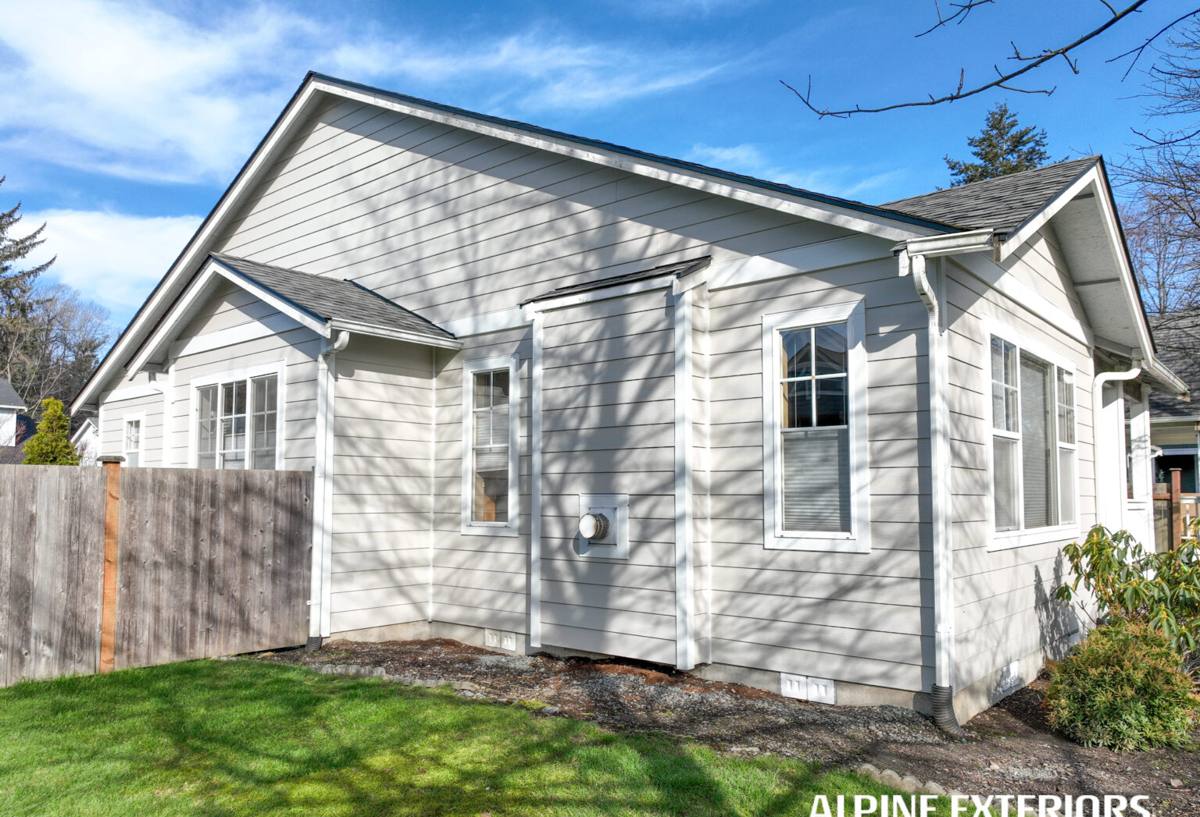
What Fiber Cement Siding Actually Needs to Do in This Neighborhood
A good siding job in Fairhaven has to handle three things at once: moisture, salt exposure, and biological growth. That's a tall order for a lot of exterior products, but it's squarely what fiber cement was engineered for.
- Moisture resistance: the material itself has to shrug off repeated wetting and drying without swelling, delaminating, or rotting at cut edges.
- Salt tolerance: fasteners, trim, and the siding's finish need to resist the slow corrosion and finish breakdown that salt air causes over years.
- Resistance to moss and algae staining: a factory finish that sheds mildew and doesn't hold moisture against the substrate keeps walls looking clean longer, especially on the shaded sides of a house.
- Dimensional stability: the plank needs to stay flat and tight through repeated wet-dry cycles so caulk lines and paint don't crack open every winter.
This is the standard we hold every job to, and it's the reason our answer for Fairhaven homes is the same every time: James Hardie fiber cement, installed to the manufacturer's specifications for this climate zone.
Why We Install Only James Hardie Fiber Cement
We don't install LP SmartSide, vinyl, Cemplank, Allura, primed spruce, or cedar, and we're upfront about why. Each of those products has real strengths — cedar looks great, vinyl is inexpensive, engineered wood products install quickly — but each also carries a trade-off that shows up specifically in a wet, salty, moss-prone environment like Fairhaven's.
Wood-based siding, even engineered wood, depends on an intact factory coating to keep moisture out of the wood fiber. Once that coating is compromised at a cut edge, a fastener hole, or a joint that wasn't sealed correctly, moisture gets in and the clock starts on rot. Vinyl handles moisture fine on its own, but it flexes with temperature, can crack in impacts, and doesn't offer the same fire performance or resale positioning as fiber cement. Cedar is a genuine premium material, but it requires an ongoing maintenance commitment — restaining, sealing, checking for rot — that most homeowners underestimate when they buy the house.
James Hardie's fiber cement is a different material category: sand, cement, and cellulose fiber, non-combustible, and dimensionally stable in a way wood products can't match. Paired with its factory-applied ColorPlus finish, it resists the fade and peel that repainted siding suffers from in coastal air, and it carries a strong transferable warranty that reflects the manufacturer's confidence in long-term performance. That's the combination we're willing to put our name behind.
The Right Hardie Product Line for a Marine Climate
James Hardie engineers its siding by climate zone, which matters more in a place like Fairhaven than most homeowners realize. The company's HZ5 formulation is built for the wetter, more moisture-exposed regions of the country, including western Washington, and it's what we spec for jobs in this area rather than a formulation built for a drier climate.
Common product choices for Fairhaven homes
- HardiePlank lap siding — the standard horizontal siding choice, available in several textures including smooth and cedarmill, and the most common fit for the craftsman and traditional home styles found throughout the neighborhood.
- HardiePanel vertical siding — used for board-and-batten looks or as an accent on gables and dormers.
- HardieTrim — fiber cement trim boards that hold up around windows, corners, and fascia far better than wood trim in a damp climate.
- HardieSoffit — vented or non-vented panels that keep moisture-prone eave areas performing as well as the wall siding above them.
Color selection matters here too. ColorPlus finishes are baked on in a controlled factory process, which gives more consistent, longer-lasting color than field-applied paint — a real advantage when a home is exposed to salt air and UV for years between repaints.
What a Correct Installation Involves
Fiber cement is only as good as its installation. Most of the siding failures we get called out to inspect in this area aren't material failures — they're installation shortcuts that let moisture in behind a product that was otherwise doing its job.
Non-negotiables on every job
- Correct clearance between the bottom of the siding and grade, decks, patios, and roof lines, so splash-back and standing water don't sit against the material.
- Properly lapped and sealed weather-resistant barrier behind the siding, with flashing integrated at every window, door, and penetration.
- Manufacturer-specified fastener type, length, and placement — under-driven or misplaced nails are one of the most common causes of early failure.
- Correctly sized gaps at butt joints and trim, caulked with a high-quality, paintable sealant rated for exterior use.
- Ventilation behind the siding where the assembly calls for a rainscreen gap, which helps the wall dry out between the region's frequent wet spells.
- All cut edges sealed or primed before installation, since a raw factory edge is where moisture intrusion typically starts.
Every one of those steps is written into James Hardie's installation guidelines. Skipping any of them can void the warranty and, more importantly, sets the siding up to fail years before it should in a climate this demanding.
What Drives Cost on a Fairhaven Siding Job
Every home is different, so we won't quote a number without seeing the house, but these are the factors that move the price up or down on most jobs in this area.
| Factor | Why It Matters Here |
|---|---|
| Existing siding removal | Homes with wood or old vinyl siding often reveal hidden moisture or rot damage under Fairhaven's exposure that needs repair before new siding goes on. |
| Wall complexity | Dormers, bay windows, and multiple gables common in older neighborhood homes add cutting, flashing, and trim work. |
| Trim and accent choices | HardieTrim and vertical accent panels add cost over a plain lap-siding install but improve long-term durability at vulnerable points. |
| House height and access | Two-and-a-half-story homes and tight lots near the water can require more staging and add labor time. |
| Color and finish | Factory ColorPlus finishes cost more upfront than field-painted siding but remove a repaint cycle for years. |
Our Process From Estimate to Finished Job
We start with an on-site walkthrough, not a phone quote, because the condition of the wall behind the existing siding changes the scope more often than homeowners expect. From there:
- Inspection of the current siding, sheathing, and any moisture damage, with photos and a straight explanation of what we find.
- A written estimate that spells out product lines, colors, trim details, and a realistic timeline.
- Removal of old siding and repair of any compromised sheathing or framing before anything new goes up.
- Installation of weather-resistant barrier, flashing, and fastening to James Hardie's HZ5 specifications for this climate zone.
- Final trim, caulking, and a walkthrough with the homeowner before we call the job done.
We don't upsell products we don't install, and we won't talk you into a fix that skips a step to save a day of labor. If a wall needs more repair than expected once the old siding comes off, we tell you before we proceed, not after.
Why Local Experience in Whatcom County Matters
Siding crews that mostly work drier, inland climates sometimes treat coastal detailing as optional — a shortcut that rarely shows up as a problem until a few winters have passed. A crew that regularly works Fairhaven and the rest of Whatcom County's waterfront areas already knows where moisture tends to find its way in on this type of exposure, which flashing details actually hold up to driving rain off the bay, and which sides of a house need extra attention for moss and algae. That local pattern recognition is the difference between a job that looks right on install day and one that still looks right in year twelve.
It also means we're not learning the region's permitting and inspection expectations on your project. We know what Whatcom County inspectors look for on a siding replacement, and we build our process around getting it right the first time.
Keeping Fiber Cement Siding Looking Right for the Long Term
Fiber cement is low-maintenance compared to wood, but "low-maintenance" doesn't mean "no maintenance" in a climate like this one. A simple annual rinse-down removes the early stages of moss and algae growth before it stains the finish. Keeping gutters clear and grading away from the foundation limits the splash-back that causes staining at the base of the wall. Recaulking joints if a sealant bead ever pulls away, and having a professional take a look every few years, catches small issues — a loose piece of trim, a gap that opened up — before they become bigger repairs.
If you're weighing siding options for a home in Fairhaven or elsewhere in Whatcom County, we're happy to take a look and give you a straight, no-pressure estimate on what a correctly installed James Hardie system would cost for your house.