 Whatcom County
 Building New in Fairhaven? The Windows Are Not a Detail You Fix Later
Fairhaven sits close to Bellingham Bay, which means new construction here deals with a combination of conditions that inland Whatcom County builds don't see nearly as often: salty marine air, wind-driven rain coming off the water, and long stretches of the year when everything outside stays damp. When you're framing a new home or a new addition, the window installation is one of the few steps in the entire build that is genuinely hard to correct once the siding, trim, and interior finishes go on. Get the flashing and sealing sequence right during rough-in, and the windows will perform for decades. Get it wrong, and the first sign of trouble is usually a stain on drywall two winters later, long after the crew that installed them is gone.
We install new-construction windows on builds throughout Whatcom County, and Fairhaven jobs get treated with the same climate-specific detailing we'd use on any other bayfront or near-shore lot — because that's what the site actually calls for, regardless of what a generic spec sheet assumes.
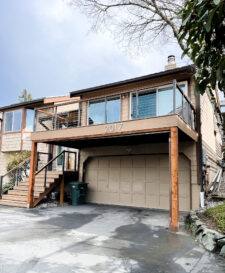
What Fairhaven's Climate Actually Demands From a Window Installation
Salt Air and Coastal Exposure
Homes within a mile or two of Bellingham Bay are exposed to airborne salt that inland Whatcom County properties simply don't deal with. Salt air accelerates corrosion on fasteners, hardware, and unprotected metal flashing. It also degrades certain sealants and finishes faster than manufacturers' standard warranty testing assumes, since most of that testing isn't done in a marine environment. That's a real factor in choosing hardware finishes and flashing materials on a Fairhaven build, not a theoretical one.
Wind-Driven Rain
Storms coming off the water don't just drop rain — they push it sideways, directly into wall assemblies and window openings at pressure. A window that would stay dry in a calm, straight-down rain can leak under wind-driven conditions if the flashing details, sill pan, and water-resistive barrier (WRB) integration aren't done correctly. This is the single biggest reason new-construction window failures show up in coastal Whatcom County towns and not in a lot of drier interior regions.
Moss and Prolonged Dampness
Whatcom County's moss season runs long — many months where north-facing and shaded surfaces stay damp almost continuously. Moss and algae growth around window trim and sills isn't just cosmetic; sustained moisture against wood trim or poorly sealed joints is what eventually leads to rot. New-construction detailing that manages water drainage away from the window, rather than trapping it, matters more here than in a drier climate.
New-Construction Windows vs. Replacement Windows — Why the Distinction Matters
These are genuinely different installation methods, and mixing them up is one of the most common mistakes on a build. New-construction windows have a nailing fin around the perimeter of the frame that gets fastened to the sheathing before the WRB and siding go on, giving the installer full access to integrate flashing in the correct shingle-lap sequence. Replacement (or "pocket") windows are designed to slide into an existing frame with the exterior trim left in place — a method for renovations, not new builds.
| Factor | New-Construction (Nail Fin) | Replacement / Pocket |
|---|---|---|
| When it's used | New builds, additions, full wall re-sheathing | Existing homes keeping original exterior trim |
| Flashing access | Full access to integrate WRB and flashing correctly | Limited — relies on existing wall assembly |
| Long-term water management | Best, when detailed correctly | Good, but constrained by what's already there |
| Typical use in Fairhaven | New homes, ADUs, additions near the bay | Remodels of existing coastal-exposed homes |
If your project is a genuine new build or an addition with open stud bays, new-construction windows are the right call — and the installation quality depends entirely on the sequencing described below.
What a Correct New-Construction Installation Actually Involves
There's a specific order of operations that determines whether a window stays dry through decades of Whatcom County storms. Skipping or reordering any of these steps is where most future leaks originate.
- Rough opening check. Confirm the opening is square, plumb, and sized correctly before the window ever shows up on site.
- Sill pan flashing. A sloped, sealed pan at the bottom of the opening directs any water that gets past the window back outside, rather than into the wall cavity.
- WRB integration. The water-resistive barrier is cut and lapped in the correct shingle order — water always drains over the layer below it, never under it.
- Window set and fastened. The unit goes in level and plumb, fastened per the manufacturer's schedule — not just "enough screws to hold it."
- Flange flashing tape. Self-adhered flashing tape covers the nailing fin at the sides and head, integrated with the WRB above and below.
- Head flashing. A drip cap or head flashing diverts water around the top of the window rather than letting it run down the face.
- Sealant at the interior. Backer rod and sealant at the interior air barrier — not just caulk on the exterior trim — is what actually stops air and bulk water intrusion.
Every one of these steps matters more on a bayside Fairhaven lot than it would on a sheltered inland site, simply because the water pressure and volume hitting the wall assembly is higher.
Choosing Frame Materials and Glass for This Climate
Material choice on a new build is worth getting right the first time, since it's expensive to change later. Here's how the common options hold up under salt air, driving rain, and a long damp season:
| Frame Material | Coastal/Salt Air Behavior | Maintenance | Notes |
|---|---|---|---|
| Vinyl | Good — doesn't corrode, some UV fading over decades | Low | Most common, cost-effective choice for new builds |
| Fiberglass | Excellent — very stable, resists salt and moisture well | Low | Higher upfront cost, strong long-term performer near the bay |
| Wood / Wood-Clad | Requires diligence — exposed wood is vulnerable to moss-season moisture | Higher | We recommend clad exteriors if wood is wanted for interior appearance |
| Aluminum-clad | Fair — cladding needs a finish rated for marine exposure | Low-moderate | Fastener and hardware corrosion resistance matters most here |
On glass packages, double-pane with a low-E coating is the standard baseline for Whatcom County new construction, and it's worth confirming the gas-fill seal warranty in writing — condensation between panes a few years in is one of the more common complaints homeowners bring us on other builders' work, and it's a seal failure, not something that can be fixed without replacing the glass unit.
Our Process for New-Construction Window Jobs in Fairhaven
- We review the rough openings and framing before scheduling delivery, catching sizing issues while they're still cheap to fix.
- We coordinate directly with your GC or builder on WRB sequencing so nothing gets covered before flashing is inspected.
- We install sill pans and flashing tape in the correct lap order on every unit — no shortcuts on units that "probably won't see much water."
- We photograph flashing details before siding goes on, so there's a record of what's behind the wall if a question ever comes up years later.
- We walk the finished openings with you or your builder before final sign-off.
Costly Mistakes We Catch on New Builds
- Nailing fins fastened over housewrap without flashing tape sealing the fin properly to the WRB.
- Reverse-lapped flashing (a common error that funnels water directly into the wall instead of away from it).
- Missing or flat sill pans that can't drain incidental water back to the exterior.
- Caulk used as the only air seal at the interior, with no backer rod or proper sealant joint.
- Hardware and fasteners not rated for coastal exposure, leading to early corrosion and staining.
- Window schedules mismatched to actual rough openings, forcing field modifications that compromise the flashing plan.
Why It Matters to Hire a Crew That Already Works in Fairhaven
A window installer who mostly works drier, inland sites can do fine, code-compliant work and still under-detail a Fairhaven install, simply because the failure modes that show up near the bay — wind-driven rain, salt-accelerated corrosion, long moss-season dampness — aren't part of their everyday experience. We work in this specific stretch of Whatcom County regularly, which means the flashing sequence, material choices, and hardware selections we bring to a Fairhaven new build are shaped by what actually fails here, not by a generic national spec sheet. That local pattern-recognition is the difference between a window that's still tight in fifteen years and one that starts showing water stains after its first real coastal storm season.
If you're framing a new home, an addition, or an ADU in Fairhaven, we're happy to take a look at your window schedule and rough openings and give you a straightforward, no-pressure estimate — just fill out the form below.