 Whatcom County
 Fairhaven's Marine Climate Is Hard on a Roof
Fairhaven sits close to the water, and that proximity shapes everything about how a roof ages here. Salt-laden air moves off Bellingham Bay and settles on exposed metal, fasteners, and flashing year-round, quietly accelerating corrosion that a homeowner further inland never has to think about. Layer on the driving rain that comes through in fall and winter storms — often blown sideways by wind off the water — and you've got a roof system that's tested on wind-driven water intrusion, not just straight-down rainfall. Then there's moss season, which in this part of Whatcom County isn't really a season at all; the combination of shade, moisture, and mild temperatures means moss and algae can take hold on a roof surface for most of the year.
None of this means a Fairhaven roof is doomed to fail early. It means the roof has to be built and installed with these specific stresses in mind — the right underlayment, the right fastener metal, the right ventilation, and material choices that actually hold up to salt exposure and constant moisture rather than just looking good on install day.
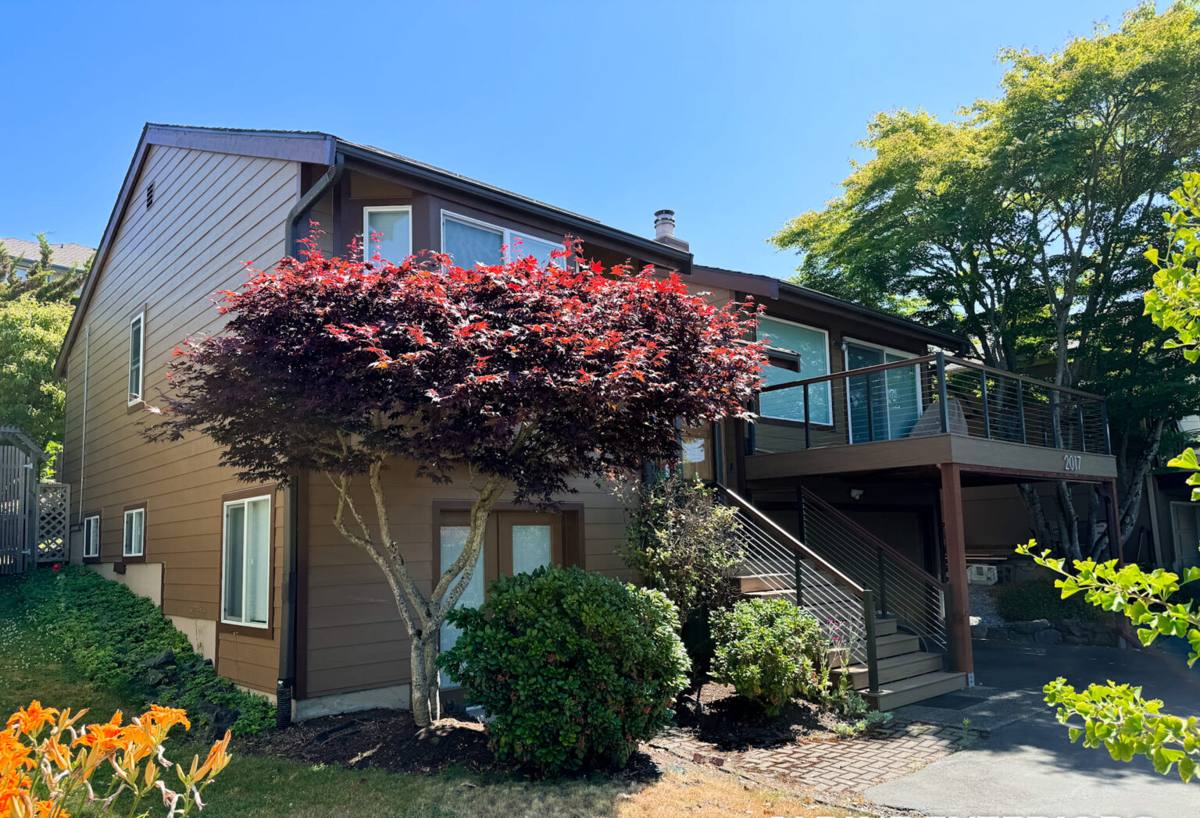
Signs Your Fairhaven Roof Has Reached Replacement, Not Repair
A lot of roofs get patched two or three times before anyone steps back and asks whether patching still makes sense. Here's what tends to tip a roof from "repair" into "replace" territory for homes in this area:
- Granule loss heavy enough that you're finding shingle grit in the gutters every time it rains
- Moss established at the ridge or in valleys, with the roof surface underneath starting to soften or cup
- Flashing around chimneys, skylights, or wall intersections that's corroded, lifted, or was never properly step-flashed to begin with
- Daylight or water staining visible in the attic, especially near eaves or valleys
- A roof approaching or past the manufacturer's rated lifespan for its material, especially if it's had no ventilation upgrades
- Multiple past repairs in different spots — a sign the roof is failing broadly, not in one isolated area
- Curling, cracking, or clawing shingles, particularly on slopes that get the most sun and salt exposure
If you're only seeing one or two of these and the roof is otherwise mid-life, a targeted repair may still be the honest answer. We'll tell you that if it's true — a replacement isn't the right call just because a roof is imperfect.
What a Correct Roof Replacement Actually Involves
A roof replacement is only as good as what happens underneath the new material. In a marine climate like this one, the details that don't show up in a driveway photo are the ones that determine whether the roof performs for its full expected life.
Tear-Off and Deck Inspection
We remove the old roofing down to the deck rather than layering over it. That's the only way to actually see the plywood or plank sheathing underneath, which matters a great deal here — trapped moisture from years of condensation or slow leaks can soften decking in ways that aren't visible from above. Any rotten or delaminated sheathing gets replaced before anything new goes down. Skipping this step is the single most common shortcut that leads to early roof failure.
Underlayment Built for Wind-Driven Rain
Standard felt underlayment isn't enough protection for a roof exposed to sideways rain off the water. We use synthetic or self-adhered underlayment at eaves, valleys, and other vulnerable transitions, sized to the actual exposure of the roof rather than applied as a one-size-fits-all layer.
Flashing and Fastener Choices
Salt air corrodes standard fasteners and thin flashing faster than most homeowners expect. We spec corrosion-resistant metal at chimneys, skylights, sidewalls, and any roof-to-wall intersection, and we step-flash rather than rely on caulk or sealant as a long-term fix. Caulk is a maintenance item, not a waterproofing strategy.
Ventilation
A roof that can't breathe traps heat and moisture in the attic, which shortens shingle life and feeds moss growth from underneath. We check intake at the soffits and exhaust at the ridge or gable, and correct the balance where the existing system is undersized or blocked — a step that's frequently skipped in cheaper replacements because it doesn't show from the ground.
Choosing a Roofing Material for Salt Air and Moss
There's no single "best" roofing material — there's the material that fits your home's exposure, your budget, and how long you plan to own the house. Here's how the common options actually compare for a Fairhaven property:
| Material | How It Handles Salt Air & Moisture | Moss Resistance | Typical Lifespan |
|---|---|---|---|
| Architectural asphalt shingle | Good, with corrosion-resistant flashing and fasteners; standard fasteners will underperform here | Moderate — benefits from algae-resistant granules and ridge treatment | 25–30 years |
| Standing-seam metal | Very good when properly coated and fastened; needs marine-grade fasteners and finish | High — sheds moss and debris better than most surfaces | 40–50+ years |
| Synthetic composite (shake or slate style) | Good; doesn't absorb moisture like natural wood | Moderate to high, depending on product | 30–50 years |
| Cedar shake | Requires the most upkeep in this climate — absorbs moisture and is more vulnerable to rot without diligent maintenance | Low without regular treatment | 20–30 years with maintenance |
We're upfront that cedar shake, while a classic look for older Fairhaven homes, carries a real maintenance burden in a climate this wet — it needs regular treatment to resist moisture and moss, and skipping that upkeep shortens its life significantly. That's a trade-off we lay out honestly rather than talk you out of a material you want; it's your home and your call, but you should make it with the maintenance commitment in view.
Moss, Algae, and Long-Term Roof Health
Moss doesn't just look bad — it holds moisture against the roof surface, works its way under shingle tabs, and can lift material enough to let water in. In a spot with as much year-round shade and rain as this part of Whatcom County sees, moss prevention has to be designed into the replacement, not treated as an afterthought. That means zinc or copper strips at the ridge on shingle roofs where appropriate, algae-resistant shingle products on sun-shaded slopes, and keeping overhanging branches trimmed back so the roof gets what sun exposure it can. None of this eliminates moss entirely, but it slows regrowth enough that periodic soft-washing keeps the roof clean instead of fighting an uphill battle.
Our Fairhaven Roof Replacement Process
- On-site assessment — we inspect the existing roof, attic, and ventilation from the inside and outside before quoting anything.
- Written scope and estimate — materials, tear-off scope, flashing detail, and ventilation work spelled out in writing, not verbal assumptions.
- Scheduling around the weather — we plan tear-off days to minimize the window your home is exposed, watching the forecast closely given how quickly conditions can turn here.
- Tear-off and deck repair — full removal, deck inspection, and replacement of any compromised sheathing.
- Underlayment, flashing, and ventilation installed — the parts that don't show but do the actual work.
- New roofing installed to manufacturer spec — correct nailing pattern, exposure, and fastener type for the chosen material.
- Final walkthrough — we review the completed roof and site cleanup with you before considering the job done.
Why a Crew That Already Works Fairhaven Matters
A roofer who mostly works inland doesn't necessarily think about salt exposure when they spec fasteners, or about how much shade a valley gets when they choose underlayment. Working this area regularly means we already know which details matter most for homes exposed to Bellingham Bay's air and weather, and we're not learning that on your roof. It also means we're familiar with the City of Bellingham's permitting requirements that apply to Fairhaven properties, including any considerations for the neighborhood's older homes, so permitting doesn't become a delay you have to manage yourself.
There's also a practical side to being local: when a windstorm rolls through and you need someone to look at a lifted ridge cap or a compromised flashing joint before it becomes a bigger problem, a crew that's already working in the area can respond faster than one that has to schedule a special trip.
After the New Roof: Keeping It Performing
A correctly installed roof still benefits from basic upkeep, especially in a climate that stays wet as much of the year as this one does:
- Keep gutters clear so water isn't backing up under the eave edge during heavy rain
- Have moss or algae growth soft-washed before it spreads, rather than waiting until it's heavy
- Trim back overhanging branches that keep sections of the roof shaded and damp
- Check attic ventilation isn't blocked by insulation or storage after any attic work
- Schedule a periodic visual inspection, particularly after major windstorms
A roof replacement done right shouldn't need much from you beyond this. If it does, that's usually a sign something in the original installation was cut short.
If your Fairhaven home's roof is showing its age or you just want a straight answer on whether repair or replacement makes more sense, we're happy to take a look. The estimate is free, there's no pressure attached to it, and you'll get a written scope you can actually compare against other quotes — just fill out the form below to get started.