 Whatcom County
 Fairhaven's Climate Puts Real Stress on Siding
Fairhaven sits close enough to Bellingham Bay that salt-laden air reaches the siding on most homes in the neighborhood, not just the ones with a water view. Combine that with the long, wet stretch of fall through spring that's normal for Whatcom County, and you've got a climate that's genuinely tough on exterior materials. Salt air accelerates corrosion of fasteners and trim, driving rain off the Sound finds every gap in flashing and caulk, and the shaded, tree-lined streets that give Fairhaven its character also mean siding stays damp longer after every storm — which is exactly what moss and mildew need to take hold.
None of that means siding fails fast here. It means siding that isn't matched to the conditions, or wasn't installed with the right details, tends to show problems years before it should — soft spots, peeling paint, moss creeping up from the bottom courses, trim rot at corners and window returns. Replacement done right accounts for all of it up front instead of leaving the next owner to deal with it.
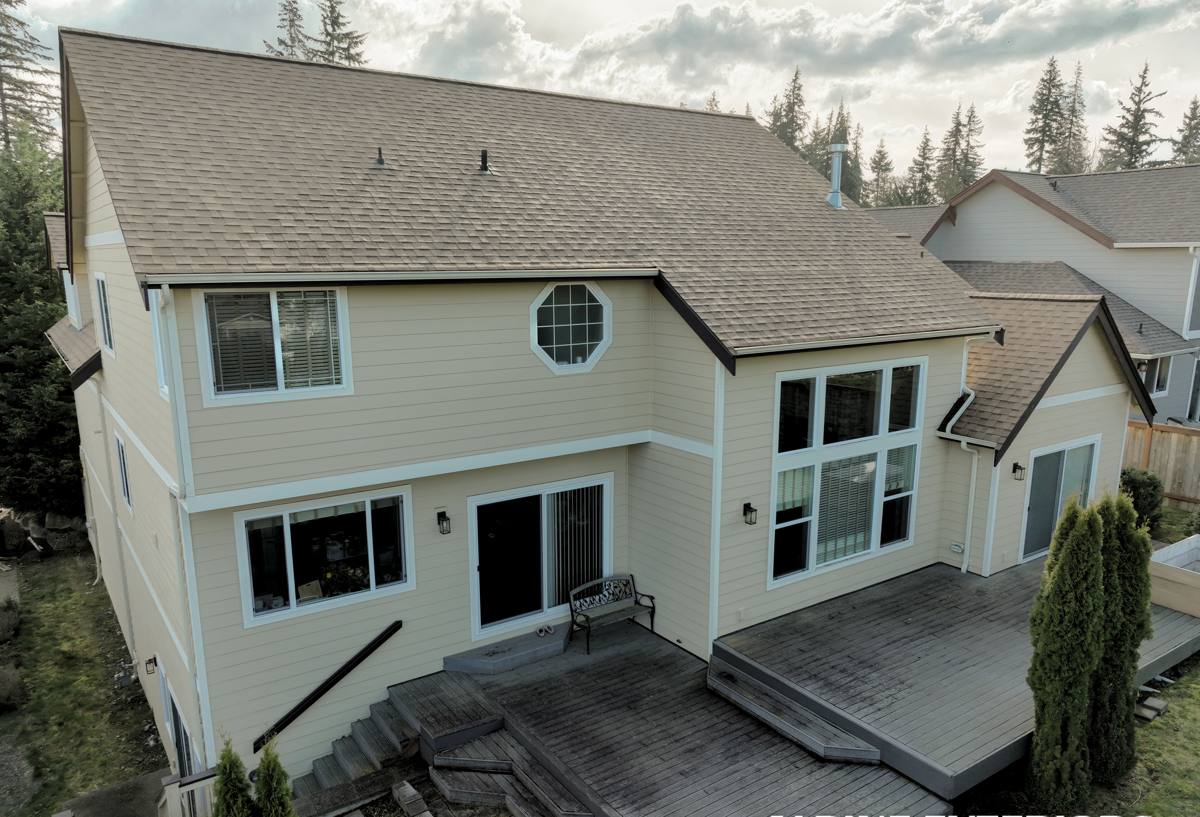
Signs a Fairhaven Home Actually Needs Siding Replacement
Not every siding problem calls for a full tear-off. But there are signs that point past patching and toward replacement:
- Soft, spongy, or crumbling siding when pressed — usually a sign moisture has been getting behind the material, not just sitting on the surface
- Paint that won't hold no matter how often it's redone — often a symptom of the substrate failing underneath, not a paint quality problem
- Persistent moss or algae growth that comes back within a season of cleaning, especially on north-facing or shaded walls
- Visible gaps, warping, or buckling at seams and panel joints
- Rot at the bottom edge of walls, around window trim, or wherever siding meets a horizontal surface like a deck or porch roof
- Rising energy bills with no other explanation — failing siding and its underlying wrap often let conditioned air escape
If you're only seeing one or two of these in a small area, a repair may be enough. If they're showing up across multiple walls, that's usually the material and the original installation reaching the end of what they can handle in this climate.
What a Correct Siding Replacement Actually Involves
Siding replacement is not just pulling off old boards and nailing up new ones. In a climate like Whatcom County's, the work that happens before the new siding goes on matters as much as the siding itself.
Tear-off and inspection
Once the old siding is off, the sheathing underneath gets a real inspection — not a glance. This is where hidden rot, soft plywood, or long-term moisture damage shows up, and it needs to be addressed before anything new goes back on. Covering damaged sheathing with new siding just hides the problem for a few more years.
Weather-resistive barrier
A new, correctly lapped weather-resistive barrier goes over the sheathing. Given how much rain this region sees, the lap direction and overlap at seams isn't a minor detail — it's the difference between water shedding away from the wall or working its way behind it.
Flashing at every penetration
Windows, doors, hose bibs, light fixtures, and vents all need proper flashing integrated with the weather barrier. This is the single most common place cheap or rushed installs fail, and it's usually invisible until years later when rot shows up around a window.
Correct fastening and clearances
Fiber cement siding has specific nailing patterns, fastener types, and clearance requirements — including gaps at the bottom of the wall and around trim — that are written into the manufacturer's install instructions for a reason. Skipping them is how you end up with wicking moisture and premature failure regardless of how good the siding itself is.
Why We Install Only James Hardie Fiber Cement
We standardized on James Hardie fiber cement siding and don't install vinyl, wood, or engineered wood products like LP SmartSide. That's a deliberate call, not a default. Fiber cement is non-combustible, doesn't expand and contract with temperature swings the way vinyl does, and holds up to sustained damp exposure far better than wood-based siding — which matters directly in a place where siding stays wet for days at a stretch during the rainy season.
Hardie's ColorPlus factory finish is baked on under controlled conditions, which gives it better fade and chip resistance than field-applied paint, and it comes with a real, transferable limited warranty. Hardie also makes climate-engineered HZ product lines built specifically for wetter regions like ours, which is the version we spec for Fairhaven and the rest of Whatcom County. We're not against every alternative on principle — we just won't put something on a home here that we don't think holds up to this climate over the long run.
How Fiber Cement Compares for This Climate
| Factor | Vinyl Siding | Wood / Engineered Wood | James Hardie Fiber Cement |
|---|---|---|---|
| Moisture behavior | Doesn't absorb water, but seams can trap it behind panels | Absorbs moisture; prone to rot if coating fails | Resists moisture damage; engineered for wet climates (HZ lines) |
| Salt air exposure | Holds up reasonably but can chalk and fade | Coatings degrade faster near salt air | Strong resistance; factory finish holds color longer |
| Fire resistance | Combustible | Combustible | Non-combustible |
| Maintenance | Low, but limited repair options when damaged | Regular repainting and moisture checks needed | Repaint cycle far longer with ColorPlus finish |
| Typical lifespan when correctly installed | 20–30 years | Varies widely with maintenance | 30+ years, often longer |
Our Process for Fairhaven Homes
The process is straightforward, but each step matters:
- On-site assessment — we walk the exterior, check for existing damage, and look at exposure (how much salt air, shade, and driving rain each wall actually gets)
- Written estimate — scope, product line, and cost broken out so you know what you're paying for
- Tear-off and sheathing inspection — old siding removed, substrate checked and repaired where needed
- Weather barrier and flashing — installed to manufacturer spec, with extra attention at windows, doors, and any horizontal transitions
- Hardie panel or plank installation — fastened and spaced per manufacturer requirements for our climate zone
- Final walkthrough — we go over the finished work with you before calling it done
What Siding Replacement Typically Costs
Every home is different, but the main cost drivers are consistent. We give real numbers during the on-site estimate — not before we've seen the house.
| Cost Factor | Why It Matters |
|---|---|
| Home size and wall complexity | More corners, dormers, and trim details mean more labor and cut waste |
| Sheathing condition | Hidden rot found during tear-off adds repair work before new siding can go on |
| Siding profile chosen | Lap, panel, and shingle-style Hardie products vary in material and labor cost |
| Trim and accessory work | Window trim, corner boards, and fascia often get replaced alongside siding |
| Access and site conditions | Steep lots, tight setbacks, or mature landscaping can add time |
Why It Matters to Hire a Crew That Already Works in Fairhaven
Fairhaven isn't a generic subdivision — it's a mix of older homes, tighter lots, and a location close enough to the water that exposure varies a lot from one block to the next. A crew that's worked in the neighborhood already knows which walls tend to take the worst of the driving rain, where moss builds up fastest, and how to sequence a job around the narrower streets and setbacks common in the area. That local familiarity shows up in fewer surprises mid-project and a finished install that's actually suited to the specific spot your home sits in, not just a generic install by the book.
It also matters for permitting and any neighborhood-specific requirements that can apply to exterior work in parts of Bellingham — a contractor who's already navigated that process locally can move through it faster than one seeing it for the first time.
Questions to Ask Before You Hire
- Are you a certified or factory-trained installer for the siding product you're proposing?
- What weather-resistive barrier and flashing details will you use, specifically?
- Will you inspect and repair sheathing before installing new siding, and is that included in the estimate?
- What's the manufacturer's warranty, and is it transferable if I sell the home?
- Can I get the fastening and clearance specs you'll follow in writing?
- Do you carry liability insurance and workers' comp coverage you can provide proof of?
If your Fairhaven home is showing signs of siding trouble — or you just want an honest read on whether repair or replacement makes more sense — we're happy to come take a look. The estimate is free, there's no pressure, and you'll walk away with a clear picture of what your home actually needs.