 Whatcom County
 Why Ferndale Decks Wear Out Faster Than the Brochure Says
If you've owned a deck in Ferndale for more than a few years, you already know it doesn't age the way decks do in drier parts of the country. Ferndale sits close enough to Bellingham Bay and the Strait of Georgia that salt-laden air is a constant, low-grade factor working on every exposed fastener, hinge, and metal connector on your deck. Add in Whatcom County's long, wet stretch of driving rain from fall through spring, and a moss season that can run five or six months on north- and west-facing structures, and you've got a combination that ages decking, framing, and hardware well ahead of schedule.
None of that means a deck can't last. It means the materials, fastening, drainage, and maintenance schedule all have to be chosen with this climate in mind — not with a generic national spec sheet. A deck built or repaired without accounting for salt air and standing moisture will show problems years before it should: soft spots underfoot, rust bleeding through fastener heads, moss creeping into board gaps and holding water against the wood.
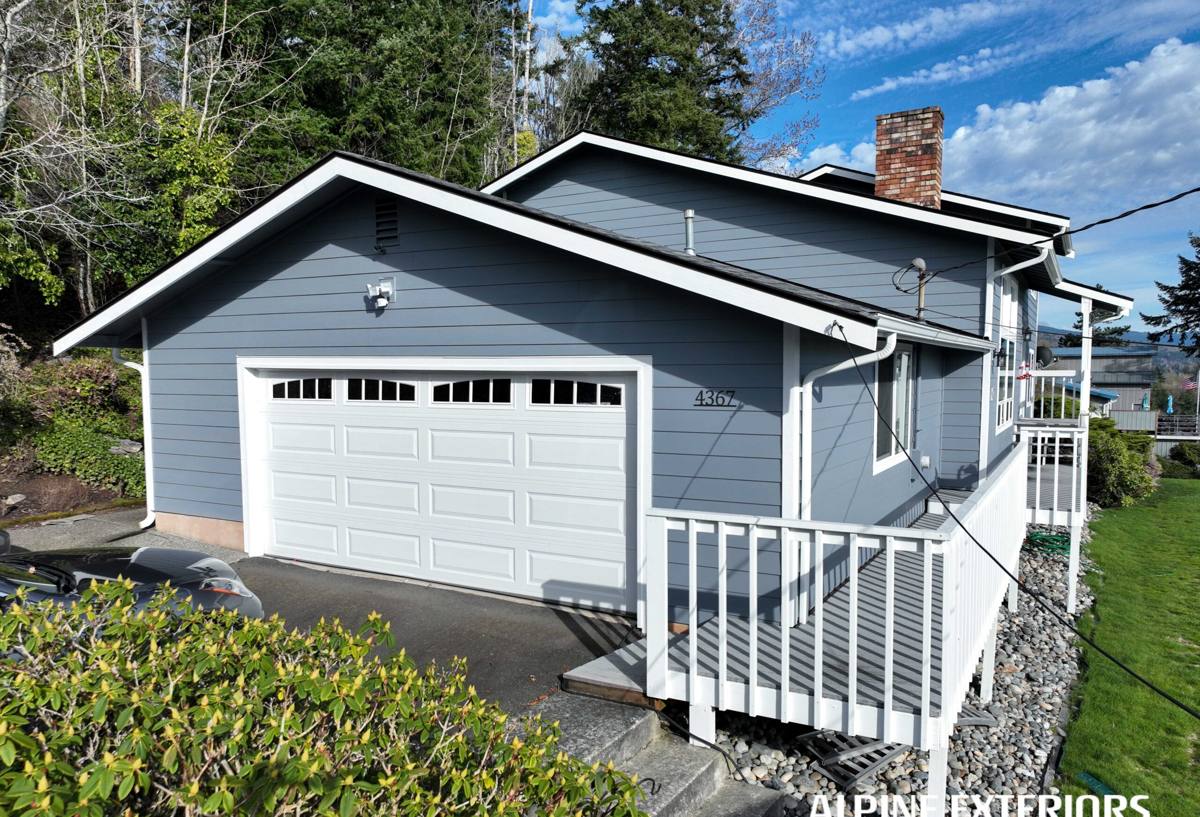
Repair or Replace? Knowing Which One You Actually Need
Not every tired-looking deck needs a full rebuild. But in our experience, Ferndale homeowners often wait too long trying to patch a deck that's past the point where patching makes sense — usually because the surface boards look fine while the structure underneath is quietly failing.
- Soft, spongy, or bouncy spots when you walk across the deck
- Fasteners that are rusted, backing out, or leaving dark streaks in the wood
- Gaps between boards that have closed up or widened unevenly, a sign of moisture-driven warping
- Persistent moss or algae that regrows within weeks of cleaning
- Ledger board attachment (where the deck meets the house) showing gaps, rot, or water staining on the siding above it
- Posts or footings that feel loose, or visible rot at the base of support posts
- A deck older than 15–20 years that has never had the substructure inspected
If what you're seeing is limited to a handful of surface boards and the framing underneath is sound, repair can make sense. Once the ledger connection, joists, or footings are compromised, replacement is almost always the more honest recommendation — patching around a failing structure just delays the real cost and adds risk.
What a Correct Deck Replacement Actually Involves
A deck replacement done right is not just pulling up old boards and screwing down new ones. In a climate like ours, the parts you don't see matter more than the parts you do.
Ledger Board and Flashing
The ledger board — where the deck attaches to the house — is the single most common failure point on decks in wet climates, and it's the one homeowners can't easily inspect themselves. Proper flashing at this connection keeps water from working its way behind the siding and into the wall framing. We treat this detail as non-negotiable on every replacement, even when it adds a step the old deck clearly never had.
Framing and Fasteners
Joists, beams, and posts need to be rated for exterior, ground-contact, or coastal exposure depending on where they sit relative to grade and moisture. Fasteners and structural connectors should be corrosion-resistant hardware rated for the exposure — standard hardware corrodes noticeably faster here than it would inland, and once a fastener starts rusting it weakens the connection it's supposed to hold.
Footings
Footings need to be sized and set to local frost depth and soil conditions, not just "deep enough to look right." Undersized or shallow footings are a common shortcut on older decks, and they're one of the reasons a deck can feel structurally sound for years and then develop movement all at once.
Drainage and Airflow
Water needs somewhere to go — off the surface, and out from underneath. Board spacing, joist spacing, and ground clearance all affect how quickly a deck dries out after rain. A deck that stays damp longer is a deck that grows moss faster and rots sooner.
Choosing Decking Material for Ferndale's Climate
There isn't one "best" decking material — there's a best material for your budget, your maintenance appetite, and how exposed your deck is to salt air, shade, and standing moisture. Here's how the common options actually compare in this climate, without the marketing spin.
| Material | How it holds up here | Maintenance | Honest trade-off |
|---|---|---|---|
| Pressure-treated wood | Good structural performance if properly sealed and re-sealed; prone to moss and graying without upkeep | Needs cleaning and sealing every 1–2 years | Lowest upfront cost, highest ongoing labor |
| Cedar | Naturally rot-resistant but still absorbs moisture over time in shaded, damp areas | Annual cleaning, periodic oiling or staining | Better look and smell than treated pine, similar maintenance burden |
| Composite (capped) | Excellent resistance to moisture and moss buildup; doesn't absorb water into the core | Occasional washing, no sealing or staining | Higher upfront cost, but far less time spent on upkeep |
| PVC decking | Fully synthetic, essentially immune to rot and moisture damage | Lowest maintenance of any option | Highest material cost; some homeowners prefer the look of wood grain composites over PVC's feel underfoot |
For homes closer to the water with heavier salt exposure, or decks in shaded, slow-to-dry locations, we generally steer clients toward capped composite or PVC — not because wood is a bad product, but because the maintenance schedule wood needs in this climate is more demanding than most homeowners realistically keep up with. If you want the look and feel of real wood and are committed to annual maintenance, cedar remains a solid, honest choice.
Whatcom County Permitting and Code Basics
Most deck replacements in Ferndale that involve rebuilding the structure — not just swapping surface boards on an otherwise sound frame — require a permit through Whatcom County, and inspections typically cover footings, framing, and the ledger connection before boards go down. Requirements can shift based on deck height, size, and whether it's attached to the house, so we handle the permit review as part of our process rather than leaving it for the homeowner to sort out. Skipping this step is a common shortcut that can cause real problems at resale, when an unpermitted structure has to be disclosed or reworked.
Our Deck Replacement Process
- On-site assessment. We inspect the existing deck's framing, ledger, footings, and posts — not just the surface — to confirm replacement is the right call and identify anything the old build got wrong.
- Material and layout discussion. We walk through decking options honestly, including maintenance expectations, based on your deck's sun and moisture exposure.
- Permit handling. We prepare and submit what Whatcom County requires so inspections happen at the right stages without delays.
- Demolition and disposal. Old decking, framing, and hardware are removed and hauled off — we don't leave debris for you to deal with.
- Structural rebuild. Footings, framing, ledger flashing, and hardware are installed to hold up under coastal moisture and driving rain, not just to pass a quick glance.
- Decking installation. Boards are installed with proper spacing and fastening for drainage and long-term stability.
- Final walkthrough. We go over care instructions specific to the material you chose, so you know what upkeep — if any — is actually needed.
What Drives the Cost of a Deck Replacement
Every deck is different, but the same handful of factors tend to move the price up or down. We'd rather walk you through these upfront than hand you a number with no context.
| Factor | Why it matters |
|---|---|
| Deck size and shape | Square footage and complexity (angles, multiple levels) directly affect material and labor |
| Decking material chosen | Treated wood, cedar, composite, and PVC span a wide cost range |
| Height and footing depth required | Taller decks and deeper footings mean more structural work |
| Condition of the existing structure | Rotted framing or a failed ledger connection adds rebuild scope beyond the visible decking |
| Railings and stairs | Code-compliant railings and stair systems add material and labor beyond the deck surface itself |
| Site access | Difficult access for material delivery or debris removal can add time |
Broadly speaking, a straightforward treated-wood replacement sits at the lower end of the range, while a larger deck rebuilt in capped composite or PVC with new railings sits well above it. We won't know your real number until we've seen the deck, but we'll never leave you guessing about why a quote lands where it does.
Why It Matters to Hire a Crew That Already Works in Ferndale
A deck replacement built to a generic spec — the kind you'd get from a crew that mostly works drier inland markets — is a deck that's set up to underperform here. Contractors who work Ferndale and the surrounding Whatcom County coastline regularly know which fastener grades actually hold up against salt air, which framing details keep moss from taking over shaded corners, and how local permitting and inspection actually run in practice, not just on paper. That familiarity shows up in fewer callbacks and a deck that still looks and performs the way it should five and ten years out, not just on installation day.
Keeping Your New Deck Performing Long-Term
Whatever material you choose, a little seasonal attention goes a long way in this climate. Clear leaves and debris out of board gaps before the wet season sets in, since trapped organic matter is what feeds moss and holds moisture against the surface. Rinse off salt spray and grime periodically if your deck is exposed to coastal air. For wood decks, stick to the sealing or staining schedule your material needs — skipping a year is usually when problems start. Composite and PVC decks need far less, but an occasional wash keeps them looking their best and lets you spot any hardware issues early.
If your Ferndale deck is showing its age — or you just want an honest opinion on whether repair or replacement makes more sense — we're happy to take a look. Reach out for a free, no-pressure estimate using the form below.