 Whatcom County
 Ferndale's Climate Is Harder on Roofs Than It Looks
Ferndale sits close enough to the water that salt-laden air is a constant, low-grade stress on every roof in town. It doesn't announce itself the way a storm does — it just quietly speeds up corrosion on nails, flashing, vent caps, and any exposed metal fastener, year after year, until a roof that should have another decade in it starts leaking at the seams first. Combine that with the driving rain that blows in off Pacific storm systems most of the year, and you get water that doesn't just fall straight down — it gets pushed sideways, up under shingle laps, behind flashing edges, and into gaps that would never leak in a calmer climate.
Then there's moss. Whatcom County's mild, wet winters and shaded, tree-lined lots are close to ideal moss-growing conditions, and a roof doesn't need to look overrun for moss to be doing damage. Even a light, even carpet of moss on a north-facing slope holds moisture against the shingles and roof deck for months at a stretch, which is exactly the kind of sustained dampness that breaks down asphalt granules, rots sheathing, and works nails loose from underneath.
None of these three things — salt air, driving rain, moss — is dramatic on its own. Together, over enough Whatcom County winters, they're the reason we get called out to Ferndale roofs that are still structurally sound but failing in very specific, very local ways.
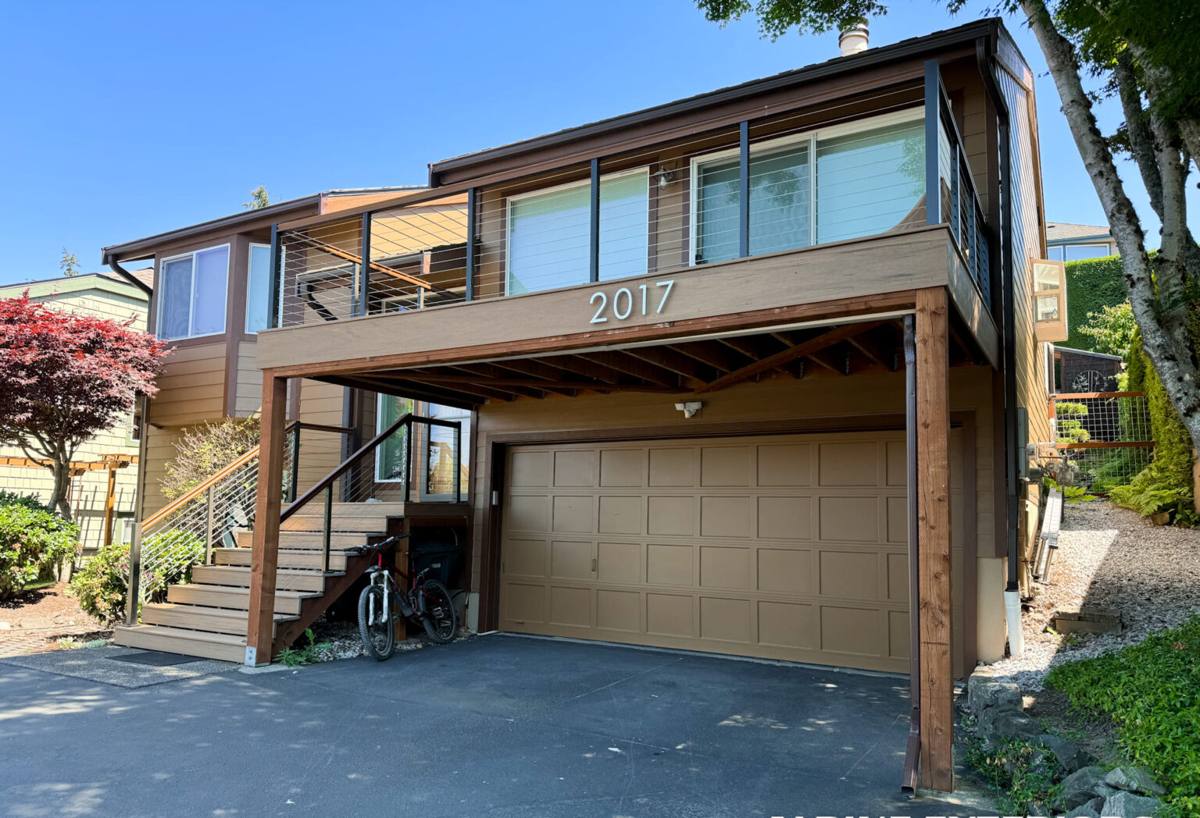
The Repair Calls We See Most Often in Ferndale
Flashing failures
Flashing around chimneys, skylights, and where a roof meets a wall is almost always the first thing to fail on an older Ferndale roof. It's thin metal, it's fastened with exposed nails, and it takes the brunt of both salt-air corrosion and wind-driven rain. When flashing starts to lift, rust through, or pull away from its seal, water finds its way in at a single point and can travel a surprising distance before it ever shows up as a stain on a ceiling.
Moss-related shingle and deck damage
By the time moss is visible from the ground, it's usually already lifted shingle edges and trapped moisture underneath. Left long enough, it degrades the shingles themselves and can soften the plywood decking below — which turns a straightforward shingle repair into a decking repair too.
Wind-driven rain at eaves, ridges, and vents
Storms that push rain sideways expose weak points that never get tested in a gentle rain — loose ridge caps, gaps at the eaves, and poorly sealed transitions. These are often the source of leaks that seem to "come and go" with the weather, because they only let water through under specific wind conditions.
Cracked or failed roof vent boots
The rubber boots sealing plumbing and exhaust vents degrade with repeated wet-dry cycling and UV exposure. They're a small, inexpensive part, but a cracked boot is one of the most common single sources of a slow, hard-to-trace leak.
What a Correct Roof Repair Actually Involves
A repair done right starts with finding where water is actually entering, not just where it's showing up inside — those are frequently not the same spot, since water travels along the underlayment and framing before it drips somewhere visible. That means getting on the roof, checking flashing, penetrations, and shingle condition directly, rather than guessing from the ground or patching the stained spot and hoping.
Once the source is confirmed, the repair has to tie properly into the existing roof system — matching shingle type and, where possible, color; reinstalling flashing with correct laps and fasteners so water sheds over it rather than behind it; and checking that the underlayment beneath the repair is still intact before closing it back up. A patch of roofing cement over a crack might stop a leak for a season, but it isn't a repair — it's a delay, and it usually makes the eventual real fix more expensive because it hides what's underneath.
We also check the areas around the repair, not just the failure point itself. A cracked vent boot next to healthy shingles is a five-minute fix. The same crack next to moss-damaged shingles and soft decking is a different job, and a homeowner deserves to know that difference before work starts, not after.
Repair or Replace? How We Help You Decide
Not every roof problem in Ferndale needs a full replacement, and we don't push one when a solid repair will hold. The honest answer usually comes down to a few factors:
| Factor | Points Toward Repair | Points Toward Replacement |
|---|---|---|
| Roof age | Under roughly 15 years, materials still flexible | Nearing or past the material's expected lifespan |
| Extent of damage | Isolated to one flashing point, vent, or section | Spread across multiple slopes or recurring in different spots |
| Decking condition | Solid, dry sheathing under the damaged area | Soft, delaminating, or rotted decking found on inspection |
| Repair history | First or second repair on this roof | Third or more repair, especially in different areas each time |
| Moss/algae staining | Surface growth only, shingles intact underneath | Granule loss and shingle curling visible under the moss |
We'll walk you through where your roof lands on each of these before recommending anything, and we'll tell you plainly if a repair is the more sensible call financially, even when a replacement would be the bigger job for us.
Our Roof Repair Process
- Phone or online request, with photos if you have them — this helps us come prepared with the right materials.
- On-site inspection where we get on or above the roof, not just a look from the yard, to confirm the actual source of the problem.
- Straight explanation of what's failing, why, and the repair options — including cost range and what happens if it's left alone.
- Written estimate before any work begins, so there are no surprises once we're on the roof.
- Repair completed with materials matched to your existing roof, correct flashing details, and cleanup of the work area.
- Final walk-through so you can see what was done and ask questions before we leave.
Handling Moss and Algae the Right Way
Whatcom County's long wet season means moss isn't a one-time cleanup — it's an ongoing maintenance issue for most tree-shaded properties. We treat it carefully: no pressure washing, which strips protective granules off asphalt shingles and shortens their life faster than the moss itself would. Instead, we use gentler removal methods and, where it makes sense, install zinc or copper strips near the ridge, which release trace metals with the rain that discourage new moss growth over time without chemical runoff every season.
If moss has already caused damage — lifted shingles, exposed nail heads, soft spots — removal alone won't fix that. We'll flag those areas separately so you know whether you're looking at a cleaning, a repair, or both.
Roofing Materials We Work With in This Area
Composition (asphalt) shingles are the most common roofing material on Ferndale homes, and for good reason — they perform well in this climate when properly installed and maintained, and repairs are straightforward when the shingle line is still available or closely matched. Metal roofing has become more common on newer builds and re-roofs in Whatcom County, and it handles driving rain and salt air well, though repairs require different techniques around seams and fasteners than shingle work. Cedar shake still shows up on older homes in the area; it's a beautiful material but demands more maintenance in a moss-prone, damp climate, and repairs need to account for that.
Whatever your roof is covered in, our approach is the same: match materials as closely as possible, respect how that specific material sheds water, and never mix repair techniques that work for one roofing type but compromise another.
Signs Your Ferndale Roof Needs Repair Now
- Water stains on interior ceilings or walls, especially ones that appear or worsen after windy rainstorms
- Visible moss buildup, particularly on north-facing or shaded slopes
- Shingles that are curling, cracking, or missing granules in patches
- Flashing around chimneys or skylights that looks lifted, rusted, or gapped
- Rubber boots around roof vents that are cracked or split
- Granules collecting in gutters after a storm
- Daylight visible through the roof deck from inside the attic
- Sagging areas anywhere on the roofline
Catching any of these early is almost always cheaper than waiting — a flashing repair now is a fraction of the cost of the decking and interior repairs that follow a roof left leaking through a full Whatcom County winter.
Why a Local Ferndale Crew Matters
Roof repair isn't a one-size-fits-all trade. A crew that works Ferndale regularly already knows how salt air behaves on this roofline versus one further inland, how aggressively moss grows on a shaded lot near the water compared to an open one, and which flashing and fastener choices actually hold up here instead of just on paper. That local pattern recognition speeds up diagnosis and avoids repairs that look fine in July but fail in the first real November storm.
Being local also means faster response when storm damage needs attention now, not next month, and a crew that's still around and answering the phone if a repair needs a follow-up visit — not a company that did one job in the area and moved on.
If you're dealing with a leak, visible moss, or damaged flashing on your Ferndale home, we're glad to take a look and give you a straight answer — no pressure, no upsell, just an honest assessment and a free estimate.