 Whatcom County
 Why Ferndale Siding Takes More Punishment Than People Expect
Ferndale sits close enough to the Salish Sea and the Nooksack River bottomlands that homes here deal with a different set of pressures than siding fifty miles inland. Salt-tinged marine air moves through the area most of the year, driving rain comes in sideways during fall and winter storms, and the mix of tall evergreens and damp shade that defines Whatcom County means moss and algae get a long season to work on anything that holds moisture. None of this is dramatic on its own. It's the cumulative effect — years of freeze-thaw cycles, wind-driven water finding gaps, and organic growth sitting against a wall — that turns small siding problems into expensive ones if they're ignored.
Siding repair in this climate isn't just about matching a color or patching a hole. It's about understanding why the damage happened in the first place, because in Whatcom County, moisture is almost always the real culprit, even when the visible symptom is a crack, a stain, or a soft spot.
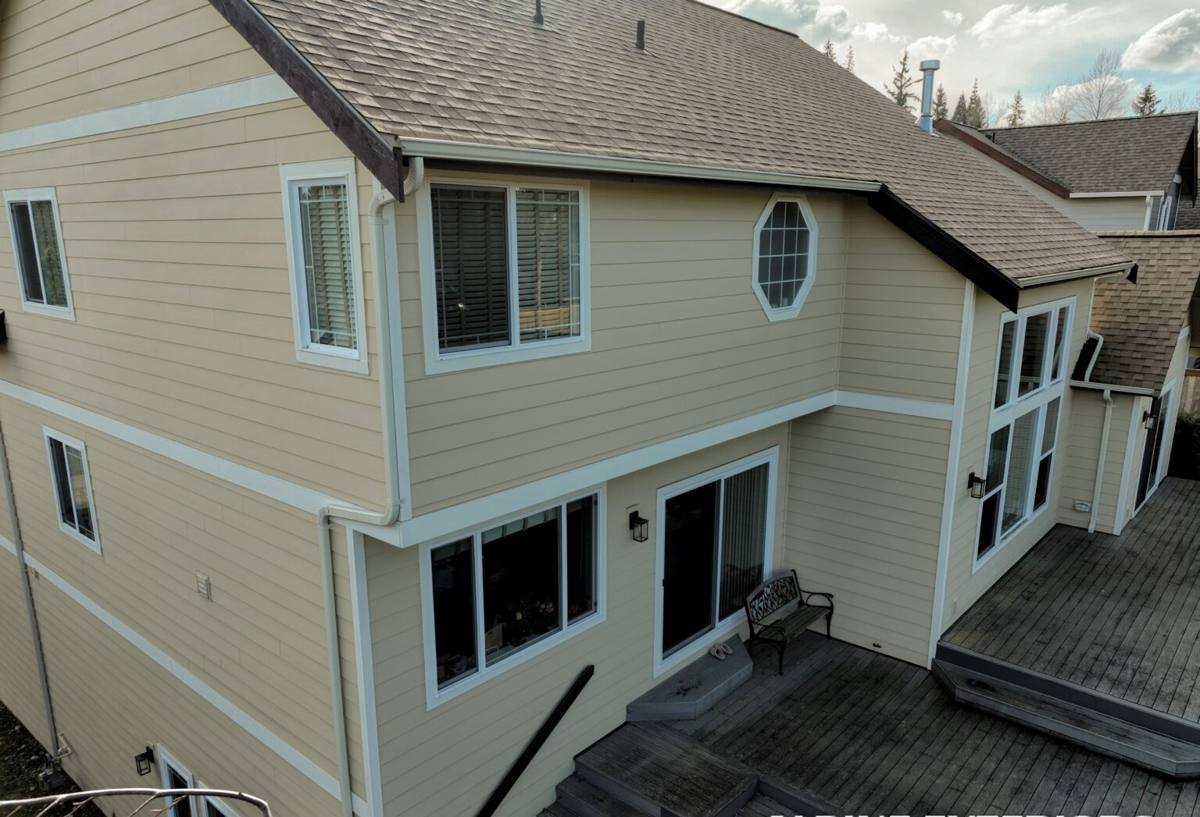
Signs a Ferndale Home Needs Siding Repair
Most siding problems don't announce themselves loudly. They show up as small, easy-to-dismiss details that get worse every wet season they're left alone.
- Dark streaking or green-black growth that keeps coming back within weeks of cleaning
- Soft or spongy panels near the bottom courses, around windows, or under roof lines with poor drainage
- Visible gaps, cracked caulking, or warped boards at seams and corners
- Paint that's bubbling, peeling, or failing faster than it should on one section of the house
- Musty smells or visible moisture on interior walls that back up to exterior siding
- Nail pops, buckling, or panels that have pulled away slightly from the wall
Any one of these can be a minor fix. Several of them together, especially on the north or west-facing walls that catch the most wind-driven rain, usually mean water has been getting behind the siding for a while.
Why Moss Season Matters More Here Than It Looks
Whatcom County's long stretch of cool, wet, low-sun months means moss and algae have far more time to establish than they would in a drier climate. On siding that traps moisture — including wood-based products with wicking seams — sustained moss growth keeps the substrate wet for weeks at a time. That's a very different situation than a house getting rained on and drying out between storms. It's the difference between siding that sheds water and siding that's constantly damp underneath a layer of growth.
What a Correct Siding Repair Actually Involves
A repair that only addresses what's visible from the ground is a repair that comes back. Doing it right means treating every damaged section as a diagnostic opportunity, not just a patch job.
Step One: Find the Water, Not Just the Damage
Before any siding comes off, a correct repair starts by figuring out how water is getting in. That could be failed flashing above a window, a gap where two trim pieces meet, a downspout dumping water against a wall, or simply siding that was never sealed properly at the original install. Replacing the damaged board without fixing the entry point just delays the next repair.
Step Two: Check What's Behind the Siding
Once panels are pulled, the house wrap, sheathing, and framing underneath need a real look. In Ferndale's climate, we regularly find that visible siding damage is smaller than what's happening behind it — soft sheathing, saturated insulation, or wrap that's torn and no longer doing its job. Repairing the surface without addressing this is cosmetic, not structural.
Step Three: Match Material and Method, Not Just Appearance
A patch that looks close in color but behaves differently than the surrounding siding — different expansion rate, different moisture absorption, different fastening pattern — creates a new weak point right at the seam. Correct repair means matching both the look and the performance characteristics of what's already on the wall, or in some cases recommending a full section replacement instead of a visual patch.
How Different Siding Materials Hold Up in This Climate
Not all siding fails the same way, and what we find during a repair call often depends heavily on what was installed originally.
| Material | Common Failure Pattern in Whatcom County | Repair Difficulty |
|---|---|---|
| Vinyl siding | Cracking in cold snaps, warping near heat sources, seams that let wind-driven rain behind panels | Patch-friendly but rarely matches faded color; often needs wider section replacement |
| Cedar or primed wood siding | Moisture wicking at butt joints, rot behind moss growth, paint failure from constant damp | Labor-intensive; rot usually extends further than visible |
| Engineered wood (e.g. LP-style products) | Edge swelling where factory sealant has worn through, especially at cut ends | Moderate; swollen edges often mean sheathing checks are needed |
| James Hardie fiber cement | Occasional impact damage or caulking failure at trim joints; the board itself resists moisture swelling | Straightforward when caught early; the material itself isn't the point of failure |
This is a big part of why we standardized on James Hardie fiber cement for the installs we do. It's not that other materials can't be repaired — it's that fiber cement doesn't swell, wick, or rot the way wood-based and some engineered products can, which means repairs stay smaller and less frequent over the life of the siding.
Repair or Replace? What Actually Decides It
Homeowners in Ferndale often call about one bad section and end up needing a broader conversation. Here's what actually drives that decision, honestly, without pushing toward the bigger job by default.
| Factor | Leans Toward Repair | Leans Toward Replacement |
|---|---|---|
| Extent of damage | Isolated to one wall or a few panels | Recurring in multiple areas, or found behind several sections |
| Age of existing siding | Under 10-15 years, otherwise sound | Original material near or past its expected service life |
| Cause of damage | One-time event (impact, isolated flashing failure) | Systemic moisture issue tied to the material or original install |
| Sheathing condition | Dry, intact behind removed panels | Soft, stained, or saturated sheathing found during inspection |
| Material match | Current siding still available or close match exists | Discontinued color or profile, visible patchwork unavoidable |
We'll tell you straight if a repair is the right call — plenty are. But if we open a wall and find the underlying problem is bigger than the patch, you'll hear that too, along with why, before any work continues.
Our Process for Siding Repair in Ferndale
We keep this simple and transparent, because homeowners deserve to know what's happening to their house before it happens.
- Inspection: We look at the damaged area and the wall as a whole — not just the spot you called about, since Whatcom County's weather tends to hit whole exposures unevenly, not single boards.
- Diagnosis: We identify the water source or mechanical cause before recommending anything, and we explain it in plain terms.
- Scope and options: You get a clear picture of what a repair covers, what it won't cover, and whether replacement makes more long-term sense for that section.
- The work: Proper flashing and moisture barrier detailing at every repair, correct fastening, and material matched for performance, not just looks.
- Walkthrough: We show you what we found and what we did, including anything behind the siding that's worth knowing about even if it wasn't part of the original scope.
Why Hiring a Crew That Already Works in Ferndale Matters
Siding repair is one of those jobs where local experience shows up in details a homeowner would never think to ask about — how far wind-driven rain typically travels up a wall on an exposed corner lot near open farmland, which roof-to-wall transitions tend to fail first in this specific weather pattern, or how long moss can sit on a north wall before it's doing real damage rather than cosmetic. A crew that works Whatcom County regularly has already seen the way this climate specifically attacks siding, rather than applying generic repair methods built for a drier region.
It also means someone who understands why we only install and repair with James Hardie fiber cement. We're not against other products because of marketing — we're direct about the trade-offs after years of seeing how vinyl, cedar, and some engineered sidings hold up against sustained coastal moisture and a moss season that doesn't let up for months. Fiber cement's resistance to swelling and rot, backed by a strong factory finish warranty, is why we stand behind it as the long-term answer rather than another material we'd be back to patch again in a few years.
Simple Maintenance That Prevents Repair Calls
- Rinse siding gently once or twice a year, focusing on shaded north and west walls where moss builds fastest
- Trim back vegetation and tree limbs that keep siding shaded and damp
- Check caulking at trim, window, and door joints annually — it's usually the first thing to fail
- Make sure gutters and downspouts direct water away from walls, not down them
- Look at siding after major windstorms for loose panels, cracked boards, or shifted trim
- Address small stains or soft spots right away instead of waiting for the next dry season
If you're seeing any of the warning signs above, or just want an honest look at what your siding needs before the next round of Whatcom County storms, we're happy to come out and take a look. The estimate is free, there's no pressure, and you'll get a straight answer about whether you need a repair, a bigger fix, or nothing at all.