 Whatcom County
 Samish sits close enough to the water and low enough in the tree canopy that its homes take a specific kind of beating: salt-laden air drifting in off the bay, wind-driven rain that gets pushed sideways into wall assemblies, and a moss and algae season that can run eight or nine months out of the year in the shaded, damp pockets around Lake Samish and the surrounding hillsides. Siding here doesn't just need to look good — it needs to survive a climate that's actively working to soften, swell, and colonize whatever's on the outside of the house. This page is about what fiber cement siding done right looks like for a Samish home, and why the crew you hire for it matters as much as the material itself.
What Samish's Climate Actually Does to Siding
Whatcom County's marine climate is mild, which is part of why people live here — but "mild" and "gentle" aren't the same thing. Three specific stresses show up again and again on Samish homes:
Salt Air
Proximity to Puget Sound and Bellingham Bay means airborne salt is a constant, low-level presence. Salt accelerates corrosion on exposed metal fasteners and trim, and it can leave a fine residue on painted surfaces that breaks down finishes faster than an inland home would ever see. Materials and coatings that aren't rated for coastal exposure tend to chalk, fade, or corrode noticeably sooner here.
Driving Rain
Storms coming off the water rarely fall straight down — wind pushes rain horizontally into wall surfaces, seams, and any gap in the building envelope. This is a water-management problem more than a water-resistance problem: the siding system as a whole, not just the panels, has to shed and drain water correctly. A product that's water-resistant but installed with poor flashing or clearances will still let moisture in.
The Long Moss Season
Shaded lots, tree cover, and consistent moisture create ideal conditions for moss, algae, and mildew growth on north-facing and shaded wall sections. Once organic growth gets a foothold in a porous or improperly sealed surface, it holds moisture against the wall and accelerates whatever damage the rain started. Homes tucked into wooded lots near Samish see this more than open, sun-exposed properties elsewhere in the county.
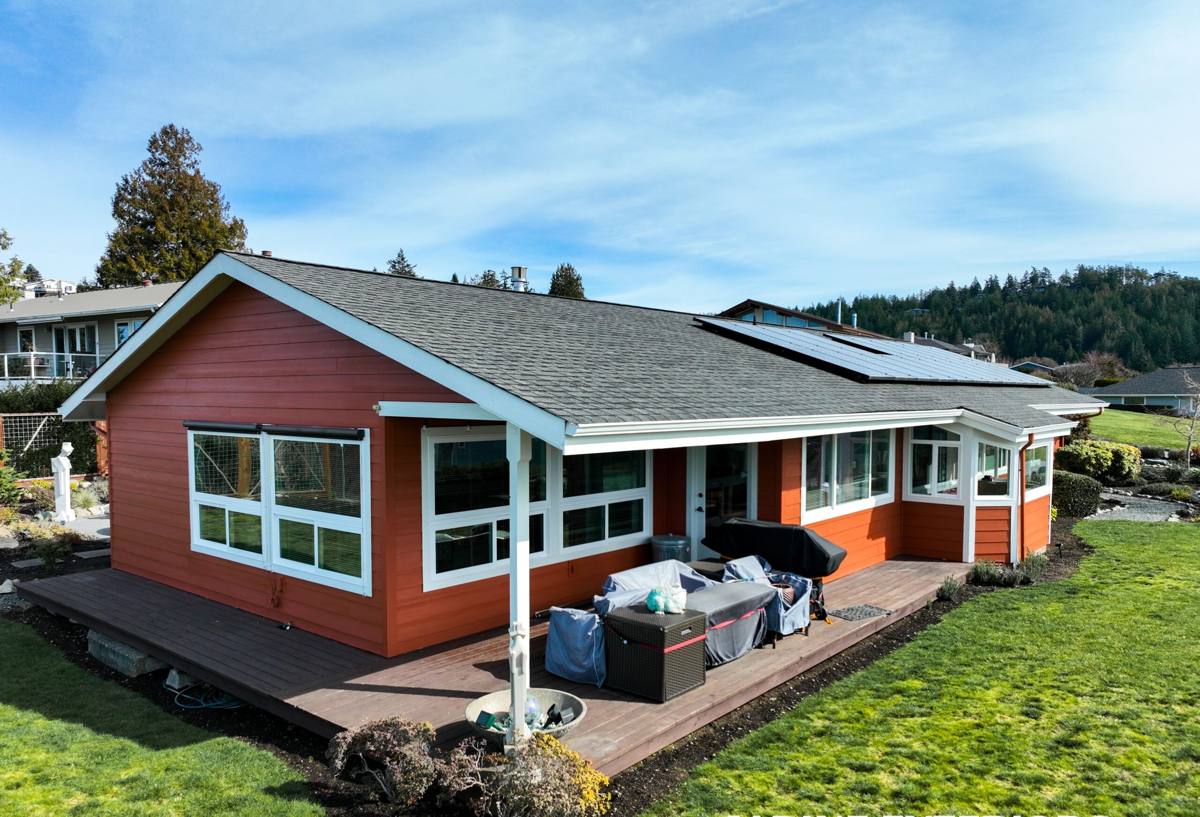
Why We Only Install James Hardie Fiber Cement
We've made a deliberate decision as a company: we install James Hardie fiber cement siding, and we don't install LP SmartSide, vinyl, Cemplank, Allura, or bare wood siding like primed spruce or cedar. That's not a marketing position — it's what we've concluded holds up best against exactly the conditions Samish throws at a house.
Fiber cement as a category resists the things that hurt other sidings in this climate: it doesn't rot when it stays wet, it's non-combustible, and it doesn't provide the organic material that moss and algae feed on the way wood-based products can. Within fiber cement, James Hardie's HZ5 product line is engineered specifically for climates like ours — cold, wet, and humid for long stretches — with a formulation designed to resist moisture-related expansion and cracking better than general-purpose fiber cement. The factory-applied ColorPlus finish is also baked and cured under controlled conditions, which gives it more consistent resistance to fading and chalking from salt air and UV than a field-applied paint job typically achieves.
We're not going to tell you every other product is unusable — vinyl and engineered wood products have real markets and legitimate uses. But for the specific combination of salt exposure, driving rain, and sustained moisture that Samish homes deal with, we've standardized on the product we trust to still look and perform right in fifteen years, not just at install.
What a Correct Fiber Cement Install Actually Involves
Fiber cement siding fails less often because the panels themselves are bad and more often because the installation cut corners. The panels are only as good as the water-management system built around them. A correct install includes:
- Proper weather-resistive barrier (house wrap) installed shingle-style so water drains outward, not behind the siding
- Correct starter strip at the base to set the first course level and kick water away from the foundation
- Flashing at every window, door, and horizontal penetration — not caulk used as a substitute for flashing
- Manufacturer-specified fastener spacing and fastener type, matched to substrate and exposure
- Minimum clearance from grade, roofing, decks, and other horizontal surfaces to prevent wicking and splash-back moisture
- Field-cut edges sealed or primed per manufacturer spec, since raw cut edges are the most vulnerable point on any fiber cement panel
- Caulking only at specified joints, with a quality sealant rated for exterior, marine-adjacent exposure
Skip any one of these and you don't get a siding failure right away — you get a slow one, showing up as staining, soft spots, or paint failure two to five years down the road, usually right around the areas most exposed to driving rain or shade.
Our Process on a Samish Job
1. On-Site Assessment
We start by walking the property and looking at exposure: which walls take the worst of the weather off the water, where moss and algae are already established, where the existing siding or trim shows signs of moisture damage, and where the home's flashing and drainage details need attention regardless of what siding goes on.
2. Tear-Off and Substrate Check
Removing the old siding is also when we find out what's actually happening underneath — soft sheathing, compromised house wrap, or rot around windows and penetrations. We address what we find before anything new goes up. Covering a moisture problem with new siding just delays it.
3. Water Management First
House wrap, flashing, and starter details go in correctly before a single piece of Hardie touches the wall. This is the step that determines whether the siding lasts twenty-plus years or fails early, and it's the step that's easiest to shortcut if a crew is trying to move fast.
4. Installation to Manufacturer Spec
Panels are installed with correct fastener schedules, clearances, and joint treatment, following James Hardie's published installation requirements — which is also what keeps the manufacturer warranty intact.
5. Final Walkthrough
We go over trim, caulking lines, and clearances with you before calling the job done, and explain what routine maintenance (if any) the finish will need going forward.
Climate Stress vs. What the Siding System Needs to Do
| Local Condition | What It Does to a Home | What the Siding System Needs |
|---|---|---|
| Salt air off the water | Corrodes exposed fasteners, degrades weak finishes faster | Corrosion-resistant fasteners, factory-cured finish (ColorPlus) |
| Wind-driven rain | Forces water sideways into seams and gaps | Correct flashing, house wrap lapped shingle-style, sealed joints |
| Shaded, damp lots | Sustained moss, algae, and mildew growth | Non-organic material, proper clearance from grade and vegetation |
| Freeze-thaw swings | Stresses materials that absorb and hold moisture | Climate-engineered formulation (HZ5) resistant to moisture cycling |
Why a Crew That Already Works Samish Matters
Fiber cement installation isn't exotic, but doing it correctly for this specific stretch of Whatcom County means knowing where the trouble spots tend to show up before you start: which wall orientations catch the worst of the driving rain, which lots hold moisture longest into the season, and how far back from grade and landscaping the bottom course needs to sit given how wet the ground stays here. A crew that's worked Samish and the surrounding Whatcom County communities repeatedly has already made — and learned from — those judgment calls. That's the difference between a technically correct install on paper and one that actually holds up against this specific climate over the next few decades.
It also matters for something more practical: permitting, local supply lead times, and knowing which subcontractors (if trim carpentry or minor structural repair is needed) are reliable in this area. None of that is glamorous, but it's what keeps a project on schedule instead of stalling out.
Signs Your Current Siding Is Already Losing the Fight
- Persistent moss or dark streaking on north- or shade-facing walls that comes back shortly after cleaning
- Soft or spongy spots when you press on siding near the base of the wall or below windows
- Paint or finish that's chalking, peeling, or fading unevenly, especially on the side facing the water
- Visible gaps, warping, or separation at seams and corners
- Rust staining running down from fasteners or trim
- Musty smell or visible staining on interior walls that share an exterior wall with problem siding
Any one of these on its own isn't necessarily an emergency, but a few together usually mean moisture has already gotten past the surface, and it's worth having someone look before it turns into a bigger repair.
Maintenance Expectations After Installation
One of the practical advantages of a correctly installed James Hardie system with a factory ColorPlus finish is how little upkeep it asks for compared to a painted or bare wood exterior. You're not refinishing it every few years. That said, no siding in this climate is fully maintenance-free:
- Rinse off accumulated grime, pollen, or early moss growth annually, especially on shaded walls
- Keep landscaping and irrigation from throwing water directly onto the siding
- Check and re-seal caulking at trim and penetrations every few years as part of general home upkeep
- Have gutters and downspouts inspected so overflow isn't running down the wall surface
If your Samish home's siding is showing its age, or you're planning ahead for a replacement before winter storm season sets in, we'd be glad to take a look and walk you through what we'd recommend and why. Reach out for a free, no-pressure estimate — there's a form right below this page to get that started.